
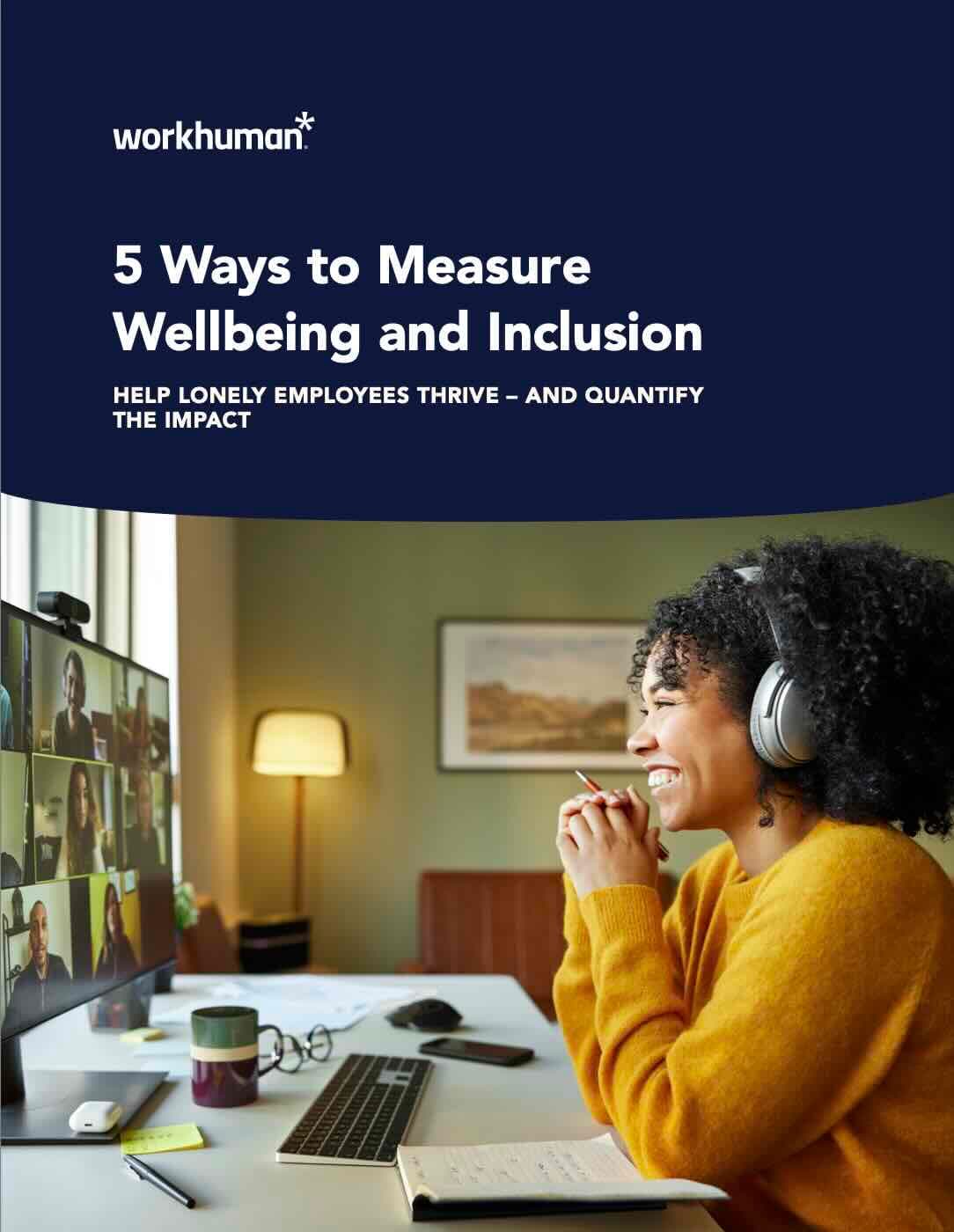
The workplace has always been a place of community and camaraderie. However, in this global and dispersed landscape, with 93% of iCIMS survey respondents saying flexibility is top of mind when deciding to apply for or accept a job, making friends at work is less of a guarantee for today’s young workers.
Forward-thinking HR practitioners are taking notice. At Workhuman LiveOpens in a new tab 2024:
- Workhuman CEO Eric Mosley featured research from YouGov, which found 30% of millennials “always or often” feel lonely, and 22% have “no friends” at all.
- Global DEI thought leader Raven Solomon shared Ypulse survey data showing Gen Z identifies “technology overdependence/addiction” as a top concern among their generation, ranked among inflation, the pandemic, and racism, because of its impact on social connection, mental health, and wellbeing.
This crisis of belonging is a top concern among organizations who care about supporting their people’s holistic wellbeing and psychological safety. But how do you know if your policies and programs are driving an equitable and inclusive culture? Here are some ways to measure and quantify the value of belonging.
Recommended for you

