
The Talent Management Lifecycle: Stages, Strategies, and Best Practices
by Ryan Stoltz
Last updated
11 min read
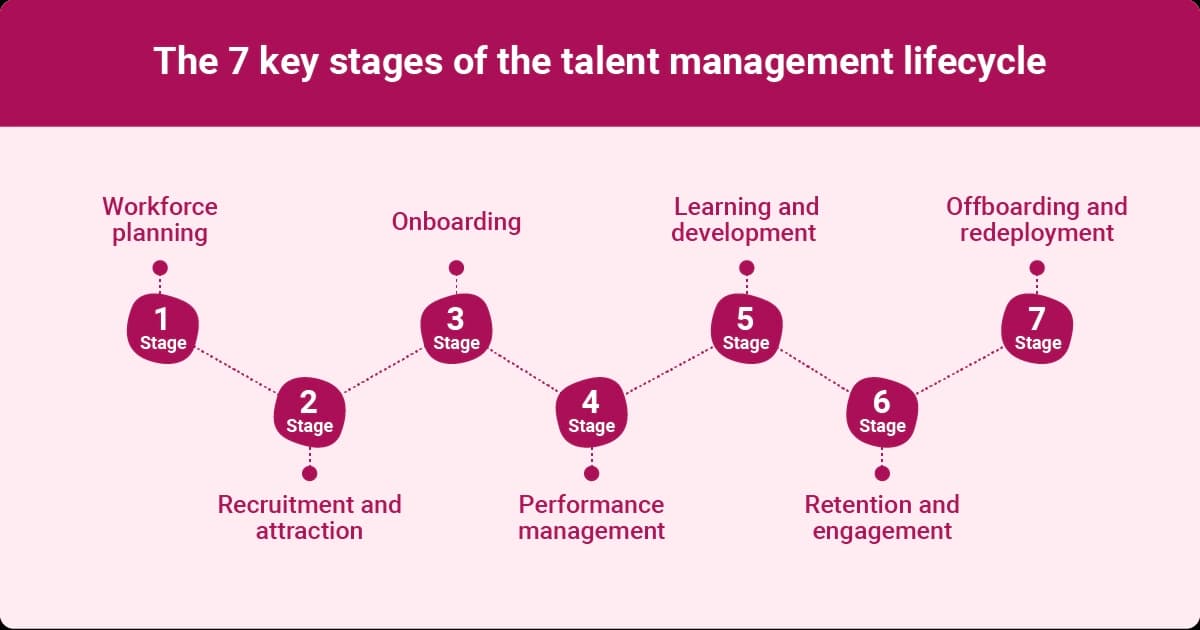
Table of contents
- What is the talent management lifecycle?
- Why the talent management lifecycle matters now more than ever
- The evolution of talent management: From personnel administration to strategic advantage
- The 7 key stages of the talent management lifecycle
- Talent management lifecycle best practices
- How to implement the talent management lifecycle in your organization
- Real-world examples of successful talent management lifecycles
- Tools and software to manage the employee lifecycle
- FAQs
Share this article
A competitor has spirited away another high performer, and your oh-so-promising new hire takes six months to contribute. Oh, and you've interviewed 12 people for that critical role, but no one has the exact skills you need. Sound familiar?
By focusing on the talent management lifecycle, you can connect these seemingly disconnected problems into a system you can actually fix. It's how you move talent decisions from reactive firefighting to deliberate planning across every stage of employment, from workforce planning through offboarding.
Skills’ half-lives are shrinking, and ManpowerGroup’s insights on “Global Talent ShortageOpens in a new tab” say that up to 74% of employers struggle to fill roles. Meanwhile, an Express Employment Professionals-Harris Poll survey, “The $100,000/Year Drain: How Employee Turnover Is Costing Companies Big in 2025”, found that turnover costs businesses an average of $36,723 annually.
But it's not all hopeless. With the right talent management, you can solve your hiring woes and stay competitive.
This guide walks you through all seven stages of the lifecycle and explains the difference between talent management and basic HR administration (hint: it's more strategic and future-facing). It also gives you a practical roadmap to start using this framework in your organization.
What is the talent management lifecycle?
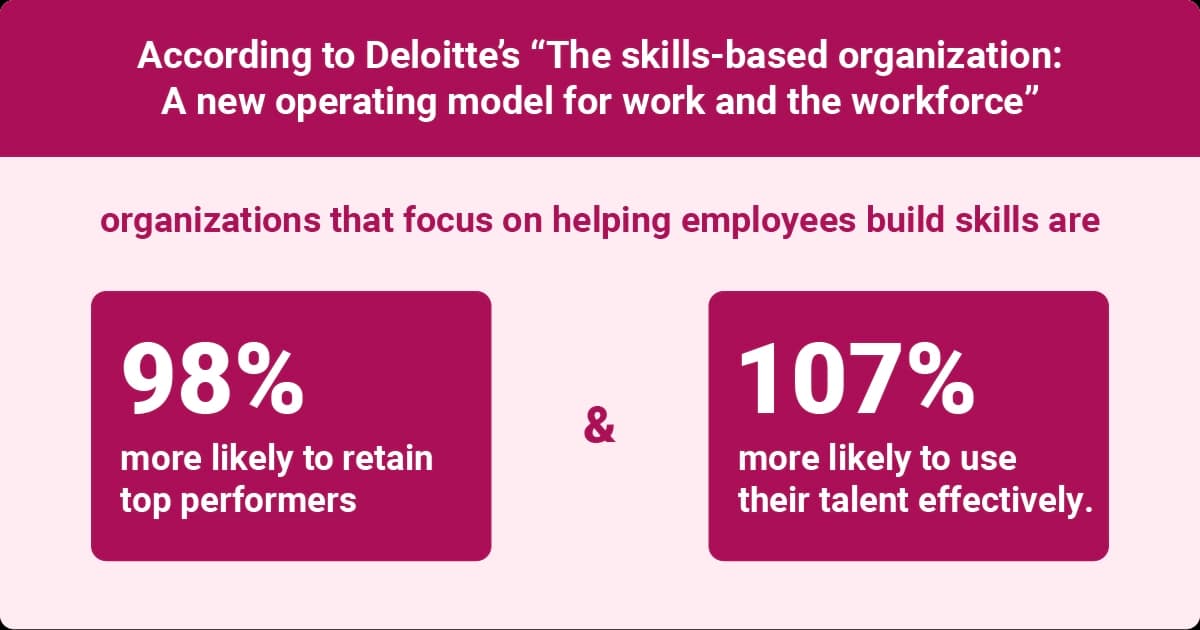
The talent lifecycle can also make a huge difference in the employee experience. According to Deloitte’s “The skills-based organization: A new operating model for work and the workforce”, organizations that focus on helping employees build skills are 98% more likely to retain top performers and 107% more likely to use their talent effectively.
While no single platform owns every stage of the talent management lifecycle, recognition and feedback data can strengthen decisions across the entire journey. Workhuman adds a human-centered layer of insight by capturing moments of contribution, collaboration, feedback, and appreciation as they happen.
These signals help HR leaders better understand engagement, skills, visibility, performance patterns, and emerging leadership potential alongside the structured data in their HRIS, ATS, LMS, and performance systems.
Key goals of the talent management lifecycle
The talent management model is a deliberate strategy that aims to make sure your organization always has the right skills, when and where you need them. Let's say your leadership team plans to launch an AI initiative in six months. With the lifecycle, you can start recruiting AI specialists now or upskilling your current employees instead of racing to hire people at the time when the business outcomes should have come.
Other goals include:
- Creating a more positive employee experience
- Decreasing time-to-productivity for new hires
- Developing succession plans for critical roles, such as executives and managers
- Improving overall productivity
- Making HR decisions that match the business goals and strategy
- Raising performance through clear feedback and growth opportunities
- Reducing turnover costs by proactively fixing retention issues
- Supporting long-term employee growth and promoting from within
Talent management vs. human resource management
Talent management falls under the umbrella of human resource management (HRM), but there are a few key differences:
Of course, you don't have to choose one or the other. Effective organizations usually have strong HR operations and a clear talent lifecycle. Plus, talent management relies on HRM data and processes for many decisions.
For instance, you may analyze performance data to see which teams need more support or where a new hire would make the biggest impact.
Talent management lifecycle vs. employee lifecycle
HR professionals often talk about employee and talent management lifecycles when discussing workforce planning. Here's a quick comparison:
For the best results, use the employee lifecycle to map out core processes and stages. Layer your talent management strategy on top to make sure you're supporting and engaging your team at every step.
Why the talent management lifecycle matters now more than ever
If you feel like you get whiplash every time you read HR news, you're not alone. The workforce looks very different from it did a decade ago, and organizations can no longer count on a simple "help wanted" sign whenever they need to hire.
Here are six trends reshaping HR and how a talent management strategy can help:
- AI and automation: While anyone can experiment with ChatGPT, more advanced AI knowledge remains scarce. In the World Economic Forum survey, “AI’s new dual workforce challenge: Balancing overcapacity and talent shortages”, the majority (94%) of leaders say they're experiencing an AI-critical skills shortage. The talent lifecycle can address this gap by allowing organizations to upskill or reskill tech-savvy employees. It can also help companies make smart decisions about which tasks to automate and how to redesign roles to make the most of top talent.
- Talent scarcity: The saying "good help is hard to find" has never been more true. A 2025 US Talent Shortage Survey by ManpowerGroup found that many employers are struggling to fill roles in information technology, operations, sales, and other key areas. Focusing on retention and reskilling can help address this skills shortage.
- Growth of remote and hybrid work: At most organizations, the office looks emptier than usual these days. According to Robert Half’s “Remote work statistics and trends for 2026” report, 88% of employers offer at least some hybrid options, and 12% of new job postings in the third quarter of 2025 were fully remote. This shift has helped expand talent pools, but it's also led to fierce competition for top performers. If you want employees to flock to your company and stick around, you need to prioritize culture-building and employee engagement.
- Rising turnover costs: Replacing an employee can cost the equivalent of a significant percentage of their annual salary. By reducing attrition, talent management decreases hiring expenses.
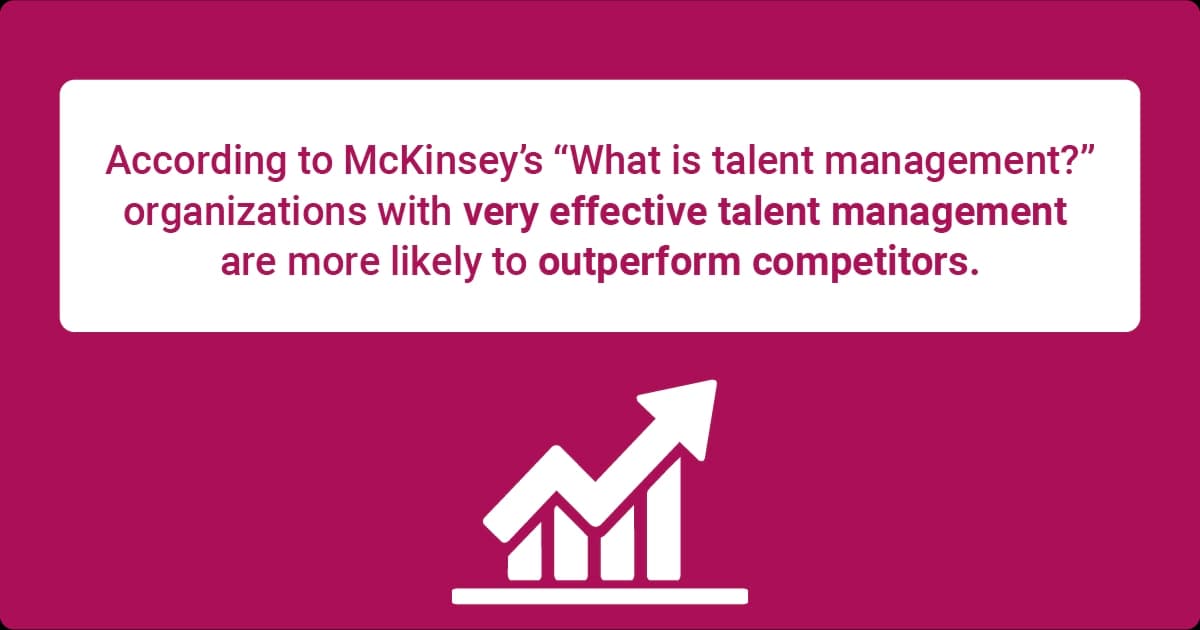
- Strategic advantages: According to McKinsey’s “What is talent management?”, organizations with very effective talent management are more likely to outperform competitors. It can also help businesses adapt to change by making sure employees have the right skills for what comes next.
The evolution of talent management: From personnel administration to strategic advantage
While businesses have always relied on employees, the way they manage their workforce has changed drastically over the past 60 years. Here's a brief timeline of this evolution, according to an Open Access Library Journal article titled, “The Evolution of HRM: From Personnel Management to Strategic PartnerOpens in a new tab”:
- 1950s-1970s: Personnel management primarily focused on administrative tasks, such as payroll and record-keeping. Employers often viewed their teams as expenses, not resources.
- 1980s-1990s: Businesses adopted a strategic human resources management approach. They viewed people practices as part of their overall strategy and prioritized employee development.
- 2000s: Organizations began viewing HR as a strategic partner and focused on attracting and keeping high performers. McKinsey coined the term "The War for Talent" to describe this shift.
- 2010s: The growing popularity of people analytics in HR allowed organizations to make data-driven talent decisions.
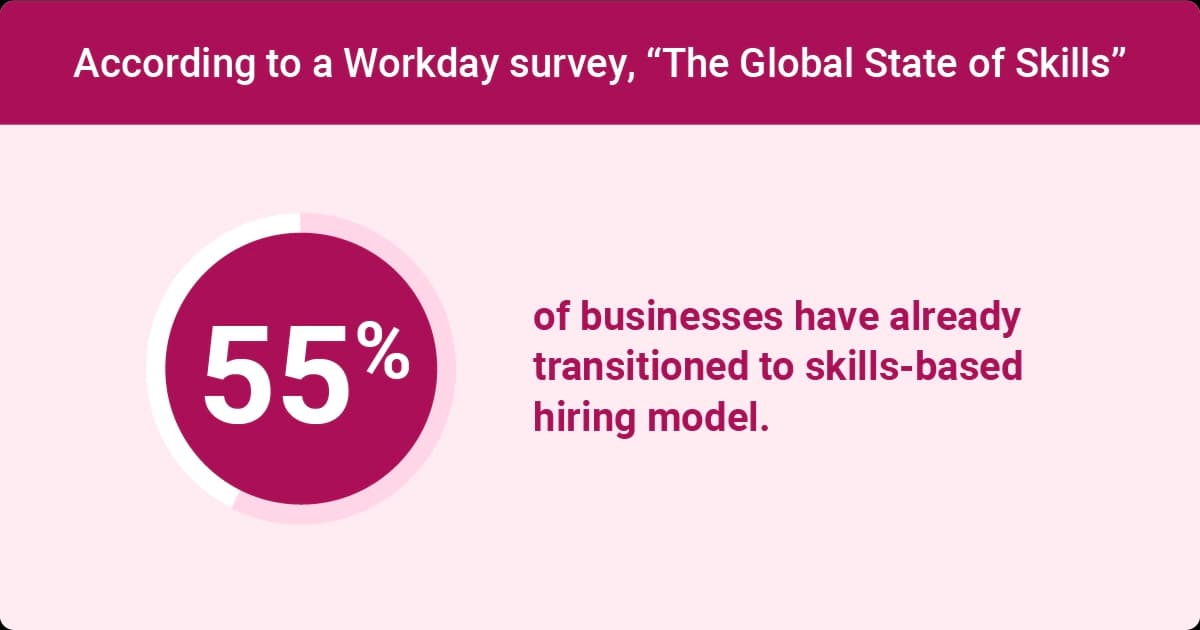
Today, skills-based hiring is the latest trend reshaping HR. According to a Workday survey, “The Global State of Skills,” 55% of businesses have already transitioned to this model. Other emerging trends include AI-assisted recruiting and internal talent marketplaces, which help match current employees to new roles.
See also: 13 Best People Analytics Software in 2026
The 7 key stages of the talent management lifecycle
There are several models for talent lifecycle management, but it typically covers a few core activities.
Stage 1: Workforce planning
Before you start brainstorming job ads, you need to understand your current workforce. Inventory your team's skills and roles, and look for potential gaps that could affect your future business plans. For example, a tech company might realize that no one has experience with a new programming language needed for an upcoming project.
Stage 2: Recruitment and attraction
Stellar performers usually don't fall into your lap. Follow these steps to attract and retain top talent:
- Spell out what your ideal candidate looks like based on your current and future needs. If your organization's three-year plan involves using more data analytics, look for people who already have those skills, even if you don't need them right now.
- Don't just rely on LinkedIn for recruitment. Source candidates through several channels, including referrals and industry job boards.
- Once you've identified a few promising candidates, evaluate fit with a structured interview and skills assessments.
- Make competitive offers with fair compensation and benefits. Emphasize growth opportunities and other perks, such as flexible start times and hybrid schedules.
- Gather data to measure the effectiveness of your talent acquisition lifecycle.
Stage 3: Onboarding
It's tempting to rush through onboarding. After all, you're excited about your new hires and want them to start contributing as soon as possible. However, the Work Institute’s 2025 retention report states that early attrition makes up 40% of overall turnover. A strong onboarding program helps new hires learn the culture, reducing the risk of losing them in the first year.
Before employees officially start, send them welcome materials and explain the expectations for their roles. These small gestures can help soothe pre-boarding jitters.
During the first week, introduce new employees to key stakeholders and existing employees, and give them opportunities for early wins. This could be as simple as participating in a team meeting or completing a small project. These activities build confidence without overwhelming recruits.
Continue checking in with new hires throughout their first 90 days. Set training milestones, and match them with a mentor. Your new hire onboarding checklist should also include frequent feedback conversations to get them up to speed quickly.
Stage 4: Performance management
The work isn't over once new hires start contributing. Throughout their tenure, HR should manage their performance to help them meet expectations and grow.
Collaborate with employees to develop SMART goals that connect their priorities to the team and the company's objectives. A marketer, for instance, may aim to design a TikTok campaign that boosts engagement by 20% this quarter.
Give regular feedback as they work toward these goals. Platforms like Conversations allow you to schedule frequent check-ins with employees instead of waiting for annual reviews. This software can also calibrate formal performance reviews to make sure they're fair and consistent.
These discussions should feel supportive, not scary or punitive. Give employees space to express their goals and concerns, and be clear about expectations. Over time, link performance outcomes to development opportunities and compensation. And make sure to recognize exceptional efforts, too.
Stage 5: Learning and development
According to the Gallup study, “Addressing the Barriers Blocking Employee Development”, only 45% of employees participated in training for their current job in 2024. Professional development is a key phase of the talent management cycle because it keeps employees engaged and prepared to adapt to new roles.
These best practices can help you strengthen your team's skill set:
- Use human-centered analytics, such as Workhuman® iQ and related talent insights, to identify skills signals, collaboration patterns, and employees who may benefit from targeted development opportunities
The latest innovation from Workhuman makes tracking and developing skills a breeze.
Powered by unique data from your recognition program, Workhuman iQ® analyzes text and works with the AI Assistant to:
- surface real-time insights from millions of recognition moments
- develop skill profiles across your organization
- provide guidance to promote skills aligned with your company values
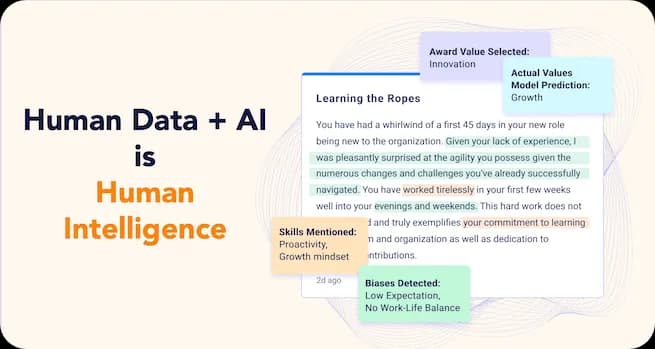
Get previously hidden insights with this first-of-its-kind recognition-specific language model combined with AI.
See everything you can achieve with Workhuman iQ & AI AssistantOpens in a new tab →
- Offer leadership development programs and technical upskilling. For example, you might host a monthly workshop on data literacy or automation.
- Create individual development plans (IDPs) that connect employees' current roles to future career paths.
- Develop mentorship programs or provide opportunities for one-on-one coaching.
- Encourage managers to offer stretch assignments to help employees build experience and adjacent skills.
- Link learning opportunities to succession plans. A leadership boot camp might open the door to a management position.
Stage 6: Retention and engagement
Employee Recognition is one of the most effective ways to encourage employees to stick around. Encourage managers to praise engaged employees, and create a system for peer recognition. Make these acknowledgments even more meaningful with small rewards, such as bonuses or an extra day off.
Keep a close eye on engagement, too. Send out regular pulse surveys, and offer opportunities for employees to provide feedback. This data can reveal declining morale or negative sentiment before it leads to attrition. If parents seem disengaged, for instance, you might offer flexible work options or support groups to meet their needs.
Finally, use career and retention conversations to spot potential flight risks. Sometimes, a new role or recognition is all it takes to re-engage dissatisfied employees who are eyeing job ads.
Stage 7: Offboarding and redeployment
Even the most supportive organizations offboard employees. These best practices can help you end your relationship on a positive note:
- Conduct exit interviews and surveys to spot recurring issues and get feedback on improving the talent management lifecycle. If several existing employees say they didn't get enough mentorship, it's time to set up a learning and development program.
- Create a system for handing off documentation, knowledge, and projects. That way, departures don't disrupt entire teams.
- If your organization is eliminating certain roles, consider whether you can move the employees instead of offboarding them.
- Stay in touch with previous employees by building alumni networks or following them on social media. These former employees could refer people to you later or even return as boomerang hires.
Integrating succession planning across stages
Strategic workforce planning means preparing to fill critical roles long before an employee hands in their resignation letter. If you wait until the offboarding stage, you may scramble to find qualified replacements.
Here's how to plan for succession throughout the entire talent management lifecycle:
- Workforce planning: Create a list of critical roles and future skills you'll need in the next two to three years. Use this information to start building talent pipelines.
- Recruitment and attraction: As you sort through job applications, look for external hires who have long-term potential. Focus on people with valuable skills you'll need in the future or the ability to develop them. For instance, a data analyst who's already an expert in advanced analytics could probably learn machine learning or new software later.
- Performance: Flag high performers and track their growth to see when they're ready for next-level roles.
- Development: Help potential successors grow their skill sets with leadership and specialist programs. That data analyst might be thrilled to go to a leadership workshop or earn a predictive modeling certificate.
- Retention: Don't leave your best employees in the dark about your plans. Develop concrete growth plans so they can clearly visualize their future with your organization.
This does not replace succession planning. Instead, it complements leadership development by giving organizations a broader, more objective view of future-state leadership talent — including people who may not yet be on the usual shortlist but are already showing signs of influence, impact, and leadership growth.
Alternative talent lifecycle models (4-, 5-, and 7-stage)
You don't need to stick to the seven-stage model if it's too complex. Some organizations use a four-stage model, which includes broader phases like attraction, development, retention, and separation. Or try a five-stage model, which adds another phase for engagement. What matters most is addressing all the key touchpoints, not the exact number of stages.
Talent management lifecycle best practices
You don't need to totally overhaul your HR workflows. These practical tips will help you improve your talent lifecycle gradually.
Technology stack for the lifecycle
Even the most competent HR professionals can struggle to remember each employee's goals or sift through a mountain of applications. Luckily, there are plenty of tools to help you stay organized and efficient, such as:
- Applicant tracking systems for recruiting
- Learning management systems for professional development
- Performance management platforms, which make it easy to set goals and exchange feedback
- Engagement and recognition tools like Workhuman to improve retention
- People analytics dashboards to monitor metrics throughout the lifecycle
Measuring success: Key metrics by stage
Don't assume your lifecycle is working perfectly. These metrics will help you track your progress at each stage:
Building an employer brand to strengthen talent attraction
Stand out from competitors by defining your employee value proposition, or what makes your company a unique place to work. Maybe it's a commitment to sustainability or a fun work culture. Showcase this value through authentic content like employee stories and day-in-the-life videos.
The role of HR and people leaders in lifecycle success
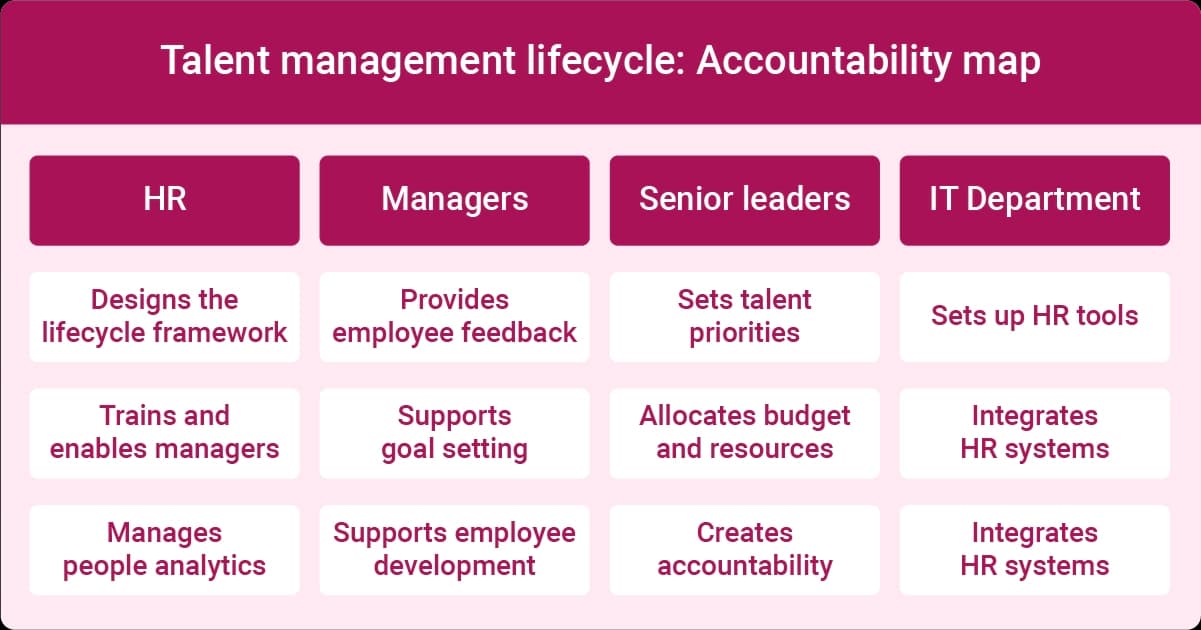
Collaboration is key to building a strong lifecycle. No single person can manage every stage alone, especially in larger companies. Add these players to your talent management team:
- HR designs the lifecycle framework and trains managers. It's also in charge of data analytics.
- Managers handle day-to-day activities like giving feedback and helping employees set goals.
- Senior leadership focuses on big-picture tasks, such as allocating budget and keeping managers accountable. They set talent priorities, too.
- Information technology sets up HR tools and integrates them into your tech stack.
How organizational culture shapes lifecycle effectiveness
Your company's culture has a huge impact on the talent lifecycle. If employees feel cynical or view development as a punishment, that negative mindset can make every stage less productive.
Avoid this issue by promoting an inclusive, high-trust culture. Celebrate employee achievements, and frame learning as an investment in their future. Leader buy-in is essential, too.
How to implement the talent management lifecycle in your organization
Follow these steps to put your talent management lifecycle into action:
Common implementation challenges and how to address them
It's normal to encounter obstacles as you set up your lifecycle, but proactive planning can help you solve them quickly.
Limited resources are one of the most common roadblocks. Get the most out of your budget by prioritizing a few high-impact stages, such as onboarding. Later, you can gradually add more stages.
Managers and employees may also resist change, especially if they're anxious that the lifecycle will add to their workloads. Win them over by setting clear expectations and providing training for managers. Rolling out changes slowly can also ease the transition.
Real-world examples of successful talent management lifecycles
Starbucks is one companyOpens in a new tab invested heavily in the talent development cycle. The Starbucks College Achievement plan provides 100% tuition coverage for employees who work at least 20 hours a week.
It's also recently announced plans to hire more employees and fill 90% of leadership roles with internal hires. These initiatives have boosted morale and led to a more energetic company culture.
Tools and software to manage the employee lifecycle
Technology can help organizations manage the talent lifecycle with more consistency, visibility, and speed. In most cases, that means using a connected set of tools rather than a single platform. You might use an applicant tracking system for recruiting, a learning management system for development, performance management software for goal-setting and feedback, and engagement tools to support retention.
The real value comes from how well those systems work together. When your tools are disconnected, talent data gets trapped in silos, and employees end up with a fragmented experience. When they’re integrated, HR leaders and managers can make better decisions across the lifecycle, from hiring and onboarding to development, performance, and retention.
Choosing the right platform
When evaluating software, start with your biggest pain points. If hiring bottlenecks are slowing growth, recruiting technology may be the priority. If retention or internal mobility is the problem, performance, development, or engagement tools may have a greater impact.
These steps can help you choose the right fit:
- Evaluate your organization’s size, structure, and budget
- Prioritize the lifecycle stages with the greatest friction or business risk
- Look for platforms that integrate with your existing HR systems and collaboration tools
- Request demos based on your real use cases, workflows, and reporting needs
- Pilot the tool with one team, business unit, or location before expanding further
- Review implementation support, training resources, and analytics capabilities
The best talent technology does more than automate tasks. It helps you connect talent decisions across the employee experience, reduce administrative friction, and give leaders better insight into what employees need to succeed and stay.
FAQs
What is the talent management lifecycle?
The talent management lifecycle covers all the stages that employees experience as they interact with an organization, from recruitment to retention and offboarding.
How is the talent management process different from human resource management?
Talent management is a strategic approach to attracting and supporting employees. On the other hand, human resource management includes all the processes and policies that influence the employee experience, such as payroll and compliance.
What is the goal of the talent management lifecycle?
The talent management lifecycle makes sure that organizations have the right talent when they need it.
What is the role of HR in the talent management lifecycle?
HR spearheads the talent lifecycle by building the framework, training managers, and supporting employee development.

Ryan Stoltz
Ryan is a search marketing manager and content strategist at Workhuman where he writes on the next evolution of the workplace. Outside of the workplace, he's a diehard 49ers fan, comedy junkie, and has trouble avoiding sweets on a nightly basis.
Recommended for you