
People Analytics: Moving Beyond Dashboards to the Future of HR Insights
Last updated
5 min read

Table of contents
- What Do People Analytics Look Like Today?
- Workforce Analytics Maturity
- Why Traditional Dashboards Fall Short for HR Leaders
- From Meaningful Insights into Action: How Real-Time Signals Can Solve Business Problems
- Apply Human Intelligence to Drive People Analytics Insights and Improved Business Outcomes
Share this article
People analytics has long been seen as HR’s ticket to connecting talent data with business strategy and real results. But for many organizations, the reality is more complex.
Even though companies gather lots of workforce data, insights are often fragmented across systems and focus on past events. In fact, a Josh Bersin studyOpens in a new tab revealed that fewer than 10% of companies surveyed could systematically connect people data to organizational outcomes.
Traditional dashboards show past trends, but without context or real-time insight, they don’t guide informed decisions. Teams can easily mistake correlation for causation or get stuck relying on outdated numbers that don’t reveal what’s really happening.
To stay at the forefront of shaping culture, engagement, and performance management, HR professionals need to leverage people analytics tools to see what’s ahead. By building on traditional metrics with real-time, human-centered data—and working hand-in-hand with artificial intelligence and industry experts—HR leaders are transforming people analytics.
What Do People Analytics Look Like Today?
People analytics is the HR practice of gathering and analyzing workforce data to gain insight that drives better decision making. It helps reveal patterns, anticipate risks, and shape strategies that improve employee retention, engagement, and workforce productivity.
To make sense of employee data, teams typically use four types of analytics:
1. Descriptive Analytics – What happened?
Summarizes historical data and trends—turnover numbers, recognition volumes, engagement survey scores—to show where the organization has been.
2. Diagnostic Analytics – Why did it happen?
Explores correlations and root causes. For example, uncovering whether dips in recognition align with lower morale, or whether certain manager styles contribute to higher turnover.
3. Predictive Analytics – What might happen?
Uses forecasting models to project future outcomes, such as attrition risk or readiness for internal mobility, enabling HR to anticipate rather than react.
4. Prescriptive Analytics – What should we do next?
Turns predictions into actionable guidance. This could include launching recognition programs, providing manager coaching, or rolling out skill development initiatives to steer future outcomes.
The real value lies in using today’s HR data sources to understand what’s happening right now in the employee experience. Yet many human resource management teams are still stuck reacting to the past. Turning insight into action requires the right data inputs and a more mature, real-time approach to analytics.
Workforce Analytics Maturity
Organizations typically progress through several maturity stages on their people analytics journey, each reflecting deeper capabilities and greater strategic impact:
1. Foundational – Basic Reporting
At this stage, HR teams manually track essential metrics like headcount, employee turnover, and engagement scores. The focus is largely retrospective, providing a historical view that’s critical but reactive.
2. Operational – Contextual Reporting
Here, organizations add layers of context by benchmarking across teams or against industry standards using business intelligence tools. This enables diagnostic insights, helping to understand why trends occur rather than just what happened.
3. Advanced – Statistical Modeling
Teams begin uncovering meaningful correlations by analyzing diverse data streams, including feedback, recognition patterns, and engagement surveys. These data-driven insights inform targeted interventions, moving HR toward proactive problem-solving.
4. Strategic – Predictive & Prescriptive Analytics
As organizations advance, they increasingly integrate real-time data to forecast workforce trends and support proactive decision-making. This stage transforms HR from reactive reporters into proactive culture shapers and strategic business partners.
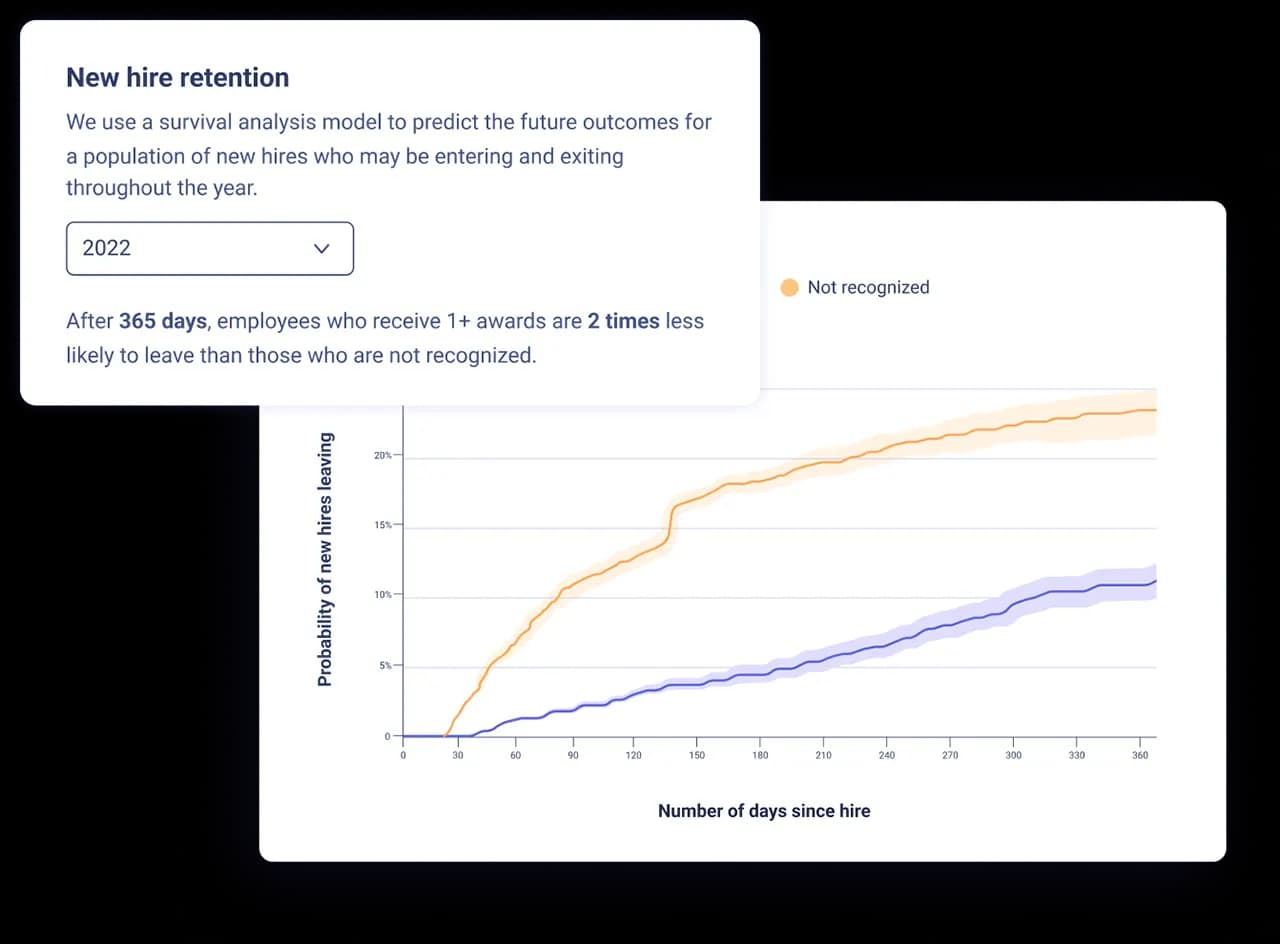
The most effective people analytics combines structured and unstructured data gathered throughout the employee lifecycle from various systems and HR processes.
- Structured data includes consistent, quantifiable metrics like headcount, tenure, performance ratings, compensation, and promotion rates. It’s critical but often lacks the nuance needed to explain what’s really happening.
- Unstructured or semi-structured inputs offer critical context and nuance, such as recognition messages, employee surveys, 1:1 check-ins, and performance review comments. These often live in systems not designed for analysis and require tools like natural language processing (NLP) to extract insight at scale.
When these sources come together, business leaders gain a multidimensional view of workforce health—one that moves beyond surface metrics to deeper, more actionable insight. This is where people analytics deliver real impact: by enabling HR to act quickly, support employee wellbeing, improve retention strategies, and strengthen business performance.
So, what’s getting in the way?
In many cases, it’s reliance on analytics tools that weren’t built for real-time insight. Most HR teams still operate from dashboards that track what’s already happened through descriptive analytics, rather than to help shape what happens next through prescriptive analytics.
Why Traditional Dashboards Fall Short for HR Leaders
Dashboards are helpful for tracking structured data for key HR metrics, but many are not built to shape the future. For example, a dashboard might show that attrition was 8% last quarter, but it won’t flag early signs of disengagement or collaboration breakdowns.
The richer, more human side of the employee experience is unstructured—captured stories, signals, and sentiment buried in feedback, recognition messages, survey responses, and performance conversations. It holds the early signals of disengagement, burnout, or collaboration breakdowns, but it’s rarely part of traditional HR reporting.
According to IBMOpens in a new tab, roughly 80% of business data is unstructured, rich with context that doesn’t fit neatly into rows and columns.
Unfortunately, bringing unstructured data into a dashboard isn’t simple. It requires advanced people analytics tools and capabilities like natural language processing (NLP) to turn qualitative input into actionable insight. Without these capabilities, critical signals go undetected and HR analytics remain shallow.
From Meaningful Insights into Action: How Real-Time Signals Can Solve Business Problems
Take Brian, an HRBP at a Prosaria—a fictitious global biotech enterprise—who supports Research & Development functions across the US and EMEA. His priority is clear: improve retention in early-career lab roles in Scotland amidst a period of high demand for biotech talent. His path to achieving that goal is less straightforward.
With AI-powered tools that surface emerging trends and provide advanced analytics support, Brian is able to connect the dots faster, support more strategic decisions, and build trust across key stakeholders.
Here’s what that looks like in practice:
Detect Risks Early and Prevent Turnover
Insight: Brian notices a drop in peer-to-peer recognition among lab teams in Scotland. Jamie, his colleague on the Employee Listening team, also flags a shift in sentiment from recent pulse surveys. While turnover rates haven’t yet increased, these signals point to early disengagement that could lead to higher attrition if left unaddressed.
Optimize Workforce Planning and Talent Management
Insight: Brian reviews the real-time skills map generated from observed behaviors in recognition messages for a crowd-based view of talent data. In doing so, he spots a pattern: several mid-career scientists in Scotland are frequently recognized for mentorship, knowledge-sharing, and cross-functional collaboration—skills that aren’t captured in formal role descriptions or HR systems.
Strengthen Credibility with Real-Time Insights
Insight: Ahead of a board meeting focused on organizational effectiveness, Brian receives an urgent request from Priya—specifically, how R&D leaders across regions are driving collaboration and engagement. Instead of scrambling for slide decks or manually pulling stale data points, Brian turns to his recognition platform’s self-service reporting. In minutes, he generates a report showing real-time recognition trends aligned to cross-team collaboration, innovation, and inclusion. The data analysis highlights what teams are driving momentum towards these goals and how that progress shifts over time.
Apply Human Intelligence to Drive People Analytics Insights and Improved Business Outcomes
Unlike static dashboards or annual surveys, employee recognition captures real interactions as they happen—peer acknowledgments, manager appreciation, and cross-team shout-outs. This continuous stream provides scalable insight into employee experience, team dynamics, and emerging risks across roles, geographies, and business units.
Not all recognition delivers the same impact. When recognition is specific, timely, and genuine, it drives stronger performance — and that positive effect compounds. Every meaningful moment of appreciation generates richer data, unlocking deeper insights that guide smarter actions and greater ROI over time. That’s why Workhuman has invested in AI-powered innovation and built a modern platform that helps employees master the art of giving great recognition. It sparks broad participation and transforms everyday recognition into something more valuable, more data-rich, and more revealing for leaders across the business.
By pairing this recognition data with artificial intelligence and predictive analytics, HR and business leaders gain real-time intelligence they can act on. They can identify declining engagement before it becomes turnover, spot emerging leaders, and align interventions directly with organizational strategy.
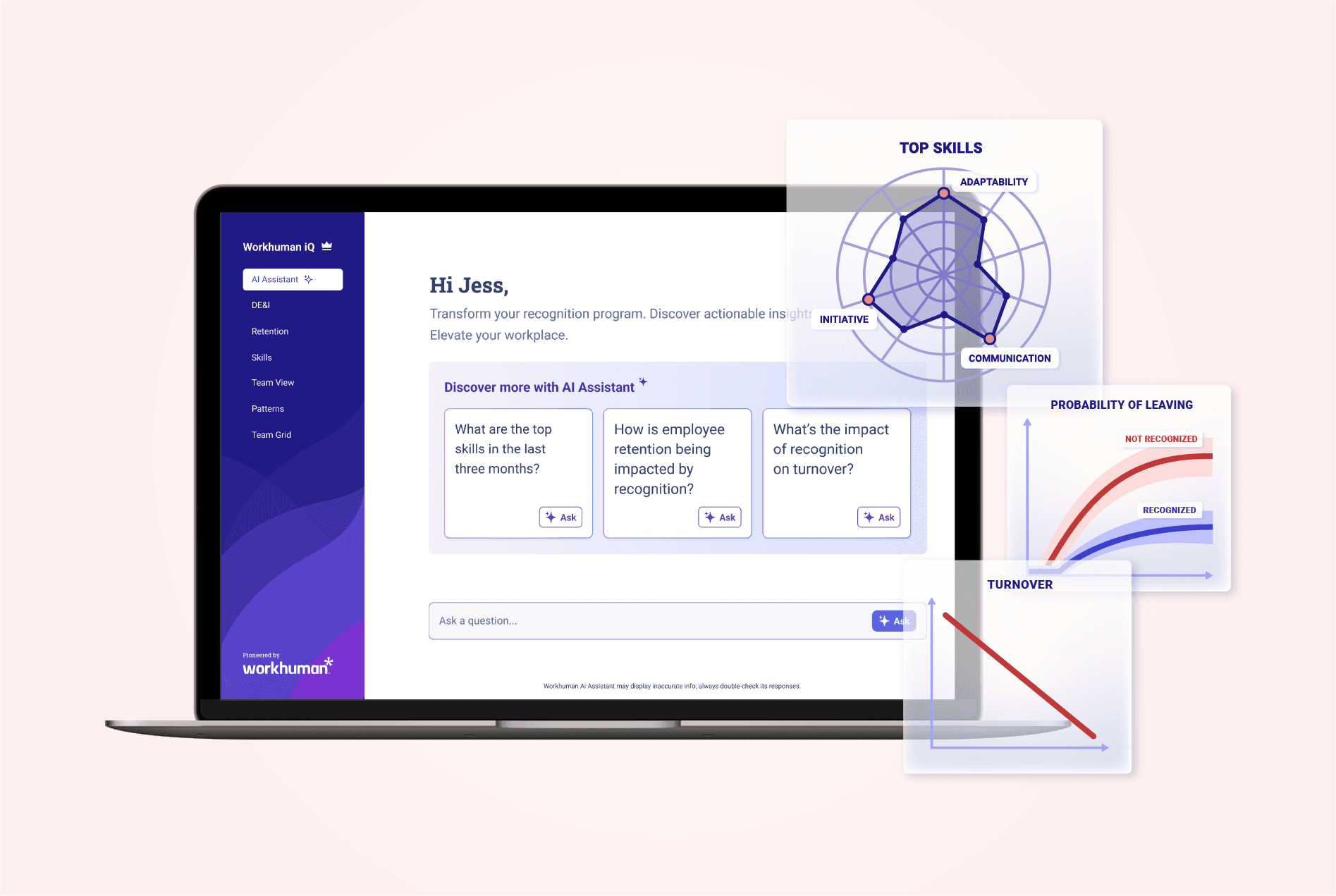
With visual analytics and a built-in AI-Assistant, Workhuman iQ provides instant visibility into recognition activity — either continuously or on demand. Managers can see which skills are being demonstrated, track progress against initiatives, and even analyze networks of collaboration across the organization. That level of insight helps HR and leadership make more confident decisions about succession, mobility, mentorship, and retention.
The real power of people analytics comes when data, AI, and human judgment work together. While traditional HR metrics like headcount and employee performance ratings show what happened, they rarely explain why. Recognition data fills this gap—offering timely, authentic signals that reveal how work gets done, who is doing it, what behaviors drive results, and where employee engagement and organizational culture are thriving (or just surviving).

Alison Enzinna
A content strategist and innately curious person, Ali Enzinna has started exploring the working world, looking for opportunities to make big changes through small actions.
Recommended for you