
23 Essential Qualities of a Good Manager in 2026
by Ryan Stoltz
Last updated
12 min read

Every organization rises or falls on the strength of its managers. Yet managers themselves are increasingly struggling to stay engaged.
Gallup’s State of the Global Workplace: 2026 report found that global employee engagement fell to 20% in 2025, its lowest level since 2020. Manager engagement declined even more sharply, falling from 27% to 22% in a single year.
That decline has consequences far beyond managers themselves. Gallup research finds that managers account for 70% of the variance in team engagement, making the quality of management one of the strongest influences on how employees experience work.
A good manager does more than assign work and track performance. They provide clarity, build trust, recognize contributions, support growth, and help employees connect their everyday work to a larger purpose.
This article explores 23 essential qualities of a good manager, why each one matters, and how organizations can develop stronger managers at every level.
Why do good managerial attributes matter?
Good management is a measurable business driver. Managers shape how people experience their work every day, and those daily experiences accumulate into team culture, performance, and retention outcomes.
Boosting team morale and productivity
Managers who lead with empathy, communicate transparently, and hold themselves accountable create psychological safety. They build an ecosystem in which people feel comfortable contributing fully.
Gallup’s “World's Largest Ongoing Study of the Employee ExperienceOpens in a new tab” found that organizations with high employee engagement are 23% more profitable than those with disengaged workforces, and engaged teams show measurably better business outcomes across the board.

When employees trust their manager, they're more focused, more collaborative, and more willing to go above and beyond.
Micromanagement, inconsistency, or a lack of recognition, on the other hand, drains motivation quickly. Strong managerial qualities set the tone from which the team's sustained productivity flows.
Reducing employee turnover
One of the most compelling business cases for developing good managers is its direct impact on retention. According to research titled “42% of Employee Turnover Is Preventable but Often Ignored,” two in five employees who left jobs between 2023 and 2024 said their manager or company could have prevented their departure.
Replacing an employee in a management role can cost up to 200% of their annual salary. This is a significant financial burden that skilled, attentive managers help organizations avoid.
Effective managers build environments where employees feel seen, valued, and supported in their growth. When people have a reason to stay, they do. This could be a meaningful relationship with their manager, clear development opportunities, and genuine recognition.
Employee retention is rarely spontaneous. It's usually cultivated by the person closest to the employee's day-to-day experience.
Cultivating a strong, positive company culture
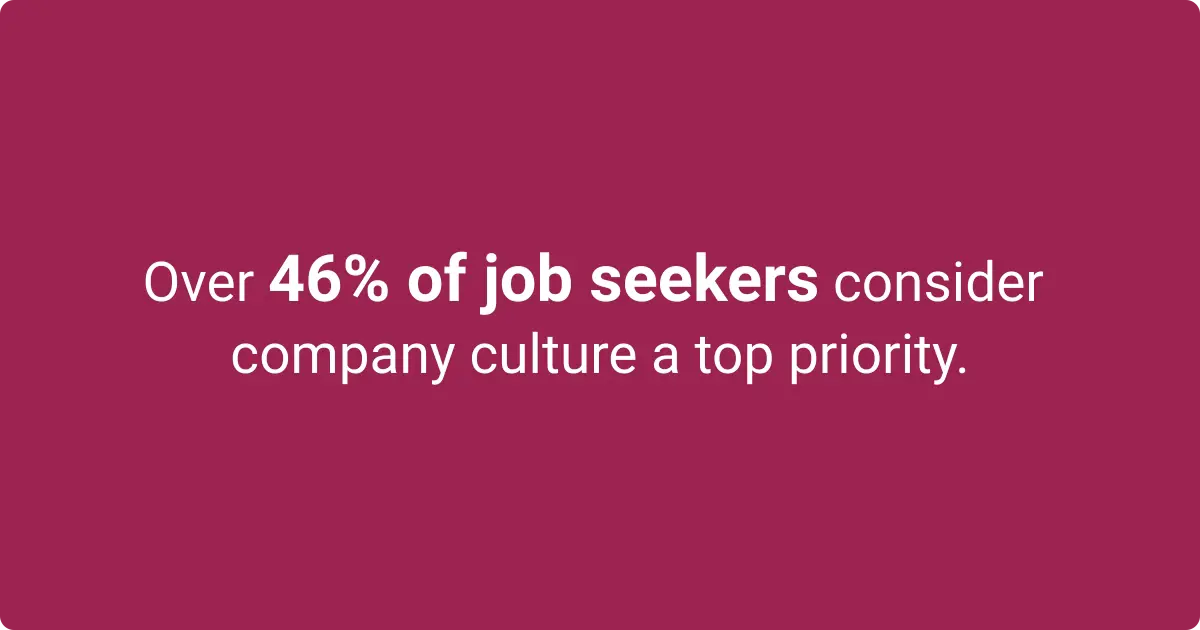
Managers are the most direct channel through which organizational values either live or die. A company can write its culture on the walls, but if managers don't embody the company’s mission in their interactions, it won't take hold.
When managers lead with integrity, recognize contributions, and communicate honestly, they signal that the organization's values are real. That consistency builds cohesion.
Employees who feel connected to a strong company culture are 3.7 times more likely to be engaged at work and 55% less likely to be actively seeking another job.
Leading organizational change and innovation
Organizations that stand still fall behind. Managers who embrace continuous improvement, adapt their approach as circumstances shift, and actively encourage creative thinking become a force multiplier for innovation.
Conversely, managers who are resistant to change or who shut down creative thinking create bottlenecks that slow the entire team.
The best managers understand that their role isn't simply to execute existing processes. It's to build teams that can evolve alongside the business.
That capacity for adaptive, good leadership skills becomes especially valuable during periods of organizational transition, market disruption, or strategic pivots.
23 essential qualities of a good manager
Strong management is multidimensional. The qualities below span three interconnected domains: how managers lead themselves, how they relate to and communicate with others, and how they lead their organization toward its goals.
Effective self-leadership qualities
Before a manager can lead others effectively, they need to lead themselves. Self-awareness, discipline, and the ability to regulate emotions under pressure are foundational not just for individual performance but also for the credibility that any management role requires.
Emotional stability
Managers are constantly navigating competing demands, unexpected setbacks, and interpersonal friction.
Emotional intelligence begins with emotional stability, which is the ability to remain composed, measured, and clear-headed in stressful situations rather than reacting impulsively.
When a manager models emotional regulation, it reduces anxiety across the whole team. People take cues from their leaders.
A manager who escalates under pressure signals that instability is acceptable. In contrast, one who stays grounded signals that challenges are manageable.
This quality is foundational to healthy team dynamics and to the kind of trust that makes collaboration possible.
Work drive
A manager's work ethic sets a visible standard. When a team member sees their manager bringing energy, focus, and genuine commitment to the work, it raises the collective bar.
Work drive isn't about working the longest hours. It's about demonstrating that the work matters and approaching it with care and intentionality.
This quality also influences company culture. Teams that see their manager cutting corners or disengaging tend to mirror that behavior. Strong work drive, modeled consistently, shapes a team's shared expectations for what good performance looks like.
Empathy
Understanding what a team member is experiencing is one of the most underrated soft skills in management.
Empathy allows a manager to recognize when someone is struggling before it becomes a performance issue, to tailor support and communication style to individuals, and to resolve conflicts before they escalate.
Research consistently links empathetic leadership to stronger employee success and higher employee engagement.
Continuous learning
A successful manager doesn't assume that what worked last year will work next year. The business landscape, the workforce, and the tools available to managers are always changing.
A commitment to continuous learning ensures that managers stay equipped to make sound decisions, whether through formal training, peer networks, or active reflection.
This quality also models intellectual humility for the team. Managers who are openly curious and open to being wrong create teams that are less defensive and more innovative.
Learning organizations start with learning leaders who are committed to acquiring new skills on an ongoing basis.
Assertiveness
Good managers communicate with clarity and confidence. Assertiveness means being willing to take on decision-making calls, set expectations, deliver difficult feedback, and hold people to agreed standards, without being aggressive or dismissive.
For teams, assertive management translates into predictability. People know where they stand and what's expected of them.
They also know that their manager will offer guidance and advocate clearly on their behalf when needed. That clarity reduces stress and supports higher performance.
Openness
Being open to new experiences is important when managing team members from many different backgrounds. Showing that you are receptive to their ideas and willing to learn new skills will inspire creative thinking in the workplace.
Managers who demonstrate openness signal that speaking up is safe. This increases the quality of information that reaches decision-makers and builds a culture in which problems are surfaced early rather than buried.
Accountability
Accountability means owning both outcomes and processes. It translates to taking responsibility when things go wrong rather than deflecting blame downward and being willing to acknowledge mistakes openly.
Research on accountability and commitment in the workplace consistently shows that teams led by accountable managers demonstrate higher trust levels and stronger collaboration.
For employees watching from the team level, successful managers who hold themselves accountable set a tone of shared responsibility.
It also reinforces the idea that standards apply to everyone, not just the people being managed. Workplace accountability isn't a top-down tool; it's a shared value that starts with the manager.
Interpersonal and relationship-building qualities
Management is fundamentally a relational role. The ability to communicate clearly, build trust, and work alongside others determines how much of a manager's potential leadership actually lands.
Effective communication skills
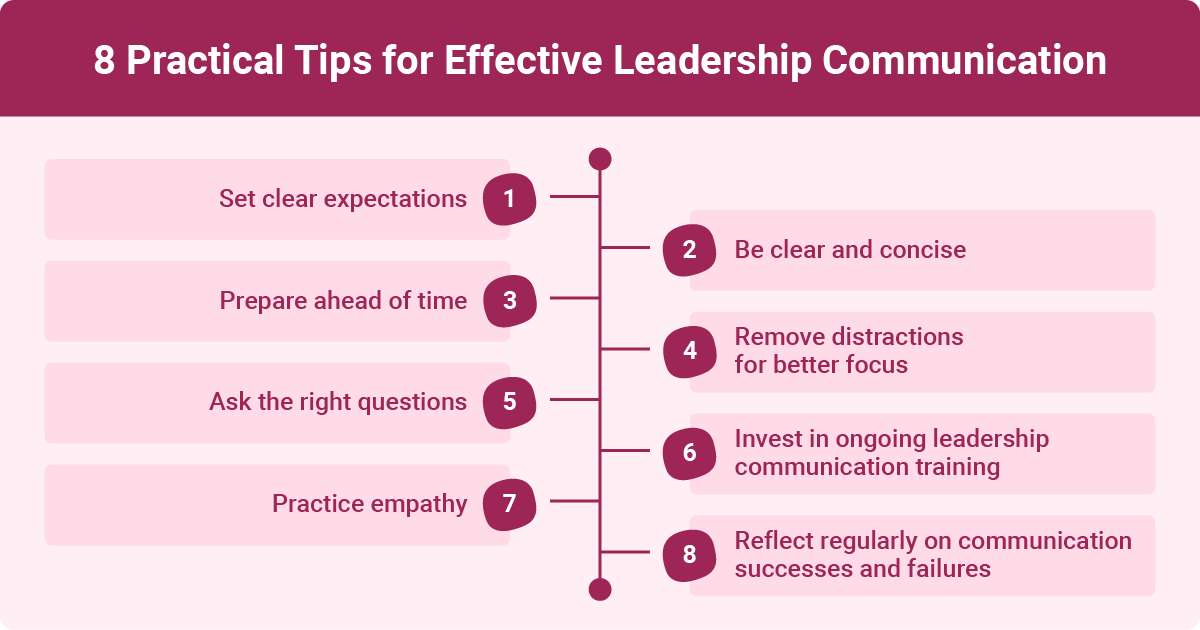
Effective communication skills sit at the core of everything a manager does. This includes speaking clearly and concisely, adjusting communication style to the audience, and ensuring that priorities and expectations are consistently understood across the team.
But communication is not just about talking. Active listening is equally important, and it often distinguishes confident managers from reactive ones.
Research from Workhuman, “5 Ways (Effective) Feedback is a Gift,” reinforces that the most productive communication is bidirectional: it involves not just delivering messages but creating the conditions in which honest input can be received.
Credibility
Credibility is earned, not assigned. It develops over time through consistent follow-through, demonstrated expertise, and alignment between what a manager says and what a manager does.
When a manager is credible, their decisions carry weight, their feedback is taken seriously, and their direction is followed willingly rather than reluctantly.
Transparency
Transparent managers share relevant information with their teams, explain the reasoning behind decisions, and are honest about uncertainty.
This doesn't mean disclosing everything. Some information is confidential and context-specific. But it does mean defaulting toward openness rather than opacity.
Transparency builds engagement because it communicates respect. When employees understand the "why" behind a decision, even a difficult one, they're far more likely to support the outcome.
Conversely, a culture of information hoarding breeds speculation, distrust, and disengagement. Written communication skills are invaluable, and they encourage employees to be fully transparent.
Teamwork
Great managers understand that they are part of a team as much as they lead one. They contribute actively, give credit where it's due, and focus on collective success rather than individual visibility.
A manager who fosters teamwork creates an engaged team that’s more resilient and more capable than any individual member.
Improving employee work performance often comes down to whether the environment supports collaboration. A manager who actively reinforces interdependence and shared accountability builds that environment day by day.
Trustworthiness
Trust is the currency of effective management. Employees need to know that their manager will follow through on commitments, keep confidences, and treat them fairly and consistently. Without that foundation, even technically competent management falls flat.
Trustworthiness is particularly important in retaining top performers. People who feel their manager can't be relied upon, or who don't believe their manager is acting in good faith, are significantly more likely to leave.
Trustworthy management, by contrast, creates the kind of stability that encourages people to invest in their role and in the organization.
Inclusiveness
Inclusive managers actively create space for people with different backgrounds, working styles, and perspectives to contribute fully.
Research from Workhuman's report, “3 Ways to Build an Inclusive Culture,” highlights that inclusion isn't just a values statement. It's a practice that needs to be built into how teams operate day to day.
When every team member feels that their voice counts, the quality of decisions improves, innovation increases, and employee morale rises. Inclusive leadership also sends a signal about who belongs, and in organizations where belonging is felt, turnover tends to fall.
Recognizing and appreciating others
Recognition is one of the most powerful tools available to managers. Employees who feel genuinely appreciated are more motivated, more productive, and less likely to leave.
According to “The Importance of Employee Recognition: Low Cost, High ImpactOpens in a new tab,” a study by Gallup, employee recognition is directly linked to increased productivity, morale, and job satisfaction. Great leaders use this to boost productivity and ultimately reach the company’s goals.
Workhuman's research on recognition underscores that acknowledgment doesn't have to be elaborate to be effective.
Organizational leadership qualities
At the organizational level, good managers think beyond their immediate team. They connect daily work to the bigger picture, align their team with company priorities, and help navigate the complexity that comes with growth and change.
This is strategic thinking, and it’s a critical skill for building a positive work environment.
Leadership
Inspiring others to work toward a shared vision is the essence of leadership. An effective manager articulates goals clearly, communicates the purpose behind the work, and helps team members understand how their contributions connect to outcomes that matter.
Leadership is also demonstrated in how managers handle adversity. Teams watch their managers closely during difficult periods. Employees feel secure in a respectful work environment.
A manager who stays focused, decisive, and calm under pressure earns a level of trust and respect that translates directly into team performance and loyalty.
Delegation
Delegating tasks is both a management skill and a form of trust. Effective managers match tasks to the right people, provide the context and authority needed to succeed, and then step back.
This empowers team members, distributes workload more efficiently, and creates development opportunities that keep people engaged.
Managers who struggle to delegate become bottlenecks and inadvertently signal that they don't trust their team. They do this by holding on to tasks out of a desire for control or fear of imperfection.
Learning to delegate well is one of the highest-leverage moves to effectively manage a team.
Goal setting
Setting clear, actionable goals gives teams direction and creates a shared basis for accountability.
Well-defined goals for a team help each person understand what success looks like, how their work connects to broader priorities, and where to focus their energy when competing demands arise.
The most effective goal-setting involves the team in the process. When people have a voice in defining what they're working toward, they feel more ownership over the outcome, and ownership drives performance.
Innovation
Good managers don't just execute existing strategies. They foster the conditions in which new ideas can emerge and know how to focus on an employee’s strengths.
This means encouraging experimentation, rewarding creative thinking, and being willing to question processes that have outlived their usefulness.
In practice, innovation often starts with psychological safety. When team members know they won't be penalized for proposing an idea that doesn't pan out, they're more willing to think beyond the obvious.
Managers who listen actively and cultivate this culture consistently find that their teams are more adaptive and more capable of solving problems that don't have obvious solutions.
Conflict resolution
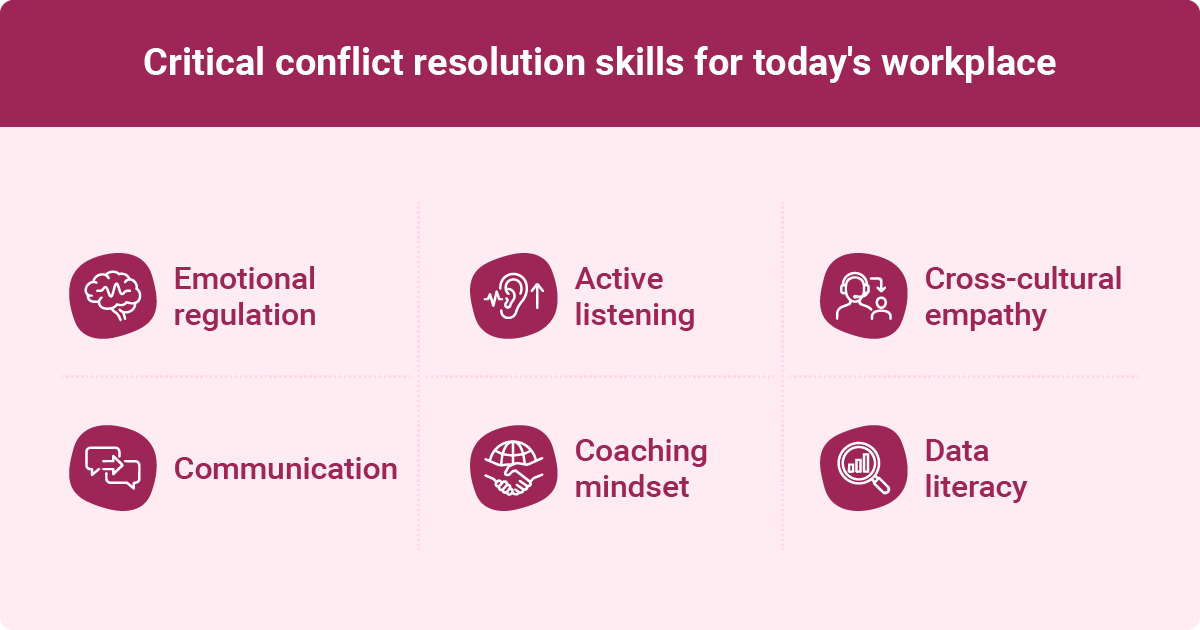
Where there are people, there is conflict. And how a manager handles it determines whether it becomes destructive or generative.
Managers who avoid conflict or handle it inconsistently allow resentment to build. Those who address issues promptly and fairly build trust and model the kind of direct communication that healthy teams depend on.
Managing change
Change is a constant in organizational life. Whether it's a restructuring, a new system, a shift in strategy, or an unexpected external disruption, teams look to their managers for cues on how to respond.
Managers who communicate change clearly can acknowledge uncertainty honestly. They remain focused on what the team can control to help their people navigate transitions without losing momentum.
Resilience in the face of change is a quality that can be developed, and it all starts with the manager.
Motivating work environment
Motivation is not something managers can inject directly into their teams, but they can create the conditions in which motivation thrives.
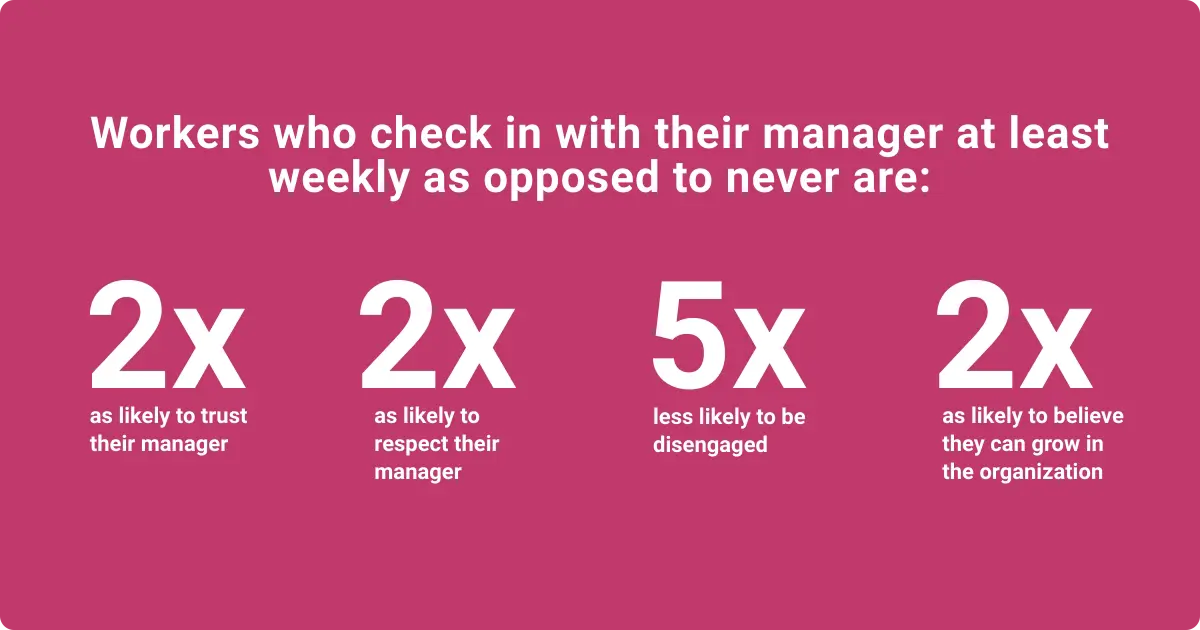
That means removing unnecessary friction, recognizing effort and achievement, and providing development opportunities. It’s also maintaining a culture of employee check-ins at work that keeps the manager connected to what each team member needs.
Motivating employees requires understanding what different people are driven by. Some are motivated by autonomy and a work-life balance; others by growth, recognition, or the quality of their relationships at work.
Managers who invest in understanding their team members individually are far better equipped to create environments where people want to bring their best.
Advocating for the team
One of the most underappreciated characteristics of a strong manager is their willingness to advocate for their team.
This means making the case for resources, speaking up when the team is overburdened, pushing back on unrealistic timelines, and ensuring that team members' contributions are visible to organizational leadership.
Advocacy builds loyalty. When people know their manager has their back, they feel supported in ways that translate into stronger engagement and lower attrition.
Avoiding micromanagement
Trust is fundamental to effective management. Managers who micromanage undermine both confidence and autonomy. Research consistently links micromanagement to higher levels of stress, disengagement, and turnover.
The antidote isn't hands-off management; it's clear expectations combined with genuine trust.
When people understand what's expected, have the skills and resources to deliver, and know their manager is available when needed, they don't need constant oversight. They need room to do the work.
How can managers improve their leadership traits?
Leadership development isn't a destination; it's an ongoing practice. Here are some actionable tips for being a good manager, regardless of where you are in your leadership journey.
Set clear expectations
Ambiguity is one of the most common sources of frustration and underperformance on teams. When people aren't sure what's expected of them, they make assumptions, and those assumptions don't always align with what the manager had in mind.
Set expectations explicitly: what success looks like, how progress will be measured, when check-ins will happen, and what decisions team members are empowered to make independently. The time invested upfront in clarity pays dividends in execution.
Lead by example
Leadership by example is about demonstrating the values and work ethic you want reflected in your team. When people see their manager living the standards they set, those standards become real rather than aspirational.
Encourage feedback
A culture where feedback flows freely is a culture where problems get solved before they become crises.
Managers who actively invite input from their teams, and who respond to that input with curiosity rather than defensiveness, build the kind of trust that makes honest communication possible.
Create regular, structured opportunities for feedback through check-ins, employee engagement surveys, retrospectives, or simple open-door practices. And when someone gives you difficult feedback, thank them. That response signals that speaking up is safe and worthwhile.
Master time management
Managers are pulled in multiple directions simultaneously: strategic priorities, team needs, stakeholder demands, and unexpected issues. Without intentional time management, reactive work crowds out the high-impact activities that move the needle.
Prioritize ruthlessly. Protect time for the work that matters most and be willing to decline or delegate anything that doesn't require your specific attention. A manager who is always reactive is rarely effective.
Build trust within the team
Trust doesn't happen by accident. It's built through consistency, honesty, and follow-through over time.
Make commitments you can keep. Acknowledge when you've made a mistake. Treat team members fairly and consistently. Be transparent about decisions that affect them.
Trust accelerates everything else: communication improves, and conflict is navigated more easily. Plus, performance goes up when people don't have to spend energy managing uncertainty about their manager's motives or reliability.
Building trust within the team is one of the highest-return investments a manager can make.
How can organizations support and develop good managerial characteristics?
Individual managers can work on themselves, but organizations that actively invest in developing better managers build a leadership pipeline that pays compounding returns. Here's how.
Provide leadership training
Leadership is a skill, not just a personality trait. Organizations that offer ongoing leadership development give managers the tools to grow in the role rather than surviving it.
Continuous training also signals organizational investment. Managers who feel supported in their development are more engaged, more effective, and more likely to stay.
Research from Workhuman on recognition and management effectiveness underscores that development opportunities are among the most powerful drivers of managerial performance.
Create mentorship programs
Experienced leaders carry institutional knowledge that can't be taught in a classroom. These could be lessons about navigating organizational dynamics, building credibility, handling difficult situations, and developing people effectively.
Mentorship programs create structured channels for that knowledge to flow to newer managers.
Mentors also provide a sounding board that helps managers process challenges without feeling isolated in the role. That support is particularly valuable in the early stages of management, when the learning curve is steepest and the stakes are highest.
Foster a growth mindset
Organizations that frame challenges as learning opportunities, rather than threats or failures, build a culture of growth. Managers become more willing to take appropriate risks, try new approaches, and openly acknowledge what's working and what isn't.
Conduct regular leadership performance reviews
Managers need feedback just as much as the people they manage. Regular leadership performance reviews create accountability and a roadmap for growth.
These reviews are most effective when they include input from team members, not just upward assessment.
360-degree feedback gives managers a fuller, more accurate picture of their impact and identifies development areas that might not be visible from a single perspective.
Conclusion
Managers are integral in creating a positive and productive work environment. Without them, it’ll be impossible to keep your employees aligned and on the same page.
Being the bridge between companies and their employees, managers are there to address any questions and concerns from their team. They also represent your company’s core values in the workplace.
With that in mind, it’s of the utmost importance to find and develop the above-listed qualities of a good manager in your managerial candidates.

Ryan Stoltz
Ryan is a search marketing manager and content strategist at Workhuman where he writes on the next evolution of the workplace. Outside of the workplace, he's a diehard 49ers fan, comedy junkie, and has trouble avoiding sweets on a nightly basis.