Workhuman vs. Motivosity: 2026 Comparison Guide
by Ryan Stoltz
Last updated
7 min read
Table of contents
- Workhuman vs. Motivosity Platform Overview
- Feature Comparison: Workhuman vs. Motivosity
- Recognition & Culture Building
- Integrations & Tech Ecosystem Fit
- Pricing & Cost-Effectiveness
- Impact on Engagement, Retention, and Morale
- AI and Product Innovation
- Global Reach and Capabilities
- Customer Support
- Ease of Use & Implementation
- Workhuman vs. Motivosity: Strengths & Weaknesses
- Workhuman vs. Motivosity: What Customers Say
- Workhuman vs. Motivosity : Final Verdict
Share this article
Employees expect more than the occasional pat on the back or a $10 gift card at Christmas. They want their leaders and peers to recognize their hard work in meaningful ways. Even a public shout-out in the company Slack can have a huge impact on morale.
It's not just about feel-good moments. Recognition has become a must-have system for improving engagement, retention, and performance.
Employee recognition platforms help organizations reinforce good behavior and values at scale. These tools also use recognition data to help leaders see what's working and who needs more guidance.
That's why Workhuman and Motivosity often get compared. Both platforms support peer-to-peer recognition with flexible rewards. They also allow global and remote teams to celebrate each other's achievements across organizations.
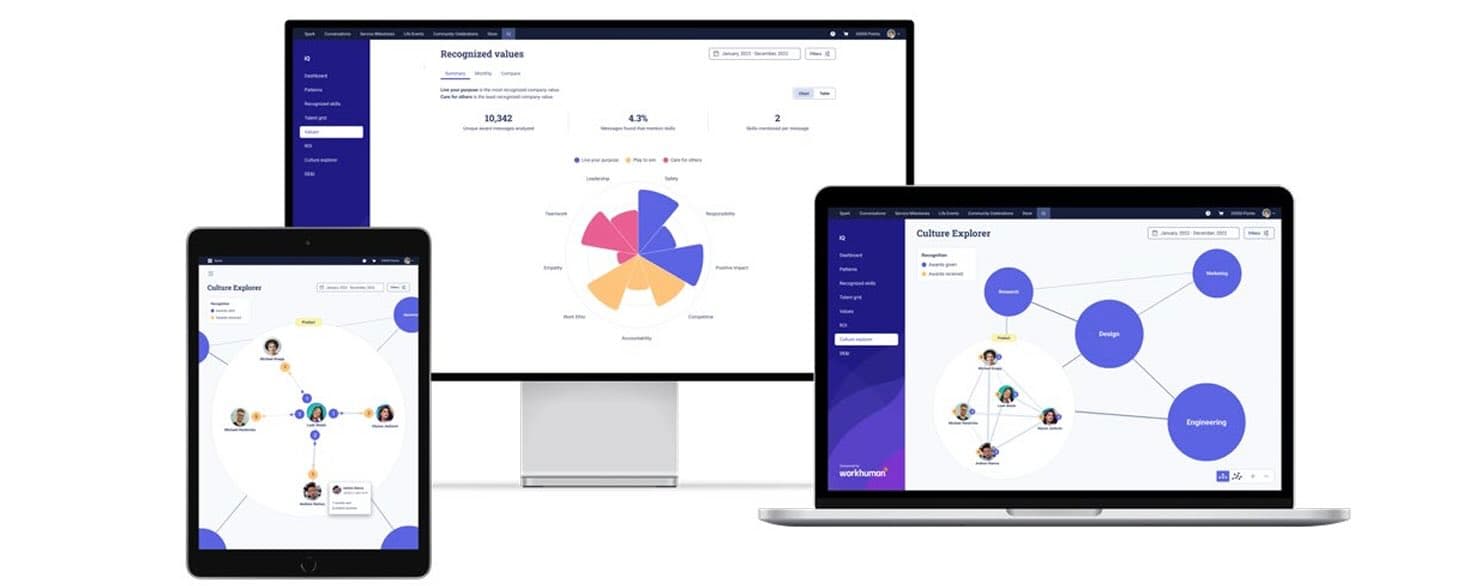
However, they have different purposes and outcomes. Workhuman is a strategic recognition platform that uses advanced data analytics and behavioral science to create measurable impact. On the other hand, Motivosity focuses on building a people-first culture through small moments of appreciation.
If you're comparing these options, ask yourself which platform will help you turn recognition into a long-term cultural and business advantage. This guide breaks down the core differences between Workhuman vs. Motivosity, from how they approach recognition to integrations and customer support. Fit is everything.
Workhuman vs. Motivosity Platform Overview
Workhuman at a Glance
Motivosity at a glance
- Founded in 2013 as a "people-first recognition platform" centered on appreciation and reward redemption
- Recognition revolves around small, frequent moments of appreciation and milestone celebrations
- Focuses on using lightweight engagement features, such as challenges and awards, to encourage employee participation
- Built-in social feed to share announcements and achievements, with engagement analytics
- Gathers engagement data with pulse surveys and eNPS surveys
- Offers minimal visibility into:
- Who gets work done and how they do it
- Which behaviors and values are being reinforced
- Available skills, leadership potential, and collaborations
- Has a global rewards store, but it only localizes gift cards for employees of multinational organizations, not merchandise.
- Organizations can build custom swag stores with branded clothing and accessories.
- Integrates with common HR systems and workplace tools, including ADP, BambooHR, Microsoft Teams, Okta, and Slack
At their core, both Motivosity and Workhuman let employees recognize each other and earn rewards. However, they use that recognition in distinct ways.
Workhuman uses employee recognition to shape more inclusive cultures, increase productivity, and gain leadership intelligence. By contrast, Motivosity focuses on making appreciation simple and routine to build connections.
Feature Comparison: Workhuman vs. Motivosity


Recognition & Culture Building
Workhuman
Motivosity
- Recognition is mostly top-down, with leaders able to reward employees with spot bonuses and awards.
- Offers limited points for peer-to-peer and milestone-based recognition, which may frustrate some team members
- Automated awards nominations help reinforce company values, but lack a personal touch.
- Emphasizes the frequency of recognition over quality, with the vendor website recommending that organizations recognize employees four to five times a month
- Challenges encourage employees to compete against each other instead of promoting collaboration.
- Recognition is largely transactional and doesn't intentionally reinforce specific values or behaviors.
Integrations & Tech Ecosystem Fit
Workhuman
Motivosity
- Offers basic integrations with major HRIS systems and workplace tools, including BambooHR, Dayforce, Google Workspace, Microsoft Teams, and Slack
- Integrations are mostly focused on broadcasting announcements and appreciations across other platforms, not capturing deeper data.
- Relies heavily on internal data collection methods, such as pulse surveys and participation rates, limiting its usefulness for analytics
- Integrations often feel clunky and don't always work as advertised, leading to tech headaches.
- Doesn't support sensitive financial or medical data, making it less suitable for organizations with strict compliance requirements
Pricing & Cost-Effectiveness
Workhuman
Motivosity
- Uses a bundling model, which means you'll need to buy packages with the specific features you want
- The size of your company also affects the price, so costs increase linearly as your company grows.
- Requires upfront licensing for all employees, even if not everyone adopts the software
- Sells recognition modules separately or in bundles, so you'll need to pay more to expand your program.
- Doesn't come with an ROI guarantee
- Customers get support from a dedicated implementation specialist and customer success manager, but not recognition consultants.
Impact on Engagement, Retention, and Morale
Workhuman


“We’re really focused on outcomes. … And measuring who is getting recognized, the frequency of recognition, linking it to retention, linking it to turnover implications – all of that demonstrates the return on investment is significant.”
Motivosity
- Typically frames recognition frequency and participation rates as evidence of success, not cultural changes
- Puts less emphasis on using recognition and rewards to improve long-term business results, making it difficult to see the impact
- Encourages weekly recognition, which may make it feel less exciting and meaningful over time
- Fun challenges often temporarily motivate employees, but don't always lead to lasting behavioral changes
- Analyzes the effectiveness of recognition programs based on surface metrics, such as:
- Employee net promoter score
- Number of rewards redeemed
- Survey participation rates
- Survey responses
- Recognition data shows activity, but doesn't help leaders understand why certain employees leave or why morale fell last quarter.
AI and Product Innovation
Workhuman
Motivosity
- Offers an internal team hub where employees can share resources and post announcements, though this may overlap with your existing collaboration tools
- Updates usually focus on simplifying recognition and adding new ways to celebrate employees.
- Only offers a handful of AI capabilities, including sentiment analysis and an AI Tax Navigator.
- The platform mostly uses technology to support basic applications, such as milestone celebrations and peer-to-peer giving.
- Analytics tend to focus on participation and employee sentiment, not on more in-depth insights.
- Doesn't use recognition data for skills intelligence, professional development, or succession planning
- Treats recognition more as a reward system than an intelligence layer that leaders can use for better decision-making
Global Reach and Capabilities
Workhuman
Motivosity
- Employees can choose rewards from a global catalog, but options may be limited in some countries or regions.
- Automatic currency conversion and tax payments
- Relies on external marketplaces, including Amazon Prime and Shopify, which may lead to inconsistent shopping experiences
- Only U.S. and Canadian employees can order from Amazon, and free shipping is exclusively available to users in the U.S.
- Offers more than 800 gift cards in approximately 70 countries, which may not cover your entire workforce
- Doesn't have automatic equity assurance, so identical rewards may have drastically different values for employees in different areas.
- While the platform technically has global reach, it may not accommodate all of your employees' needs and preferences.
Customer Support
Workhuman
Motivosity
- Standard customer support model with live technical support
- During the initial setup, organizations work with a dedicated implementation specialist and customer success manager
- Limited opportunities to get strategic advice from recognition experts
- No behavioral scientists or researchers to help you understand your data more deeply
- Fully automates the fulfillment process, which may lead to uneven support experiences
- Internal teams must take the initiative to grow their program and demonstrate its value without extensive support
Ease of Use & Implementation
Workhuman
Motivosity
- Relatively small learning curve for basic functions, such as sending a quick recognition message or liking a post in the social feed
- More advanced features can feel convoluted and less intuitive
- A cluttered user interface makes it challenging to find essential information
- Simple tasks like scrolling through pages and clicking menus are often buggy, especially on mobile devices
- On the administrative side, limited filters make it difficult to laser in on specific roles or locations
- Lacks customization options for the visual design and workflows
- Offers little strategic guidance, so organizations must figure out how to design and improve their programs by themselves
- Users must manually adjust their settings to reduce notifications, which may get overwhelming for organizations with a high volume of recognition
- As your recognition program grows, so does friction, with manual tasks quickly piling up
Workhuman vs. Motivosity: Strengths & Weaknesses
Workhuman Strengths
Workhuman Weaknesses
- May include too many features and rewards for companies looking for a basic gift-card shop or swag design tool
- The partnership model includes one-on-one consultation and coaching, which some buyers may not need.
Motivosity Strengths
- The basic points-and-redemption model is easy to set up, but it often makes recognition feel more transactional than authentic.
- Offers several distinct types of recognition, including spot bonuses from managers and service shoutouts from delighted customers
- Has enough core features for organizations that want to offer fun incentives without necessarily digging into recognition data
- Automated milestones and nominations make recognition part of everyday routines.
Motivosity Weaknesses
- Overemphasis on recognition frequency may cheapen its impact, reducing appreciation to just another notification.
- A bundle-based pricing model may seem more affordable at first, but costs add up quickly as you tack on new features.
- Provides few opportunities for customization, such as adding your branding to the rewards storefront
- No global equity measures, so the employee experience varies depending on where they live
- Amazon partnership only applies to employees in the United States and Canada, with residents of other countries limited to Shopify.
- Limited analytics doesn't provide nuanced insights about skills, performance, productivity, and other critical metrics.
- Lower customer satisfaction, with users often spotlighting the confusing user interface and lack of personalization
Workhuman vs. Motivosity: What Customers Say
Customer Feedback & Quotes
Workhuman:
Motivosity:
- "You have to schedule an appointment to get help, and it's very frustrating. We paid for the more expensive package and haven't even been able to accurately use it because they don't have the lead completely working correct." - G2 review from a small business owner with 50 or fewer employees.
- "What I like best about Motivosity is how it makes appreciation intentional, visible, and meaningful. It’s not just a “thank you” behind the scenes. | The user experience could be more intuitive, and it sometimes feels a bit transactional. Improving navigation and personalization would make it even better." - Verified G2 customer review in financial services.
- "The simplicity makes it easy for people to use regularly, becoming part of our day-to-day workflow and something we enjoy. | While the interface is clean, it can sometimes feel like there's a lot going on. It would be helpful to have streamlined options or filters to focus on the most relevant updates." - Verified G2 enterprise reviewer in marketing and advertising.
- "Motivosity has minimal reward options, and this limited the international market. The planning for Motivosity can be expensive and less transparent." - G2 review from an IT manager for a mid-market company.
- Multiple G2 reviews mention that the platform's point system limits opportunities for peer recognition, leaving some employees feeling left out.
- The lack of user-friendliness is another common concern, with many reviewers noting that they struggle to learn the user interface and use more advanced features.
Why Workhuman Wins With Customers
- Leading AI and analytics: Buyers consistently spotlight Workhuman's sophisticated analytics, reporting, and large language model features. These tools help organizations engage employees and turn recognition into increased revenue.
- Authentic, human-centric recognition: While some platforms make recognition feel transactional, Workhuman users often see it as a way to build connections and uplift their peers.
- Exceptional support: Customers praise Workhuman's collaborative approach and expert support at every phase, from buying and implementation to interpreting data.
- Global reach: The world's largest enterprises choose Workhuman for its global capabilities and easy scalability.
Workhuman vs. Motivosity : Final Verdict
Choose Workhuman if:
Choose Motivosity if:
You mostly want a hands-off way to distribute rewards.
Motivosity uses a standard, points-based recognition model. Employees earn points and redeem them in the rewards store whenever and for whatever they want. This process doesn't require any administrative effort, saving your HR team time. However, this transactional approach probably won't lead to lasting behavioral or cultural changes.
When it comes to recognition, you value quantity and variety over deep connections.
This platform offers many ways to recognize employees, including automatic milestones, peer recognition, top-down rewards, nominations, and customer shout-outs. These options level the playing field by giving everyone a chance to get acknowledged. However, Motivosity focuses more on frequent rewards than personalized recognition experiences.
You're focused on quick wins and immediate engagement, not long-term growth.
Motivosity tracks reward activity, number of gifts received, employee sentiment, and participation rates. If your top priority is engaging team members quickly, these metrics can help you demonstrate success.
You're satisfied with basic analytics and integrations.
This software can be sufficient for analyzing usage and employee sentiment, though it can't uncover the underlying reasons for how people feel. It also has basic connectivity for widely used workplace tools, but these integrations may take more effort to set up and configure.
Final Verdict
Both Workhuman and Motivosity support social recognition and flexible rewards for global organizations.
The main difference between Motivosity vs. Workhuman comes down to how well the software performs after you roll it out to your team.
Bottom line
See also:

Ryan Stoltz
Ryan is a search marketing manager and content strategist at Workhuman where he writes on the next evolution of the workplace. Outside of the workplace, he's a diehard 49ers fan, comedy junkie, and has trouble avoiding sweets on a nightly basis.