
If 10 Historical Leaders Ran Your Recognition Program
Last updated
8 min read
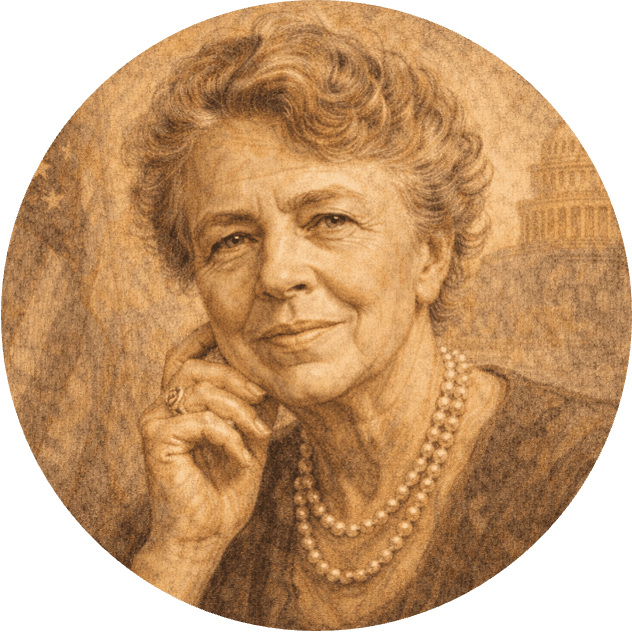
Table of contents
- Make recognition accessible to all.
- Use recognition as a public signal for what good looks like.
- Keep recognition credible.
- Make values visible through recognition.
- Use recognition to build bridges and break silos.
- Replicate what works by recognizing it.
- Spot (and celebrate) hidden talent.
- Turn human observation into signals.
- Spot excellence early, and cultivate it.
- Make hidden leadership visible.
- What these leaders would remind us
Share this article
Ever wonder what recognition would look like if some of history’s most famous leaders had access to a platform like Workhuman? As both a history nerd and a recognition nerd I have to admit, I have.
I'm not just talking “would Genghis Khan give more awards?” (yes, and they’d probably be terrifying). But the more interesting questions like: if these leaders could have recognized in real time, in public, with specificity, what would they reward? What would they make visible? And maybe more important, drawing from what we know they did well, what lessons would that teach the rest of us about what recognition is actually for?
So I propose a little thought experiment! Let’s take ten historical figures and imagine each one leading a recognition program with modern tools and modern visibility. I’ll pull out the leadership lesson each leader can show – the pattern that still shows up in workplaces today – and translate it into what good recognition can reinforce (or what bad recognition can accidentally create). It will only be vaguely rooted in real history, but very much rooted in real recognition!
Please don’t report me to your college history professor. I’ll absolutely be taking some outrageous liberties and even making up whole people. Mea culpa, as Caesar might say (but very likely didn’t!)
All right. Ten leaders. Ten recognition patterns. Let’s see what they’d do with a Workhuman Culture Hub. Go!
Julius Caesar
Make recognition accessible to all.
Don’t get Caesar wrong. All that tyrant language makes it easy to misread him as an elitist. He was a general, a force of personality – and let’s just say the Ides of March suggests he didn’t always lead by consensus. But Julius was a man of the people. He understood the power of public support, the value of the crowd’s point of view on real behavior, and the advantage of making the many feel seen – not just the few at the top.
So, if Caesar ran recognition, it would likely be public, specific, and strategic in the best way: a way to make contribution legible to everyone, and to let the “people” tell the story of what’s really happening across the organization. The loudest voice wouldn’t automatically win – because the point would be volume of perspective, not volume of ego.
Caesar’s recognition program would absolutely be disciplined (he loved execution), but it would also be everyone-to-everyone recognition that shows where work is actually getting done and where leadership is emerging in the ranks.
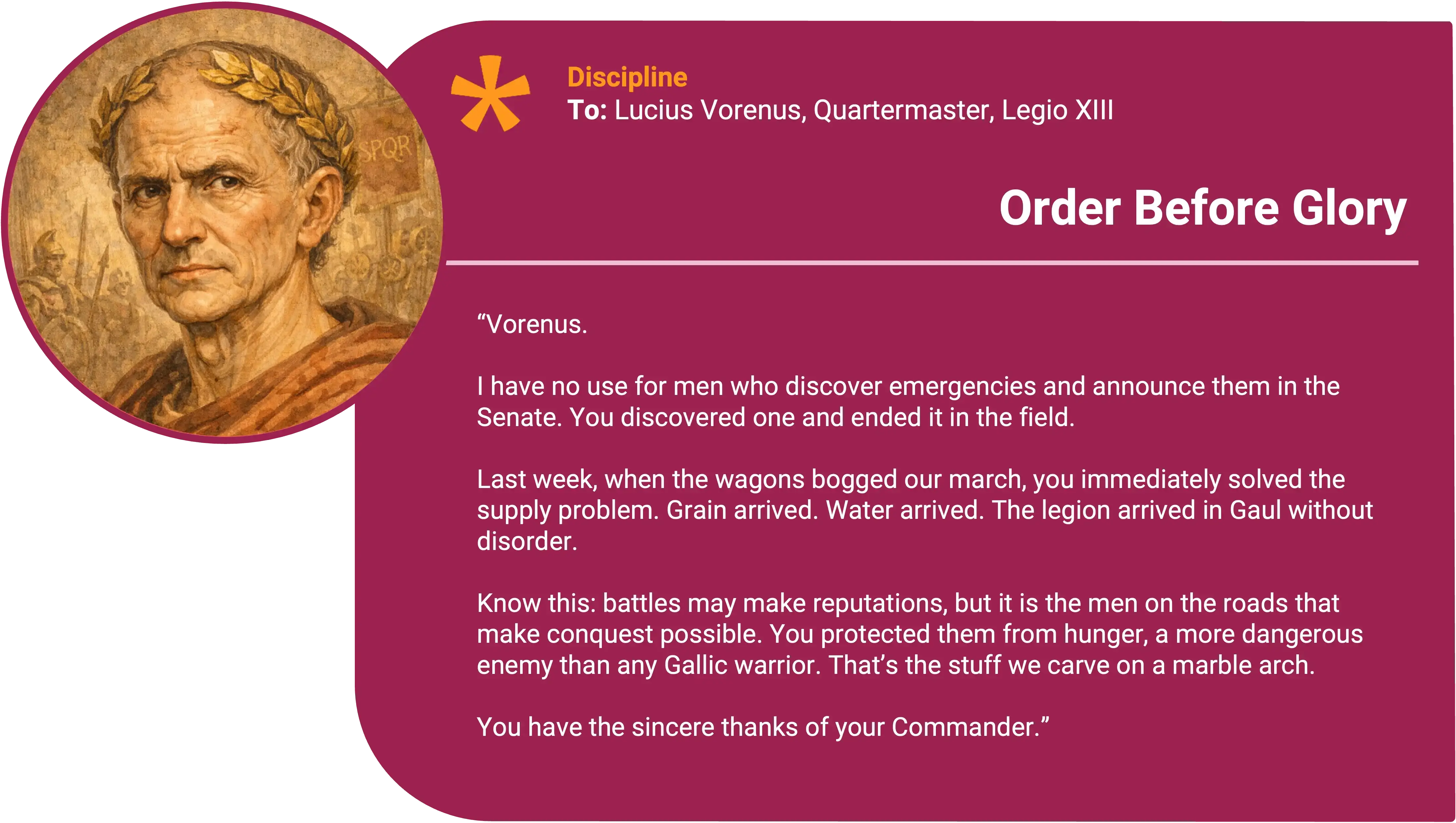
Let’s imagine what a recognition message from Caesar to his (100% fictional) quartermaster Lucius Vorenus might sound like.
Queen Elizabeth I
Use recognition as a public signal for what good looks like.
If Caesar’s recognition program is “control,” Elizabeth’s is “signal.”
The Virgin Queen governed in a den of snakes: rival courts watching, alliances shifting, pamphlets flying, and constant threat. In that world, praise is never just praise. It’s a public marker of trust. It’s how you steady the realm, align the court, and make it unmistakably clear which behaviors earn favor – without letting recognition devolve into faction and flattery.
Elizabeth’s lesson is sharp: recognition is a signal, and you should use it like it matters. When recognition is consistent and tied to your strategic initiatives (Spanish Armada anyone?), it builds confidence – especially when everyone is nervous and your rivals are listening. (And in Elizabeth’s world, you could assume someone was always taking notes.)
So Good Queen Bess’ recognition moment wouldn’t be a throwaway “thanks for all you do.” It would be a public message: this is what bold, useful service looks like, and this is what the Crown will reward.
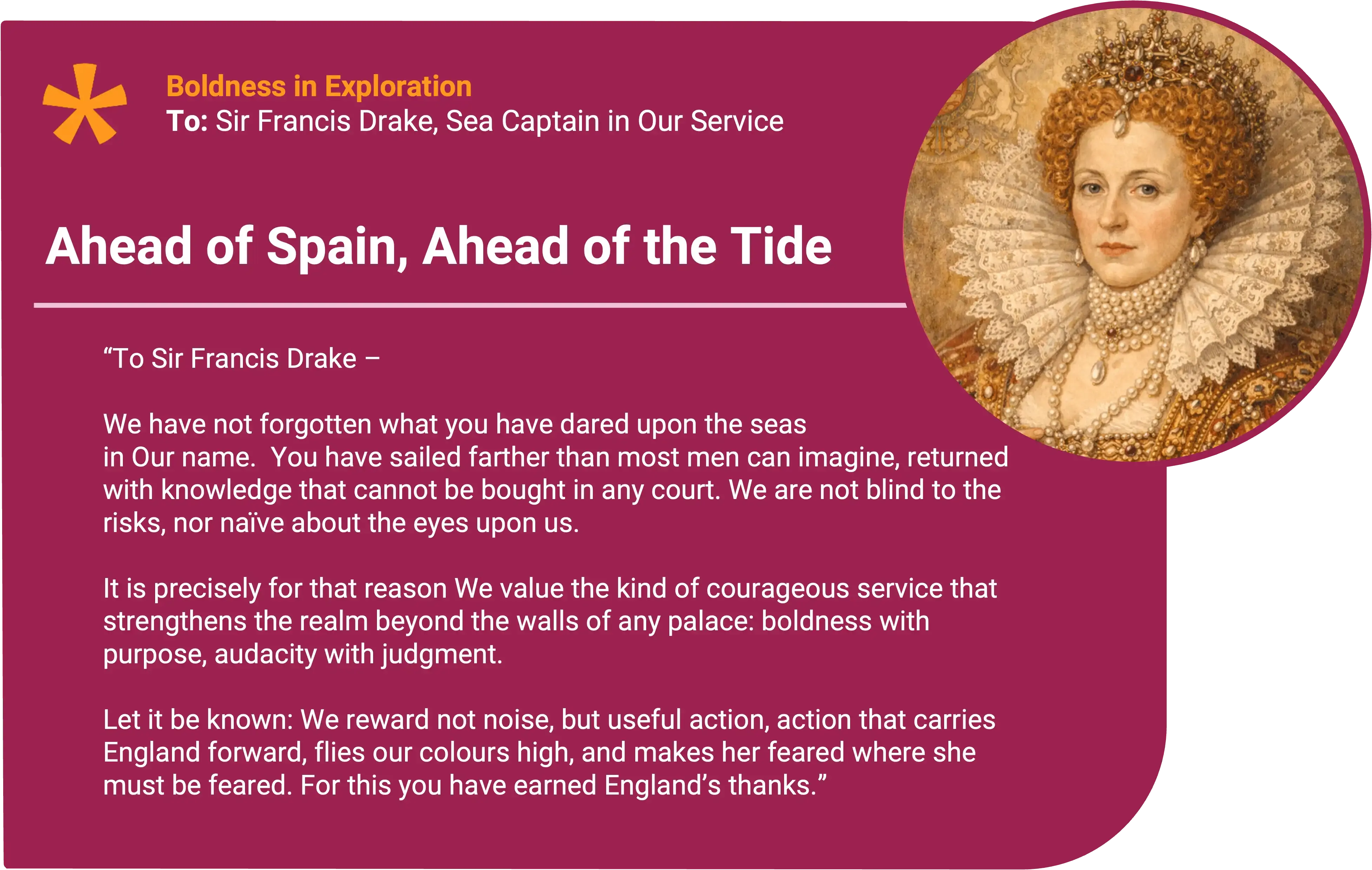
So, let’s imagine what she MIGHT have said to Sir Francis Drake, as he set forth in his sailing ship.
Niccolò Machiavelli
Keep recognition credible.
Machiavelli gets name-dropped like a cartoon villain, but his real obsession is very simple. He’s always asking: what works?
We think in the context of a recognition program, the author of The Prince would be all about authenticity. He wouldn’t care if it sounded nice. He’d care if it was believable – because once recognition feels like performance, it stops functioning. People learn to read it as politics. They stop trusting it. And then you’ve got theatre, not culture.
People have to hear their own voices and see their own stories in recognition. It has to speak to them in the connection to lived values – even in the rewards people can choose.
Machiavelli’s lesson is uncomfortable and useful: credibility is everything. Recognition can’t be flattery, or a tool for control. It has to be specific, grounded, and true enough that people accept it as reality – because that’s how you actually reinforce behavior.
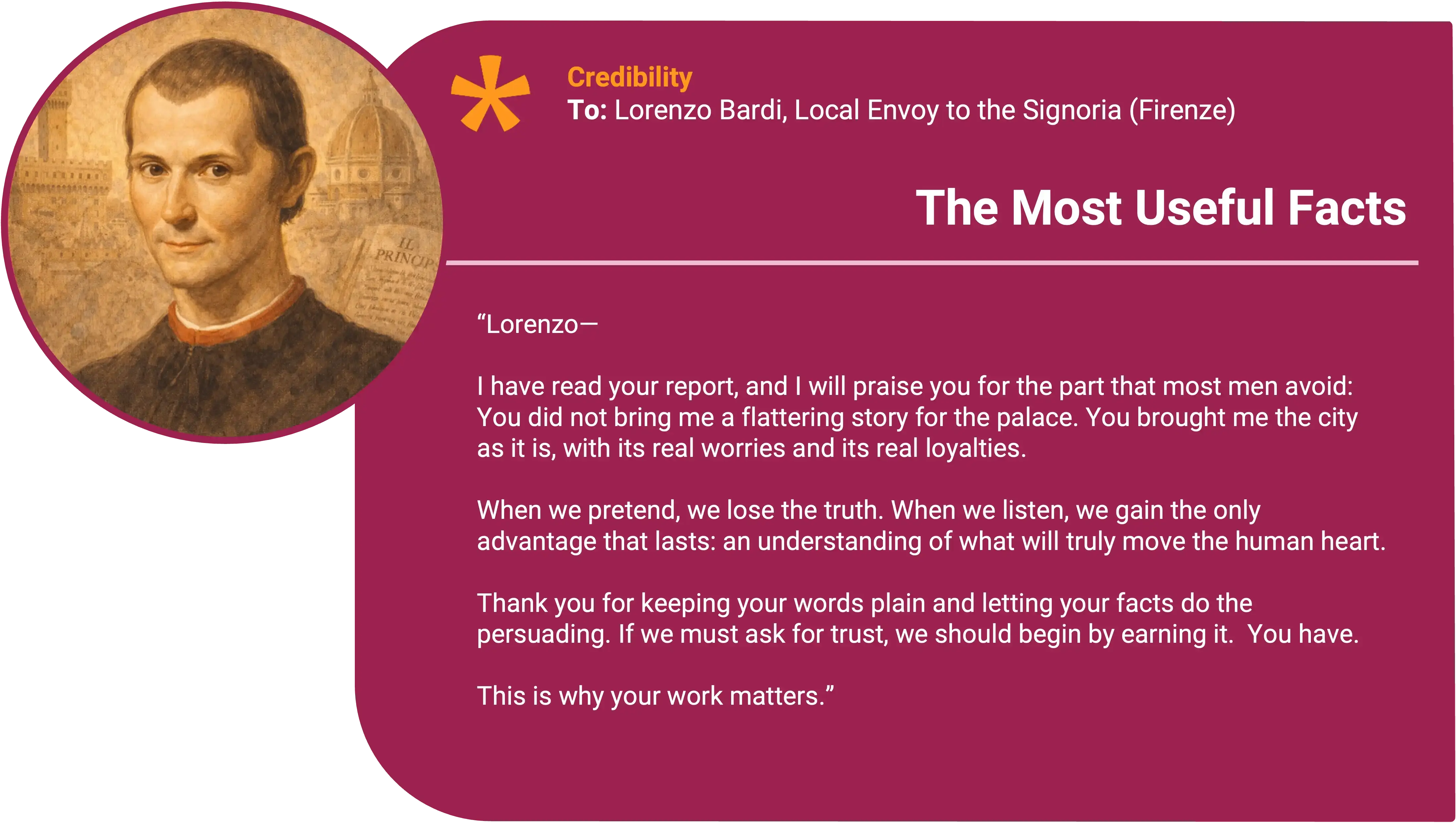
Let’s imagine a recognition note from Machiavelli in the style of a private political letter to an (absolutely made up) local envoy.
Eleanor Roosevelt
Make values visible through recognition.
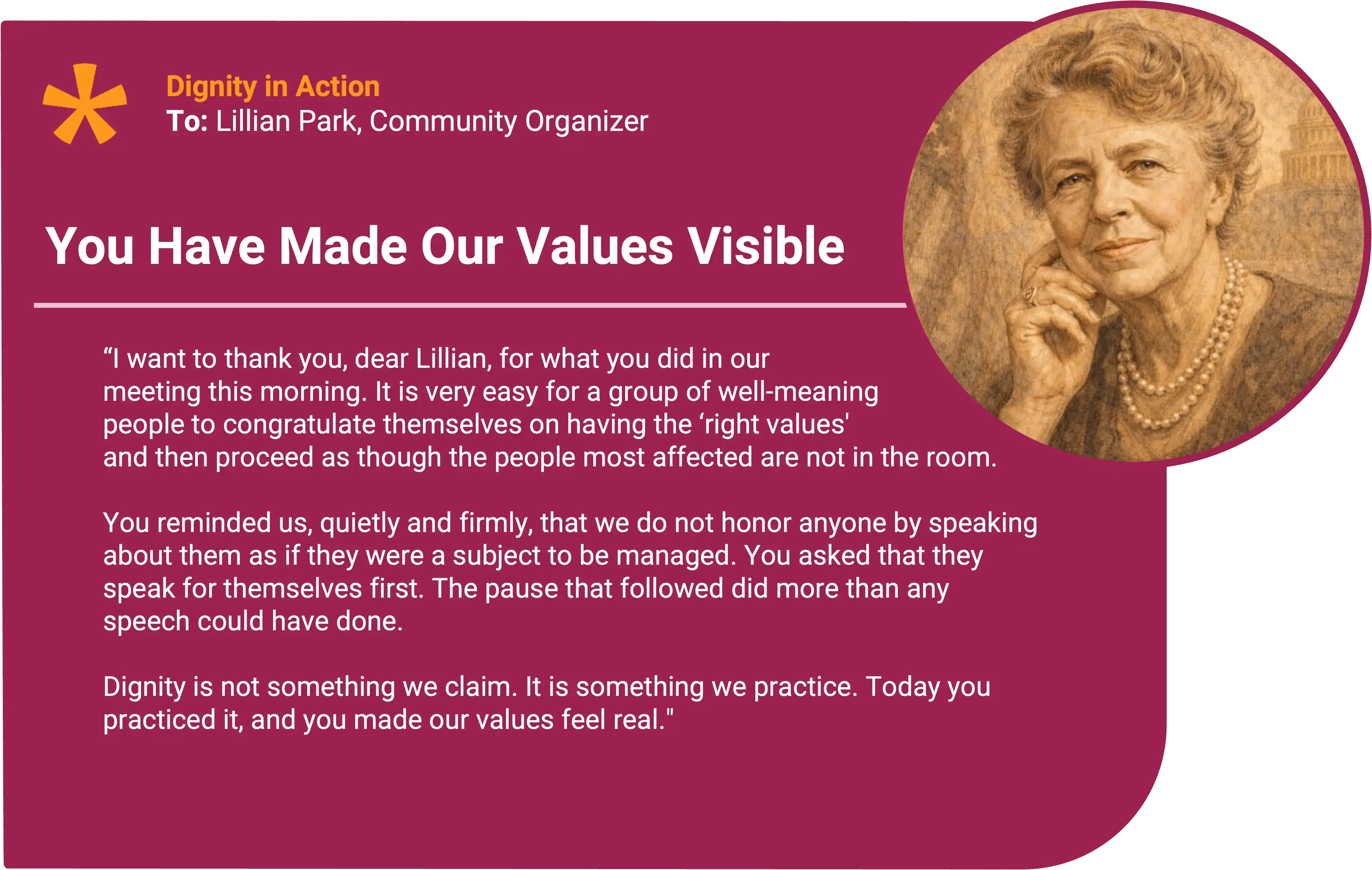
Eleanor Roosevelt is one of my favorites – I named my kid after her! – so of course she had to make this list.
The former First Lady and activist wrote constantly about what she observed, what she worried about, and what she believed mattered. Her leadership is a reminder that dignity isn’t an idea – it’s behavior. It’s what you do in rooms where power decides who counts.
So, if she ran recognition, I’m guessing she’d reward the actions that make culture human and real: listening, inclusion, moral courage, making space for people who are too easily dismissed.
This is recognition at its best: not just praising what happened, but reinforcing what “good” looks like and inspiring people to live up to your shared values.
Let’s imagine a recognition from her to a local community organizer (fictional) in a way that might make her feel both seen and challenged to greatness at the same time.
Nelson Mandela
Use recognition to build bridges and break silos.
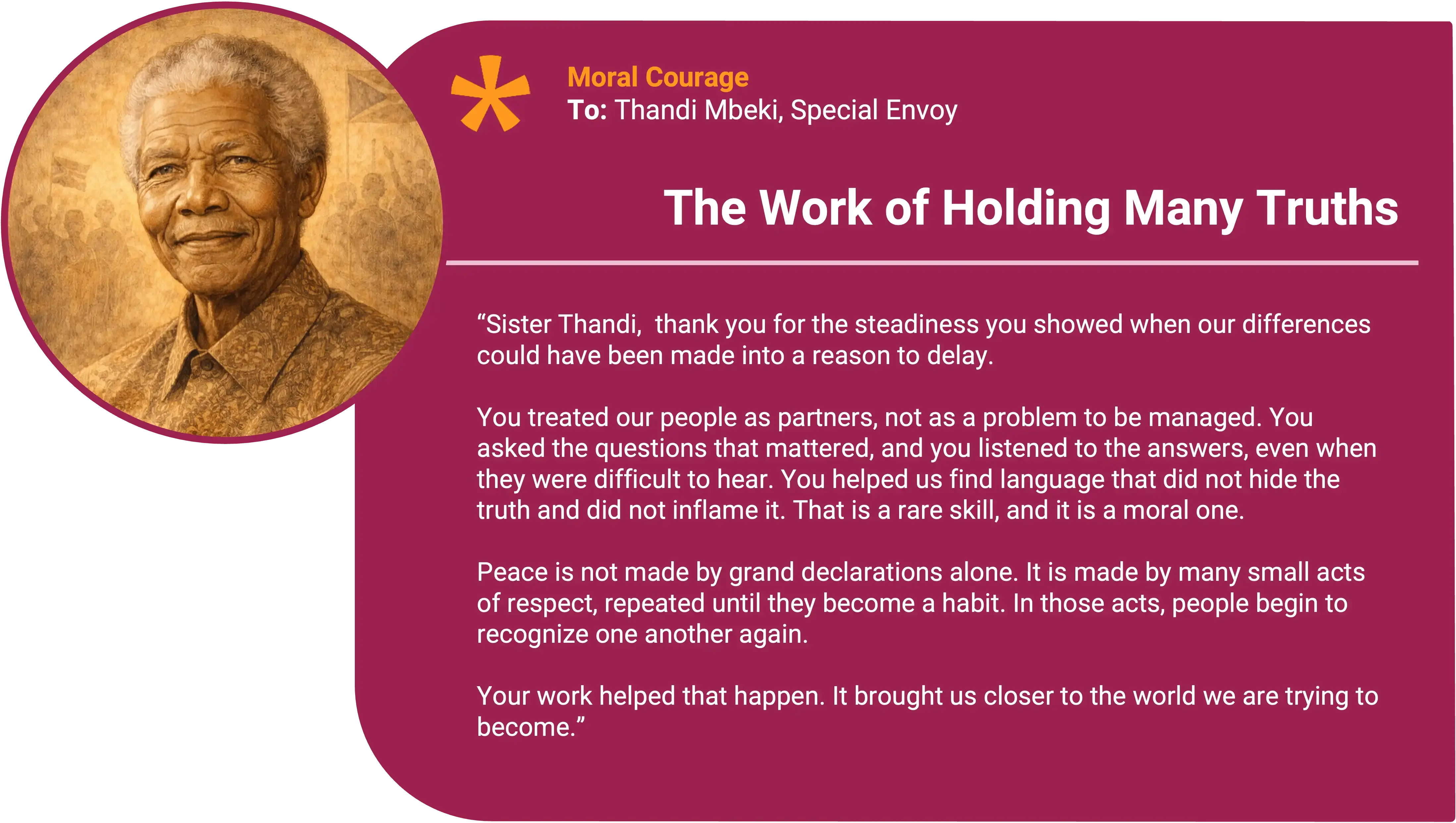
The legacy of the great Nelson Mandela was very much about unity and building bridges, and I think his recognition program would be similarly about creating connection among humans, and helping people to collaborate and innovate – breaking down silos.
He would recognize the hardest kind of leadership: keeping people moving forward together without pretending tension isn’t real. Modern workplaces are filled with challenges: change, pressure, distrust, silos. Recognition has the power to connect different groups and create ties of gratitude that can blossom into productive relationships.
I think the Nobel Peace laureate’s lesson would be simple: use recognition to unite. Reward the people doing the slow, difficult work of shared purpose – because cohesion isn’t a vibe. It’s built, one thank you at a time.
When I envision the Father of the Nation’s fictional recognition message, I think it would be something that inspires people across divides.
Henry Ford
Replicate what works by recognizing it.
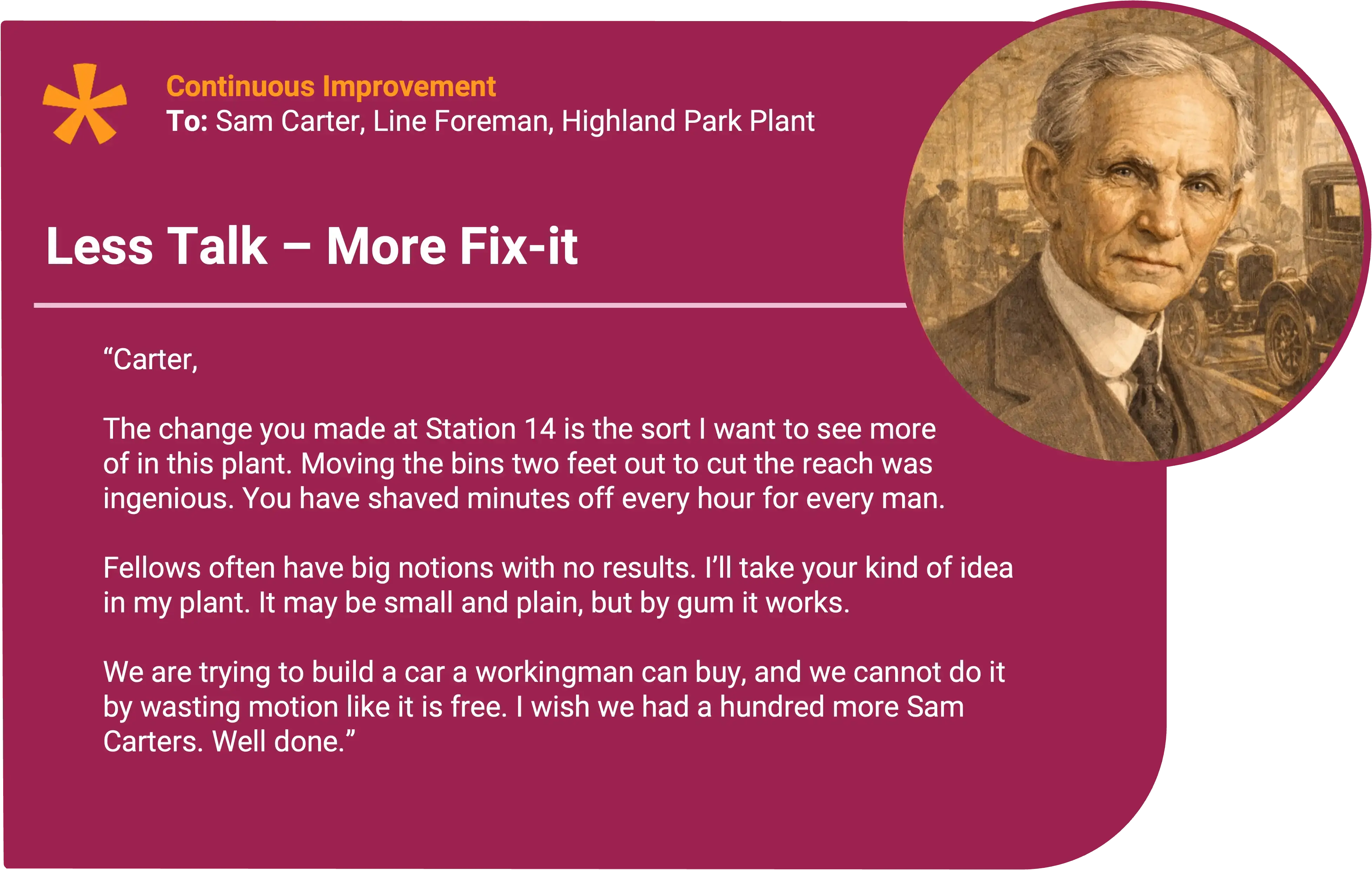
Henry Ford may not have been as dedicated to the idea of choice as we are, (he famously offered his Tin Lizzie in ‘Any color the customer wants so long as it is black’) but he sure would hate an empty recognition program.
The pioneer of the modern assembly line was all about fewer wasted steps, fewer defects, less friction – and work that gets better because the whole system gets better. His recognition program would teach people what improvement looks like, and spread practical excellence. Henry Ford would love Workhuman’s Culture Hub, for example, where you can see and emulate the work that is moving the business forward.
So, what might Ford have said to a foreman who made a small change that quietly improved the whole system? Probably quite a lot.
Florence Nightingale
Spot (and celebrate) hidden talent.
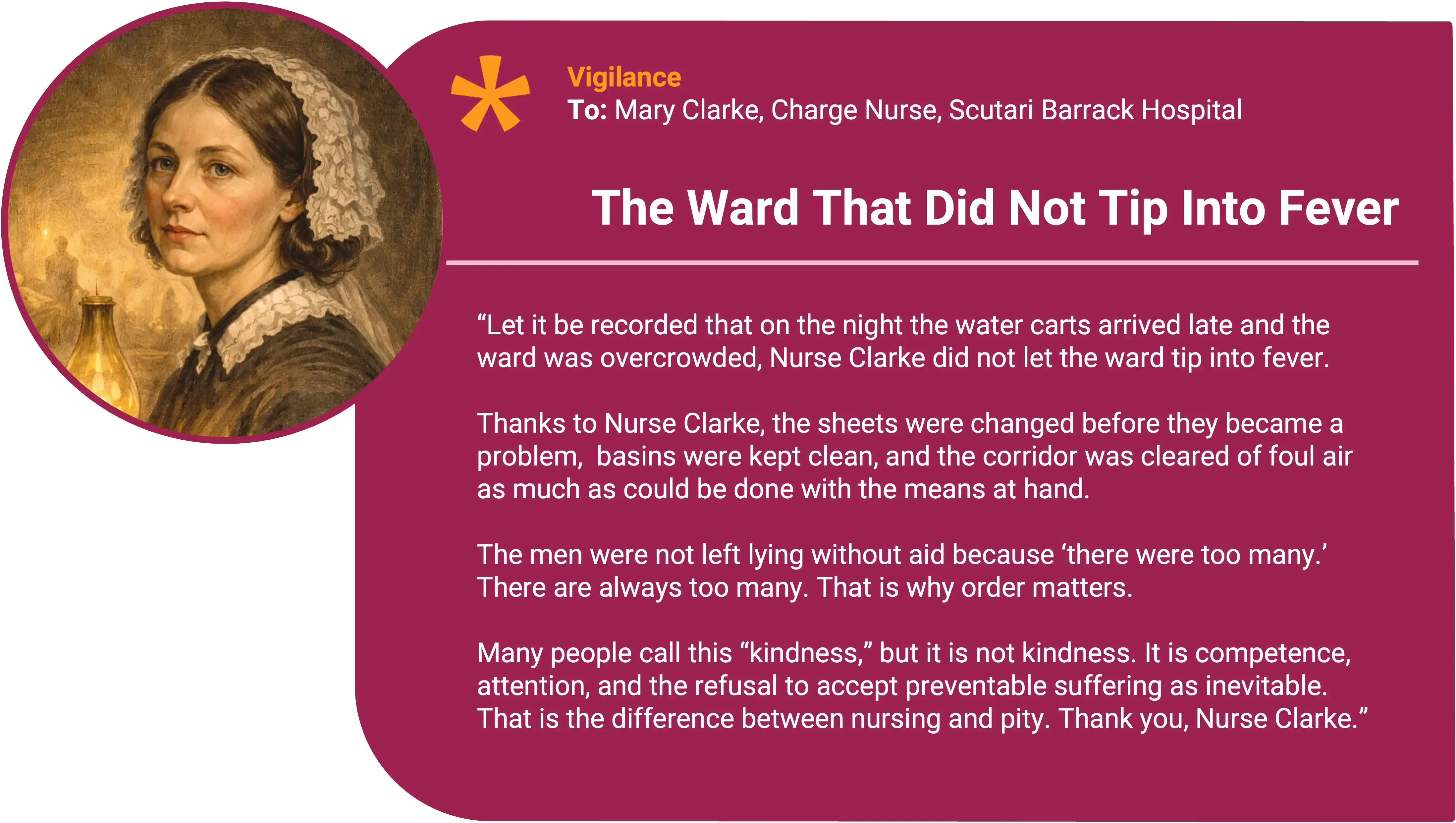
The Lady with the Lamp’s legacy rests on an inconvenient truth: the unglamorous details are the difference between survival and disaster – cleanliness, ventilation, observation, prevention, systems that keep suffering from multiplying. But the people who make the biggest difference are often unsung heroes.
Not much has changed in the century and a half since her work on health sanitation made Florence Nightingale a nursing hero. In modern organizations, those who get the most attention are the loudest in the room. But often the people who keep things from breaking are those behind the scenes.
Recognition is a way of recording that impact in a way that elevates these hidden influencers, and I think Nightingale’s lesson here is direct: recognize the everyday behavior that makes the difference. The hero moment is visible, but the work that made that moment possible also needs recognition.
Let’s imagine what the Angel of Crimea might have written to a charge nurse who held the ward together through discipline and care.
Marie Curie
Turn human observation into signals.
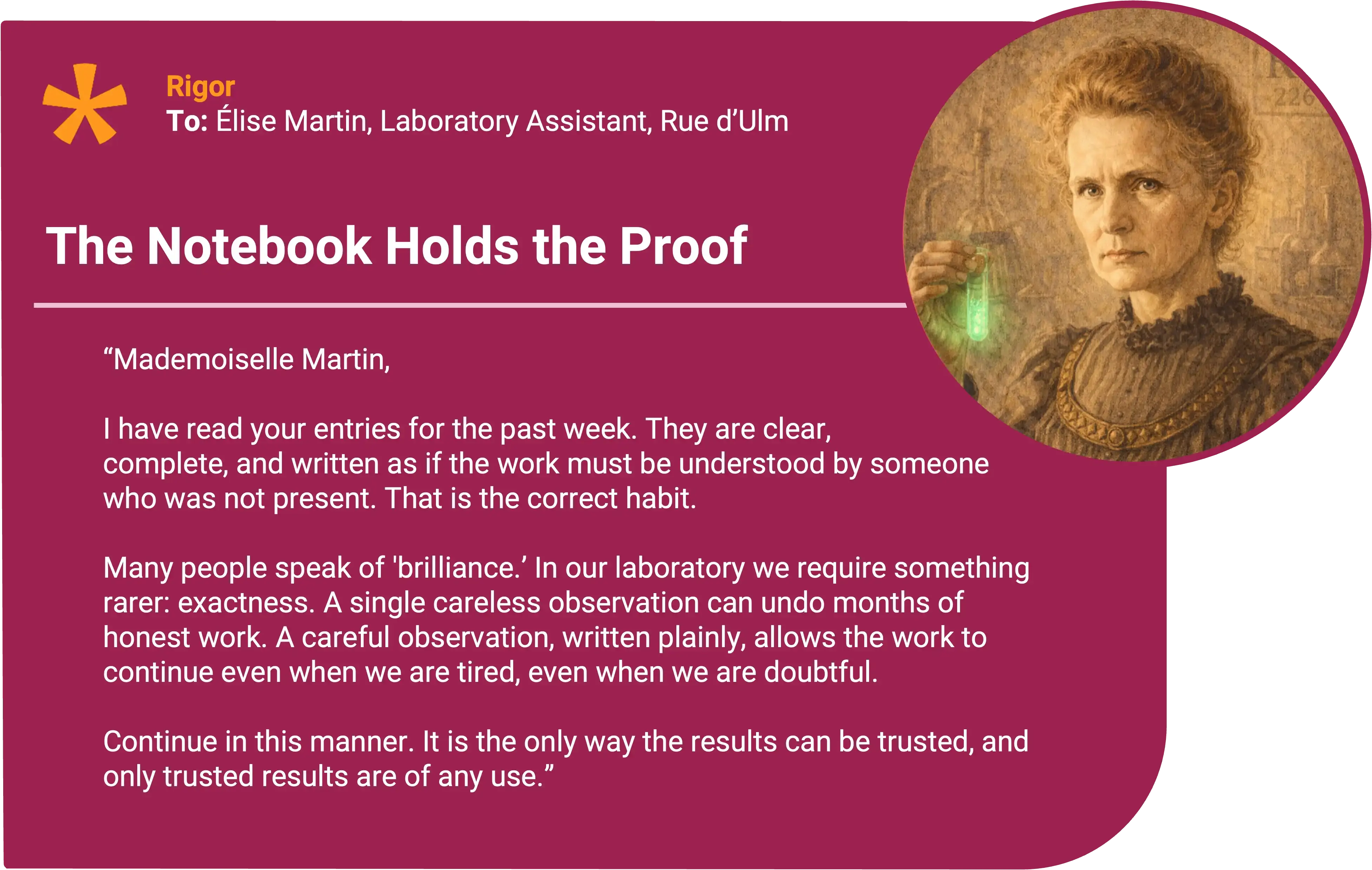
If you want to actually understand people and work, you don’t start with job titles and résumés. In the spirit of Marie Curie, you start with observation, evidence, and small, specific truths of what someone did, how they did it, and what changed because of it.
That is why I think Marie Curie belongs in this list. She was obsessed with rigor, yes, but also with record-keeping; with measurement and a source of truth. Curie would have loved the idea that recognition, when it is specific enough, can become a usable dataset. A living record of human strengths in action.
This is basically the Human Intelligence promise: when human observation is captured in the language of real work, that data illuminates patterns. And when you pair that with modern AI, you get something more valuable: decision-level insight grounded in evidence.
So, what would Curie have said if she could recognize a lab assistant for the kind of precision that makes data trustworthy, and makes insight possible? Let’s find out!
Sun Tzu
Spot excellence early, and cultivate it.
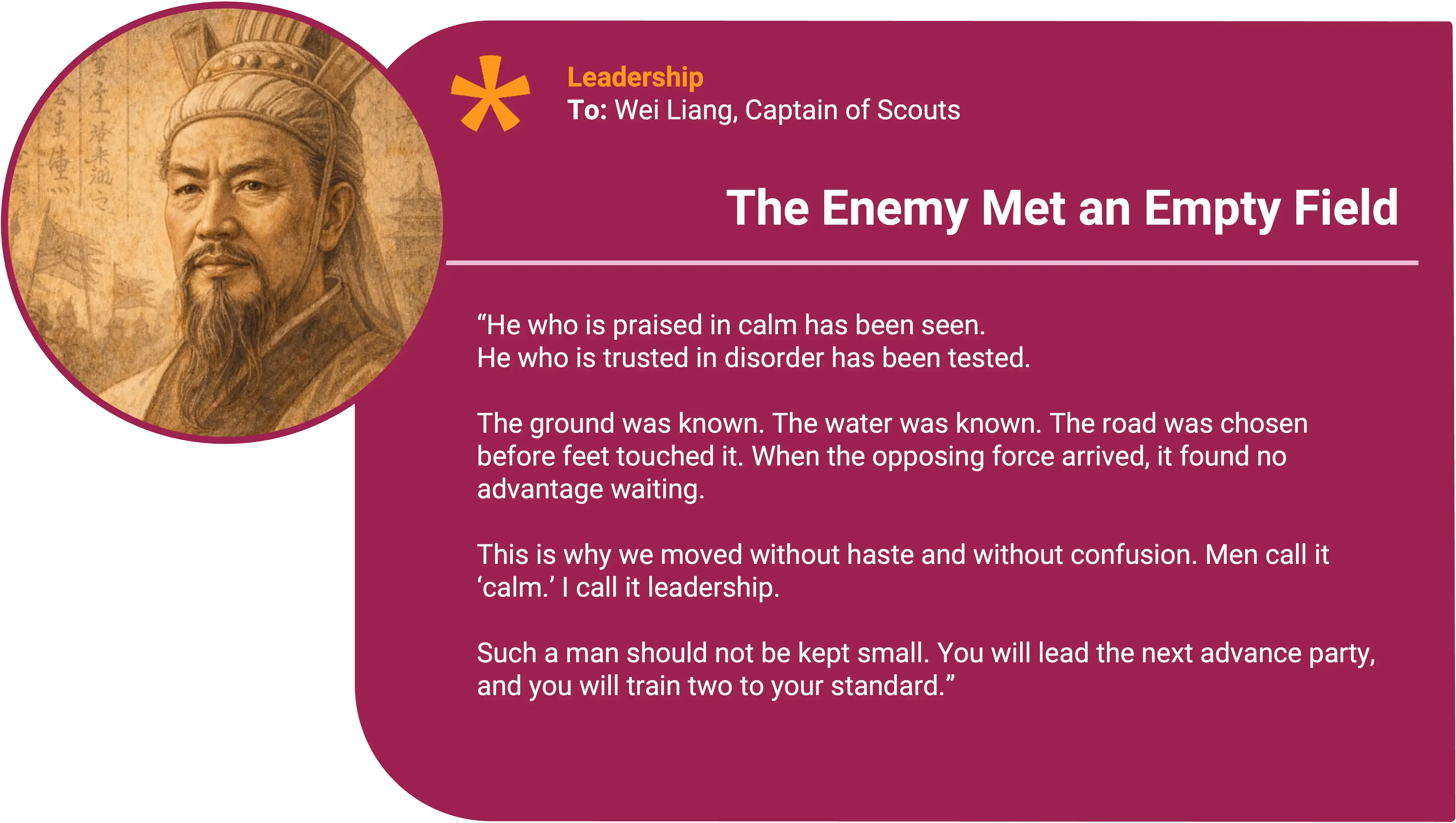
Sun Tzu would treat recognition less like a vibe and more like a field report. Because if you are trying to win anything that matters, you need to know who is reliable under pressure, who makes good decisions with imperfect information, who steadies other people, and who raises the performance of the whole group. Titles do not tell you that. Behavior does.
So, I think his recognition program would have a very practical purpose: to identify capability early and reward merit in ways that strengthen the whole, not just the individual. And when it is time to promote, promote the people whose excellence has already been demonstrated in real conditions, not the ones who simply look the part.
That is the Workhuman lesson, too: recognition is a signal that shows demonstrated skills and strengths.
So, let’s imagine what Sun Tzu might have written to a captain who might be ready for greater command.
Harriet Tubman
Make hidden leadership visible.
Finally, let’s talk about Harriet Tubman. She is where this post stops being purely cute, because her story makes one thing impossible to ignore: some of the strongest leadership you will ever encounter is not loud, titled, or predictable.
Tubman’s world was built on networks. On people who planned, sheltered, guided, watched, carried, and kept their nerve when the cost of getting it wrong was unthinkable. A lot of that leadership had to stay quiet on purpose. Visibility was not a reward; it was a risk. And yet the work still got done because certain people simply stepped up.
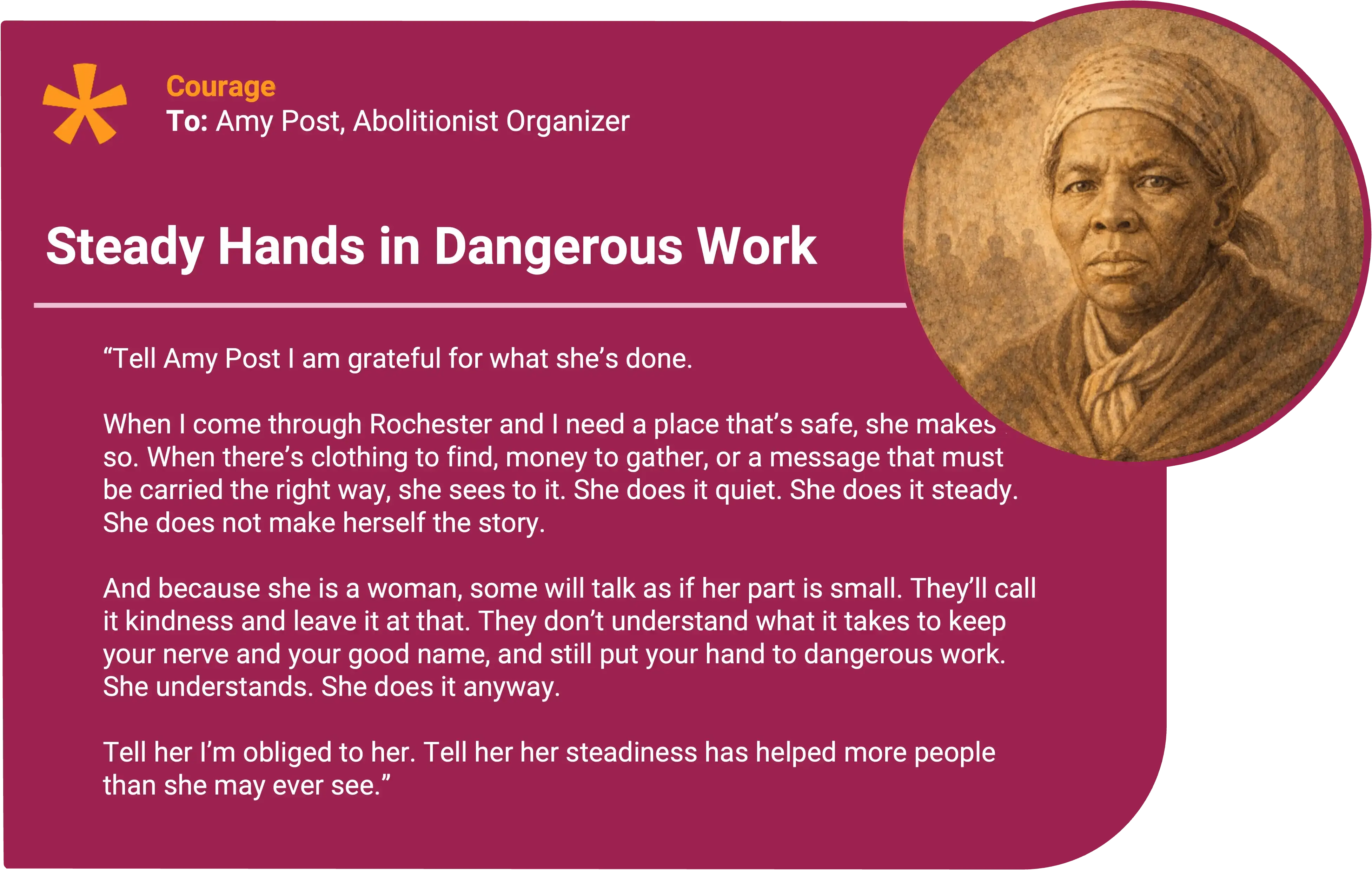
That is why Ms. Tubman belongs in a recognition conversation. Recognition is one of the only ways organizations can consistently surface leadership behavior – even in unexpected places – identifying the people who may not self-promote, but who everybody relies on.
For this one, I want to ground the moment in Tubman’s real support network by imagining a recognition of Amy Post, an abolitionist organizer in Rochester. And because we are imagining this in a modern format, we’ll frame the message as if Tubman dictated it to a trusted writer.
Let’s imagine that recognition message to Amy Post.
What these leaders would remind us
From silly to poignant, this little exercise makes one thing obvious: recognition is never “just being nice” or some gamified perk.
Recognition signals to people what matters. It shapes what gets repeated. It decides who becomes visible, who stays invisible, and what kind of leadership you end up growing, on purpose or by accident.
- Make it real: no performative, copy-paste “great job” recognition.
- Make it specific: clear enough that others can repeat the behavior.
- Make it accessible: everyone-to-everyone, not just top-down.
- Make it fair: equitable enough to trust.
- Make it measurable: human signals that show how work gets done, where strengths are showing up and who is leading.
That’s the Workhuman point of view in a nutshell: recognition is how culture becomes visible, and it’s how the real story of work gets told – by the people doing it.
So, if your recognition program is feeling a little generic lately, start by asking better questions: What do we want people to notice? Who do we keep missing? What kind of work do we praise, and what kind do we treat like it’s just “part of the job”?
Then do the simplest thing that actually changes behavior: recognize the right moments, with real specificity, in a way that lets everyone see what good looks like.
So go on. Be the kind of leader who notices. Caesar can keep the marble arches — you can build a culture where good work doesn’t have to shout to be seen. (And no one needs to report me to their history professor.)
Want to learn more about what makes for great recognition? Check out our ebook: Strategic Recognition 101: Your Guide to Proving ROI

Darcy Jacobsen
Darcy is a passionate storyteller and champion of workforce transformation, human connection, and recognition-driven culture. As an author on the Workhuman blog, she loves to connect deep research insights with modern workplace dynamics to uncover what really drives engagement, belonging, and happiness at work. With a background in communications and a master's in medieval history, she brings a unique perspective to her writing, taking deep dives into all topics around organizational psychology and the science of gratitude.
Recommended for you