
Boost the ROI of Your Recognition Program: The Science Behind Investing In Your Reward Store Experience
by Mindi Ennis
Last updated
5 min read

Table of contents
- Redeeming awards strengthens a culture of recognition
- In-house ownership of the store:
- Best practice design:
- True global reach:
- Automated employee feedback loops:
- Multi-channel communications suite:
- What outcomes can these investments deliver?
- Consider asking these questions
Share this article
The most successful online shopping websites all have one thing in common: they are designed with the end user in mind. The search engine, product filters, category navigation, and checkout are all carefully constructed to make shopping easy and enjoyable, so that shoppers can quickly find and purchase whatever it is they’re looking for. Then, the faster the customer receives their order, the better!
A good experience with an online store fosters repeat visits, building the brand’s trust and reputation. This is why, when employee recognition providers invest in the rewards shopping experience, it can have a big impact on the program’s overall success.
Redeeming awards strengthens a culture of recognition
Workhuman iQ Team found that when an employee received an award and then redeemed it in the Workhuman store, they rated their overall program satisfaction 13% higher, on average, than with an award alone. We also found a significant impact on program engagement, with redeemers 66% more likely to recognize a colleague than those who don’t.
Employees who redeem awards report higher program satisfaction and are more likely to recognize a colleague.
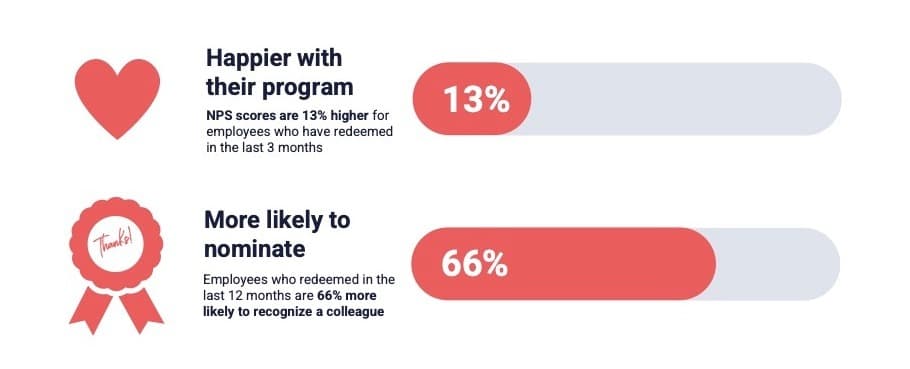
Results based on a Q1 2025 WHIQ analysis of a representative sample of Workhuman users.
Investing in a recognition platform where employees actually redeem their awards creates more engaged employees who are happier with their program overall.
Over the past 25 years, we’ve grown our rewards store into one of the largest e-commerce platforms in the world, with over $1B in annual sales across 150+ countries and a global catalog offering more than a million reward choices including merchandise in 70+ countries, gift cards – offering 10k brands to all employees – charitable giving, and travel experiences. Read on to learn what you should look for (and avoid) in a rewards store if you want to maximize your investment in recognition.
Look for these rewards store investments that drive engagement (and watch for these red flags!)
In-house ownership of the store:
At Workhuman, we own and manage the end-to-end store experience with a dedicated team of experts. This allows us to individually curate catalogs in 150+ countries, directly manage supplier relationships, and react quickly to trends in the market.
Most importantly, recognition providers who fully manage their stores have the freedom and flexibility to make changes that reflect the needs of their customers and improve the experience for end users. This flexibility is crucial across all lanes of the shopping platform, whether it be sourcing, customer service, or fulfillment.
Best practice design:
We know that the end users of a recognition rewards store aren’t just “employees”, they are also consumers who are very familiar with shopping online. It’s important that the look, feel, and features of a rewards store mirror that of other online stores where they would feel comfortable spending time and money.
At Workhuman, we’ve redesigned our shopping experience to rival the world’s largest online retailers. We’ve added wishlists, new product filters, better search and navigation, recently viewed items, recommended products, multiple product images and expanded product details, a streamlined checkout, and more. Our merchandising team refreshes the store homepage weekly with culturally relevant sales and messaging that align with local holidays and shopping trends.
True global reach:
We don’t believe in second class employees, and have invested in our Store in all regions where we have end users, leading to a global supplier network of more than 600 suppliers across merchandise and gift cards. More than 95% of the employees who use Workhuman are eligible for in-country sourcing and fulfillment, removing the additional cost and delivery time that comes with cross-border customs and tariffs. We maintain direct partnerships with each of our suppliers, and hold them to our high standards by closely monitoring their adherence to service agreements. When problems do arise, in-house customer service is available everywhere, 24/7 to assist.
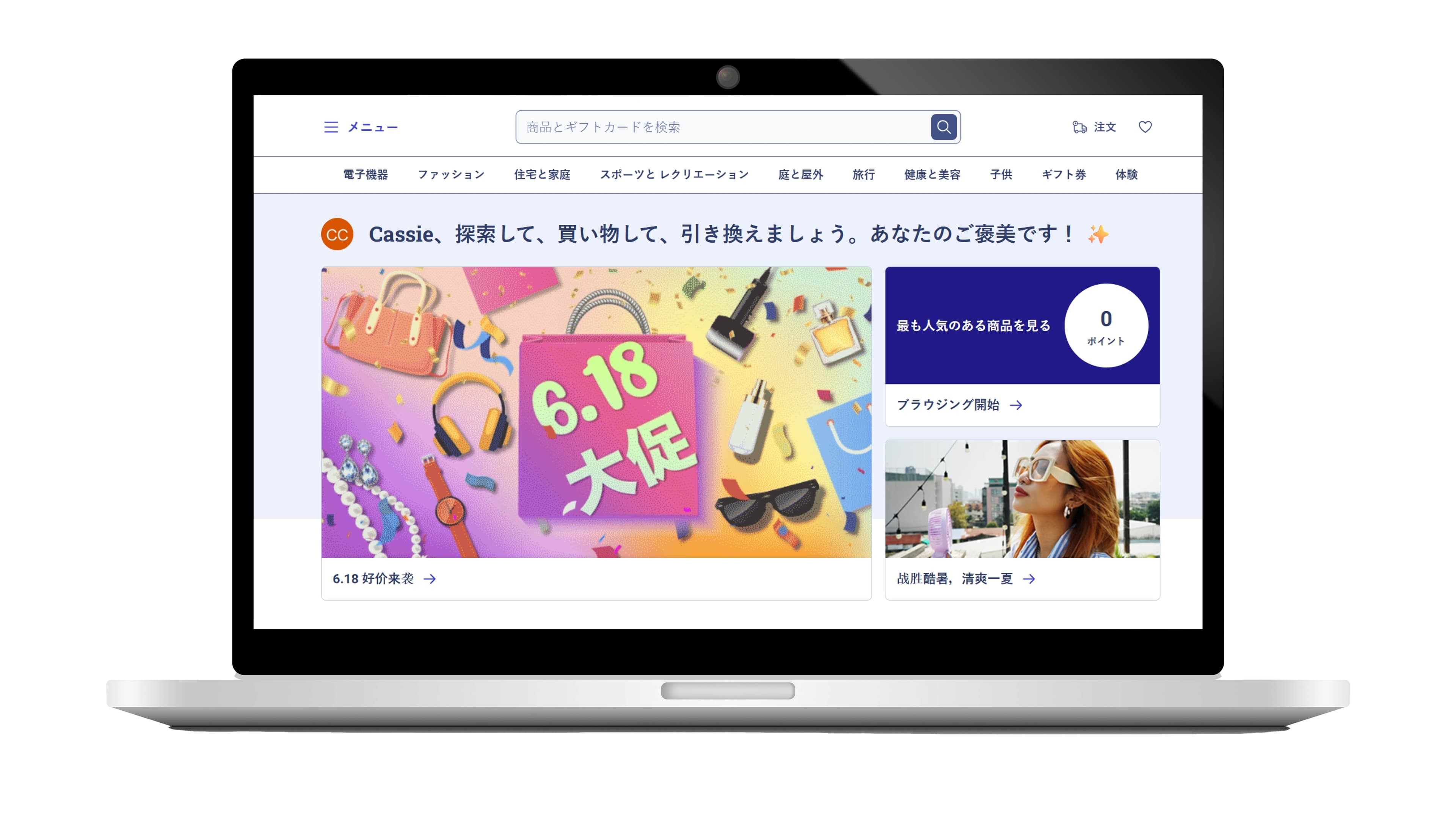
To us though, true global reach is about how you connect with employees in each region, not just how many countries you can deliver to. That’s why we work hard to ensure every employee recognizes that they are our target audience, no matter where they live or what stage of life they’re in. We focus on inclusive and culturally sensitive imagery, copy, and promotions that reflect local holidays and shopping trends – while curating country-specific catalogs using the same approach. The experience differs from country to country throughout the year; during August for instance, employees shopping our store in the US will see Labor Day Sales, while in China they’ll notice deals celebrating Qixi festival. These micro-inclusions are subtle, but they go a long way towards making employees feel seen and recognized.
Automated employee feedback loops:
Regular feedback is an important aspect of any store. When shopping on Workhuman’s store, users may encounter randomized surveys at several strategic points in the shopping journey: during shopping, after checkout, and after order delivery. Many of the improvements we’ve made have been as a direct result of this feedback. When employees feel listened to and valued, they are more likely to have a great shopping experience.
90% of employees, globally, rate the Workhuman store positively.
In addition to end user surveys, program managers can submit feedback and requests directly to their Workhuman team.
Multi-channel communications suite:
When employees are reminded to redeem their points in the store, they’re 3x more likely to visit the store, and twice as likely to redeem. Through email, mobile push notifications, and in-app guides, Workhuman sends targeted and timely messages encouraging employees to reward themselves. This contributes to high redemption rates, which strengthens engagement for the recognition program overall.
What outcomes can these investments deliver?
The Workhuman iQ Team studied a representative sample of Workhuman users and discovered that users who had redeemed in the last twelve months were 66% more likely to recognize a colleague in the next six months. That means, when a rewards store is optimized for redemptions, it can help deliver meaningful outcomes.
In our new reward study, Workhuman discovered when people have a positive rewards experience, they're:
- 2x more likely to feel motivated
- 3x more likely to recommend their organization
- 2x more likely to feel they belong
- significantly more likely to recognize others
- deliver stronger outcomes across every metric from engagement to NPS
Want the full picture? Our latest research breaks down what makes rewards meaningful and effective with practical advice for turning these insights into real impact.
Workhuman's 2025 Rewards Study
With these results, it’s clear that the quality and design of the rewards store matters for overall program success. With more redemptions, comes more engagement and recognition.
Consider asking these questions
If you’re looking for a recognition provider, how can you determine whether the right investments have been made in their store? Here are six key areas to probe that will shed light on their employee experience.
1. Ask for a demo of their store experience.
Pay attention to how things are organized in the store. Is it easy to find specific items? Can you filter a large list of items down to what you’re looking for?
Imagine your global population using the store. Is it culturally relevant? Does it celebrate local holidays, and feel different for different countries?
Put your shopper cap on. Ask yourself if you would spend actual money in this store with your credit card. Does it look and feel reputable, or is it outdated and clunky?
2. Ask for real data around customer service and fulfillment metrics.
As a global society, we’ve gotten accustomed to getting orders quickly and seamlessly. Is there a lot of cross-border shipping? How long does it take for customers to receive their orders?
Additionally, who will customers call if there is a problem? What are their CSAT scores? Average wait times?
A shopper’s experience doesn’t end when they submit their order. If the post-order service is less than what they would expect from a reputable online store it will create frustration and erode trust, which may lead to complaints about the program.
3. Ask about their redemption rates.
How quickly are users redeeming once they receive an award, and at what rate? What are their strategies for improving redemption rates?
High redemption rates mean people actually want the rewards and are using them. It’s a simple sign that the program is resonating with employees and delivering real value. Plus, when employees redeem they are more likely to recognize other employees, driving better program engagement and outcomes.
4. Ask about their supplier network.
How many suppliers do they work with? How many countries offer merchandise awards? If they lose a major supplier, what is their plan to minimize impact on employees? To offer the best in choice and stability, it’s important to have a diverse supplier network at the heart of your store’s catalogue.
5. Ask about how they collect and action employee feedback.
What questions are they asking employees about their shopping experience? Is there a randomized survey? What does the survey look like, and how many employees answer it? What are some examples of how they’ve actioned the feedback to improve their store?
Stores that have developed mature feedback loops, and can produce real-life examples of how they have utilized client and employee feedback to improve, show you that they’ll be willing to develop a partnership that’s focused on employee wins.
6. Ask about the management of their store.
Do they have an in-house rewards team? How much of the store experience is outsourced to a 3rd party? Are sourcing, customer service, and fulfillment logistics managed in-house?
Only recognition providers who have invested in the end-to-end rewards experience, and own each component of their store can truly support their shoppers.
Having the right store experience can be a game changer for your recognition program. A store designed with your employees in mind can deliver meaningful outcomes and help drive the kind of culture change you’re seeking.

Mindi Ennis
Mindi lives in Leominster, MA with her husband, daughter, and favorite family member Max the dog. She's focused her career on helping companies get the most out of their e-commerce platforms, and is a true believer in the power of the Workhuman Store.
Recommended for you