Employee Reward Programs: What They Are and What They Can Do for Your Business
Last updated
7 min read

Organizations face a common tension: employees want to feel valued, connected, and supported, while businesses need cultures that drive engagement, retention, and high performance. When these priorities aren’t aligned, disengagement rises, turnover increases, and even strong strategies struggle to deliver results.
A modern employee reward program sits at this intersection. It’s one of the few systems that can strengthen both employee experience and business outcomes when designed thoughtfully and executed consistently.
In the sections ahead, we’ll explore what employee reward programs are, why they matter, and how HR leaders can deploy them successfully across complex, distributed workplaces.

What is an employee reward program?
An employee rewards program is a structured system set up by a company to recognize, appreciate, and incentivize employees for their performance, achievements, or contributions to the organization.
The magic happens when recognition and rewards work together:
- Recognition moments give context and visibility, highlighting specific effort, achievement, impacts, and behaviors.
- Rewards make those moments stick with tangible value, making them memorable and motivating.
Benefits of employee reward programs
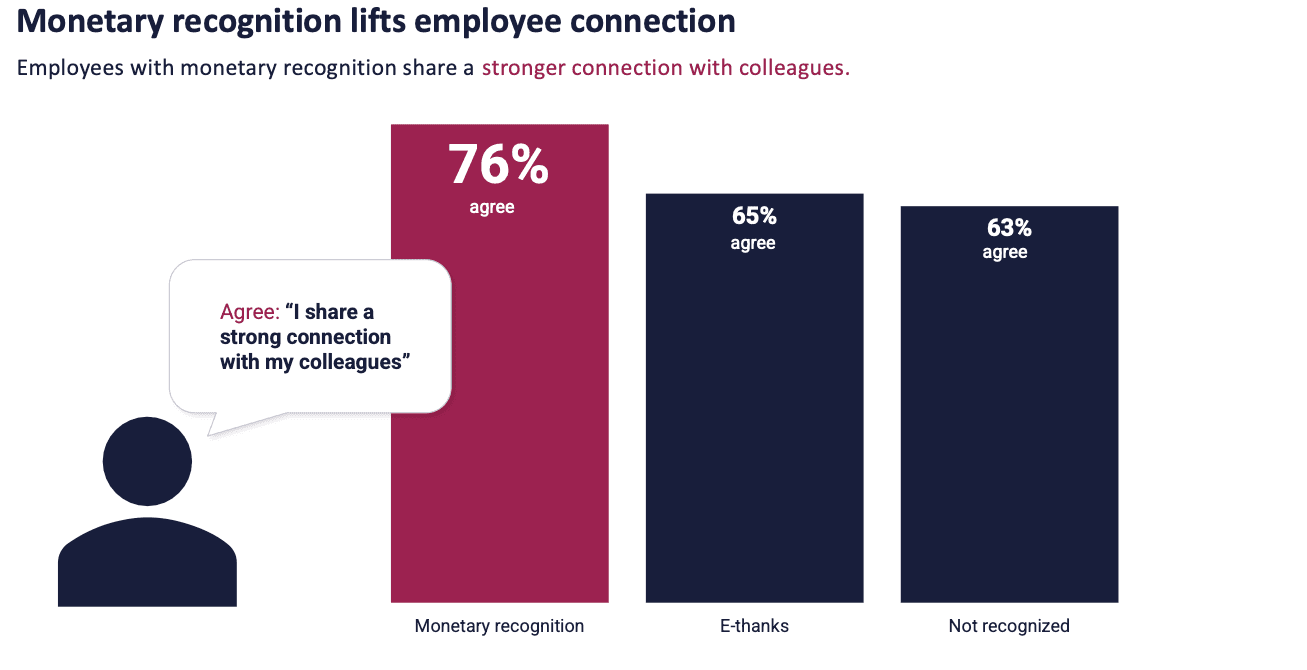
Workhuman's 2025 Rewards Study – The Tangible Value of Appreciation, based on responses from more than 2,500 employees across five countries – found a clear link between meaningful recognition, positive reward experiences, and improved outcomes including employee motivation, belonging, and advocacy.
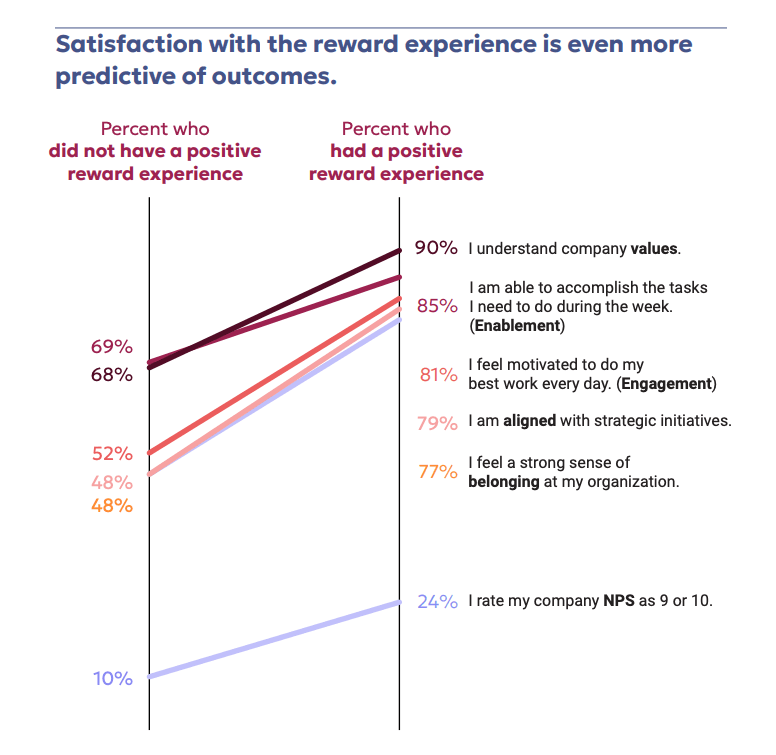
The takeaway is simple: when employees consistently receive recognition that feels genuine and rewards that feel personally valuable, they are more connected, more engaged, and more likely to deliver strong business results.
This research also reinforces what many HR teams see anecdotally: recognition makes culture visible, reward moments make impact memorable, and the combination creates the conditions for high-performing, values-aligned teams.
Let's dig into how.
1. Increased engagement and productivity
Employees do their best work when effort is seen and appreciated. Recognition reinforces high-value behaviors like collaboration, quality work, and customer responsiveness. Rewards punctuate those moments, driving focus and sustained employee performance.
According to Workhuman and Gallup, disengaged workplaces experience 37% higher absenteeism, 49% more accidents, and 60% more errors – but employee recognition programs help reverse these trends by link employees' contributions to larger organizational goals, keeping them focused, connect, and committed.
2. Improved retention and reduced turnover
Recognition – especially when it comes from peers as well as managers – reduces burnout and reinforces a sense of purpose. When appreciation is visible across teams and levels, employees feel valued by the broader organization, not just their direct manager.
For one Workhuman customer, cross-unit recognition made employees 4x less likely to leave.
3. Stronger company culture and belonging
Time and again we see that company culture hinges on connection between employees.
A successful social recognition and rewards program looks like a web – reaching across teams and departments, stretch up and down org charts – creating organic moments of connection, even in dispersed and hybrid workplaces. This visibility and connection strengthens community, breaks down silos, and builds pride in shared success – it also makes culture visible.
When employees publicly recognize one another for living company values – like innovation, collaboration or customer excellence – those values become tangible and repeatable. Recognition activity becomes a real-time view into how culture is lived – not just how it’s described.
4. Greater psychological safety and equity
Recognition tied to values and outcomes clarifies expectations and reduces fear of failure. Meaningful reward experiences amplify this sense of safety by showing the organization invests in both the work and the person behind it.
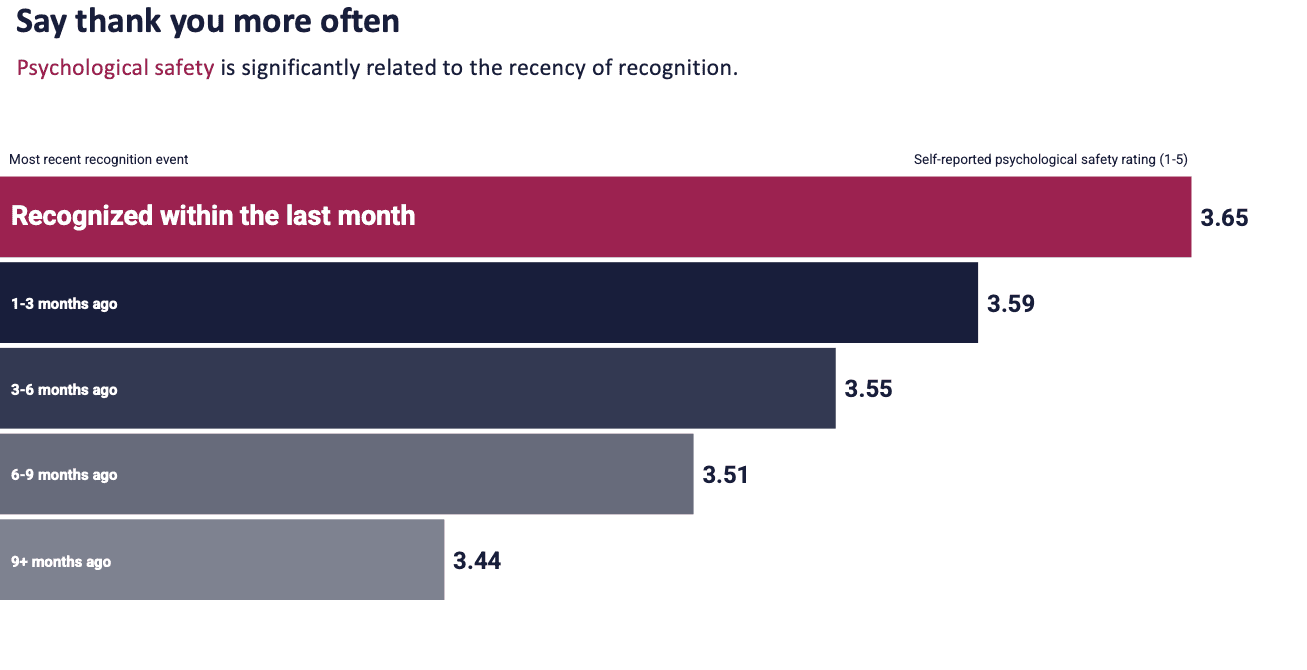
Our research – including survey data and customer insights – shows a clear connection between recent recognition and higher levels of psychological safety, which correlates with better decision-making, more innovation, and stronger team performance.
Recognition programs also support equity and inclusion goals. By tracking recognition patterns across teams, roles, locations, and demographic groups, HR leaders can identify disparities and intervene to ensure no one is overlooked. Programs that are fair, visible, and personalized help foster a sense of belonging for all employees, reinforcing both psychological safety and organizational equity.
How to build and implement an effective employee reward system
Not all programs are created equal. The difference between a high-performing employee rewards system and a “points-for-prizes” perk often comes down to strategy, platform design, and execution.
Focus on the following components to ensure you're successful:
1. Set clear, strategic goals
Before launching a reward program, anchor it in strategic intent. The most effective programs align to key business priorities, creating a roadmap for design, communication, measurement, and impact.
To set your program up for impact:
- Define objectives upfront. Identify which organizational goals the program should reinforce.
- Tie recognition to company values. Celebrate positive behaviors and achievements that reflect the culture you want to cultivate.
- Measure what matters. Plan to track engagement, recognition participation, reward redemption, and monitor equity indicators signals indicating employees are engaged, connected, and motivated by the program.
- Scale for reach. Ensure recognition and rewards work across teams, departments and regions to build a shared culture of appreciation.

2. Select the right program and platform
Choosing the right platform is foundational to a successful, scalable employee reward system. The solution you select should not only fit your budget and workforce needs, but also ensure fairness, consistency, and accessibility for every employee.
Look for a platform that is:
- Easy to understand and use. Adoption depends on intuitive design and a frictionless experience.
- Integrated into daily workflows. Slack, Teams, Outlook, HRIS, and SSO integrations make recognition a natural part of how people work.
- Accessible everywhere. A modern mobile app, responsive design, and support for hybrid, deskless, and frontline workers ensure participation anytime, anywhere.
- Insight-rich. AI-assisted recognition, automated service milestones, DEI and fairness analytics, and manager dashboards reveal patterns, surface workforce insights, and support culture-building.
- Equitable and transparent by design. Look for governance controls, visibility rules, and fairness analytics ensure recognition is consistent and bias-free.
- Personalized and localized. Reward catalogs – with equivalent award values – and the same high-quality, joyful program experiences to meet diverse employee needs across regions.
- Flexible and global. Multi-language support, local currency and tax handling, and compliance ensure smooth operations across geographies.
- Secure and enterprise-ready. SOC2, GDPR compliance, role-based permissions, audit logs, and flexible budget controls give HR and IT peace of mind.
- Continuously improving. Look for a partner committed to innovation – expanding capabilities, refining AI, and evolving reward options to keep the program fresh.
Equally important is choosing a partner who provides ongoing consulting and strategic guidance to help you maximize those innovations:
- Launch support, change management, and activation resources
- Communication templates and internal enablement programs
- Ongoing program reviews and optimization recommendations
- Best practices that help align recognition with values, culture, and business priorities
The right partner pairs a modern, ever-improving platform with the expertise to help your organization adapt, grow, and sustain long-term cultural impact.

3. Make rewards meaningful and impactful
The effectiveness of a reward program depends less on the cost or novelty of the reward and more on how meaningful it feels to the recipient. To ensure your rewards truly drive engagement and connection:
- Listen to your employees. Use surveys, pulse polls, and focus groups to understand preferences by role, location, or tenure. Regular feedback ensures rewards stay relevant.
- Test and iterate. Pilot new reward options with small groups to see what motivates employees before rolling out company-wide.
- Reward in real time. Align recognition and rewards with accomplishments or milestones to reinforce desired behaviors and outcomes immediately.
- Connect rewards to impact. Make it clear how contributions led to recognition – linking effort to outcome strengthens engagement and motivation.
- Measure and refine. Track redemption rates, participation, and employee engagement to identify which rewards resonate and which need adjustment.
Workhuman's 2025 Rewards Study highlights how the ways you reward employees – frequency, value, and choice – directly influence engagement, motivation, and connection. Here's what we found about choice:
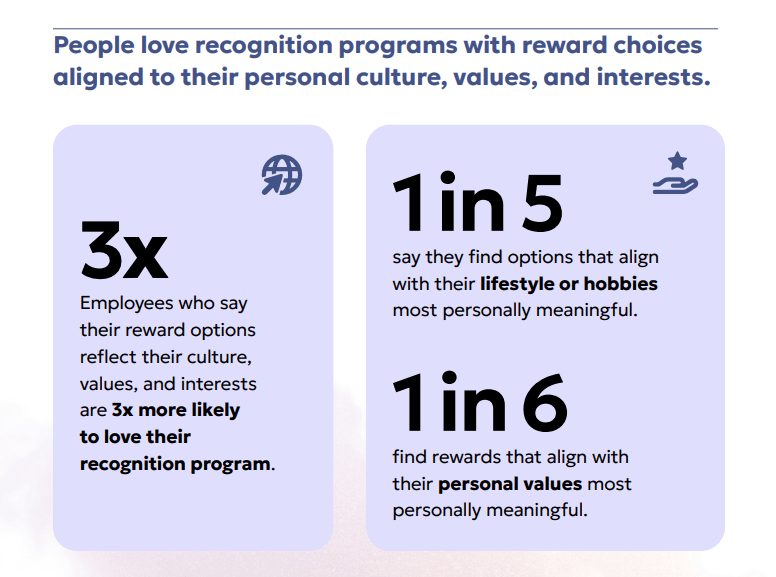
Want the full picture? Our latest research breaks down what makes rewards meaningful and effective with practical advice for turning these insights into real impact.
5 ways of rewarding employees
- Employee recognition: Programs that enable peers and managers to publicly celebrate achievements with recognition messages and reward points, creating visible moments of appreciation.
- Monetary rewards: Bonuses, spot awards and incentives, or gift cards delivered through a structured program are most motivating when personalized and timely.
- Experiential and lifestyle: Team outings, retreats, or subscription-based perks, can create memorable and highly personalizable engagement points.
- Additional time off: Flexible personal time or floating holidays are already a popular benefit that boosts satisfaction and engagement while showing trust in employees' work-life balance.
- Career and skill-building: Learning opportunities, tuition reimbursement, or professional development support growth and increase engagement. Professional development can straddle the line between reward and obligation, so be sure it's not the only option.
4. Make participation easy (and expected)
Even the best-designed reward program only works if employees actively participate. The key is making recognition effortless, visible, and meaningful across your organization. To increase adoption:
Leverage platform tools
Use platform prompts, nudges, integrations, and mobile access to encourage regular recognition and reward redemption. Seamless integration with Slack, Teams, Outlook, and HR systems makes recognition a natural part of everyday work. Real-time notifications and milestone reminders help employees give and receive recognition consistently.
Enable leadership and managers
Participation is strongest when leaders and managers model recognition behaviors:
- Executives lead by example. Leaders who publicly recognize employees set the tone for the organization and encourage widespread adoption.
- Managers amplify engagement. Equip managers with tools, training, and guidance to recognize contributions, milestones, and life events – like learning a new skill, completing a stretch assignment, mentoring, or volunteering.
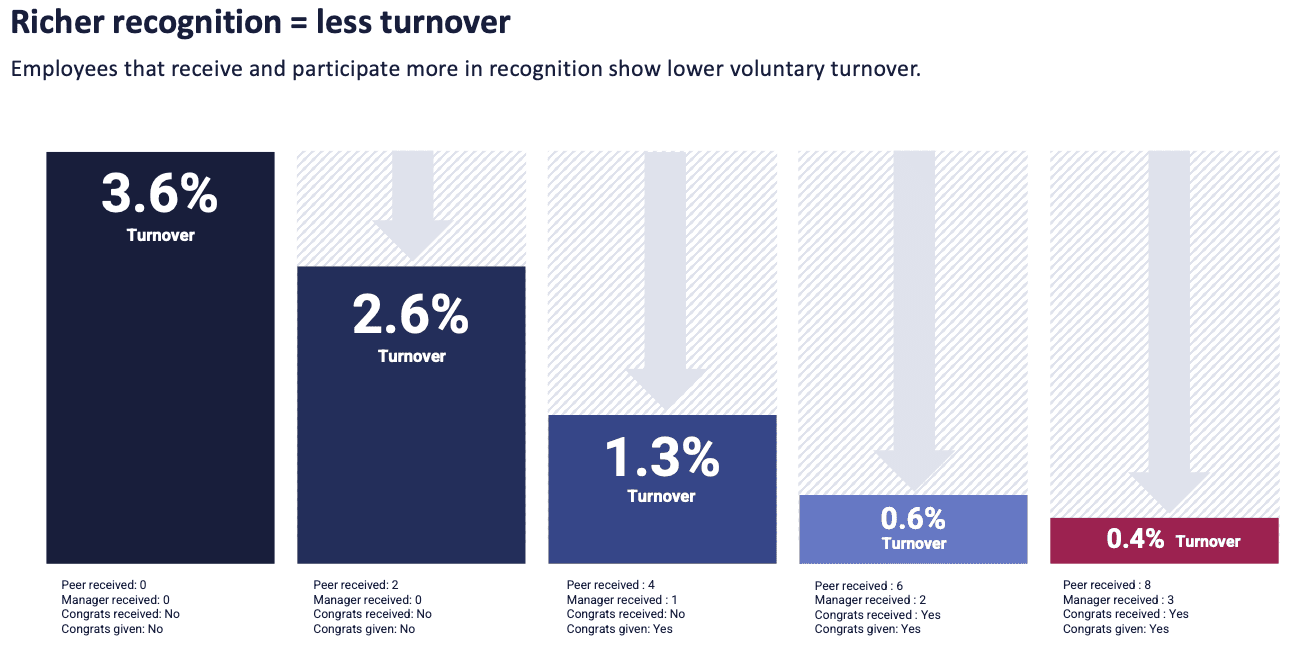
The Workhuman iQ team has seen that employees who receive regular recognition – especially from both managers and peers – feel more valued, leading to lower voluntary turnover. For one customer, giving recognition was just as impactful as receiving it, fostering deeper engagement and connection to culture.
Communicate clearly and frequently
Launch campaigns, internal training, and ongoing communications to ensure employees understand how to access and use the platform. A short company meeting or virtual session can be more effective than relying solely on email.
Some companies, like Workhuman, may provide clients with activation packages and internal communications templates to make employee adoption and participation seamless and sustained. In fact, our partner CAA Club Group saw 100% adoption rates in their first year after launch.
Publicize and celebrate achievements
Make recognition visible to the entire organization to reinforce culture and motivate participation. Workhuman's Platform was designed with several features to amplify praise to share experiences publicly:
- Social Recognition allows employees to write each other heartfelt recognition and leave notes celebrating their colleagues' recognition messages.
- Culture Hub curates recognition moments personalized to each employee for a "joy scroll" through a feed of culturally energizing messages, celebrating successes across the organization.
- Topics ties recognition directly to strategic initiatives, helping people understand what’s important and see it reinforced.
- Reward StoriesOpens in a new tab gives employees the opportunity to spotlight their most exciting reward redemptions – complete with photos, videos and personal reflections.
- Social Sharing let's them amplify their recognition and rewards outside your organization to their social networks.
These features help employees see the real impact of recognition, celebrate contributions, and feel connected across teams.
Iterate and improve
Collect real-time feedback, track engagement metrics, and monitor reward redemption to refine your program. Regularly review what’s working, adjust rewards and recognition frequency, and ensure adoption remains high over time.

A recognition and rewards platform that works for you
A modern platform should do more than process awards. It should teach, guide, and elevate recognition culture.
After 25 years, Workhuman deeply understands the most granular best-practices and uses that knowledge and experience to drive every decision we make. That’s why we’ve invested so much in AI infused within an ultra-modern platform that teaches employees how to give better recognition and inspires pervasive participation.
Our platform is built for meaningful moments at scale:
- AI-powered assistance helps employees craft specific, impactful recognition messages.
- A global rewards marketplace ensures every employee gets localized, relevant choices that reinforces the values and performance that underpins your recognition program.
- Advanced analytics highlight trends, surface workforce insights, and find opportunities for deeper alignment.
Every feature, every capability, and every piece of guidance we offer are reflections of our thought-leadership and our commitment to helping organizations build high-performing, values-driven cultures.
Conclusion
Employee reward systems and programs are powerful engines for engagement, retention, culture, and connection. When recognition is meaningful and rewards feel personal, employees feel valued for who they are and what they contribute – and that creates the conditions for more desirable employee experience, stronger teams, and better outcomes.
If your organization is ready to build a culture where appreciation is real, visible, and scalable, now is the ideal time to invest in a modern employee recognition and reward system.

Alison Enzinna
A content strategist and innately curious person, Ali Enzinna has started exploring the working world, looking for opportunities to make big changes through small actions.
Recommended for you