
Human-Centered Leadership: Transforming Workplaces Through Empathy and Empowerment
by Anna Picagli
Last updated
4 min read

Companies that see the most success over time are those whose teams are agile and innovative. Fostering this type of culture may require a shift in your leaders' mindsets – from treating employees as “resources” to treating them like humans.
As Gary Hamel states, every employee gets to decideOpens in a new tab whether to bring their unique skills and ideas to work. Gallup’s engagement data suggests the answer is usually "no." To survive, grow, and continuously innovate, leaders should commit to creating a culture where every person can bring their initiative, imagination, and passion to work.
What exactly does a human-centered leader do?
Human-centered leadership is a leadership style that prioritizes the following:
Embracing a growth mindset
Technology continues to change at an accelerated pace. What used to take decades now takes years; what took years takes months; months, weeks; weeks, days; days, hours. An employee executing one task today must be continually upskilled to handle a different job tomorrow.
For this reason, a human-centered leader embraces a growth mindset. They believe everyone's skills can be developed through dedication and hard work – brains and talent are just the starting point. A growth mindset creates a culture of continuous learning and evolution, where it is safe to work outside your comfort zone and learn new skills.
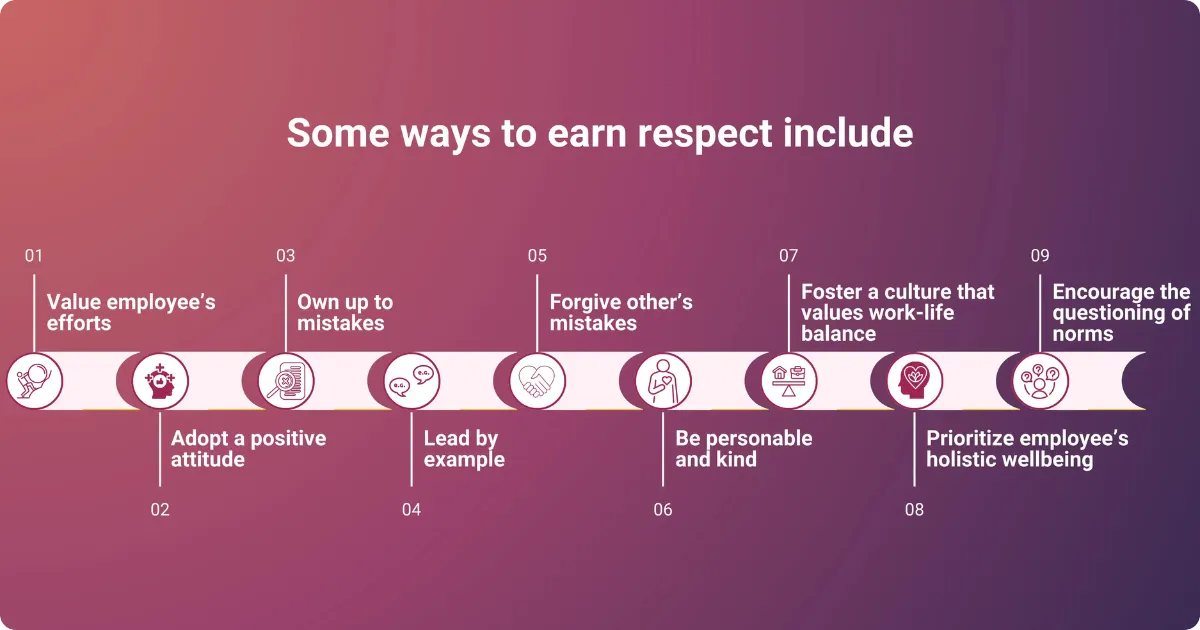
Earning respect
As leaders move up the hierarchy of an organization, the assumption is they deserve increasing respect. This paradigm is incorrect. According to Simon Sinek, "Leaders lead not to serve those above them; they lead to serveOpens in a new tab those who serve them." Effective people management is rooted in this mindset, focusing on serving and empowering those within the organization.
Taking off the mask
Human-centered leaders are authentic and genuine. They are guided by their values and stay true to those principles. Authenticity enables leaders to emotionally connect to employees. It invites everyone to let their “masks” down and connect, inspire, collaborate, and innovate. Without authenticity, most workplace relationships are superficial, which is detrimental to collaboration and innovation.
By building both personal and professional relationships with employees, managers can lead their teams in a more close-knit, genuine, effective way. This centers on human connections and supports the long-term success of the organization.
Understanding the limits of knowledge
Power, as the late Karl Deutsch astutely observed, is the ability to afford not to learn. As leaders move up the hierarchy, their intellectual capital tends to decline. They do not have the time to focus on understanding the details of what is needed in the market.
Effective leaders empower employees to challenge norms and decisions. They engage employees, especially those in customer-facing roles, to gather the right information to drive strategy and vision. Human-centered leaders acknowledge their blind spots and actively engage those who have the details needed to make decisions.
Removing obstacles
A human-centered leadership approach doesn't involve micromanagement. Instead, it removes barriers to fostering a culture of productivity and resilience. The goal is to enable individuals to create, innovate, and charge full speed ahead. Some barriers are to other teams and priorities.
Asking for feedback
The human-centered leader asks for feedback from their teams on a continuous and systematic basis. They take feedback seriously and commit to evolving and changing. These leaders are humble, ask for help, and apologize when needed. This helps foster a deeper sense of psychological safety in the organization.
Understanding the impact of bias
Leaders cannot close their eyes to systematic racism and bias throughout the organization. Leaders must be aware of their own biases and the organization's challenges for creating a diverse and inclusive culture. By modeling positive behaviors and learning to put people first, they can have positive, lasting impacts on organizational culture.
Coaching versus managing
Priorities shift too quickly for leaders to become experts at everything. The command-and-control leadership model must evolve to one where leaders give support and guidance. They must equip employees with the skills to make the right decisions through ongoing coaching. Not only does this help employees feel safe, but it also encourages them to be lifelong learners.
Caring about more than profit
Many forward-thinking leaders are embracing their obligation to society as a whole. Carol Stanford explains that a regenerative organization "begins to take responsibility not only for its internal systems … but also for the larger social and natural systemsOpens in a new tab that we depend on collectively."
The bottom line is successful organizations and leaders care for and invest in the society and community in which they operate.
Leveraging technology
The people-oriented leader understands the value technology can bring in helping transform their culture into one that values, recognizes, and inspires each individual. For example
- Social Recognition® enables employees and leaders to give peer-to-peer recognition awards to one another and create a more inclusive work culture.
- Crowdsourced feedback drives continuous learning and development
- Simplifying the check-in process helps managers and employees have collaborative and productive discussions
- Regular pulse surveys help leaders understand, on a continuous basis, challenges within the organization
Recognizing great work
Finally, human-centered leaders create a culture of recognition where employees feel valued, respected, and recognized for their creativity and innovation. This fosters a sense of belonging that creates a more positive, productive work environment, helping employees feel more psychologically safe.
FAQ
How can I create more opportunities for human-centered leadership in my organization?
Hiring a diverse and inclusive leadership team can be extremely helpful when trying to increase the number of varied perspectives and the level of empathy within your organization. Investing in professional development and training programs can help your existing leaders hone their skill sets and tailor their strategies to be more successful.
Are there any training programs to foster human-centered leadership?
Harvard Business School hosts one of the premier programsOpens in a new tab for those looking to develop more human-centered leadership skills. With expert teachers and executive coaching opportunities, this training is one of the most highly regarded in the nation.
Wrapping up
Although change isn't easy, it's time that leaders adopt a new mindset. For organizations to be successful and thrive in the new world of work, they must take on new leadership behaviors and treat team members as valued, respected humans who are a critical competitive advantage.
Not only will this result in increased employee engagement, but it will also create a more positive, healthy work culture for everyone in the organization.

Anna Picagli
As an RYT500 yoga instructor and a Reiki Master Teacher, Anna is an advocate for holistic wellness, especially within the workplace. She’s extremely passionate about the brain-body connection and exploring how mental and physical wellness intersect.
Anna has experienced firsthand how chronic stress, overworking, poor management, and other organizational issues can lead to extreme burnout. Knowing the impact that a toxic work environment can have on a person’s body, psyche, and general sense of well-being, she now works to direct others away from facing the same fate.
As Workhuman’s Senior Content Specialist, Anna is a regular contributor to Workhuman iQ reports and aims to create resources that company leaders can reference to help improve their culture and empower their employees, creating healthier workplaces for everyone.
In her free time, she’s an avid solo traveler, a voracious reader, and a seasoned home chef. You can learn more about Anna’s work on LinkedIn or through the Yoga Alliance.
Recommended for you