
Employee Recognition Software for Large, Global Companies: A Feature Guide
by Ryan Stoltz
Last updated
11 min read
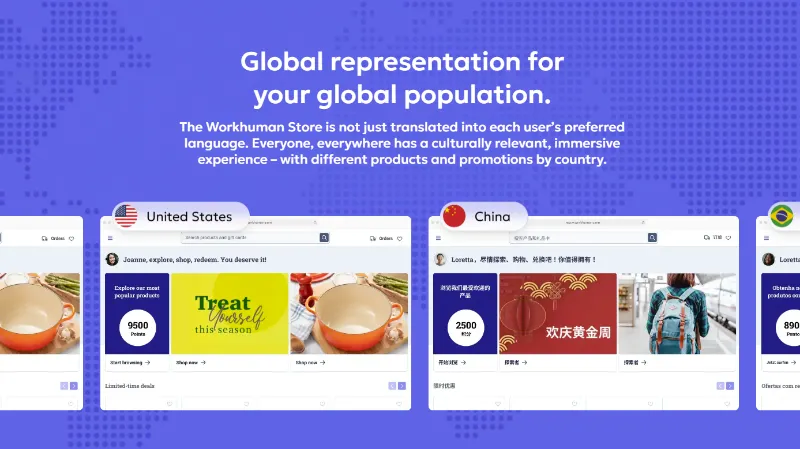
Table of contents
- The real challenges of running recognition across multiple countries
- The business case for a unified global recognition platform
- 10 Core features to look for in employee recognition software for global companies
- Industry-specific considerations for global employee recognition programs
- How Workhuman supports global recognition programs
- Questions to ask vendors (global RFP checklist)
- Global recognition requires global infrastructure
- FAQs
Share this article
A recognition program that works well in one country is often unsuccessful in other countries. What begins as an effective engagement initiative in the US or UK usually breaks down into regional workarounds and unsupported employee populations the moment it crosses a border.
This usually happens because of two common mistakes. Some organizations try to globally roll out a recognition platform built for a single country, leading to inconsistent employee experiences and compliance gaps.
Other companies allow their branches worldwide to use their own recognition software vendor. As a result, data is stored in separate systems, and recognition visibility becomes limited.
With the right employee recognition software for global companies, business leaders can avoid both mistakes. You get one platform to manage global employee recognition programs, offer localized rewards options, and adapt to local compliance requirements.
To help HR and total rewards leaders identify and evaluate the top employee recognition platforms, this guide reveals:
The real challenges of running recognition across multiple countries
After launching a global recognition and rewards platform, the main difficulty is keeping it consistent and compliant across countries. Here are common challenges organizations face.
Program fragmentation
When a global company manages recognition country-by-country or vendor-by-vendor, program data gets scattered in siloed systems. As a result, it’s nearly impossible to ensure consistent reporting and equitable recognition across a global workforce.
As per Salesforce’s Guide to Modern Data ManagementOpens in a new tab, fragmented data makes siloed systems more expensive to maintain and run than a unified employee recognition platform.
Tax and compliance complexity
Recognition rewards are usually taxable, but how you handle them varies widely by country. In the UK, for example, they fall under benefits in kind (BiK), while in the US, the IRS treats them as fringe benefits. Some non-cash rewards, such as vouchers, are tax-free up to a certain monthly limit in Germany.
Without a recognition platform that handles country-specific tax requirements automatically, the burden shifts to total rewards and finance teams who have to track and report on tax obligations manually. This increases both compliance risk and administrative overhead.
Works councils and local governance
Before implementing employee-facing technology, many European countries require employers to consult and sometimes seek approval from a works council — a group of employee reps who represent and advance staff interests in discussions with management.
The works council consultation or approval requirement is a common blind spot when buying employee recognition software. Global organizations often discover the requirement late in the implementation phase, when timelines are difficult to adjust.
Rewards catalog gaps
A rewards collection that works in North America might not be suitable for workers in Southeast Asia, Latin America, or Eastern Europe. That’s because cultural preferences and local availability of some rewards vary by region.
If employees can’t find recognition rewards they actually want or can use, the recognition program fails to achieve its purpose. Staff members end up frustrated instead of feeling appreciated and valued.
Local fulfillment, relevant merchandise, and in-country gift card availability are mandatory for global employee recognition programs to succeed. Without these elements, employees are less likely to engage with the recognition platform.
Currency and foreign exchange (FX) management
Currencies differ in value and purchasing power in different countries. For this reason, global recognition programs tied to a single currency often create inequities in award value across regions. They also increase administrative burden if managers have to manually calculate FX conversions just to issue awards using local currency.
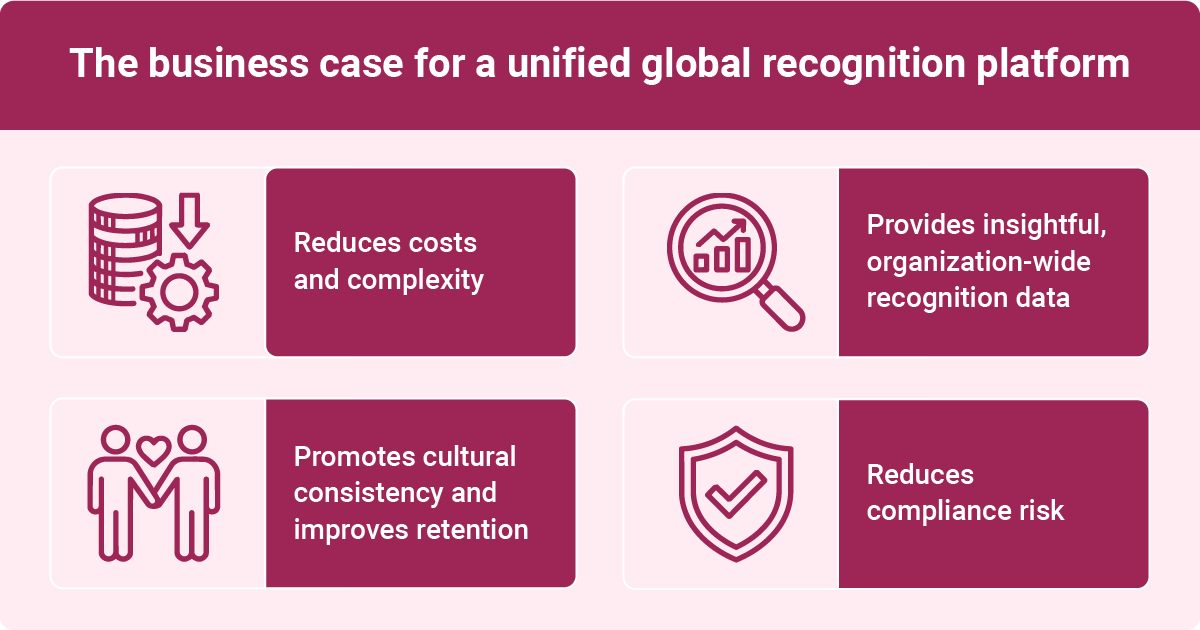
The business case for a unified global recognition platform
In employee recognition for large companies, the justification for a unified global platform is both operational and strategic.
Reduces costs and complexity
Maintaining multiple recognition software vendors across countries comes with redundant costs in licensing and integration.
With a unified global recognition platform, you use just one tool to acknowledge and award employees in all your branches worldwide. This reduces complexity and creates an opportunity to negotiate better deals with a single vendor, which positively impacts costs.
Provides insightful, organization-wide recognition data
In fragmented systems, recognition data is siloed by region or vendor. As a result, it’s nearly impossible to generate meaningful, organization-wide insights at a global level.
Promotes cultural consistency and improves retention
Even if rewards are tailored locally, employees in different regions should experience the same core values and recognition standards. When organizations consistently reward employees' exceptional work through a shared platform, it helps in creating a culture of recognition, where recognition becomes embedded in workplace culture rather than treated as a periodic program.
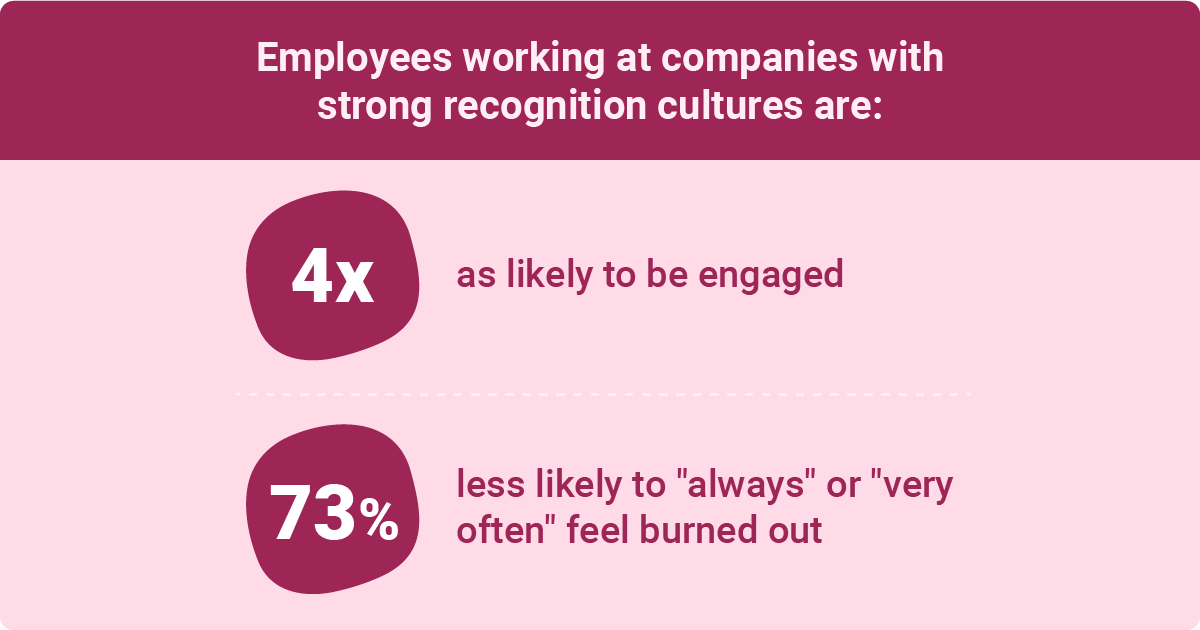
A unified recognition strategy provides a single platform for recognizing employees using your company’s values. That way, you use the same standards to acknowledge your staff while still offering a catalog of rewards that employees care about.
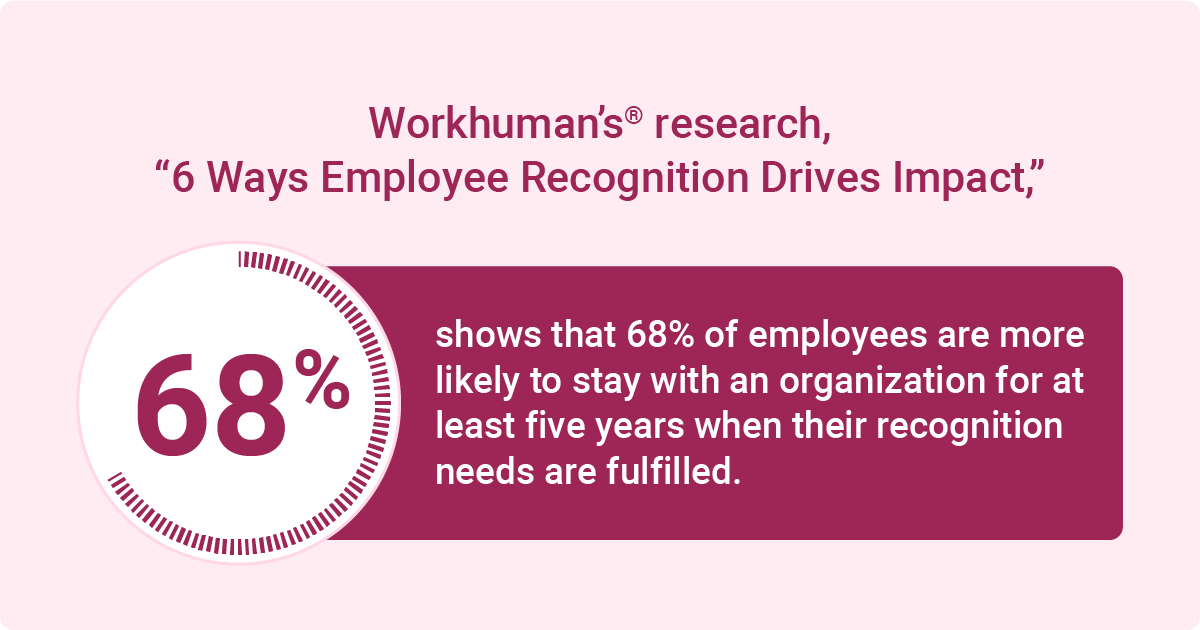
And according to Workhuman’s® research titled ‘6 Ways Employee Recognition Drives Impact’, when employee recognition needs are fulfilled, 68% of workers say they would stay in an organization for at least five years. Frequent recognition is the mechanism that drives that outcome — and a unified platform makes it easier to sustain recognition cadence consistently across every market.
Reduces compliance risk
Recognition programs intersect with tax regulations and employee data governance in every country where they are provided.
A centralized global recognition platform like Workhuman comes with automated tax handling and compliance controls for supported countries. That way, unified software reduces compliance gaps and ensures programs can scale without creating additional legal or financial risk.
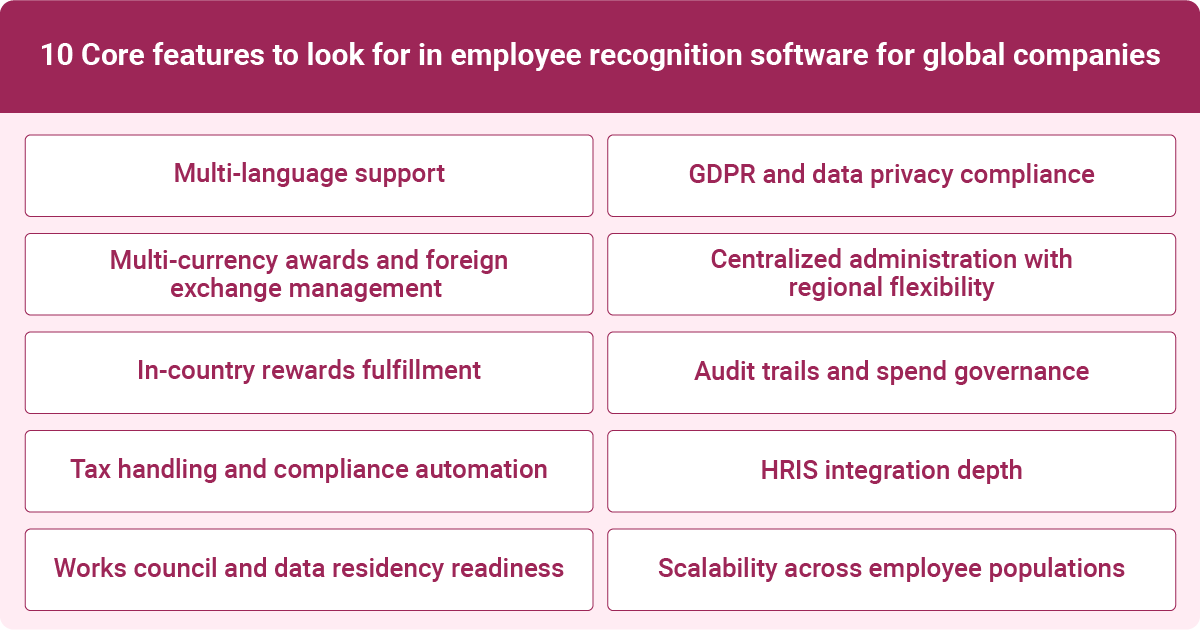
10 Core features to look for in employee recognition software for global companies
When choosing global employee recognition software, HR and total rewards leaders should prioritize features that cater to a geographically dispersed workforce. Here are the key capabilities to look for.
1. Multi-language support
Everything employees and managers interact with should be available in their local working language, from the platform interface and recognition messages to notifications and manager workflows.
Because language varies by country, partial localization, such as an English-only interface paired with local rewards, isn’t enough to drive adoption or deliver a consistent employee experience across regions.
2. Multi-currency awards and foreign exchange management
Managers should be able to issue awards for employee recognition in local currencies without having to handle foreign exchange conversions manually, which can be a lot of work when recognizing multiple people in different countries . The platform should automate FX calculations and reporting to reduce administrative overhead for HR and finance teams.
3. In-country rewards fulfillment
The global recognition software's rewards catalog must include locally relevant options backed by a reliable global reward fulfillment infrastructure. Shipping rewards internationally involves customs and long wait times.
In-country fulfillment eliminates the need for international shipping, allowing employees to receive awards quickly. Leaders should consider where their global teams are located and then evaluate recognition software based on how well the vendor supports localized rewards fulfillment in those regions, not just the total number of countries the vendor claims to cover.
4. Tax handling and compliance automation
Since tax rules for employee rewards vary widely by country, managing them manually across multiple regions is time-consuming and hard to scale. A global recognition platform should automate the process by calculating and reporting the tax treatment of rewards in different countries.
Before choosing a platform, HR and total rewards professionals should ask vendors which countries are fully supported for automated tax handling. Just as important, business leaders should ask where manual workarounds will be necessary. This allows them to choose a solution that minimizes compliance risk and reduces operational burden across regions.
5. Works council and data residency readiness
The platform should also offer the option to choose where data is stored. Some countries have data residency laws that require sensitive employee information to remain within their borders.
6. GDPR and data privacy compliance
Running global employee recognition programs involves using employee personal information, which is usually protected by law. Senior leaders should identify all applicable data protection regulations and choose an employee recognition platform that complies with them.
If the European Commission’s General Data Protection Regulation (GDPR) applies, for example, the platform must be demonstrably compliant, which includes having:
- Clear data processing agreements
- Documented employee retention policies
- The ability to fulfill data subject access requests
In short, a vendor should show how compliance is built into the recognition platform. A compliance statement on their website or marketing materials isn’t enough proof.
7. Centralized administration with regional flexibility
Global recognition programs require governance that works at two levels simultaneously: centralized oversight for consistency and compliance, and regional flexibility for local configuration. Administrators need unified control over budgets, approval workflows, and spend visibility across all markets, while regional administrators need the ability to configure local languages, compliance parameters, and award structures without disrupting the broader program.
The platform should enforce this balance through a structured role-based access control (RBAC) framework — where access to features, data, and analytics is determined by assigned roles and capability rules rather than ad hoc configuration.
Spend management, reporting, and team-level analytics should each be scoped by role, ensuring employees, regional administrators, and global HR leaders see only what their permissions allow. Access assignments should sync with organizational employee data and be secured through Single Sign-On (SSO).
When evaluating vendors, ask how RBAC is implemented across a multi-country instance, specifically, whether a regional administrator can be scoped to their employee population while a global HR leader retains visibility across all markets.
8. Audit trails and spend governance
International organizations need recognition software that records detailed platform activities, such as:
- Who gave recognition
- Who received it
- When it occurred
- The value of the associated reward
As a result, organizations maintain reliable, exportable audit trails for compliance reviews and regulatory investigations.
In addition, global HR software should also provide complete visibility into recognition spend by country, cost center, and employee population using real-time dashboards.
With these insights, senior leaders can see where money is going and ensure they stick to recognition budgets without over- or under-investing in some regions. These recognition insights allow leaders to track recognition activity in real time, identify gaps in the recognition process, and ensure spend aligns with program goals.
9. HRIS integration depth
A global recognition platform should integrate with human resource information systems (HRIS) that international organizations use across regions. Common ones include Workday, SAP SuccessFactors, Oracle HCM, and UKG.
The integration should be deep enough to handle the complexity of international organizations. For example, it should support multi-entity organizational structures, country-specific employee data fields, and regional reporting hierarchies without creating data inconsistencies.
10. Scalability across employee populations
Business leaders should ask recognition software vendors for evidence of successful platform deployments at a comparable global scale (for example, 70+ countries and over 50,000 employees). In those deployments, they should specifically ask for:
With that kind of information, HR managers can choose a platform that has been proven to scale globally and deliver measurable results.
Industry-specific considerations for global employee recognition programs
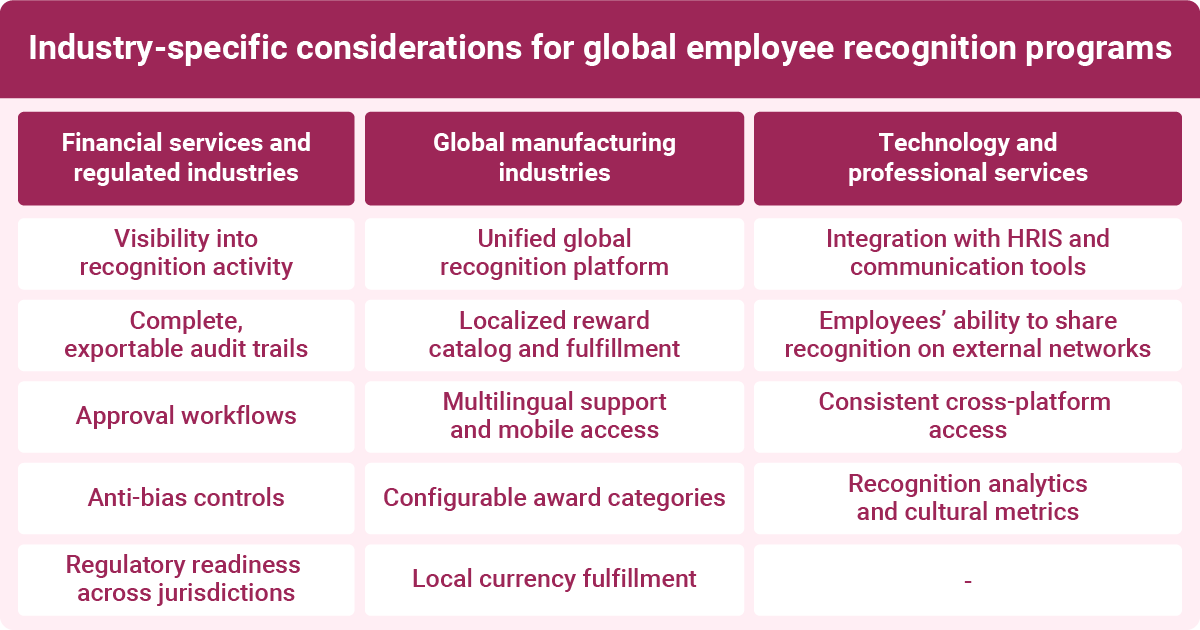
What matters most in global recognition programs isn’t always the same for every organization. Whether business leaders prioritize compliance, data-driven insights, or accessibility may depend on their industry.
Financial services and regulated industries
In financial services and other heavily regulated industries, governance and compliance are the top concerns when running global employee recognition programs. Key features in global peer-to-peer recognition software that can help address those concerns include:
- Visibility into recognition activity lets leaders monitor who is recognizing whom and identify patterns across teams and regions.
- Complete, exportable audit trails record every recognition action, so it’s easy to track decisions and support compliance reviews.
- Approval workflows allow organizations to review recognition before it’s issued, reducing compliance risk and ensuring policy alignment.
- Anti-bias controls help ensure recognition is offered fairly and consistently across regions.
- Regulatory readiness across jurisdictions, such as benefits-in-kind tax treatment in the UK, promotes compliance with local tax laws.
Besides compliance and governance, business leaders in financial services should also consider long-term platform stability. How long a vendor has supported large, global companies (operational track record) can show whether the tool will be reliable over time.
Global manufacturing industries
For international manufacturers, the primary concerns are global reach and frontline accessibility. To meet these needs, here are the essential features to consider in recognition software:
- Unified global recognition platform: It provides a centralized place where managers can use the same values to recognize employees across global plant locations, which promotes consistency.
- Localized reward catalog and fulfillment: Manufacturers should choose a platform with offers tailored to the culture and preferences of employees in different countries. In-country fulfillment ensures rewards are available and accessible even in developing regions.
- Multilingual support and mobile access: Frontline employees in manufacturing plants, who are often deskless, can easily access recognition programs on their phone, even in non-English-speaking regions.
- Configurable award categories: Manufacturers can set tailored manufacturing goals, such as safety and production milestones, that deserve recognition.
- Local currency fulfillment: Globally dispersed employees can receive awards in their own currency without foreign exchange conversions.
Technology and professional services
In technology and professional services, leaders care more about insights and integrations. For this reason, essential features to prioritize in international recognition software include:
- Integration with HRIS and communication tools, including Workday, Slack, and Microsoft Teams, so recognition flows within the tools employees already use daily.
- Employees’ ability to share recognition on external networks like LinkedIn and Viva Engage, which promotes employer branding
- Consistent cross-platform access that allows remote workers to easily access the program on a mobile app, desktop browsers, and integrations like Slack or Teams, while the recognition experience remains constant
- Recognition analytics and cultural metrics demonstrate how peer-to-peer appreciation, social recognition, and reward activities impact engagement, retention, and team recognition equity across regions.
How Workhuman supports global recognition programs
Workhuman is an employee recognition software built for large, complex, global organizations. Here's how it supports international recognition programs:
- Multi-currency award issuance and FX management: Managers can issue awards in local currencies while the platform automatically handles exchange rates and centralized reporting, eliminating manual FX calculations for HR and finance teams.
- Automated tax handling across jurisdictions: Workhuman automates tax treatment and reporting in supported markets, while reducing manual effort elsewhere — including benefits-in-kind in the UK and fringe benefit reporting in the US — reducing compliance risk and administrative overhead across regions.
- Data residency and GDPR compliance: Workhuman allows organizations to choose where employee data is stored to meet local data residency requirements. The platform is demonstrably compliant with GDPR, including data processing agreements, documented retention policies, and the ability to fulfill data subject access requests.
- Works council support: Workhuman has successfully supported works council consultation and approval processes in European markets and provides documentation to help organizations navigate those requirements.
- Role-based access controls and audit logging: Access to features, data, and analytics is governed by a structured RBAC framework combining user roles, capability rules, and access groups. Spend management, reporting, and analytics tools like Workhuman iQ are each scoped by assigned roles — ensuring employees, regional administrators, and global HR leaders see only what their permissions allow. Access assignments sync with the Employee Data File and are secured through Single Sign-On (SSO). Every recognition action is logged in a complete, exportable audit trail for compliance reviews and regulatory investigations.
- Enterprise security: All communication between users and the Workhuman platform is encrypted via HTTPS, with SSL certificate pinning on native mobile apps to prevent interception. The platform supports six SSO configurations — including SAML, SP-Init, and IDP-Init — with web and mobile authentication managed independently. Mobile access uses OAuth token authentication with 30-minute token expiry and secure storage on iOS and Android. Workhuman maintains ISO 27001 and PCI DSS compliance, providing documented certification rather than self-reported security assurances.
- Deep HRIS integration: The platform integrates with major HR systems, including Workday, SAP SuccessFactors, Oracle HCM, and UKG. Workhuman's integrations support multi-entity structures, allowing global branches to maintain existing workflows without creating data inconsistencies across regions.
- Human Intelligence™ and Advanced Analytics: Workhuman iQ provides real-time visibility not only into employee behavior but also into recognition spend by country and cost center, along with recognition rate and equity metrics across regions. Human Intelligence also surfaces insights into employee sentiment through recognition and feedback signals, giving HR leaders a continuous employee feedback signal to sit alongside recognition metrics.
- Service Milestones automation at global scale: Workhuman automates milestone celebrations — including service awards and work anniversaries — across all regions without requiring manual setup or regional administrator intervention.
- Enterprise-grade implementation methodology: Workhuman supports large, multi-country rollouts with proven deployment experience, structured onboarding, and clear implementation timelines. Merck, a global biopharmaceutical company, launched its recognition program across 85 countries in a single day.
Questions to ask vendors (global RFP checklist)
Once you’ve identified the features you need in international employee recognition software, the next step is to confirm whether the vendors you’ve selected meet requirements. The questions below will help you assess platform capabilities and compare vendors based on what matters most in employee recognition for large companies.
Global recognition requires global infrastructure
Be cautious of vendors that present their recognition platforms as ‘global’ when they’re really built for one country and stretched to fit others. Global features are often added as an afterthought. As a result, these platforms rely on workarounds to support international use, increasing administrative effort and introducing unnecessary complexity into global recognition programs.
Among the best employee recognition platforms for international companies, Workhuman stands out as a solution designed from the ground up to operate across countries — not retrofitted for global use after the fact.
Request a demo to see how Workhuman’s features make it easy to run global employee recognition programs.
FAQs
What’s the difference between a global recognition platform and a platform that just supports multiple countries?
A platform that supports multiple countries can technically be used in different locations. But the experience is often shallow. For example, they usually offer a generic gift card catalog with international shipping and little to no consideration for local requirements.
A true global recognition platform, on the other hand, is built to operate natively across regions. It offers fully localized experiences (local language and currency), along with in-country reward fulfillment, automated tax handling, works council readiness, and integration with the most common HR systems.
How do recognition platforms handle tax compliance across different countries?
Recognition platforms handle tax compliance across different countries by applying the correct tax treatment (taxable vs. non-taxable recognition rewards) based on an employee’s location and generating rewards reports that align with local payroll and regulatory requirements.
When evaluating vendors, buyers should ask:
- Is tax treatment automated or handled manually?
- Is tax handling built into the platform or dependent on third parties?
- How are updates to local tax laws managed?
- Can the system integrate with payroll for accurate reporting and tax withholding?
What is a works council, and why does it matter for recognition software?
A works council is a group that represents employees in discussions with management, which is common in many European countries. In places like Germany, companies are often required to consult with works councils before introducing new employee-facing technology, such as recognition software.
A global recognition software vendor should provide documentation for works council consultations and share examples of successful deployments in regions with works councils.
How many countries does a recognition platform need to support to work for a global company?
What matters isn’t how many countries a platform claims to support, but how well it covers the countries that matter to your business. A vendor might advertise coverage in 100+ countries but still offer generic rewards and little to no in-country expertise. Another vendor may support fewer countries overall but provide deeper, in-country infrastructure in your key markets, including localized rewards and compliance support.
Can a global recognition program actually create a consistent culture across different regions?
Yes, but only if it’s designed intentionally. A unified recognition and engagement platform reinforces shared company values across regions, helping organizations enhance employee engagement while maintaining consistent recognition standards worldwide (not siloed by location).
At the same time, leaders can still customize rewards by region and set program parameters based on local needs. Some vendors, like Workhuman, also use advanced AI and analytics to deliver Human Intelligence insights that help maintain fairness and consistency in recognition across regions.

Ryan Stoltz
Ryan is a search marketing manager and content strategist at Workhuman where he writes on the next evolution of the workplace. Outside of the workplace, he's a diehard 49ers fan, comedy junkie, and has trouble avoiding sweets on a nightly basis.
Recommended for you