
Corporate Sustainability Initiatives: Benefits, Examples, and Certifications
by Mike Lovett
Last updated
6 min read

Table of contents
- Why does corporate sustainability matter?
- The crucial role of sustainability in the corporate world
- Linking sustainability to business success
- Instilling structure into sustainability initiatives with performance management
- Certifying corporate sustainability with third-party ratings
- 10 real-world corporate sustainability initiatives examples
- FAQs
- Conclusion
Share this article
As the climate crisis harms communities around the world, more attention is turning toward companies and the sustainability initiatives they have in place to mitigate their impact.
Consumers overwhelmingly careOpens in a new tab about a company's sustainability practices. For companies in the consumer goods business, this means, quite literally, that consumers are looking at the materials or ingredients of a product, how they were sourced and shipped, and whether they can reuse or recycle packaging as opposed to having it sent to a landfill.
However, companies not making products have just as many expectations to take what steps they can to reduce their waste, use efficient and renewable energy, and minimize their required travel.
Why does corporate sustainability matter?
Mitigating the effects of climate change requires input from every part of a community. Businesses, one of the major facets of our society, can help initiate positive change in and out of the office by implementing known environmentally positive policies in their workplace.
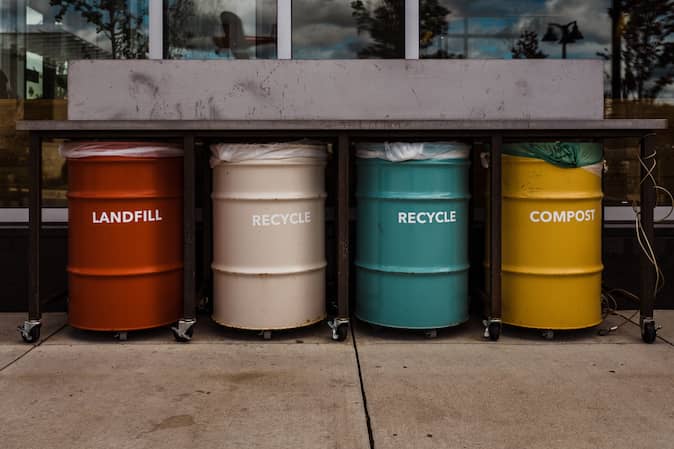
For many companies, making a positive impact is a lot easier than they might think. Compost and recycle bins in the kitchen and plans for waste reduction are two such quick fixes that set your company down a green path.
Sustainability contributes to workplace wellness and it's even a recruiting tactic with 70% of employees reporting sustainability programs make an employer more appealingOpens in a new tab.
The crucial role of sustainability in the corporate world

But now, political and public pressure is mounting for businesses to flex their positive might as key players in communities around the world.
Already, companies are taking tangible action to improve the efficiency and sustainability of their workplaces. The increase in remote work over the last few years has helped take cars off the road and reduce energy use. Companies that continue to innovate and imagine more robust sustainable practices can set an example for others.
Office buildings can be outfitted with solar panels, gardens, and bee hives. And companies overstocked on supplies could make donations to schools and local organizations for others to use. Collectively, these actions improve the efficiency of your building and the ecology of your immediate environment as well as provide a waste diversion program that benefits others.

Linking sustainability to business success
A sustainable business is better for customer and employee satisfaction. Not only are those two critical metrics for the health of a business, but they are also competitive advantages.
While some sustainability goals could be met in the first year, these initiatives will keep paying off in the following year and the years to come. Renewable energy, reusable or recyclable products, and more conscious, eco-friendly actions are the way of the future. Making these investments now is a way of future-proofing your business.
A quick check on whether your sustainability will actually translate to business success: are you spending more time marketing sustainability than tangibly making your business more sustainable? Many companies are guilty of greenwashing or not walking the walk on sustainable issues.
Social initiatives for sustainability
Combatting the effects of climate change requires collective action, which needs to be empowered. The intersection of social and environmental justice is one of the largest in society today.
Diversity, equity, and inclusion; empowerment and participation; and economic and social well-being – topics we cover extensively in the context of hiring, promotion, and business operations – are critical components of a sustainability strategy.
Employee resource groups (ERGs) centered on sustainability in the workplace are another great way to empower and include employees in sustainability efforts. Employees are on board already. An IBM study foundOpens in a new tab that 80% want to help their company hit climate or environmental, social, and governance (ESG) goals.

Environmental initiatives
With employees and the organization working in concert, sustainability goals can be set and efforts to improve the workplace can begin. What needs to be done varies significantly by organization and industry. But generally, sustainability goals should target reducing the organization's waste and carbon footprint.
Reduce your carbon footprint
Reduce energy use
Transitioning to more energy-efficient equipment and limiting heating and cooling to working hours wherever possible help reduce energy consumption.
Reduce commuting and business travel
As of 2021, transportation is the largest contributorOpens in a new tab greenhouse gas emissions in the U.S. Promoting remote and hybrid work as well as limiting unnecessary air travel are two potent, sustainable business practices.
Source from sustainable suppliers
Part of your carbon footprint is the company you keep. The supply chain is rife with unsustainable suppliers, and partnering with them works against your sustainability targets. Inquire or look for an organization's ISO 14001 certificationOpens in a new tab– accreditation that demonstrates they are measuring and improving their environmental impact.
Zero waste initiatives
Instilling structure into sustainability initiatives with performance management
To keep corporate social responsibility plans on track, you need to have a team in place with goals, objectives, and organizational support.
Choose a few critical areas of focus
There are sustainability ideas abound, but out of the gate, it's important to narrow your focus to a few. For example, implementing a compost program, reviewing suppliers, and working with building management to understand opportunities for greener infrastructure stagger short-, medium-, and long-term goals at once.
Set measurable goals
Like any other business goal, set clear targets for the organization to hit. Energy reduction, days in the office, and pounds of trash are quantifiable. For more expansive strategies with multiple goals, consider an environmental management system that can help you track progress.
Create incentives for employees and suppliers
As mentioned, employees are eager to see companies be energy efficient and practice waste minimization and pollution prevention. To incentivize and empower their participation, make it part of your business strategy and make it easy for them to get involved.
Greener policies are a boon to wellness across the board. For what else your organization can do, check out more workplace wellness tips.

Certifying corporate sustainability with third-party ratings
While not a comprehensive list, here are some of the major third-party certification programs available for businesses.
PEER
- Performance Excellence in Electricity Renewal (PEEROpens in a new tab) is the first-ever rating system to assess power system performance and improve the overall reliability, resilience, and power quality of electricity infrastructure.
TRUE
- The TRUE certificationOpens in a new tab focuses on the upstream policies and practices that make zero waste successful in an organization. Certified spaces eliminate waste, cut their carbon footprint, and support public health.
Green Business Bureau
- The Green Business Bureau's program is well-recognized and helps companies of all sizes become more sustainable, as outlined in "How to Choose the Right Green Business CertificationOpens in a new tab" by Green Business Benchmark. GBB's online program tracks your actions and completed initiatives to give you a scorecard of your progress.
B Corp
ISO 14001
- The aforementioned ISO 14001 (International Organization for Standardization) is a robust program that maps out an environmental management plan. It is reserved mainly for large-scale corporations.
10 real-world corporate sustainability initiatives examples
From reducing or eliminating waste to partnering with sustainable companies, there are examples of 14 Sustainable Business ExamplesOpens in a new tab every day. Here are a few of the most notable.
Patagonia
Sustainability is sewn into every item of Patagonia clothing. Not only are products made from recycled material, 1% of yearly earnings have been given to environmental organizations since the mid-80s. Their climate goals and carbon footprint are on their website for all to see.
LEGO
A huge user of plastics, LEGO has cut waste that went to landfills to under one percent, introduced pieces made from recycled materials, and facilitated programs to encourage donations of pre-used bricks.
Etsy
Everlane
Everland is committed to erasing plastic from its supply chain. Their clothing line, ReNew, uses plastics to make environmentally friendly fashionwear. They also have a long list of suppliers that meet ethical manufacturing standards.
Ben and Jerry's
I scream you scream, we all scream for responsible food waste, diverse and ethical suppliers, and waste-to-energy programs. B Corp-certified, Ben & Jerry's focuses heavily on the intersection of social and environmental justice. That intersection even has an ice cream flavorOpens in a new tab.
Bosch
Bosch reached its net-zero carbon emissions goal in 2020. They've continued to be a leader in environmental policies with sustainable water use and energy-efficient materials and machines.
Allergan
Winner of the EPA's Entergy STAR award for sustainability, since 2016 Allergan has reduced greenhouse gas emissions by 25% and total waste by 8%.
Intel
eBay
eBay, in its 27th year, remains one of the premier sellers of used goods. On top of becoming a household name and kickstarting an online economy of reuse, eBay has partnered with the U.S. Postal Service on green shipping items and with local stores to sell goods to reduce the cost of shipping.
Rothy's
Rothy's uses millions of plastic bottles and other marine plastic to create their products. Further, Rothy's became the world's first shoe manufacturer to receive LEED and TRUE Platinum certification. Their factory was the first in China to receive LEED Zero Waste certification.
Don't forget that environmental policies support physical and emotional wellness for your employees, too. Check out other wellness ideas for the workplace.

FAQs
Why are sustainability initiatives important?
As large players in communities, employees and customers agree that businesses have a responsibility to ensure they are mitigating their negative environmental impact.
Every business has an opportunity to make changes to their operations, however small, to create a positive effect on their employees, consumers, communities, and even themselves. Plus, waste management is getting more sustainable, not less, clean energy is growing in popularity, not waning. Businesses should recognize that the future is green.
What are some major sustainability initiatives?
Some of the biggest environmental initiatives an organization can implement are: reducing energy use and/or switching to more efficient energy sources, reducing unnecessary business travel, sourcing from sustainable suppliers, and reducing waste.
Some initiatives are more intensive and will take a longer time to realize, so your organization should focus on multiple initiatives to score short-, medium-, and long-term victories.
Conclusion
Sustainability initiatives are now a vital component of any company's business strategy. Companies that prioritize sustainability issues like their carbon footprint and social impact will develop stronger relationships with employees, customers, and partners and leave a more lasting and positive impression on their communities.

Mike Lovett
Mike is a senior content marketing specialist at Workhuman where he writes about the next era of the workplace. Outside the workplace, he’s an avid gardener, a frequent biker, a steadily improving chef, and a fantasy sports fanatic.
Recommended for you