
Recognizing Across Cultures: Germany
Last updated
9 min read
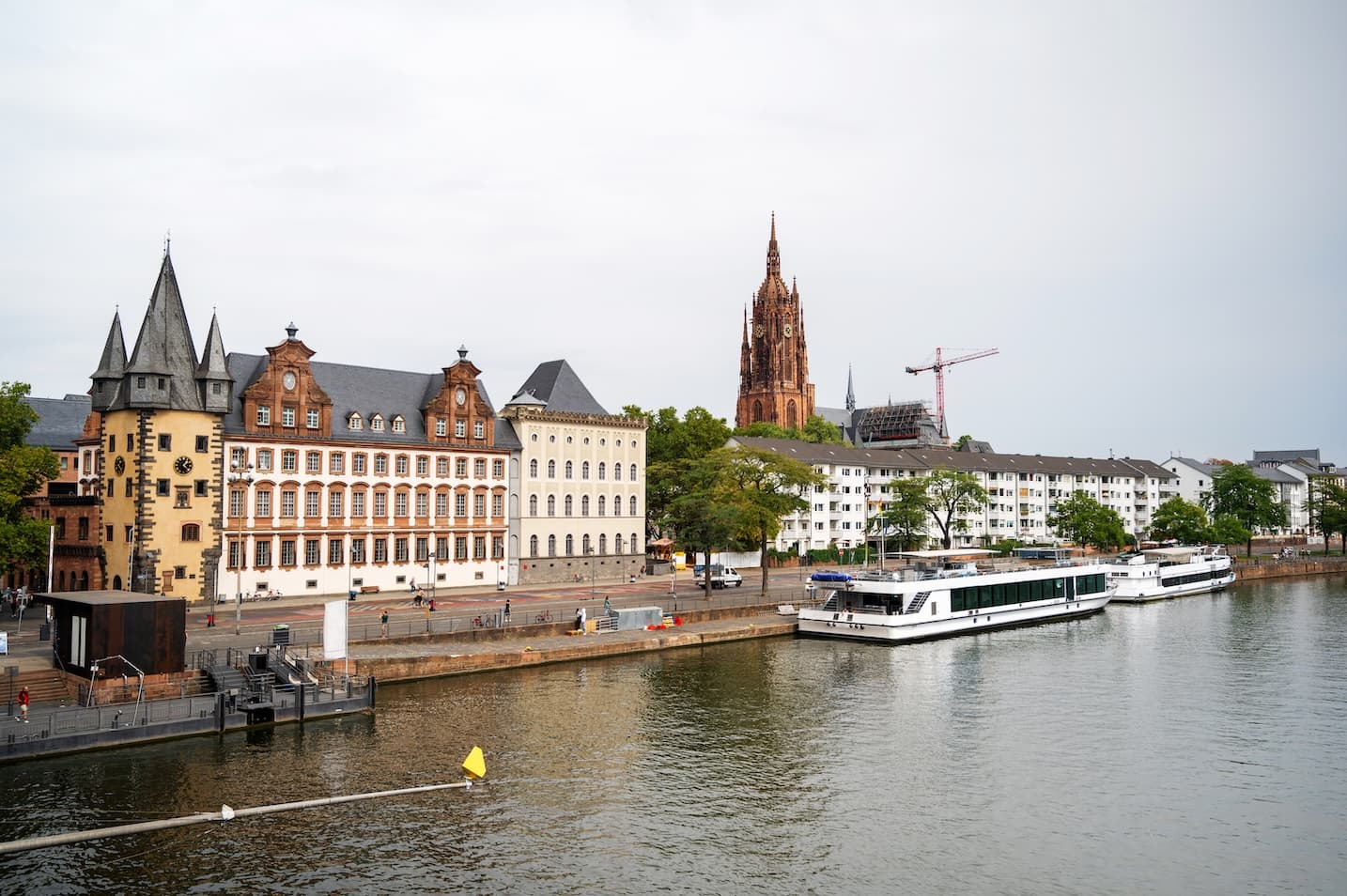
Do you know what makes recognition meaningful in Germany? Do you know about Bildung and Meistershaft? We’re continuing our series on Recognizing Across Cultures, where we explore how cultural norms shape the way people experience appreciation at work, and how organizations can make recognition more meaningful for employees around the world.

Germany
Overview
I still remember one of my first meetings with a new German team. I had spent days prepping a document, feeling rather pleased with it. They took a look and said, "This is wrong." There was no softening of the feedback. No "maybe." No "I wonder if." Just, "This is wrong." And I'll admit, with my U.S. sensibilities, I was taken aback.
It took me a while to realize they weren't being rude. They were being efficient. Their goal wasn't to make me feel any particular way about their feedback. It was to solve the problem. Once I understood that, I also noticed something equally important: when they did offer praise, I trusted it completely. They didn't hand out compliments lightly, so when they recognized good work, I knew they meant every word.
German business culture is often described as disciplined, structured, and matter-of-fact. Meetings are purposeful. Expertise is respected. Decisions are expected to be well reasoned. Employees are trusted to do their jobs well, and compliments are generally given carefully rather than freely.
It would be easy to mistake this reserve for a lack of interest in appreciation. But the opposite is true.
German employees value recognition as deeply as workers anywhere else. What differs is not whether recognition matters, but what makes it credible.
Where some cultures respond well to enthusiastic praise or highly visible celebration, German and DACH workers who align with Germanic culture norms often place greater value on recognition that is specific, sincere, and proportionate to the achievement. Recognition earns trust when it reflects observable contributions rather than exaggerated language.
For global organizations, this distinction matters. Recognition programs designed around loud celebrations, competitive awards, or generalized praise may unintentionally feel performative or inauthentic. But recognition that highlights expertise, craftsmanship, collaboration, and meaningful contribution aligns naturally with many of the values that underpin German workplaces.
The result is recognition that strengthens, not disrupts, the culture.
German Workplace Culture
As with every article in this series, we're taking some liberties by discussing Germany as representative of many characteristics shared across German-speaking business cultures.
Austria and the German-speaking regions of Switzerland each have their own unique histories and workplace norms, but they also share many of the cultural foundations explored here, particularly around precision, expertise, quality, and direct communication.
Like every region, there are also significant regional and organizational differences. A Berlin software startup may have little in common with a family-owned manufacturing company in the Basel region. Younger generations are also reshaping expectations around leadership, flexibility, and feedback.
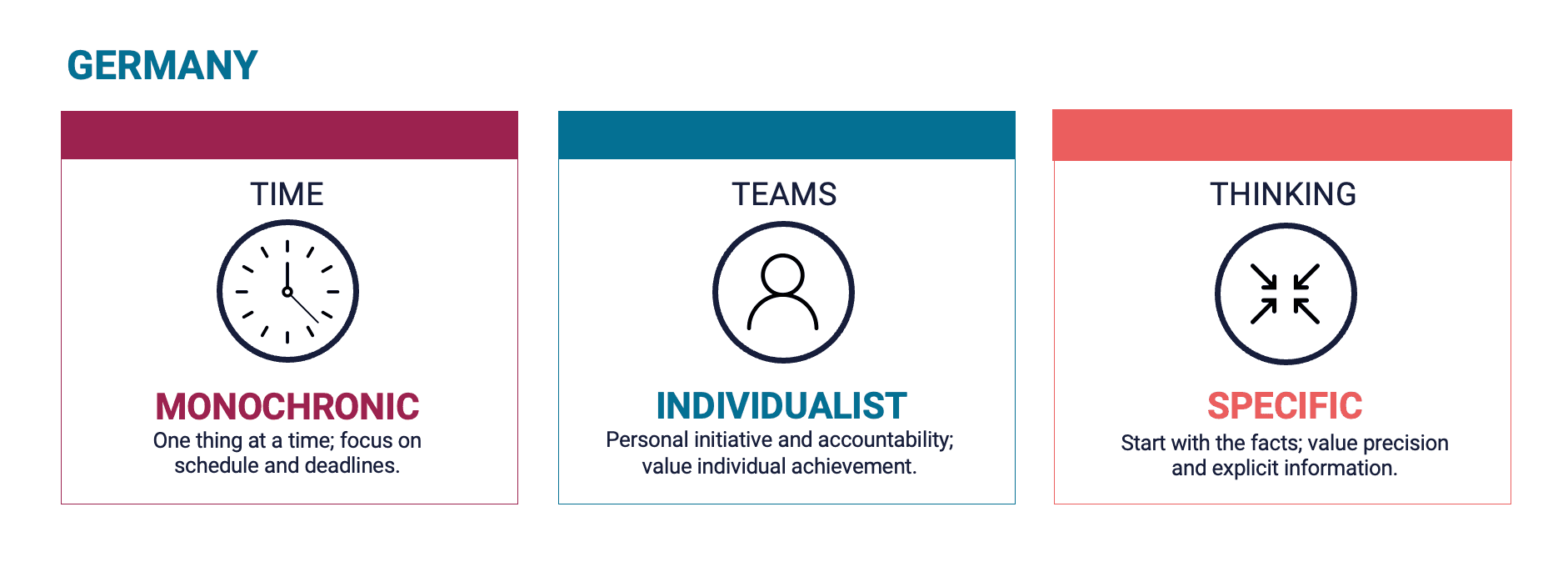
It probably comes as little surprise that Germany ranks among the world's most strongly Monochronic business cultures on Hofstede’s cultural dimensions. Time is viewed as linear, schedules are commitments rather than aspirations, and planning is viewed as a sign of professionalism and respect. Meetings begin on time, agendas are followed, and employees generally prefer to complete one task well before moving on to the next.
On Hofstede's framework, Germany also scores highly on Individualism. Personal responsibility and accountability matter. Employees are expected to take ownership of their work and develop deep expertise in their chosen field. Yet this shouldn't be mistaken for rugged individualism. German workplaces remain highly collaborative—but collaboration is built around clearly defined roles, mutual respect, and professional competence rather than consensus for its own sake.
Perhaps one of the most important dimensions for recognition is Germany’s relatively high Uncertainty Avoidance. German employees tend to value systems that are fair, transparent, and consistently applied. Recognition programs should have clear criteria, well-defined values, and an obvious connection between behaviour and reward. Specificity is part of that clarity. When recognition explains exactly what was done well, it removes ambiguity and makes the appreciation feel more credible.
Molinsky Framework
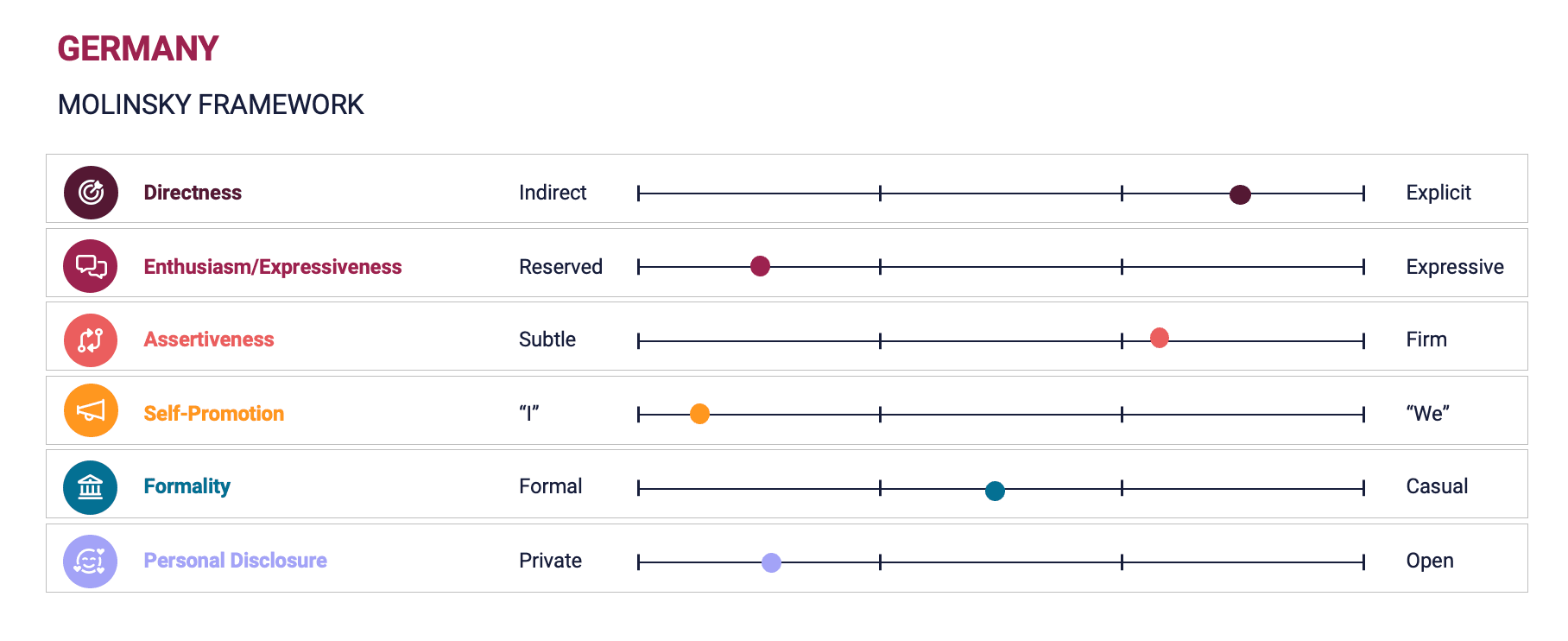
When it comes to the Molinsky methodology, German workplace norms often lean toward the explicit end of the spectrum for Directness. Feedback is generally expected to be clear, honest, and solution-oriented. As I discovered rather abruptly in my own experience, this can initially feel blunt to colleagues from more indirect cultures. But direct communication is generally intended to improve the work—not criticize the individual.
German business culture also tends toward the reserved end of Enthusiasm. This doesn't suggest a lack of passion or commitment. Rather, enthusiasm is expressed through thoughtful discussion, careful preparation, and the quality of the work itself more often than through animated language or overt displays of emotion.
On Assertiveness, Germany falls moderately toward the firm end of the scale. Opinions are expected to be supported by evidence, and healthy debate is often viewed as part of arriving at the best solution. Challenging an idea is rarely seen as challenging the person behind it.
German business culture generally places less emphasis on overt Self-promotion than many Anglo-American workplaces. While individual achievement is respected, employees are generally expected to demonstrate competence rather than advertise it. Recognition therefore serves an important role by making valuable contributions visible without requiring employees to draw attention to themselves.
German workplaces also lean toward the formal side of Formality, though this varies considerably by industry and generation. Manufacturing firms, engineering companies, and more traditional organizations often maintain greater formality than start-ups or technology businesses. Professionalism remains highly valued even in relatively informal environments.
Finally, Germany sits toward the private end of Personal Disclosure. Relationships certainly matter, but employees generally distinguish between professional and personal life. Recognition is therefore most effective when it focuses on meaningful work contributions rather than requiring employees to share personal stories or emotional experiences.
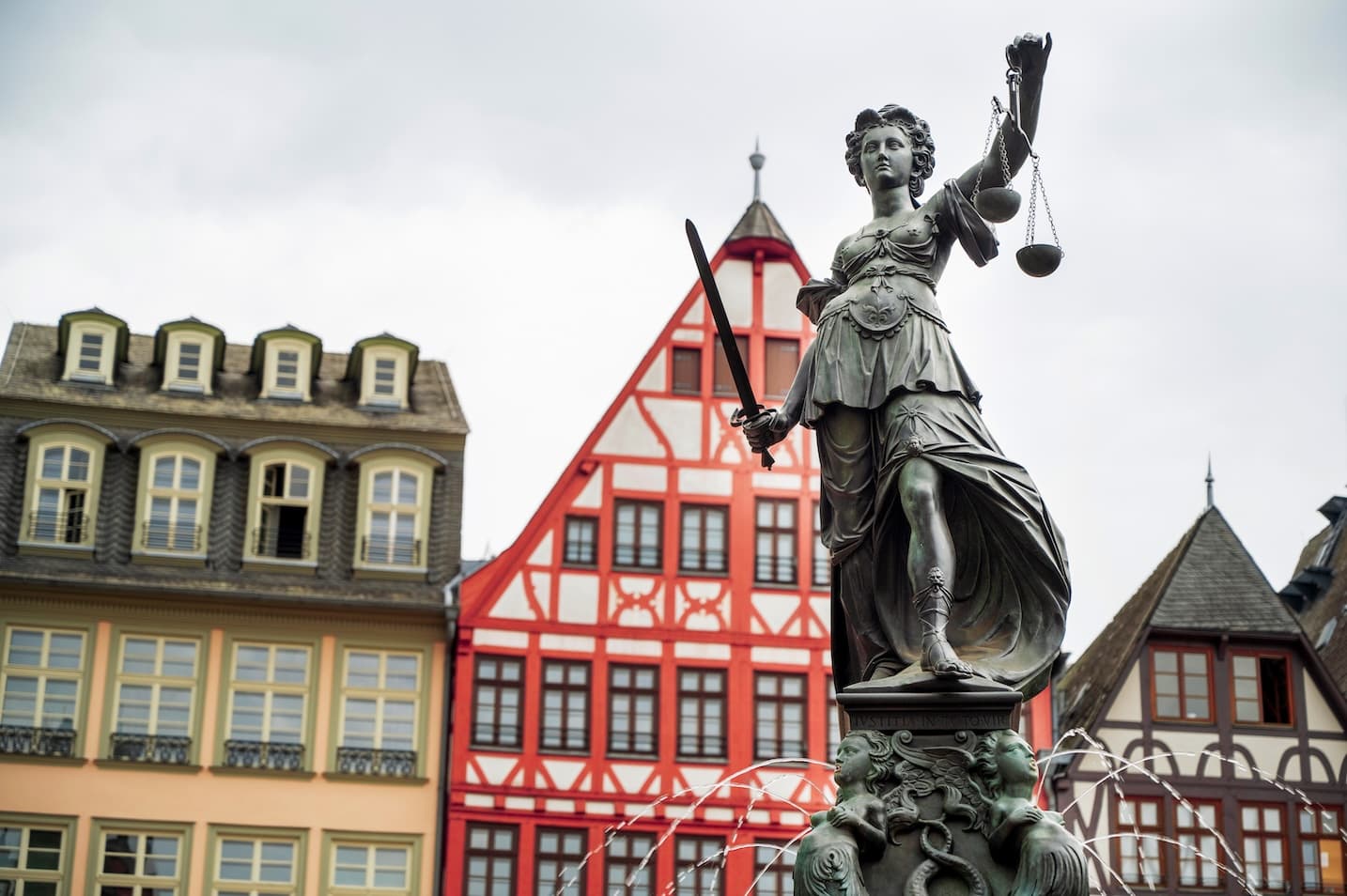
Germany – Workforce Snapshot
Germany remains Europe's largest economy and one of the world's foremost centers for advanced manufacturing, engineering, automotive innovation, pharmaceuticals, renewable energy, and industrial technology. Long associated with precision and quality, German industry continues to be driven by highly skilled knowledge workers and technical specialists.
Like many developed economies, however, Germany is facing a significant demographic shift. An aging workforce, declining birth rates, and persistent shortages of skilled labor have intensified competition for experienced employees.
Employers increasingly find themselves competing not only on salary, but also on workplace culture, flexibility, development opportunities, and purpose.
Germany's long-established apprenticeship system continues to produce some of the world's most highly trained technical professionals. At the same time, organizations are navigating rapid digital transformation, artificial intelligence, and Industry 4.0 initiatives that demand continual learning and reskilling throughout employees' careers.
International talent also plays an increasingly important role. German workplaces are becoming more culturally diverse, with multinational teams collaborating across borders and cultures. Recognition can play an important role in helping these employees feel connected, not only to one another, but to the organization's values and purpose.
German workplaces are also shaped by Mitbestimmung (co-determination), a long-standing tradition that gives employees formal representation through works councils (Betriebsräte) in many organizations. This reinforces expectations around procedural fairness, transparency, and employee voice. Recognition programs are therefore more likely to earn trust when employees clearly understand how recognition works, what behaviors are recognized, and why awards are given. Systems that appear arbitrary or overly dependent on individual manager discretion may face greater scrutiny in these environments.
Perhaps most importantly, many of Germany's most valuable contributions happen subtly. The engineer who improves a production process, the analyst who prevents an expensive error, or the technician who mentors newer colleagues may never seek the spotlight. Recognition helps ensure these contributions are seen, appreciated, and repeated.
German Business Culture in a Nutshell
To understand German business culture, it helps to understand a few concepts that have shaped both German society and the way work is approached.
Sachlichkeit
One of the defining characteristics of German communication is Sachlichkeit, often translated as objectivity or matter-of-factness. Discussions tend to focus on facts, evidence, and solving problems rather than preserving feelings or avoiding disagreement.
Recognition works best when it reflects this same principle. Rather than relying on broad praise or superlatives, recognition should clearly explain what someone accomplished and why it mattered. Specificity builds credibility.
Meisterschaft
Germany has a long tradition of respecting mastery. Whether through its renowned apprenticeship system or the historic title of Meister, professional expertise is earned through years of learning and practice.
Employees often take great pride in doing difficult things exceptionally well. Recognition that acknowledges craftsmanship, technical excellence, quality, and thoughtful problem-solving resonates particularly strongly in this environment.
Bildung
Few concepts are more deeply rooted in German culture than Bildung – the idea of lifelong education and personal development. More than simply acquiring knowledge, Bildung is about continuously improving oneself through learning, reflection, and experience.
Recognition can reinforce this cultural value by celebrating growth alongside achievement. Employees appreciate knowing that their developing expertise, mentoring, curiosity, and commitment to learning are noticed – not just the final outcome.
Ordnung
The German appreciation for Ordnung – order, structure, and systems – is often misunderstood as rigidity. In practice, it reflects a belief that well-designed systems create fairness, efficiency, and trust.
Recognition programs are no exception. Employees are more likely to trust and embrace recognition when they understand how it works, what behaviors are recognized, and why awards are given. Consistency, fairness, and transparency matter.
Taken together, these four concepts point toward an important conclusion: recognition in Germany thrives not when it is loud or more dramatic, but when appreciation is more exact, more credible, and more deserved.
Why Recognition Matters in Germany
From automotive manufacturing and industrial engineering to life sciences, finance, software, and advanced manufacturing, Germany remains one of Europe's largest and most innovative economies.
At the same time, German employers face many of the same workforce challenges affecting organizations around the world:
- competition for highly skilled talent
- demographic change and an aging workforce
- increasing expectations around flexibility and purpose
- growing international and hybrid teams
In Germany, highly qualified employees have choices. Salary remains important, but so too do meaningful work, development opportunities, supportive leadership, and cultures where contributions are noticed.
Recognition plays an increasingly important role in creating that culture. As work becomes more distributed, employees have fewer opportunities for informal appreciation through everyday interaction. Recognition helps restore visibility across teams while reinforcing the behaviors organizations most want to encourage.
One of the biggest misconceptions about German workplace culture is that "doing your job well should simply be expected." Of course it should. But expectations and appreciation are not opposites. Employees still want to know that their effort mattered. That their expertise was valued. That their contribution made a difference.
Recognition can fulfill several psychological needs that align well with many German workplace norms:
- First, it provides evidence that quality work has been noticed.
- Second, it reinforces professional mastery and continuous improvement.
- Third, it strengthens trust between colleagues by acknowledging expertise openly and fairly.
At the same time, tendencies in Workhuman's 2026 Humans at Work Barometer report, we found that only 51% of German workers reported having access to a formal recognition program – among the lowest rates in Europe. Yet among employees who did have a program, 72% had been recognized in the previous quarter, the highest participation rate in Europe.
Perhaps most importantly, recognition helps employees understand how their individual contribution advances the success of the wider organization. Recognition can help employees feel that their expertise has been noticed and trusted.
The opportunity isn't convincing German employees that recognition matters, but extending employees' access to recognition that already appears to work exceptionally well.
How to Recognize German Employees More Effectively
So how can you recognize effectively in Germany and German-speaking DACH cultures? Here are a few pointers:
- Make recognition specific and evidence-based. German employees are generally much more responsive to recognition that is grounded in actual contribution than to broad praise or emotional language. A message that explains what was accomplished, why it mattered, and what impact it had will usually resonate far more strongly than a generic compliment. In this culture, specificity is what makes recognition believable. Recognition should sound like it was written by someone who actually understood the work.
- Respect expertise and craftsmanship. Germany has a long tradition of valuing mastery, and recognition should reflect that. Employees tend to appreciate being recognized for technical excellence, careful problem-solving, thoroughness, and high-quality execution. This is one place where recognition can reinforce something deeply Germanic: the idea that doing something well, carefully, and consistently is itself worthy of respect. Recognition that highlights skill and competence fits naturally into this work culture.
- Keep the tone sincere, not theatrical. Excessive enthusiasm can sometimes reduce the credibility of recognition in German workplaces. That does not mean appreciation should be flat or formal to the point of feeling cold. It simply means that recognition should avoid sounding inflated or overly performative. A thoughtful, well-earned acknowledgment will usually carry more weight than a highly embellished one. In Germany, simple language backed by real substance often feels more respectful than a grand gesture.
- Make fairness visible. German employees tend to pay close attention to whether systems feel consistent and transparent. Recognition programs should have clear criteria and an obvious connection to company values or business outcomes. If recognition feels arbitrary, overly personal, or reserved for the most visible employees, trust in the system can erode quickly. The more employees can see that appreciation is tied to meaningful contribution, the more likely they are to view the program as legitimate. Interestingly, Germany's recognition challenge appears to be one of access rather than quality.
- Recognize quietly, but not invisibly. While German workplaces may be more restrained than some others, that does not mean recognition should disappear into the background. It simply means that recognition should be offered in a way that feels appropriate to the culture. Public recognition can work well when it is measured and meaningful, but there should also be room for private or lower-key acknowledgment. Some employees will welcome visibility; others will value a more modest expression of appreciation. Flexibility matters.
- Connect recognition to professional growth. German employees often value development, learning, and continued improvement. Recognition that reinforces growth (not just accomplishment) can be especially powerful. Acknowledging mentoring, knowledge-sharing, skill-building, or the steady pursuit of excellence helps recognition align with the broader value placed on Bildung and Meisterschaft. In other words, employees should feel that recognition celebrates not only what they did, but the standard they are building toward.
- Use recognition to reinforce collaboration, not personality. Germany is not a culture where the loudest voice in the room should necessarily get the most attention. Recognition is more credible when it reflects contribution to the team, not personal flair. It is especially effective when it highlights how someone helped others succeed, improved the quality of the work, or strengthened the process. Recognition should make clear that the organization values substance, not showmanship.
- Let the work speak for the person. This may be the most important principle of all. In German work culture, many employees do not need recognition to be lavish in order to feel meaningful. They need it to feel accurate. When a recognition message demonstrates that someone truly understood the work, the effort, and the outcome, it becomes far more powerful. In that sense, recognition is not separate from German work culture – it is one of the ways that culture confirms what it values most.
Final Thoughts
No two employees (and certainly no two organizations) experience recognition in exactly the same way. But understanding the cultural expectations people bring to work can help organizations create recognition experiences that feel authentic rather than imported.
In Germany, effective recognition is rarely about standing in the spotlight. It's about knowing that your work was understood. That your expertise was respected. And that your contribution helped move the team forward.
Those are universal human needs. Germany simply reminds us that sometimes the most meaningful recognition is also the most credible.
If you enjoyed this post, you might enjoy these related posts in this series:

Darcy Jacobsen
Darcy is a passionate storyteller and champion of workforce transformation, human connection, and recognition-driven culture. As an author on the Workhuman blog, she loves to connect deep research insights with modern workplace dynamics to uncover what really drives engagement, belonging, and happiness at work. With a background in communications and a master's in medieval history, she brings a unique perspective to her writing, taking deep dives into all topics around organizational psychology and the science of gratitude.
Recommended for you