
How to Conduct a Needs Analysis: Steps, Examples, and Best Practices
by Ryan Stoltz
Last updated
10 min read
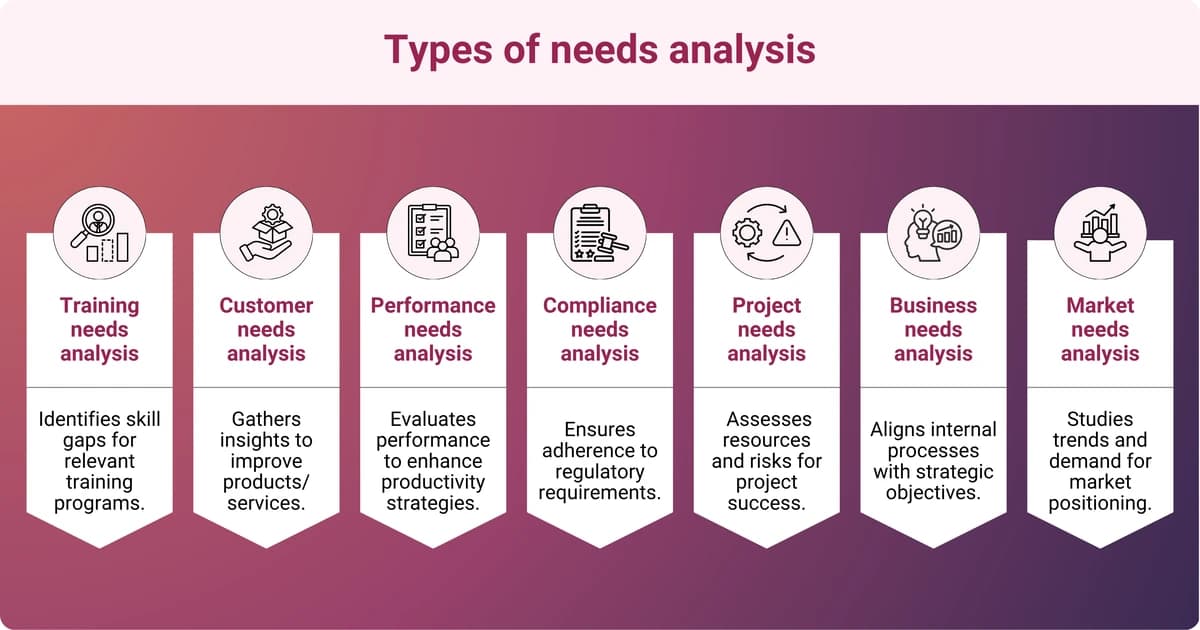
Table of contents
- What is a needs analysis?
- What is the purpose of conducting a needs analysis?
- Types of needs analysis
- The 6 essential steps in the needs analysis process
- Tools and resources for effective needs analysis
- Strategies for conducting effective needs analysis
- Common challenges in conducting a needs analysis and how to overcome them
- Turn insights into actions with needs analysis
Share this article
Amid rapid shifts in tech advancement, employee expectations, market demand, and business priorities, adaptability has become a defining factor in the modern workplace. Your key task as a 21st-century business leader is to develop your own capacity for change while encouraging resilience and adaptability in your workforce for an uncertain future.
According to McKinsey Quarterly’s report ,"Developing a resilient, adaptable workforce for an uncertain futureOpens in a new tab" only 16% of organizations invest in adaptability, even though 26% of employees identify it as a top need. A needs analysis helps your organization identify the best area to focus development efforts so you can improve job performance and prepare for what’s next.
This guide explains the basics of these analyses and why they're essential. It covers the steps, tools, best practices, and practical application to help you identify gaps in your organization and find training solutions to meet your business goals.
What is a needs analysis?
A needs analysis is a systematic process of identifying gaps between your organization’s current state and its desired outcomes. “Needs” also describes the specific training or upskilling an individual or a group in your organization requires to reach peak performance.
With this analysis, your organization can identify areas for improvement at work to help you address real priorities that drive improvement and growth instead of assumptions.
Typically, a needs analysis involves three key components:
- Needs identification: You first must recognize areas where your organization falls short of expectations.
- Data collection and analysis: This step focuses on gathering and examining information from stakeholders to understand the scope and causes of gaps.
- Targeted solutions development: This involves creating actionable strategies or programs to close the identified gaps.
When should you conduct a needs analysis?
Formally analyzing business needs can be critical during several decision points in your organization.
During organizational change
A needs analysis helps you identify capability gaps early when adopting new technologies or updating internal processes to ensure smooth transitions.
Consider, for example, that 67% of organizations undergoing digital transformation discover critical skill gaps only after implementation, as CIO reports. And 32% of business leaders say these gaps delay initiatives by five to 10 months.
With a needs analysis, you can avoid such setbacks by revealing gaps before rollout so you can upskill your workforce on time.
When setting new business goals or strategies
When reviewing compliance and regulatory requirements
Data breaches that involve noncompliance with regulations cost $173,692 more on average and $4.4 million overall in 2025, according to IBM. It's important to detect areas where current practices may not meet legal or industry standards, reducing the risk of violations and penalties.
When improving customer satisfaction
In PwC’s 2025 Customer Experience Survey, 70% of organizations said customer expectations are evolving faster than their company can adapt. And 29% of consumers reported abandoning brands due to poor customer experience. You can analyze customer feedback and service data to uncover gaps that affect experience and guide improvements that boost loyalty.
What is the purpose of conducting a needs analysis?
A gap analysis uncovers what your organization is missing to guide decisions toward the desired outcome.
Identifying gaps
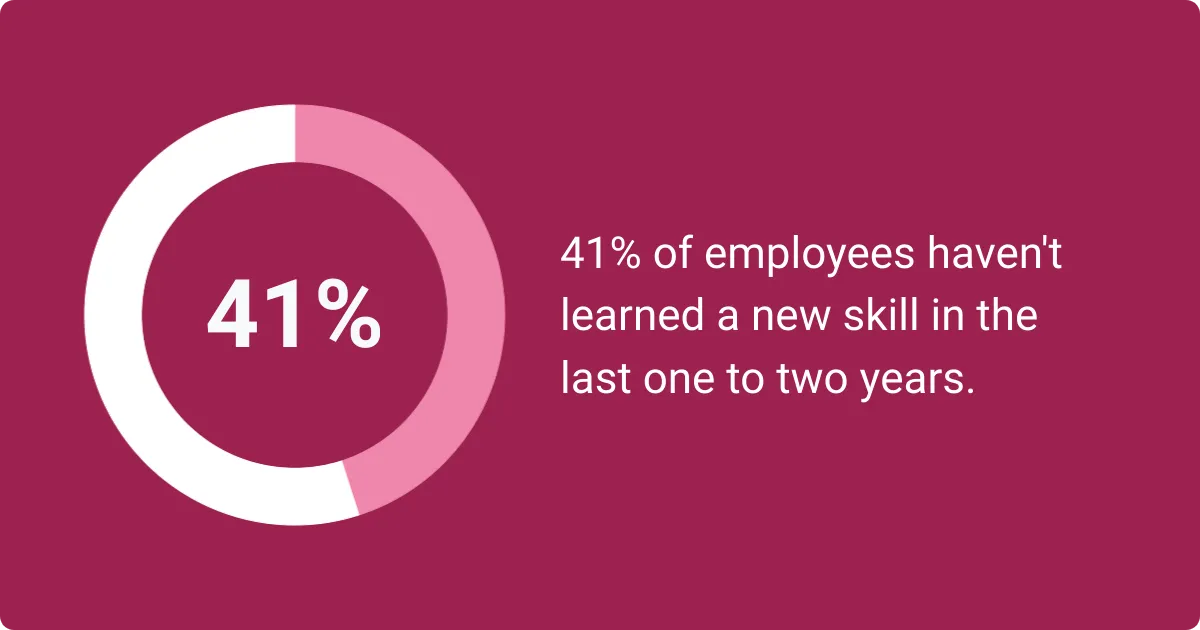
In the throes of massive tech advancement, there is an inevitable need to upskill. A 2024 Workhuman iQ survey found that 60% of employees have learned a new skill for their current role in the past six months, but the pace of tech advancement may yet outstrip their progress. It’s even more concerning for individual contributors, as 41% have not learned a new skill in the last one to two years.
A needs analysis helps close the skills gap by identifying where employees lack the capabilities required for emerging technologies and evolving business goals. It provides a roadmap for targeted upskilling so your workforce can adapt before disruption occurs.
Optimizing resource allocation
By understanding current gaps, your organization can prioritize resources towards the most critical needs for greater efficiency and cost-effectiveness:
- Time allocation: The insights from a needs analysis can clarify which skills or processes have the greatest performance impact, so your organization can focus its time on high-priority initiatives instead of scattered efforts. You won’t waste hours on low-value training initiatives or redundant activities.
- Money allocation: According to a McKinsey survey, only one-third of companies are prepared to handle workforce disruptions from technology and market trends. Many others spend their budgets on untargeted hiring or broad training programs in an effort to close potential skill gaps. Identifying areas that yield measurable results allows for a more targeted intervention.
- Personnel allocation: A needs analysis reveals workforce strengths and weaknesses in order to deploy personnel to the right roles. As Gallup reported, global employee engagement in 2024 fell to only 21%. Appropriately matching people to jobs helps boost productivity and ensure the most capable employees handle essential tasks in your organization.
Improving decision-making
While intuition can spark an idea or point you in a direction, it’s through data that you verify, understand, and qualify your decisions. According to a 2023 HBR and Google Cloud study, data-driven organizations are 1.3 times more likely to report higher revenue growth (77% vs 61%) than their peers. They’re also nearly 1.4 times more likely to achieve greater operational efficiency (81% vs 58%).
A needs analysis provides data-backed insights to prioritize initiatives with the highest impact. For example, it can identify recurring performance bottlenecks, allowing you to adjust training initiatives or improve talent development strategy. This evidence-based approach strengthens organizational strategy and leads to more confident, informed decisions.
Optimizing workflows
In Formstack and Mantis research, over half of employees (51%) reported spending two hours or more on inefficient tasks. One team member wasting two hours a day on inefficient tasks can cost your organization some $13,000 a year. If you have 100 employees, such losses can add up to $1.3 million.
With a needs analysis, you can examine how tasks, tools, and teams interact to uncover inefficiencies that slow down operations and cost your organization resources and employee satisfaction:
You can address these issues to optimize workflow across departments and strengthen operational efficiency.
Increasing customer satisfaction and revenue
Despite all the efforts and money organizations pour into customer experience tools, customer satisfaction continues to decline, according to the American Customer Satisfaction IndexOpens in a new tab. To tackle this issue strategically and create greater profits at lower risk, your organization can use a needs analysis.
Assessing performance in customer-facing areas like product development or service delivery can uncover gaps that affect satisfaction and loyalty. Address these gaps to deepen brand trust, which can lead to increased revenue.
Types of needs analysis
Depending on the goal or area of focus, you can conduct different needs analyses. Each type provides unique insight that helps your organization make informed, targeted improvements:
- Training needs analysis identifies employee skill gaps so your organization can deliver relevant training programs that strengthen workforce capabilities. Businesses often conduct one when introducing new technologies or processes that require upskilling.
- Customer needs analysis gathers insights into customer preferences and expectations to guide product or service improvements. It’s most valuable before launching new products or entering new markets.
- Performance needs analysis evaluates employee or organizational performance, helping identify areas for improvement and driving performance-based strategies. Businesses usually use it during performance review cycles or when productivity declines.
- Compliance needs analysis identifies gaps between existing practices and compliance standards to ensure that your organization adheres to regulatory requirements. Organizations often perform this ahead of audits or regulatory updates.
- Project needs analysis assesses the scope, resources, and risks associated with projects so you can adequately prepare to execute and achieve the intended outcomes. You can conduct one before initiating major projects or large-scale organizational changes.
- Business needs analysis examines internal processes and strategic objectives to identify gaps between current and desired outcomes. It helps align organizational goals with available resources for stronger strategic planning and execution. Companies analyze business needs when setting organizational goals or planning strategic initiatives.
- Market needs analysis studies market trends, competition, and customer demand to guide market positioning and product development. It’s particularly useful when your organization wants to explore new opportunities or respond to market shifts.
The 6 essential steps in the needs analysis process
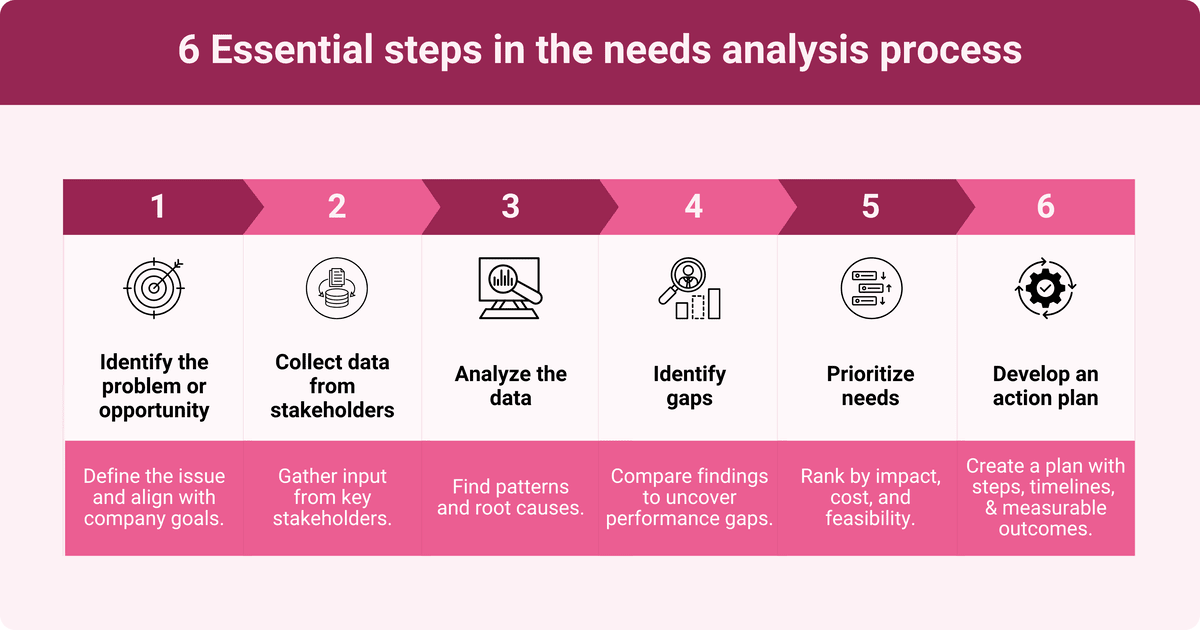
Conducting a needs analysis requires a structured approach to uncover real challenges and develop actionable solutions. While the exact procedure can vary depending on your organization’s goal and context, here are six essential steps for a thorough and effective analysis.
Step 1: Identify and define the problem or opportunity
Like any other business initiative, a needs analysis starts with a purpose in mind. Begin by identifying the specific issue or opportunity that drives the need for analysis.
What are you trying to achieve? Do you want your workforce to adapt to evolving technology, or are you looking to improve the customer experience?
Clarity helps you focus on what needs to change. With a clear objective, you can align your analysis with your company’s strategic goals and ensure you’re targeting the right issue or opportunity. It’ll also guide your entire gap analysis process.
Step 2: Collect relevant data from all stakeholders
Once you’ve set your objectives, identify the stakeholders from whom you’ll gather input about the needs you want to analyze. Your targeted data sources can be:
Use data collection tools like surveys or interviews, and examine performance data to collect different perspectives so your analysis reflects real conditions rather than assumptions from a single department.
Step 3: Analyze the data
Identify patterns and root causes of gaps from the data you collected. From performance issues and trends that point to skill shortages to workflow inefficiencies and outdated processes that limit productivity, find areas where improvement will have the greatest impact.
For instance, if multiple departments report project delays, a deeper analysis might show a lack of specific technical training or an inefficient workflow due to a failure to use available tools. You can use such insights to inform your employee career development plan.
Step 4: Identify gaps between the current state and desired outcomes
Compare your analysis findings to organizational goals or performance benchmarks to uncover gaps you must close.
For example, you might find that despite investing in new software, productivity hasn’t improved because employees haven’t received adequate training to get the most out of the new tech. Such areas of improvement represent actionable opportunities your organization should address to realize its goals.
Step 5: Prioritize needs by impact and alignment
Not every gap you identified will carry the same weight. Analyze and rank each gap based on its significance to your organization’s objectives:
- Effect on the business goal
- Cost implications
- Urgency
- Potential return on investment
- Feasibility of implementation
With the right categorization, you can zero in on initiatives that deliver the greatest value and align most closely with your strategic direction.
Step 6: Develop an action plan to address the identified gaps
Finally, create and implement an action plan with insights from your needs analysis. Outline steps, responsible parties, timelines, and required resources to address the identified needs. Include measurable outcomes such as performance metrics or completion milestones to track progress and ensure accountability.
Tools and resources for effective needs analysis
The right tools and resources make your analysis more efficient. From digital platforms to structured templates, these solutions simplify data collection and organization, making insight easier to interpret and act on:
Needs analysis software
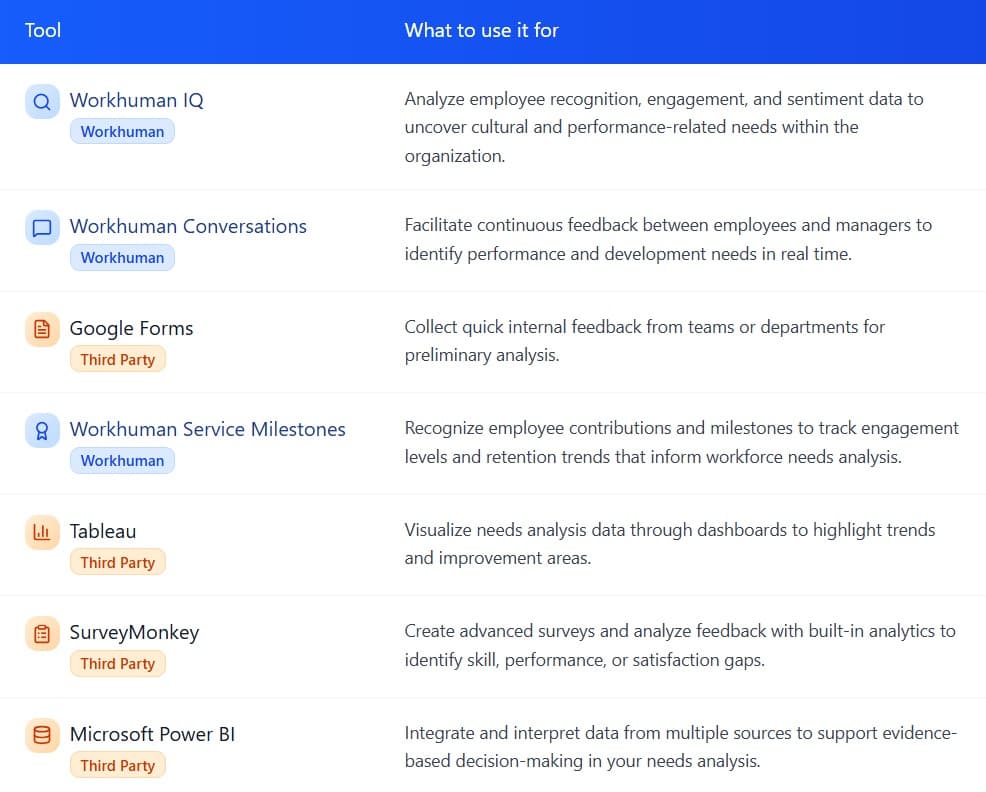
Software tools simplify how you collect and organize data from multiple sources. With the right tool, teams can automate reporting and identify trends faster. Here are some common needs analysis software solutions you can use.
Needs analysis templates
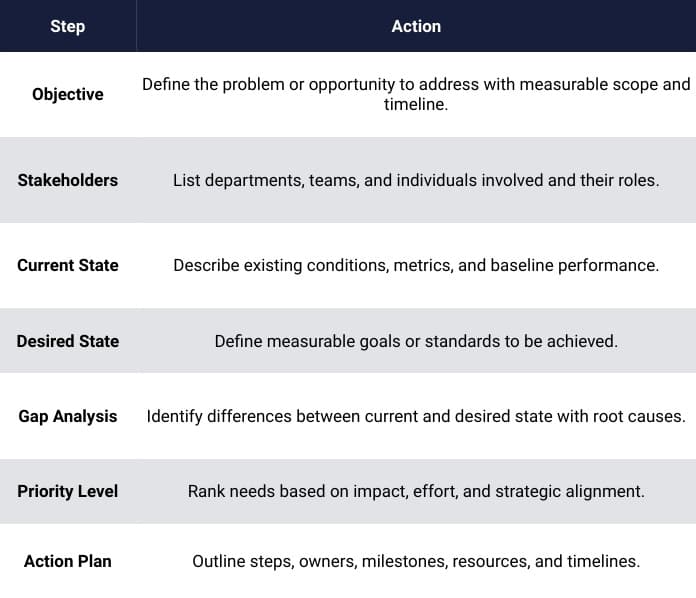
A template guides you through the process to save time and ensure consistency. Here is an example of a ready-to-use needs analysis template:
Surveys & focus groups
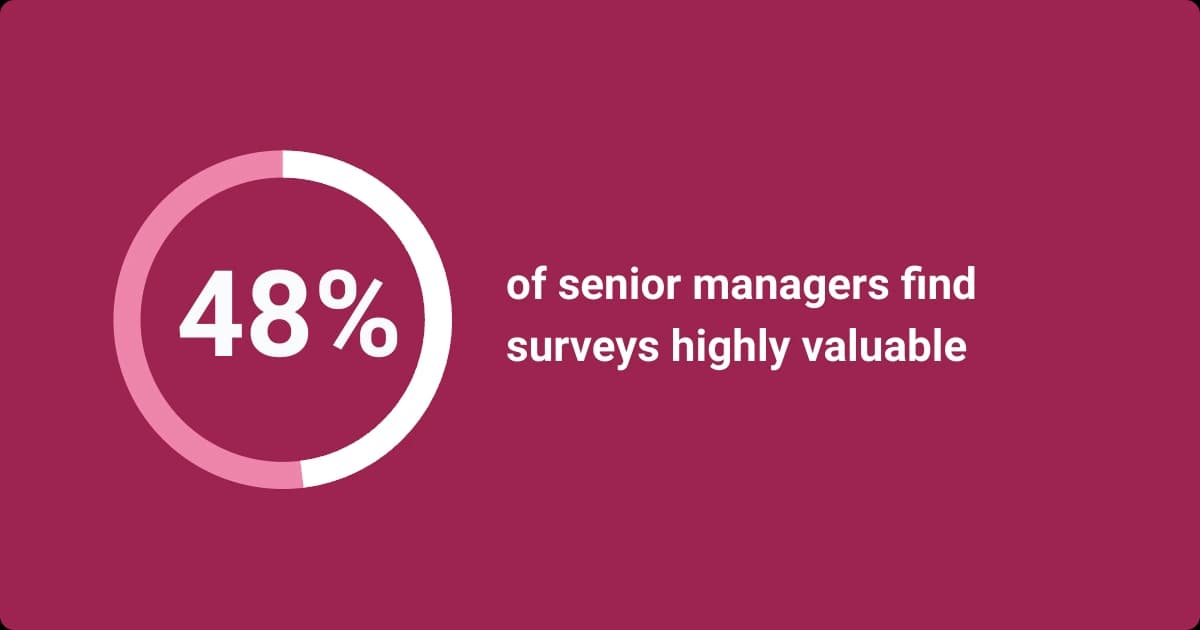
Surveys and focus groups are critical for gathering qualitative and quantitative data to uncover perceptions and expectations from stakeholders. However, while 48% of senior managers find surveys highly valuable, 45% of employees say surveys have little to no value.
To address the disconnect between intent and execution, keep questions short and unbiased. Be specific to avoid respondent fatigue and improve response accuracy. A mix of scaled and open-ended questions will help reveal statistical trends and contextual insights.
Use focus groups to conduct richer discussions and add context that numbers alone can’t capture. Combined, surveys and focus groups give you a more accurate picture of your organization’s needs, so that you can base your decisions on collective input rather than assumptions.
Training resources
Developing effective needs analysis takes practice and ongoing learning. To sharpen your analytical skills, take advantage of resources such as:
These resources can help you and other professionals in your organization conduct more accurate analyses and turn findings into data-driven strategies.
Strategies for conducting effective needs analysis
You need the right tools and approach to conduct a thorough and actionable needs analysis while maintaining continuous feedback.
Use multiple data collection methods
Relying on only one data collection method can give you a biased view of your organization's needs. To get a complete picture of gaps and opportunities, combine methods like surveys, interviews, focus groups, and observations. This mix lets you capture both numbers and narratives to validate your findings and understand the reasons behind performance trends.
Use tools to automate processes when possible
Use technology to automate repetitive tasks like:
- Survey distribution
- Data aggregation
- Report generation
- Feedback tracking
- Performance analytics
Workhuman IQ, for instance, offers real-time insights into employee sentiment and performance to help you identify organizational trends faster. Platforms like SurveyMonkey can simplify survey creation and collection, while Microsoft Power BI helps visualize and interpret data from multiple sources to support evidence-based decisions.
Automating parts of your needs analysis saves time and improves accuracy, while maintaining consistency across teams and departments.
Implement monitoring and feedback loops
An effective needs analysis includes continuous monitoring and feedback to track progress and refine strategies. Set up systems that capture input from employees and leaders to evaluate what’s working, where to adjust, and how outcomes align with goals.
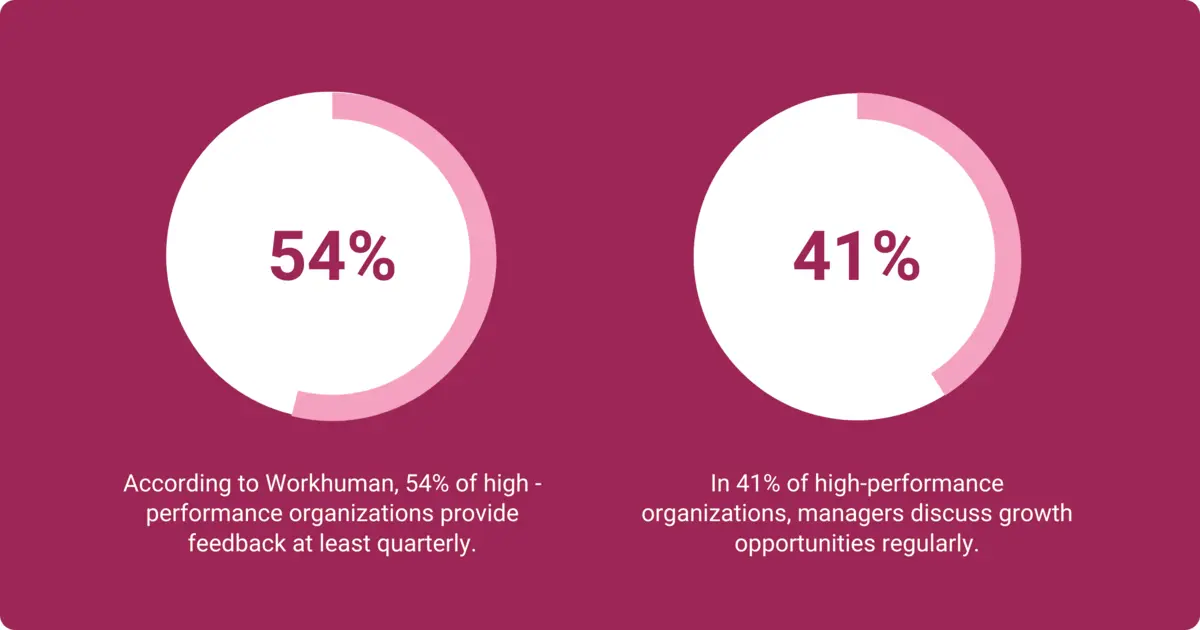
Encourage effective feedback between teams and managers to surface new challenges early. Tools like Workhuman Conversations and Social Recognition make it easier to gather ongoing feedback and celebrate progress, while keeping engagement high as your organization adapts.
Common challenges in conducting a needs analysis and how to overcome them
Needs analyses play a vital role in organizational improvement by providing structured insights into organizational gaps. However, it’s a process that often comes with multiple complications. Here are some common challenges in completing a needs analysis and how to overcome them.
Misalignment with organizational goals
Needs analyses often fall short because they aren’t connected to the organization’s larger strategy. When findings don’t clearly relate to business objectives, they lose impact and become difficult to act on.
To prevent a mismatch with business objectives, review your organization’s mission and current priorities. Check organizational KPIs and organize your analysis questions and data collection method along themes. In case of misalignment, revisit your objectives and refine your data sources to focus on what drives measurable business results.
Defining the scope too broadly or too narrowly
An overly broad scope can overwhelm your team, while one that is too narrow might overlook critical issues. For example, a retail company might try to analyze performance across all store locations at once, stretching resources too thin. On the other hand, if the retailer focuses only on sales data from a single branch, they might miss broader gaps in operational efficiency.
To find the right balance, set clear boundaries for what your analysis will cover. You can focus on specific departments or performance areas. Use a scope statement that defines the:
A well-defined scope keeps your analysis manageable and focused.
Limited resources and time constraints
Without adequate time or resources, even a well-planned needs analysis can stall before it delivers value. When you have limited resources, prioritize high-impact areas instead of trying to cover everything at once. Reallocate existing tools and personnel to fill temporary gaps and consider low-cost data collection methods like internal surveys or short focus groups to gather insights. You can also use past insights to inform your analysis.
If you’re on a tight schedule, break your analysis into smaller, manageable phases with clear milestones. Automate repetitive tasks like survey distribution using a platform like Workhuman iQ to maintain progress while delivering meaningful insights even under tight deadlines.
Inadequate or over-complicated data collection methods
How you collect data is critical. An overly complex approach can discourage participation, while simple but shallow methods can miss key insights.
To strike the right balance, diversify your data sources. Combine surveys, interviews, observations, and other data collection methods to capture qualitative and quantitative perspectives. Also, check that your questions directly connect to the goals of your needs analysis so responses are actionable.
Avoid complicating data collection, as it can lower response quality. Keep questions short and relevant to encourage engagement. Don’t use jargon, and simplify participation through digital forms or brief sessions. You can pilot your survey with a small group at first to spot confusing phrasing or unnecessary details before the full rollout.
Overlooking non-quantifiable factors
Numbers are great, but alone, they don’t tell the whole story. Some factors are critical but not quantifiable. Consider, for example, employee morale, communication quality, customer sentiments, and leadership effectiveness. You can’t put an objective number on these factors, but they can influence results and long-term performance.
To account for non-quantifiable factors, incorporate qualitative methods such as focus groups and open-ended survey questions in your process to capture the human side of performance. Qualitative data collection will help you contextualize data and reveal root causes that plain numbers might miss.
Turn insights into actions with needs analysis
As well as highlighting what’s missing in your organization, a well-executed analysis connects the performance gap to real business outcomes. You can then strengthen capabilities and make data-backed decisions that drive measurable growth.
To go beyond simply diagnosing and use the analysis as a strategic tool for continuous improvement:
- Start with clear objectives to align your analysis with your organization’s goals and measurable outcomes.
- Define a focused scope to keep your efforts targeted.
- Plan around your resources to maintain momentum without overextending.
- Collect qualitative and quantitative data to get the full picture of your organizational needs.
- Turn your insights into training, strategy, or process improvements that close the performance gaps.
Conducting a needs analysis doesn’t have to be difficult. With a template to guide your process and the right tool, you can turn insights into actionable strategies that strengthen performance and drive measurable results.

Ryan Stoltz
Ryan is a search marketing manager and content strategist at Workhuman where he writes on the next evolution of the workplace. Outside of the workplace, he's a diehard 49ers fan, comedy junkie, and has trouble avoiding sweets on a nightly basis.
Recommended for you