
Essential HR Skills: What Every HR Professional Needs to Succeed in 2026
by Ryan Stoltz
Last updated
13 min read
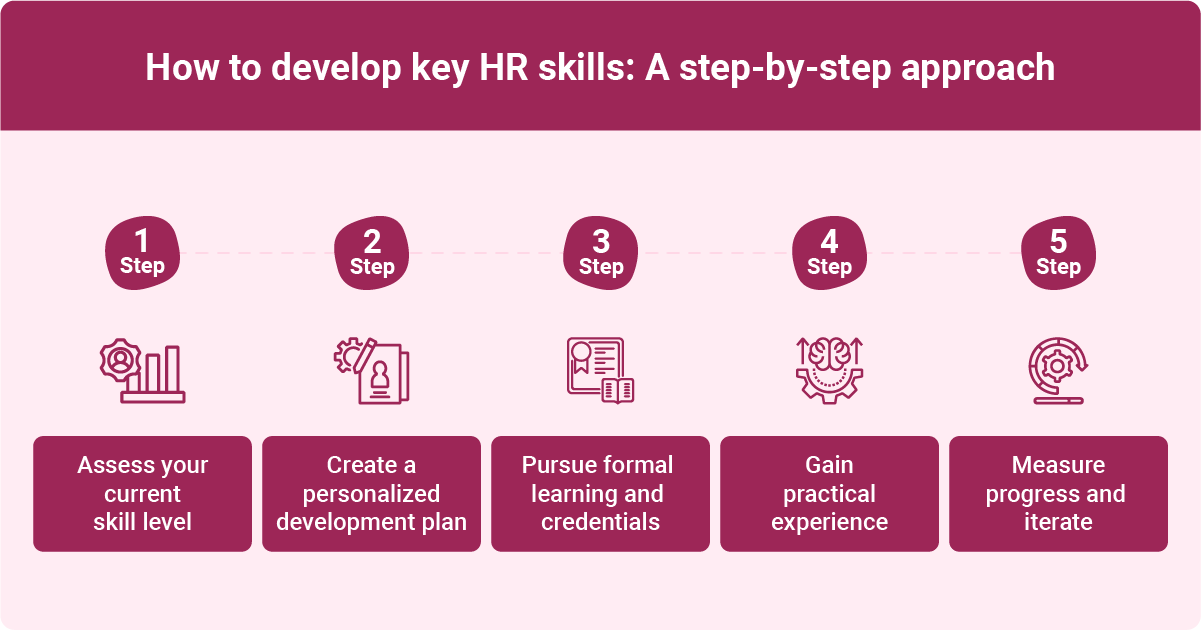
Table of contents
- What are HR skills? Core competencies defined
- Why HR skills matter: Business impact and career value
- Top 10 essential HR skills (ranked by priority)
- Technical skills vs. soft skills in HR: Understanding the balance
- HR skills by role: Generalist, business partner, and manager requirements
- Future-proof HR skills: Competencies for tomorrow's workplace
- Data analysis skills in HR: Examples and applications
- Conflict resolution skills for HR professionals
- How to develop key HR skills: A step-by-step approach
- HR skills certifications: Which credentials build which competencies
- How to highlight HR skills on your resume
- HR skills checklist and next steps
- FAQs
Share this article
It's no secret that HR professionals who can't articulate their core skills often struggle to advance. On the other side of the equation, organizations that hire based on vague criteria (like "good communication") end up with skill gaps that cost them talent.
Human resources today requires a blend of technical expertise, interpersonal agility, and business acumen that didn't exist a decade ago. In 2026, the gap between administrative HR practitioners and strategic HR leaders comes down to specific, demonstrable HR skills.
This guide defines the essential HR competencies required at every career level, from entry-level coordinators navigating human resources information systems (HRIS) platforms to senior business partners.
You'll learn which technical skills differentiate generalists from specialists, how to balance hard competencies like data analysis with soft skills like conflict resolution, and which credentials build the capabilities employers value most.
What are HR skills? Core competencies defined
Human resources skills are abilities that help professionals hire, manage, and administer benefits for employees. They include a mixture of technical and interpersonal skills. For example, an HR director may use AI to create interview questions, then draw on their negotiation skills when they make a job offer.
The Society for Human Resource Management (SHRM) created the Body of Applied Skills & Knowledge (BASK) framework Opens in a new tab to define core HR skills. It features nine domains, from analytical aptitude to relationship management.
Technical HR competencies
The days of reading paper resumes and shuffling time cards are long over. Now, professionals mostly rely on modern HR technology to manage employees. Start by familiarizing yourself with popular HRIS software like ADP and Workday. These solutions help businesses manage every aspect of HR, from payroll to onboarding new employees.
Other must-have technical skills include:
Interpersonal and soft skills
HR specialists spend a lot of time, well, interacting with humans. Successful professionals often possess strong interpersonal skills that enable them to connect with people from diverse backgrounds.
According to SHRM’s BASK, these are the most critical soft skills in HR:
- Adaptability
- Advocacy for diversity and inclusivity
- Communication, including active listening
- Conflict management
- Cultural competence
- Global mindset
- Networking
- Persuasion
- Teamwork
Ethical judgment is key, too. Employees often share sensitive information – such as Social Security numbers or thoughts about a difficult colleague – that HR professionals must guard carefully.
Strategic and business skills
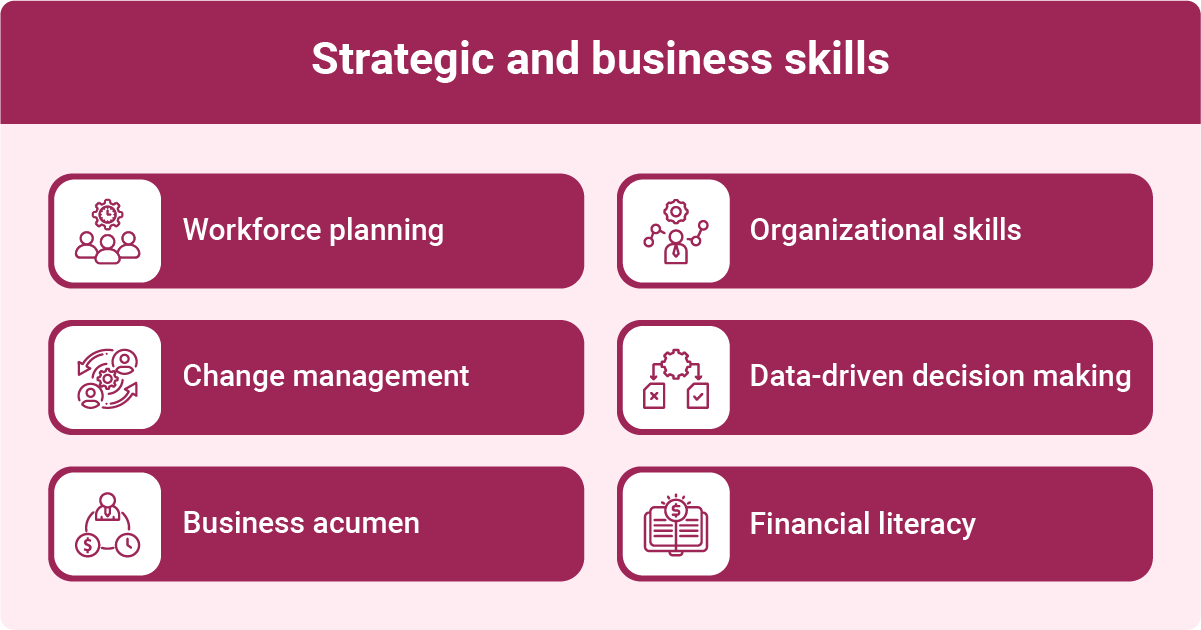
While junior HR professionals usually handle the nitty-gritty tasks, senior leaders may influence strategy and need organizational skills. In fact, according to SHRM’s analysis, “4 Critical Skill Areas to Master for HR Success”, workforce planning is one of the most in-demand skills for seasoned HR employees.
Executives may also expect them to manage change and use data to make smart decisions. Core skills like business acumen and financial literacy can help HR leaders handle these responsibilities with ease.
HR skills and key responsibilities: How competencies map to daily work
Not sure which abilities you need? Create a list of your everyday tasks, then add a column with the skills you use to complete them. The chart may look something like this:
| Skill | What it's used for |
| Compliance | Preparing audits, updating policies, and training employees |
| HRIS proficiency | Protecting data, creating reports, configuring systems, and managing vendors |
| Recruitment | Finding the right talent and interviewing them |
| Relationship management | Handling difficult situations, such as employee grievances and terminations |
| Strategic skills | Succession management, workforce planning, and advising stakeholders |
Why HR skills matter: Business impact and career value
Human resource skills don't just help you check off your to-do list faster. They have many benefits for both your career and the entire organization's success.
From a personal perspective, beefing up your resume can lead to a significant salary bump. For instance, people who earn the SHRM Certification make around 15% more than their non-certified peers.
According to the “2026 Human Resources Salary Trends” observed by Robert Half, the majority (86%) of HR leaders also offer higher pay to people with specialized HR skills, such as data analytics and strategic workforce planning. Plus, advanced skills may give you more mobility within your organization.
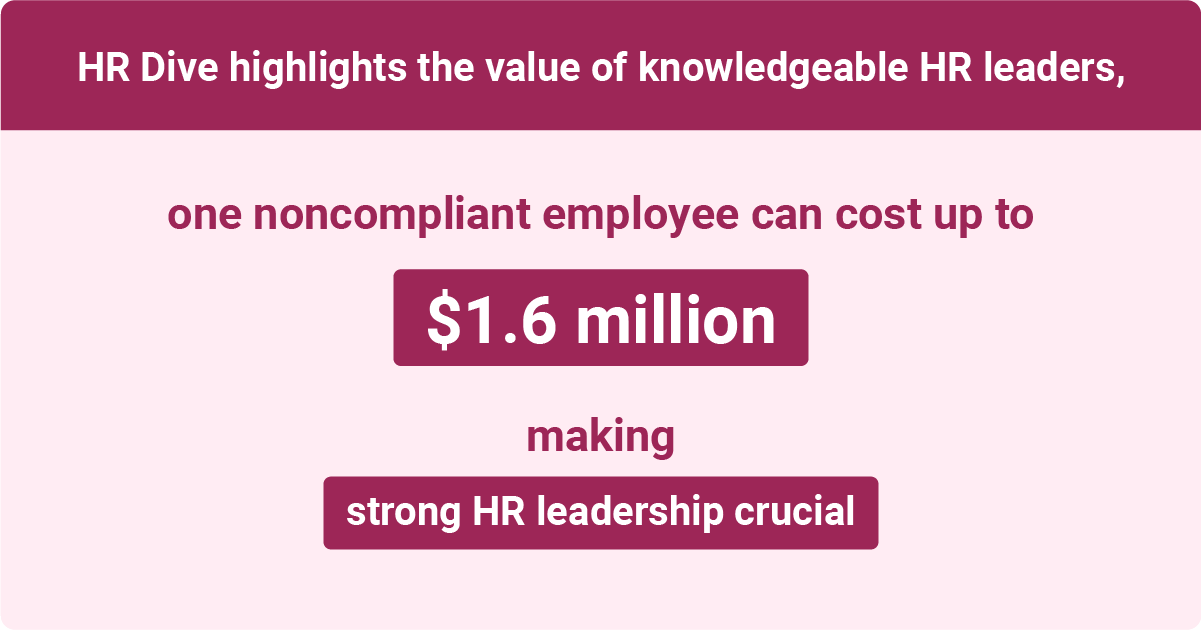
Strong HR skills also help protect organizations from legal risks. Savvy HR reps make sure everyone follows employment laws and discourage toxic workplace cultures. Given that HR Dive claims that a single noncompliant employee can cost around $1.6 million, a knowledgeable HR leader is (perhaps literally) worth their weight in gold.
Reduced turnover is another way that HR competencies help save money. SHRM claims that “Employees With a Positive Employee Experience are 68% Less Likely to Consider Leaving, New SHRM Research Highlights”. HR teams can help promote positivity with interpersonal skills like active listening and empathy.
Other benefits of HR skills include:
- Faster onboarding
- Fewer conflicts between team members
- Higher employee productivity
- Reduced turnover
- Smart hiring decisions
Top 10 essential HR skills (ranked by priority)
The skills required for the HR field can vary slightly by role and organization. However, many businesses look for these critical skills, so focus on them first if you're building your toolkit:
Essential skills for HR freshers: Building your foundation
Don't try to master every skill on this list before you even apply for your first job. HR professionals often spend years honing their abilities through on-the-job experience and certifications. Instead of trying to catch up with leaders, focus on building a strong foundation.
Start with this trio of core skills:
- Professional communication: HR often helps employees communicate with management and outside stakeholders. Prepare for these conversations by learning how to communicate through email, phone, and in-person interactions. Be tactful and ask a mentor for feedback about your tone.
- Employment law literacy: You don't need to memorize every obscure law. However, you should understand the basics, such as overtime regulations and fair hiring practices. This legal knowledge will help you protect your company from expensive violations.
- HRIS fundamentals: This software isn't always intuitive. Learn how to get around popular systems and enter data accurately. That way, you can start handling basic processes like onboarding right away.
Once your foundation feels sturdy, begin working on more advanced skills. Here are a few practical ways to build them:
- Get in the habit of managing documents and records responsibly. Create a system for tracking due dates, and keep your digital or physical files organized.
- Be discreet whenever you handle sensitive employee information. When managers and workers see you protecting this data, they'll be more likely to trust you.
- Follow onboarding checklists to a T, and go the extra mile to create a welcoming environment for new hires.
- Whenever you interact with employees, have a customer service mindset. That means actively listening to their concerns and following through when you say you'll do something.
- Ask thoughtful questions instead of immediately giving advice or jumping into problem-solving mode.
- Shadow other HR professionals to see how they handle complex situations, such as coaching a too-strict manager.
- Seek mentorship and feedback from more seasoned HR leaders.
- Sharpen your data literacy skills so you can make decisions based on hard evidence. Many organizations rely on Microsoft Excel for basic analytics and reporting.
While you can learn many of these HR skills on your own, certifications and online courses can speed up learning. One beginner-friendly option is the Associate Professional in Human Resources certificate (aPHR), designed for entry-level HR positions.
Advising and coaching: The consultative HR skills
HR professionals often provide guidance and support to all employees within their organization, from entry-level staff to executives. They may meet with executives to help them understand a new attendance policy or decide whether to grow the marketing team. Meanwhile, managers and employees might turn to them when dealing with a challenging work relationship or figuring out their next career move.
In some conversations, it's best to take on an advising role by recommending solutions based on your expertise. A busy CEO needs straightforward advice, not a philosophical debate. At other times, people just want gentle coaching to help them discover their own path forward. Workhuman's® Conversations supports crowdsourcing feedback so employees can request input from HR and their peers whenever they need coaching.
Both advising and coaching require strong active listening skills and in-depth business knowledge. Presenting yourself as a trusted advisor, not a scary policy enforcer, can also help you win over colleagues.
Technical skills vs. soft skills in HR: Understanding the balance
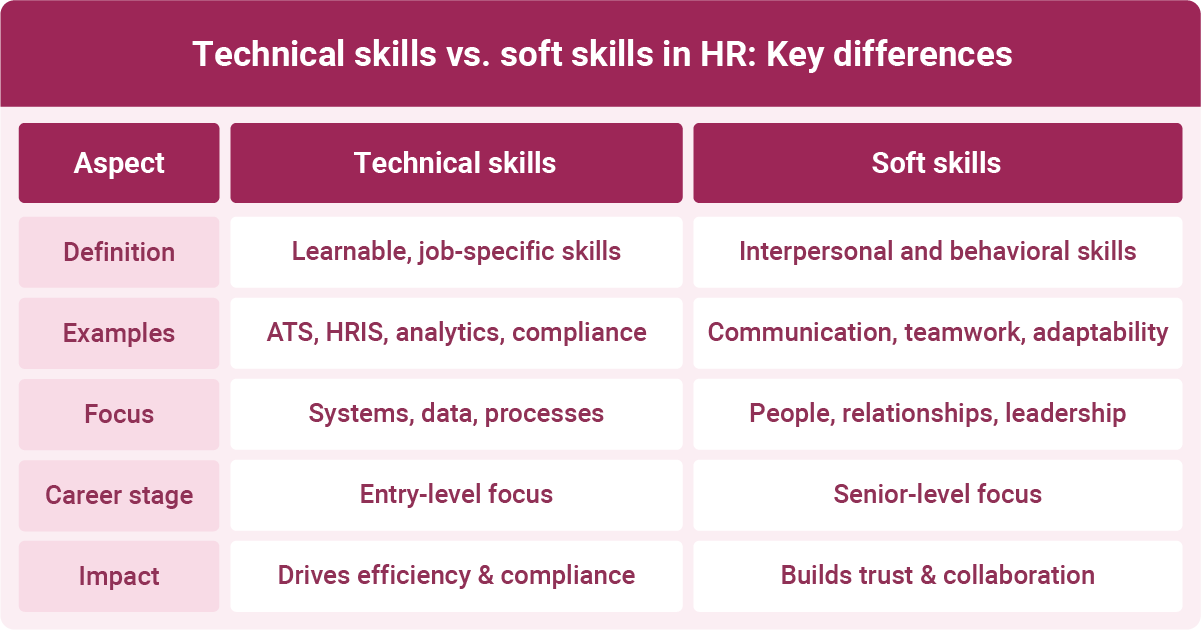
You might assume that interpersonal skills matter more in human resources, but that's not always true. It depends on your career stage. While entry-level roles may emphasize technical competencies, more senior professionals often focus more on strategy and building relationships.
Technical skills overview
Technical skills are learnable and measurable. They're often closely tied to specific roles or organizations. You may use one payroll software at your first job, then need to learn a different one when you switch companies.
Focus on these areas as you build your HR toolkit:
You should also gain experience with basic processes, such as enrolling employees in health insurance and onboarding new hires. Some organizations may teach these abilities on the job, while others expect you to know them from the start.
Soft skills overview
This may seem a bit paradoxical, but the rise of technology like AI has made many leaders see new value in human skills. A 2025 survey by testgorilla,“The State of Skills-Based Hiring 2025”, found that 60% of employers believe soft skills matter more than they did five years ago. These abilities help HR professionals form positive relationships and lead effectively.
Moreover, according to the World Economic Forum’s recent report The New Economy of Skills: Unlocking the Human Advantage Opens in a new tab– which drew in part from Workhuman data, “Analytical and systems-thinking, creativity, resilience, motivation and self-awareness, as well as curiosity and lifelong learning are not only core today, but will remain critical over the next five years.”
The most in-demand soft skills for 2026 include:
- Communication, including active listening
- Professionalism
- Time management
- Accountability
- Resilience
- Problem-solving
- Collaboration
- Adaptability
HR professionals work with sensitive data and situations, so a strong sense of ethics is also key. The HR Management Institute's Code of Ethics and Professional Conduct offers guidelines for handling data responsibly and treating all employees fairly.
Integration in practice
Technical and soft skills often go hand in hand, especially when dealing with tricky or emotional situations. If you need to lay someone off, HRIS data can help you approach the conversation more compassionately. Or you may use your compliance knowledge to tell someone to change their behavior, while also using empathy so you don't lose their trust. Balance is key.
HR skills by role: Generalist, business partner, and manager requirements
If you peruse job ads, you'll quickly notice that the required skills for HR vary by role. Sure, everyone needs certain core abilities like communication, but how you apply them depends on your career path. Understanding these differences can help you decide what to prioritize.
HR generalist core skills
Every organization needs HR generalists who can wear many hats and handle everyday activities. These employees require broad knowledge of everything from administration to compliance and recruitment. To prepare for this role, focus on gaining these skills:
- Benefits and compensation administration
- Compliance monitoring
- Employee relations, including conflict resolution and coaching
- HRIS data entry and maintenance
- Policy administration
HR business partner strategic skills
An HR business partner helps leaders turn big-picture strategy into people plans. This could involve meeting with stakeholders to explain the pros and cons of seasonal hiring or skills-based hiring. They also use data to forecast talent needs and recommend who and when to hire.
This role requires a strong understanding of organizational design and workforce planning. HR business partners also need excellent communication to get executive buy-in, especially when stakeholders are reluctant to experiment with new people approaches.
HR manager leadership skills
At the top of the hierarchy, HR managers lead teams and help coordinate HR-related activities across the entire organization. Essential HR manager skills include:
- Budget planning and resource allocation
- HR strategy development and execution
- Leadership
- Performance coaching
- Project management across departments and teams
- Relationship management with consultants and vendors
Future-proof HR skills: Competencies for tomorrow's workplace
Emerging technical competencies
If you spend any time on LinkedIn or HR forums, you already know that AI has become ubiquitous in the skills conversation. According to a 2025 HireVue survey titled “The 2025 Global Guide to AI in Hiring,” 72% of HR professionals already use this technology at least once a week. But understanding how to use these tools is only the beginning. You also need to know how to pick the right ones and use them ethically.
HR people analytics is another growing area of interest. Workhuman iQ™ uses recognition data to map and track employee skills. Use it to spot skills gaps and create opportunities for upskilling, such as hosting a public speaking workshop for people who struggle to communicate with clients. It also includes a manager dashboard that uses Human Intelligence™ to recommend ways to improve your team's performance and engagement.
Workhuman’s new AI AssistantOpens in a new tab can help automate and streamline much of this analysis by tracking skills profiles and giving managers a quick overview of their team members as needed.
AI Assistant can also make smart suggestions based on these skills profiles when it comes time to consider someone for a promotion or find someone for a particular project. You can ask things like, “Who on my team is qualified for X?” or “Who has the best interpersonal skills?”
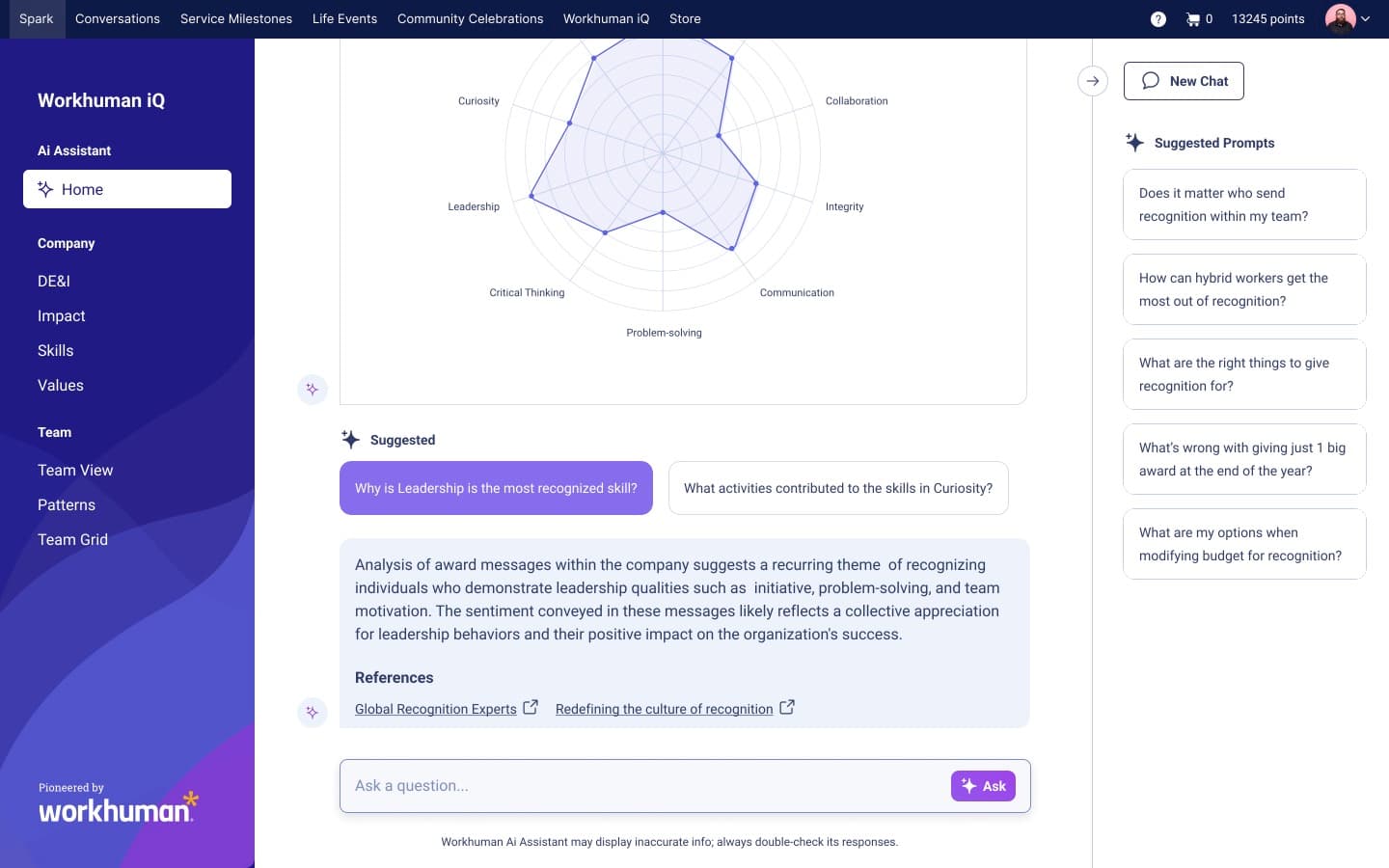
By using your organization’s data, AI Assistant makes intelligent, bias-free suggestions to help you fill open positions and prevent skills gaps.
You can also stay ahead of the curve by learning how to automate HR workflows and use digital employee experience platforms. Some organizations may also seek HR professionals with in-depth cybersecurity knowledge to help protect employee data.
Evolving strategic capabilities
The rapid growth of AI, remote work, and other changes has left many employees feeling off-kilter. HR professionals can smooth transitions and build organizational resilience by encouraging leaders to set clear expectations. Helping employees overcome their discomfort with change also improves agility.
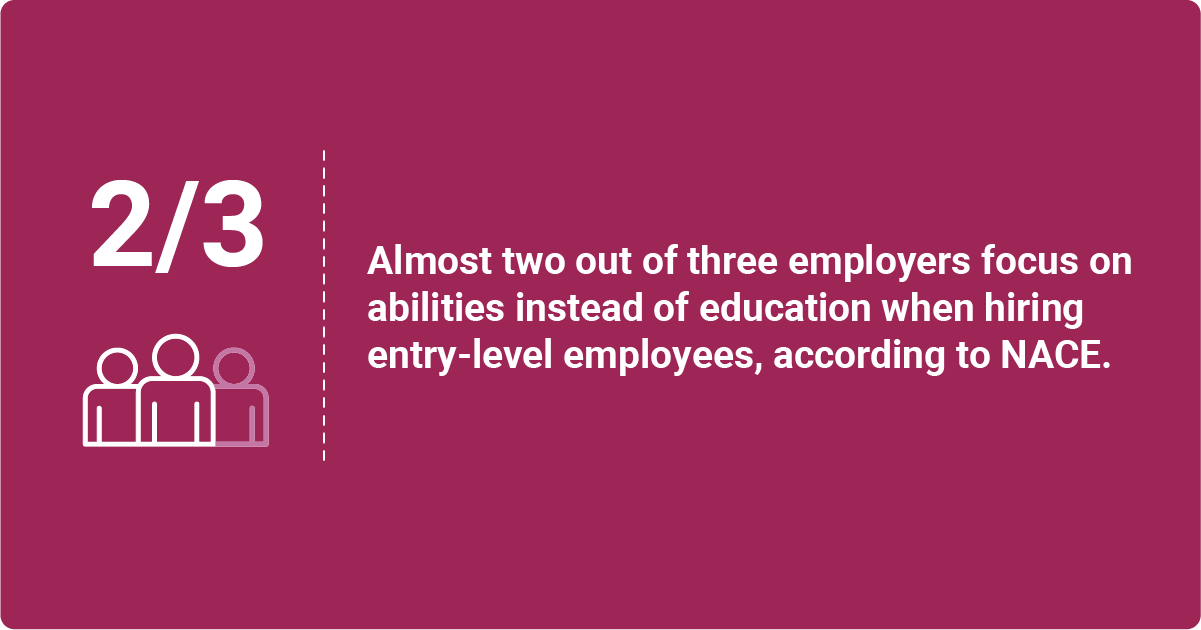
Skills-based hiring is trending, too. Almost two out of three employers focus on abilities instead of education when hiring entry-level employees, according to NACE. Stay competitive by learning how to evaluate candidates based on what they can do with tools like skills assessments.
Other must-have strategic skills include:
- Equitable policy design
- Managing hybrid workforces, which have become the norm after the pandemic
- Mapping the employee experience journey
- Personal leadership and influence without leaning too heavily on your authority
Data analysis skills in HR: Examples and applications
HR analytics can help you transition from a generalist to a strategic partner. It uses talent data to understand the workforce and make informed business decisions. Research from Emerald Insight titled “An ROI-based review of HR analytics” suggests that this process has the highest return on investment when used for workforce planning and recruitment.
Descriptive analytics applications
Descriptive analytics uses historical data to spot trends and figure out what contributed to past events. If turnover spiked last year, analyzing employee and department data could help pinpoint potential causes. Maybe your organization doesn't offer enough support for parents, or a domineering manager is driving people away.
Similarly, looking at training completion rates could explain an increase in non-compliance incidents. This technique is also useful for compensation benchmarking and headcount reporting.
Predictive and diagnostic analytics
Like descriptive analytics, predictive analytics uses historical data, but it's more forward-looking. For example, you might analyze performance data to spot struggling employees and forecast their risk of turnover. A little coaching could have a huge impact on retention. Or you could look for connections between hiring sources and employee quality.
If your best performers always come from referrals, you might prioritize that recruitment method over LinkedIn ads.
Many organizations also use diagnostic analytics to explain why certain events happen and learn how to avoid them. For instance, Workhuman's Human Intelligence™ combines AI with recognition data to analyze cultural health and performance. You might discover that a skills gap caused a project to fail or that low compensation is hurting morale.
Real-world example
A mid-sized tech company was struggling with turnover, but it couldn't figure out what was causing employees to leave. HR leaders used engagement scores, exit interviews, and manager ratings to look for trends. These analytics helped them identify at-risk employees six months before they departed.
Conflict resolution skills for HR professionals
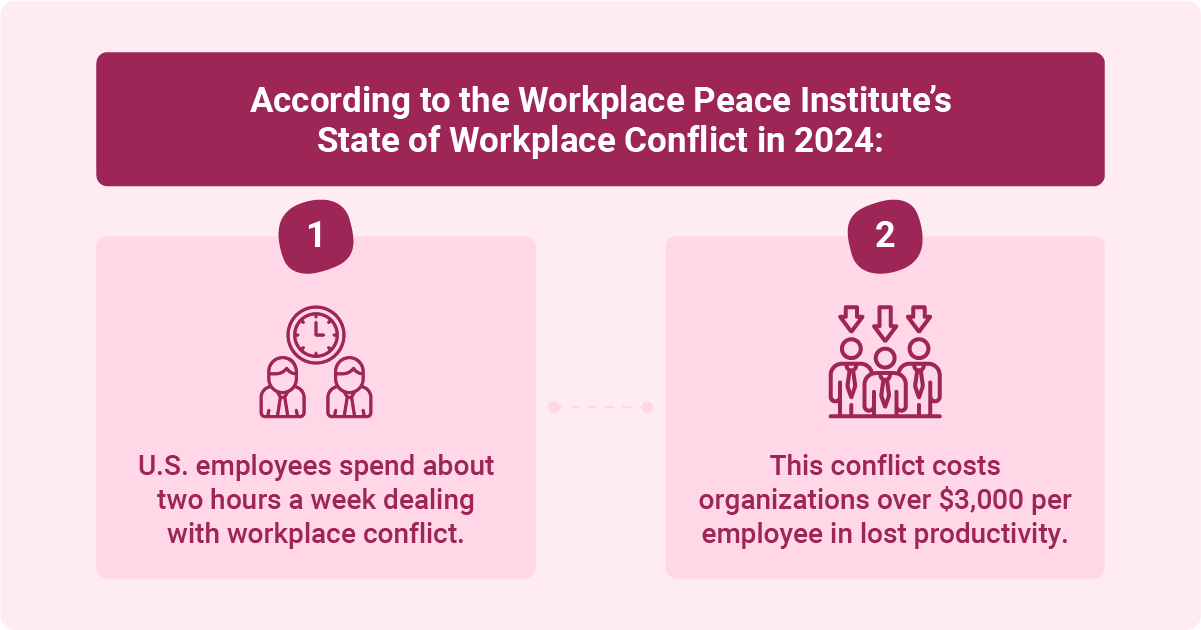
As per “State of Workplace Conflict in 2024Opens in a new tab”, by the Workplace Peace Institute, U.S. employees spend an average of two hours per week dealing with workplace conflict. That loss of productivity costs organizations over $3,000 per employee. Stressful conflicts can also lead to health problems and even make employees leave. Fortunately, HR professionals can keep the peace with a few conflict resolution skills.
Core conflict resolution techniques
Responding to conflicts isn't about declaring one side the winner. It uses a combination of empathy and impartiality to get at the root of the issue and find a solution.
Try these effective conflict resolution techniques given in “5 Conflict Resolution Strategies That Actually Work” by the Program on Negotiation from Harvard Law School, the next time your team gets into a disagreement:
- Focus on coming up with multiple solutions instead of falling into an us vs. them mentality
- Look for common ground
- Practice active listening to show you're considering all perspectives without judgment
- Recognize your own biases
- Separate the people from the problem
Once you've settled on a solution, create an agreement so everyone stays accountable.
When to escalate vs. mediate
Most interpersonal conflicts can be solved with mediation. If two employees miscommunicate or have different leadership styles, they can probably talk it out with a little guidance. However, you should immediately escalate the situation to an HR leader if the situation involves harassment, discrimination, or policy violations. You may also be mandated to report certain behaviors, so learn your legal obligations ahead of time.
Either way, document what happened and follow up as needed to make sure it doesn't happen again.
How to develop key HR skills: A step-by-step approach
Gaining HR skills for your resume takes time and the willingness to invest in self-learning. These steps will help you develop the essentials.
Step 1: Assess your current skill level
It's not always easy to see your own strengths and weaknesses. Use SHRM's BASK framework and the HRCI Capability Model to evaluate your skills and identify gaps in your knowledge. Ask your managers and peers for feedback, too. They can often assess your skill set more objectively than you can. Once you figure out where you can improve, pick two or three high-impact areas to develop.
Step 2: Create a personalized development plan
Keep yourself accountable by setting SMART goals, which are specific, measurable, attainable, realistic, and timely. For example, you may aim to master a new ATS platform within two months or learn how to analyze HR data using Power BI. Schedule progress checkpoints, too. This could be a simple calendar reminder or a meeting with a mentor to chat about what you've accomplished.
Step 3: Pursue formal learning and credentials
You don't need to go back to college to prepare for an HR career. Platforms like LinkedIn Learning and Coursera offer online courses in everything from data literacy to time management. Joining professional organizations and attending conferences can also help you learn employee relations fundamentals and other essential skills.
Step 4: Gain practical experience
Step 5: Measure progress and iterate
Track how effectively you're applying your new skills, and ask your mentors for feedback. These observations can help you adjust your learning plan as needed. You should also document your growth and achievements for performance reviews.
HR skills certifications: Which credentials build which competencies
Certifications can help you sharpen your technical skills and build your credibility. For example, SHRM's Certified Professional certificate shows that you're capable of applying HR principles in the workplace.
The Professional in Human Resources (PHR) certification is another well-respected credential. It focuses on technical and operational HR, including compliance and HR information management. If you're interested in more specialized knowledge, the Certified Employee Benefit Specialist (CEBS) program teaches the ins and outs of benefits administration.
Not ready to commit to an entire certificate? Micro-credentials from platforms like Coursera let you study specific areas, such as effective recruitment strategies or performance management.
How to highlight HR skills on your resume
Even the most talented HR professionals can get overlooked if they don't showcase their skills properly. Here's how to spotlight them on your resume.
Skills section: What to include
Start with role-relevant technical and soft competencies, then list specialized knowledge areas like employment law. Include your certifications for more credibility.
Demonstrating skills through experience bullets
Always use action verbs in your resume, and quantify the impact of your skills whenever possible. Saying "I used predictive analytics to reduce turnover by 15%" is much more persuasive than "Boosted retention."
ATS optimization techniques
Many recruiters rely on ATS to screen applications, so adapt your resume for each role by matching your skills to the job posting keywords. Use standard headers (like "Experience") and spell out acronyms to help the software understand your qualifications.
Optimizing HR skills for LinkedIn: Profile strategy for visibility
Some employers use LinkedIn to search for candidates with specific skills. Add up to 50 skills to your profile, and be sure to pin your three strongest or most specialized ones to the top. You can also ask peers for endorsements and mention critical skills in your About Me section to increase the chances of showing up in search results.
HR skills checklist and next steps
Human resources is a complex field that requires many skills, from benefits enrollment to mediation. Take control of your career journey by researching the most relevant skills for your dream role. With a structured learning plan and mentorship, you can start building a top-tier resume.
Quick HR skills checklist
Set yourself up for success by mastering these core skills:
Prioritizing your next steps
You don't need to learn everything overnight. Use a framework like the SHRM BASK to evaluate your current skills, then pick two or three areas to focus on. As your career goals and the HR landscape change, keep adding new skills to your roster.
FAQs
What are the most important skills for HR professionals?
The most important HR skills are emotional intelligence, communication, talent management, change management, data analysis, adaptability, and strategic thinking.
How do HR skills differ between entry-level and senior roles?
Entry-level HR professionals focus on foundational skills: ATS management, onboarding, benefits administration, and compliance. As professionals advance, the emphasis shifts toward strategy: translating people data into business decisions, advising leadership on workforce planning, and leading organizational change.
Entry-level roles often draw on technical skills, while senior roles demand more strategic skills.
Communication skills matter at every level, but grow more sophisticated as stakeholder complexity increases.
What is the difference between technical and soft skills in HR?
Technical skills are learnable and role-specific. By contrast, soft skills help you interact with others more effectively.
How should I list HR skills on my resume?
Use a dedicated skills section to surface relevant tools and competencies, then reinforce them with proof points in your experience section. Instead of listing "employee relations," describe a situation where you resolved a conflict or reduced turnover. Recruiters want both the signal (skills listed) and the evidence (outcomes achieved).

Ryan Stoltz
Ryan is a search marketing manager and content strategist at Workhuman where he writes on the next evolution of the workplace. Outside of the workplace, he's a diehard 49ers fan, comedy junkie, and has trouble avoiding sweets on a nightly basis.
Recommended for you