
Soft Skills vs Hard Skills: The Importance of Both in the Workplace
by Alicyn Zall
Last updated
5 min read

Data analysis and time management. Creativity and copywriting. User interface design and critical thinking.
These are just some of the skills a human brings to the workplace. We can’t pit soft skills vs hard skills when planning for a fulfilling career – instead, we have to learn how to balance the two.
In this article, we’ll learn the basics of soft and hard skills, ways of developing them, and how to approach adapting skills for the future.
Understanding soft skills and hard skills
These skills can be broken down into two categories that we’ll be exploring in detail today: hard skills vs soft skills. Let’s talk through the definitions of soft and hard skills.
Hard skills can be defined as technical knowledge that is learned in school, training, or on the job. These technical skills are what a worker needs to know to get their job done.
For example, a dentist knows how to fill a cavity, while a graphic designer is skilled in Photoshop.
Soft skills, also known as interpersonal skills, are traits and abilities that develop throughout a person’s life. While these skills are not necessary to get your job done, they are what make a human a great colleague, worker, and person, and shape how an employee works with others and independently.
Applying this to our earlier examples, a dentist will practice empathy when treating a nervous patient, while a graphic designer stays organized and on track during a complex assignment.
The key differences between hard and soft skills
The main difference between hard and soft skills is how the skills are learned and applied. Soft skills are typically innate and part of a worker’s nature. These are skills that are developed throughout childhood, schooling, and a career.
Consider teamwork. It’s learned and applied on the playground, in group projects, and throughout a career.
Now let’s compare the learning and application of a soft skill to a hard skill like healthcare knowledge. A doctor may have been developing their bedside manner throughout their life, but they don’t gain the specific – and necessary – medical expertise until they complete their formal education and pass specific certifications and exams.
It’s also important to note that hard skills are quantifiable, while soft skills are more challenging to measure. Personality assessments are a good reflection of how a person may behave in a role, but it’s less consistent than a skills assessment that shows a worker has the baseline capabilities or knowledge.
The importance of hard skills in the workplace
Before we dive into the importance of hard skills, let’s take a look at an in-depth list of hard skills examples.
How hard skills shape performance
Hard skills are what take something from an item on a to-do list to a completed task. As we’ve mentioned, if a worker doesn’t have the appropriate hard skills to do their job, their work won’t be done correctly or at all.
Having the necessary hard skills for a role leads to fewer mistakes and in turn, less time spent on fixing mistakes. Being highly skilled also leads to increased productivity and the ability to take on more challenging assignments.
Developing and improving hard skills
As we’ve learned, hard skills are typically taught in a formal environment due to their technical nature. There are varying levels of cost and commitment for employees to advance their hard skills, and there are ways for employers to provide access to these career advancement opportunities. Let’s take a look.
On-the job-training
Hard skills can be taught or learned through mentorship. Organizations can establish mentorship programs to match employees looking to teach or learn specific technical skills. This helps line up trained employees for internal mobility opportunities within your organization, reducing hiring budgets and timelines.
Formal education
Workers can actively improve or learn new hard skills by taking courses, re-certifying their licenses, and furthering their education with advanced degrees. For example, a nurse will have to continue to take courses and re-certify so that they can stay current with best practices. Employers can take the burden off workers by providing time off for courses or covering tuition or participation fees.
The importance of soft skills in the workplace
Soft skills are powerful because they are adaptable. Let’s take a closer look at examples of soft skills.
The impact of soft skills on collaboration and growth
Soft skills are what take a career to the next level. They turn a skilled, competent worker into an empathetic and visionary leader. A coder without soft skills won’t notice when their teammates need someone to jump in to problem-solve if they don’t have developed soft skills.
Soft skills can sometimes be synonymous with people skills. These skills have the biggest impact on how an employee works together with others.
Developing and improving soft skills
Soft skills, like muscles, strengthen with practice. Improving these skills takes commitment and self-awareness. Let’s talk through some ways to develop soft skills.
Embrace feedback
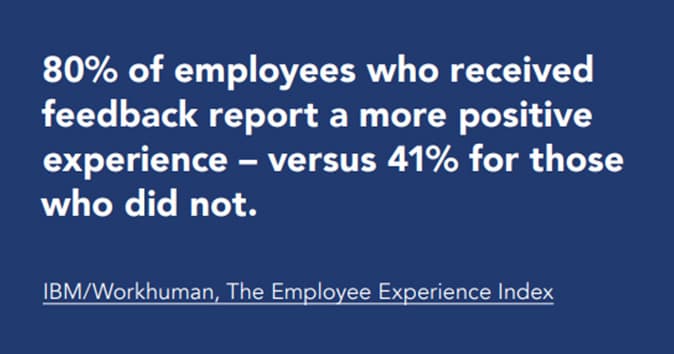
Ensure managers are accounting for soft skills when giving feedback and doing performance reviews. Appreciating an employee’s soft skills can open a door to a whole new perspective of themselves and motivate them to do their best work.
Constructive feedback provides valuable insights into an employee’s soft skills, strengths, and weaknesses. Encourage regular self-assessment and reflection periods for employees, and develop peer-to-peer feedback programs to help identify areas for improvement and track progress.
Find role models
Building relationships helps develop soft skills. Whether it’s a mentor, someone you bump into in the hall, or a teammate you work with daily, social interactions help everyone build emotional intelligence and interpersonal skills. Collaborating with our colleagues helps to enhance teamwork and leadership skills.
A mentor can provide guidance and feedback, helping you to improve your soft skills. Additionally, learning from others who have demonstrated successful soft skills can be beneficial.
Keep an open mind
Building up soft skills requires an open mind. This means trying new things and being open to new experiences and knowledge. This opens the door to developing adaptability and problem-solving skills.
Employees will face day-to-day changes in their workplace. Leadership should position change throughout the organization as an opportunity. Challenges help us all become more flexible and resilient.
Continuous learning
While there are fewer opportunities for official certifications and formal education when it comes to soft skills, there are plenty of ways to develop these skills independently and through employer-led growth programs.
Simultaneously, workers can keep flexing their soft skill muscles by exploring new ideas, methods, and resources at their own pace. This can be done through books, podcasts, blogs, courses, webinars, or events.
Balancing hard skills and soft skills
Hard and soft skills are strongest when they’re used together. A balanced skill set separates the good employees from the great. Having well-developed soft skills and technical skills makes a worker well-rounded and positioned for stretch assignments and career advancement.
Integrating hard and soft skills in the workplace
"Employees are combining hard and soft skills every day to get their work done, which is crucial for building relationships at work and creating a more cohesive work environment. Imagine a project manager. They’re likely using creativity and problem-solving (soft skills) to approach inputting a challenging problem into project management software (hard skills).
A seamless integration of soft skills and hard skills is worth recognizing. Encourage employees to appreciate and thank their peers for outstanding examples of skills integration.
Consider adopting peer-to-peer employee recognition software like Social Recognition® from Workhuman® to promote these moments of appreciation. Social Recognition features a social feed that inspires others to jump in on the appreciation and create moments of their own.
Conclusion
It’s time we put the soft skills vs hard skills debate to rest. Both hard skills and soft skills are crucial building blocks to creating a workforce of happy, engaged, and productive employees. Development plans for employees should include training and resources for both to help employees work and collaborate better together.
Alicyn Zall
Alicyn Zall is a writer dedicated to creating a more equitable and fulfilling workplace. With a focus on actionable, data-driven insights, her work empowers individuals and organizations to foster positive change. In addition to her contribution at Workhuman, Alicyn has served as an editor at Harvard Business Review where she developed books and articles about mental health and the future of work.
Recommended for you