
Company Culture Statistics: What the Latest Research Shows in 2026
by Ryan Stoltz
Last updated
11 min read

Table of contents
- What do the latest company culture statistics reveal?
- How does company culture affect employee retention and turnover?
- What statistics link company culture to employee engagement and productivity?
- How does company culture influence recruiting and candidate decisions?
- How much does toxic workplace culture cost companies?
- What do statistics say about managers, leadership, and trust in company culture?
- What are the latest company culture trends and statistics?
- FAQs
Share this article
Company culture can be difficult to quantify, but its effects show up in outcomes HR leaders care about: retention, engagement, productivity, and employee well-being. Understanding those connections is key to understanding why company culture matters.
The right company culture statistics can help leaders understand those connections, build a stronger business case for culture investments, and make more informed workforce decisions. The challenge is finding meaningful numbers supported by credible research amid the sheer volume of data available.
On top of that, many studies have different scopes, methodologies, and timelines, making it difficult to understand what employees want and which findings are most relevant to your organization. This list brings together significant workplace culture statistics, organized by theme with the source and year for each.
What do the latest company culture statistics reveal?
Company culture is an organization's shared values, beliefs, and practices and how employees experience them day to day. Researchers measure culture through factors such as engagement, connection, trust, and belonging, as well as more measurable outcomes including retention and performance.
The latest research — including Gallup's Q12 engagement survey and Organizational Culture Indicator, the Society for Human Resource Management (SHRM)'s culture research, and MIT Sloan's Glassdoor-based analysis — shows clear connections between employees' experience of workplace culture and outcomes ranging from engagement and retention to productivity. Here are some of the most notable findings:
How does company culture affect employee retention and turnover?
Company culture is closely connected to retention. Employees in positive cultures are less likely to consider leaving, while research has identified toxic culture as a major predictor of attrition. According to research from MIT Sloan, a poor culture is significantly more likely to drive away employees than low pay.
Toxic culture versus pay: The 10.4x finding
Following the Great Resignation in 2021, MIT Sloan School of Management performed a study, “Toxic Culture Is Driving the Great Resignation,” to better understand why employees were leaving their positions and how companies were responding.
They analyzed 34 million employee profiles and conducted a Glassdoor language analysis of 1.4 million reviews to estimate industry-adjusted attrition rates and uncover the underlying causes. Their results revealed the vital role company culture plays in retention:
- Toxic culture was 10.4 times more predictive of attrition than compensation during the Great Resignation.
- The 5 top drivers of toxic culture were disrespect, non-inclusive behavior, unethical behavior, cutthroat competition, and a lack of support for well-being.
Retention rates in strong versus weak cultures
Employee engagement and retention statistics show a consistent connection between employees' experience of workplace culture and their likelihood of staying. Building a positive culture includes creating psychological safety so employees feel comfortable speaking up, sharing concerns, and contributing.
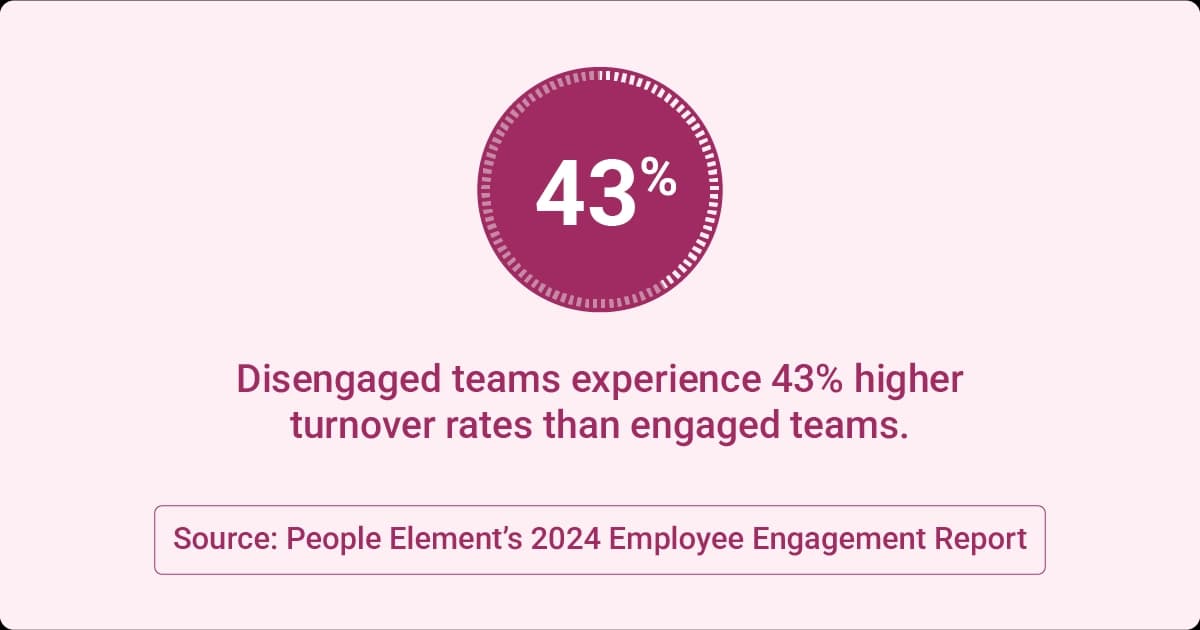
Research from SHRM and Gallup finds that employees in positive cultures, as well as those who feel connected to their organization's culture, are less likely to consider leaving.
The consequences when culture fails
Toxic work culture statistics show the repercussions that occur when behaviors in your company aren't in alignment with your stated values. Although sources vary on the specific cost, there is widespread agreement that finding, hiring, and training replacement employees when workers leave because of a negative company culture is a financial drain.
- According to “SHRM Reports Toxic Workplace Cultures Cost Billions,” a press release by SHRM, 1 in 5 Americans left a job due to bad company culture over five years, at a turnover cost of $223 billion.
- “Unleashing the Human Element at Work: Transforming Workplaces Through Recognition,” a study by Gallup and Workhuman®, found that a 10,000-employee organization can save up to $16.1 million a year in turnover costs when recognition is embedded in the culture and employees are engaged.
- The cost of replacing an employee can range from 50% to 200% of their annual salary, according to “The Myth of Replaceability: Preparing for the Loss of Key Employees” by SHRM.
What statistics link company culture to employee engagement and productivity?
Research also links employees' experience of workplace culture and engagement with productivity and other business outcomes, including differences in work quality.
The Gallup Q12 meta-analysis numbers
Gallup's Q12 meta-analysis, “The Relationship Between Engagement at Work and Organizational Outcomes,” which covered 183,000 business units across 53 industries and 90 countries, reveals that top-quartile engagement teams have significantly stronger performance than bottom-quartile teams in several areas.
- Gallup's “The Relationship Between Engagement at Work and Organizational Outcomes” meta-analysis estimated a 0.49 true-score correlation between employee engagement and composite business performance.
- According to Gallup’s “State of the Global Workplace 2026,” low employee engagement cost the global economy an estimated $10 trillion in lost productivity in 2025, equivalent to about 9% of global GDP.
Culture connection multiplies engagement
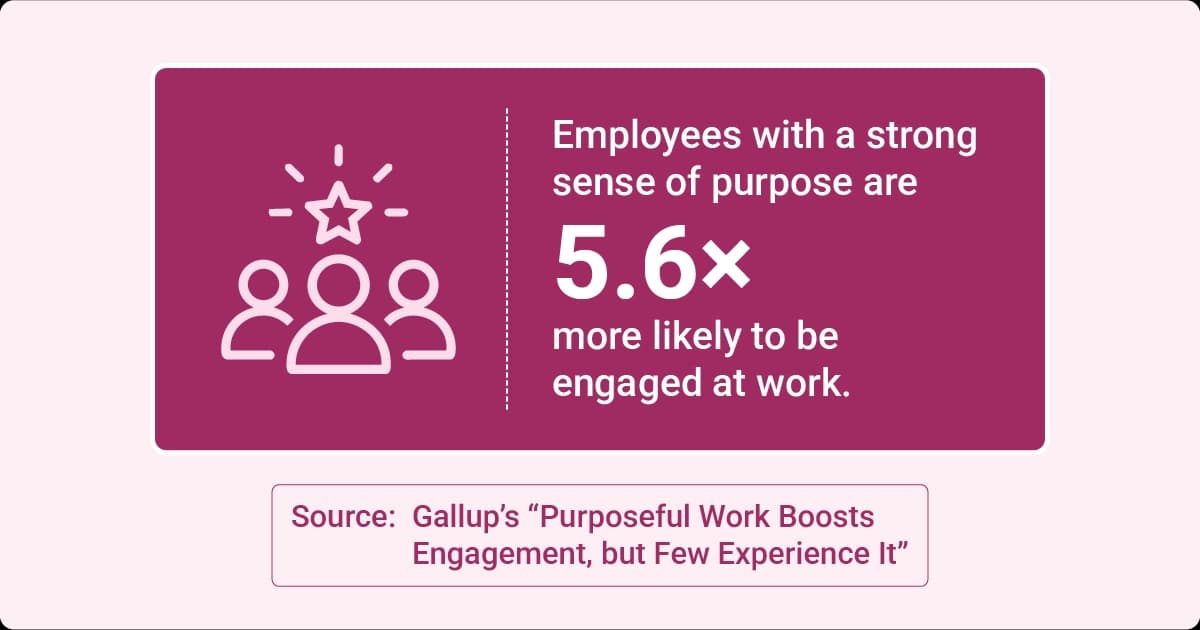
Many companies struggle with a disconnect between employees and their workplace culture. Bridging that gap matters because a connection to culture is also closely associated with worker engagement.
What employees say about culture and their own output
Employees recognize the direct impact company culture has on their engagement, productivity, and team performance. Statistics from multiple sources reflect their desire for a positive work environment.
- Eagle Hill Consulting’s “The business case for culture: How organizational culture impacts business performance” notes that 77% of employees agree a strong culture lets them do their best work, 76% see a direct link between culture and their productivity and efficiency, and 74% link culture to better customer service.
- “Workplace Culture Fosters Employee Retention Worldwide,” a SHRM report, found that 83% of employees in good or excellent cultures are motivated to produce high-quality work versus 45% in poor or terrible cultures.
- A 9% productivity increase, worth about $92 million for 10,000-employee organizations, occurs when companies double the share of employees who receive recognition for good work in a given week, according to “Empowering Workplace Culture Through Recognition,” a research study from Workhuman and Gallup.
- “Empowering Workplace Culture Through Recognition,” by Workhuman and Gallup, also found that employees are 3.8 times more likely to feel connected to their culture when they strongly agree that recognition is an important component of their workplace.
Culture, burnout, and well-being statistics
Although a growing number of companies are prioritizing employee well-being, those efforts don't always align with employees' needs. Research also shows strong relationships among culture connection, burnout, well-being, engagement, and productivity.
- Burnout is 62% less likely for employees who feel strongly connected to their organization's culture, according to Gallup’s “Indicators: Organizational Culture.”
- Mind Share Partners' “2021 Mental Health at Work Report” found that 84% of respondents said at least one workplace condition had a negative impact on their mental health.
- “The important role of leaders in advancing human sustainability,” by Deloitte, notes 70% of workers say a stronger organizational commitment to well-being would increase productivity and performance, and 71% say it would increase engagement and job satisfaction.
- 70% of employees say their organizations offer well-being benefits, but 51% say those benefits aren't aligned with their actual needs, and only 43% of employees are satisfied with their benefits, according to “Six leader/worker disconnects affecting workplace well-being” by Deloitte.
The cost of poor culture and engagement
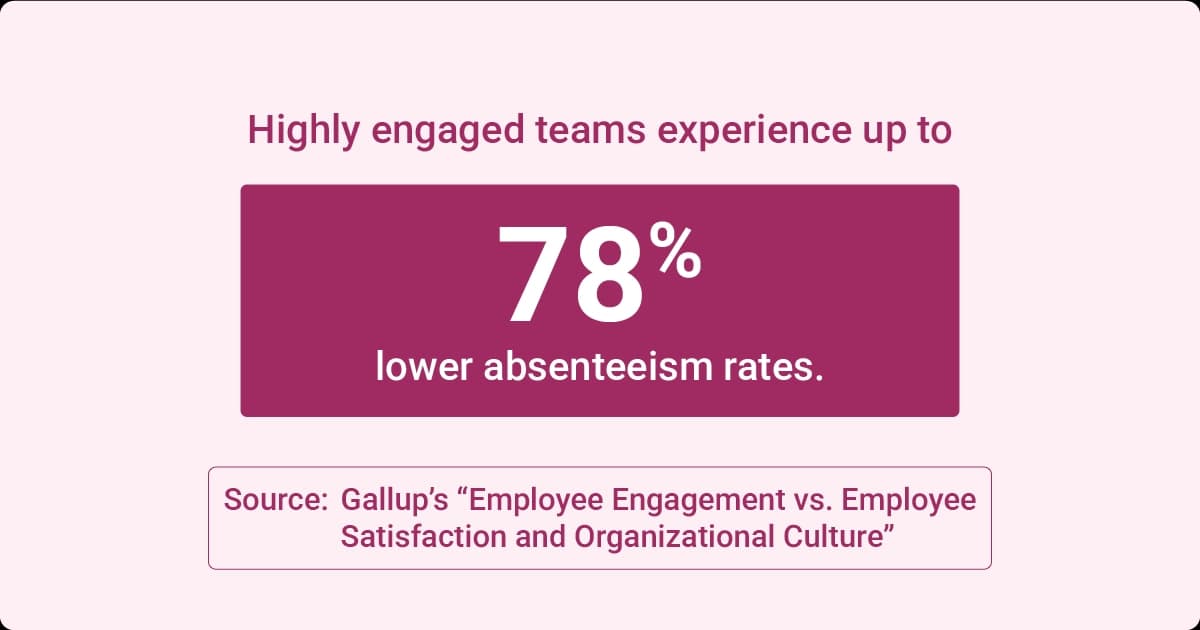
Employee absences and financial losses are common effects for organizations with toxic cultures. Studies show individual companies and the global economy both suffer as a result.
How does company culture influence recruiting and candidate decisions?
Company culture is an important consideration for many job seekers and employers. Organizations with a positive corporate culture may have an advantage in attracting top talent, while those with a negative reputation or toxic culture at work may face greater recruiting challenges.
Job seekers and culture
Although pay and benefits are critical factors when looking for a new position, company culture is also a must-have for many job seekers. Potential employers also take it into consideration, potentially removing a candidate from their list of prospects if they don't seem like a good fit.
- “Culture Over Cash? Glassdoor Multi-Country Survey Finds More Than Half of Employees Prioritize Workplace Culture Over Salary,” a Glassdoor press release, notes 77% of job-seekers would consider a company's culture before applying for a job there, and 56% say company culture affects job satisfaction more than salary. (Glassdoor 2019)
- 23% of respondents pointed to company culture as the reason they would choose one role over another, making it the top factor in the survey, according to “Candidates Choose Jobs Because of Company Culture,” by SHRM.
- 91% of U.S. managers view candidate culture alignment as equally or more important than skills and experience, according to “More Than One-Third Of Workers Would Pass On Perfect Job If Corporate Culture Was Not A Fit, Survey Finds,” a Robert Half study. (Robert Half 2018)
Employer brand, referrals, and the open-to-leaving market
Company culture is primarily an internal issue, but it's not hidden from outside parties. Former and current employees openly share information about their workplace environment through online reviews or word of mouth. If your company develops a reputation for a negative culture, it becomes more difficult to secure and retain talented professionals.
- 58% of employees have left or considered leaving a job because of negative office politics, according to “Your best employees are leaving. But is it personal or practical?” by Randstad.
- Gallup’s “Indicators: Organizational Culture” notes that employees who feel connected to their organization's culture are 5.3 times as likely to recommend their employer.
- 52% of employees are watching for or actively seeking a new job, according to Gallup’s “Indicators: Employee Retention and Attraction.”
- SHRM report, “Workplace Culture Fosters Employee Retention Worldwide,” notes more than 8 in 10 employees at organizations with a positive culture say they're likely to recommend their organization to people looking for a job.
How much does toxic workplace culture cost companies?
Estimates of the costs businesses experience because of poor culture range from tens of billions of dollars exclusively for turnover to hundreds of billions for wider impacts. Although constructing a positive environment may require an initial investment, it can help limit the potential losses.
Turnover costs: The SHRM and MIT Sloan estimates
The high cost of turnover is one of the biggest financial reasons why companies face pressure to improve company culture. A revolving door of employees results in more frequent training, as well as hiring and onboarding expenses.
- SHRM press release, “Toxic Workplace Cultures Cost BillionsOpens in a new tab,” notes turnover driven by bad culture cost American businesses $223 billion over five years. (SHRM 2019)
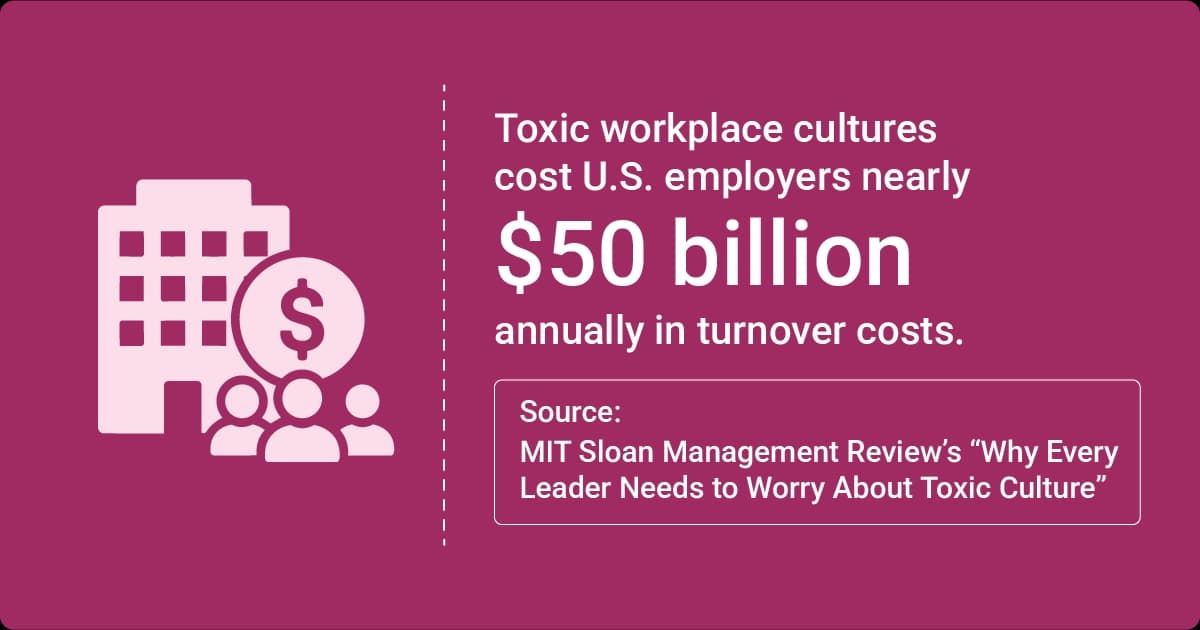
- “Why Every Leader Needs to Worry About Toxic Culture,” by MIT Sloan Management Review, highlights that the cost of turnover triggered by a toxic culture was up to nearly $50 billion per year for U.S. employers even before the Great Resignation.
The cost of employees who repeatedly engage in toxic workplace behaviors
A single employee who repeatedly engages in toxic workplace behaviors may seem like a minor issue, particularly for a large company. However, research shows that these behaviors can carry significant costs.
Healthcare, incivility, and productivity losses
Workplace incivility, mental health challenges, absenteeism, and lost productivity can all carry significant costs for employers. Although estimates measure different factors, the financial impact can be substantial.
- “Mental Health Issues Affect Corporate Bottom Line,” by National Organization on Disability, found that companies experience an estimated $210.5 billion in annual losses across productivity, absenteeism, and medical costs due to untreated depression.
- U.S. organizations lose about $2.7 billion per day to uncivil workplace behavior, and workers experiencing incivility report losing nearly 37 minutes of productivity per day, according to “The Cost of Incivility: Addressing Workplace Challenges into 2025,” by SHRM.
Why toxic culture cost estimates vary so widely
Studies produce dramatically different estimated costs of toxic cultures because they use separate definitions of toxicity. For example, some focus on legal or regulatory violations, while others use a broader group of behaviors, such as incivility and rudeness.
In addition, some researchers account for indirect costs, such as productivity, healthcare, and disengagement, while others only include direct losses, such as turnover expenses or legal settlements.
Finally, studies also differ in scope, with some looking at the cost of an individual worker and others examining the global impact. When using these statistics within your organization, look carefully at the context before quoting them to ensure they align with your business case.
What do statistics say about managers, leadership, and trust in company culture?
Managers have a significant influence in defining the company culture and strengthening or weakening engagement. Employees who don't trust their leaders are less likely to feel comfortable in the workplace.
The manager effect on engagement
While HR can design a positive organizational culture that fosters growth, frontline managers can determine whether that culture translates to the employee experience. Investing in manager enablement and education can be essential to ensure that team leaders reinforce the right type of environment.
- A Gallup study found that managers account for 70% of the variance in team engagement.
- Declining manager engagement is reflected in Gallup’s “Global Engagement Falls for the Second Time Since 2009,” finding that manager engagement fell from 30% to 27% in a single year.
- Less than half of managers worldwide have received management training, according to “Addressing the Barriers Blocking Employee Development,” by Gallup.
Trust in leadership statistics
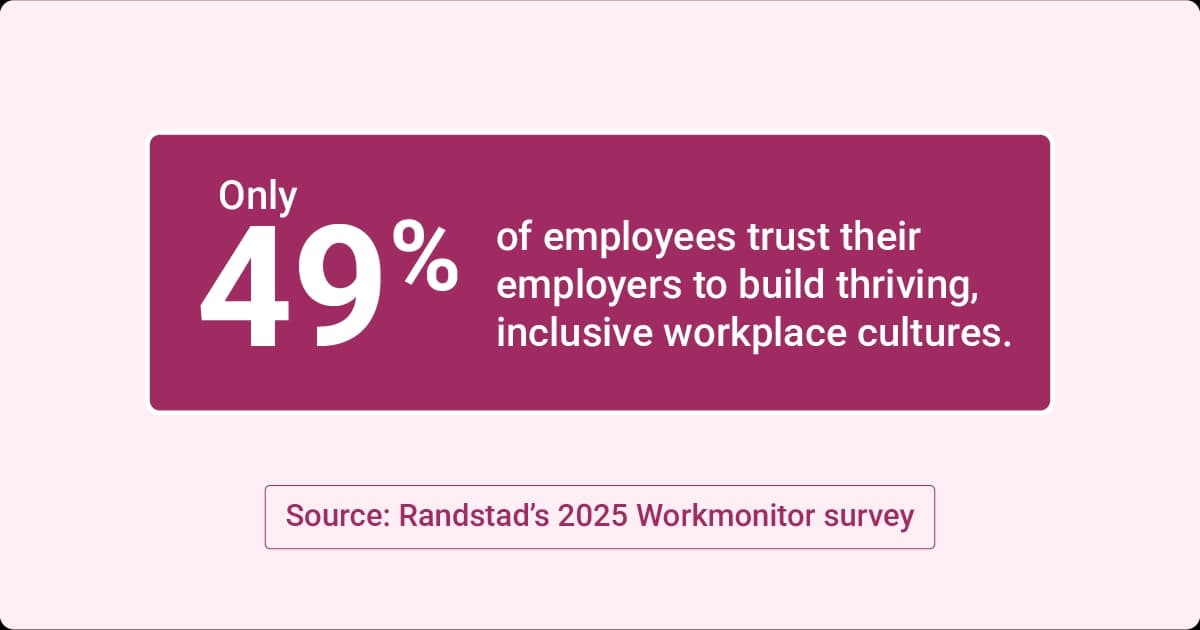
- According to Randstad’s “2025 Workmonitor survey,” only 49% of employees trust their employers to create thriving, inclusive cultures.
- 48% of employees say they have moderate to low trust in leadership, according to “The State of Workplace Culture and Connection 2026” by HR Research Institute.
- “The important role of leaders in advancing human sustainability,” by Deloitte, found engaged workers who trust leadership are more than 2.5 times as likely to say their company is advancing human sustainability.
- 90% of people quit their jobs in part because of their boss, according to “The Boss Effect: 90% of Employees Don’t Quit Jobs—They Quit Bad Bosses,” by Bamboo HR.
- Businesssolver’s “2019 State of Workplace Empathy Study” found that 92% of CEOs say their organization is empathetic, but only 72% of employees agree.
Recognition and culture connection statistics
Employee recognition and retention statistics show that simply having a recognition program is not enough to improve the company culture. The program must be meaningful and high-quality to have a measurable impact. When managers consistently recognize employee contributions and autonomy, voluntary turnover is lower, and job satisfaction is higher.
Unfortunately, many companies have insufficient recognition programs despite the pressing need for them.
- “The State of Workplace Culture and Connection 2026,” by HR Research Institute, found that 35% of employees infrequently or never receive meaningful recognition from their peers, and 37% rarely or never get it from managers.
- “Recruiting Focus May Shift to Emphasis on Employee Engagement,” by SHRM, found that 34% of U.S. workers report a lack of proper recognition for their contributions.
- “The Human-Centered Workplace: Building Organizational Cultures That Thrive,” a study by Gallup and Workhuman, notes that senior leaders were 50% more likely than in 2022 to strongly agree that leadership values recognition, while just 22% of employees said they get the right amount of recognition for their work.
- Only 13% of employees with a recognition program rate it as excellent, even though 70% believe their leaders care about the program, according to “Empowering Workplace Culture Through Recognition,” by Gallup and Workhuman.
What are the latest company culture trends and statistics?
Shifting work models, priorities, and technologies are changing how business leaders approach company culture. These statistics underscore the importance of staying ahead of the trends to remain competitive with job seekers.
Hybrid, remote, and return-to-office statistics
Hybrid and remote work have changed where employees experience workplace culture, but Gallup's data suggests cultural connection remains a challenge across work locations. Strengthening team cohesion and peer recognition can help organizations build connections across onsite, hybrid, and remote work environments.
- Gallup’s “Indicators: Hybrid Work” notes roughly 52% of remote-capable U.S. employees work in hybrid arrangements, making that the dominant model, while about 26% to 27% of workers are fully remote and 21% to 22% are fully onsite.
- “Unleashing the Human Element at Work: Transforming Workplaces Through Recognition,” by Gallup and Workhuman, found that embedded recognition multiplies cultural connection across all types of work locations: remote workers are 3x more likely to feel connected, hybrid employees are 4x more likely, and onsite employees are 6x more likely.
- Only one in five employees strongly agree they feel connected to their workplace culture, a statistic that is nearly identical across work locations: 20% remote, 20% hybrid, 18% onsite, according to Gallup’s “Indicators: Organizational Culture.”
- Enhancv’s “Return-to-Office Mandates are Triggering a New Era of Workplace Sabotage” found that 72% of workers don't trust the rationale behind return-to-office mandates, believing they may be a precursor to layoffs.
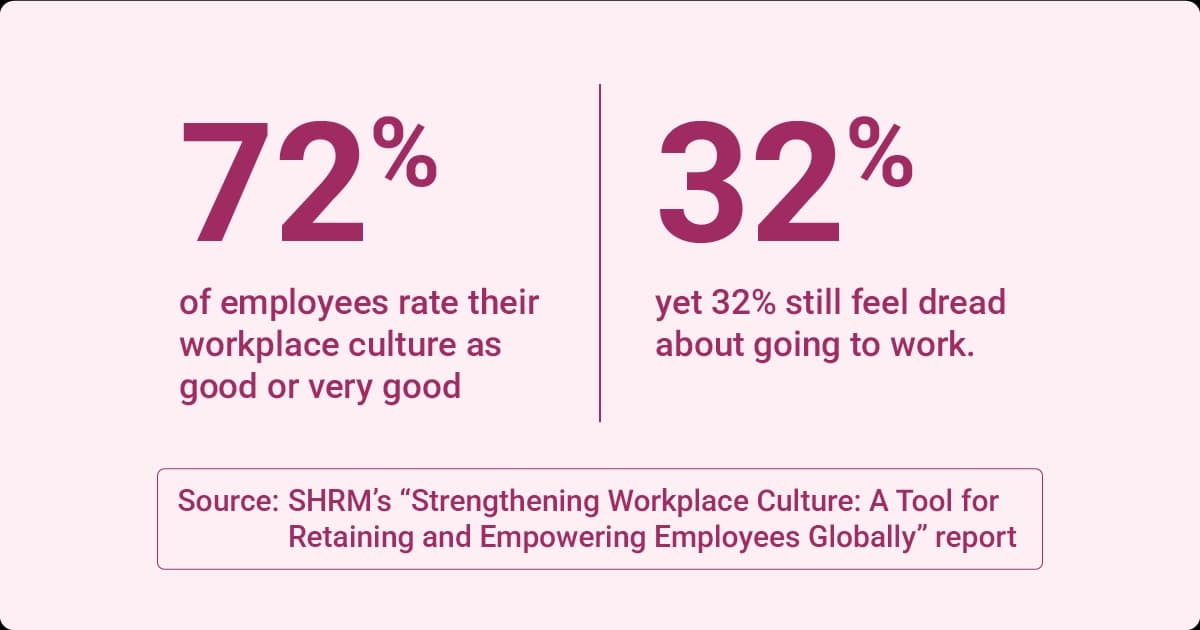
Work-life balance overtakes pay
Salary is no longer the number one reason to take a job. Modern employees are equally concerned with their quality of life.
AI and company culture statistics
Artificial intelligence (AI) is a vital tool for many companies, but it affects more than efficiency and workflow development. AI implementation also influences trust and creates a new aspect of the company culture conversation, one that some leaders are failing to directly address.
- According to Deloitte’s “Dealing with AI’s cultural debtOpens in a new tab,” 42% of workers say their organization rarely evaluates AI's impact on people, and 80% of leaders, managers, and workers worry coworkers use AI to appear more productive.
- In a Microsoft report, “2025: The year the Frontier Firm is born,” 82% of leaders called 2025 a pivotal year to rethink strategy and operations, with AI agents changing team structures and culture expectations.
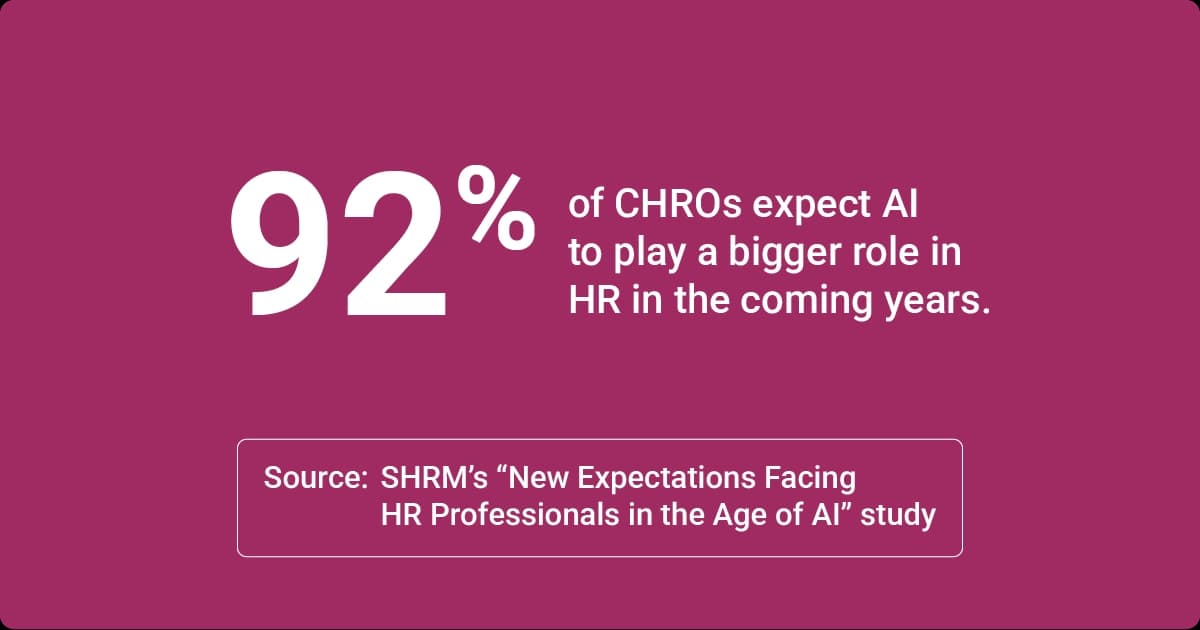
- 92% of CHROs anticipate deeper AI integration across the workforce, according to “New Expectations Facing HR Professionals in the Age of AI,” by SHRM.
Culture on the CHRO agenda
Compelling statistics help tie company culture and engagement spending to concrete business value and lower turnover. As such, many CHROs are placing greater importance on building a positive company culture.
- Gartner’s “2026 HR Trends: 4 Strategic Priorities for the Modern CHRO” notes that organizations see up to a 34% increase in employee performance when they successfully embed the desired culture into daily work.
- Workplace culture rose to 31% of CHRO priorities, up from 15% the prior year, according to a SHRM press release, “What Will Work Look Like in 2026? New SHRM Research Reveals How Leadership, Culture and AI Are Shaping the Future.”
FAQs
What percentage of employees feel connected to their company culture?
Gallup’s “Indicators: Organizational Culture” reports that, as of 2026, only 20% of employees strongly agree that they feel connected to their work culture. This is a decrease from 2024, when 23% of workers reported feeling connected.
Is company culture really more important than pay?
For many job seekers, company culture can be as important as pay when evaluating an employer. Research shows that employees consider factors such as workplace culture and work-life balance alongside compensation, with some surveys finding that these factors can outweigh salary in employment decisions.
How much does low employee engagement cost the global economy?
According to estimates from Gallup’s “State of the Global Workplace 2026” report, low engagement cost the world economy $10 trillion in 2025. These losses, which equate to 9% of GDP, are largely the result of decreased productivity.
Where do the most reliable company culture statistics come from?
The most reliable company culture statistics are available in surveys and studies from reputable organizations, including Gallup, the SHRM, and Workhuman. When researching the current state of company culture and how to improve it, look for recent data from a credible source with clear relevance to your organization.
How does remote or hybrid work affect company culture?
Gallup’s “Indicators: Organizational Culture” suggests that cultural connection remains a challenge regardless of work location. Only about one in five employees strongly agree they feel connected to their workplace culture, with similar results among remote, hybrid, and onsite employees.
Organizations with distributed workforces may need different approaches to building connections, including consistent recognition, communication, and opportunities for employees to connect with one another.

Ryan Stoltz
Ryan is a search marketing manager and content strategist at Workhuman where he writes on the next evolution of the workplace. Outside of the workplace, he's a diehard 49ers fan, comedy junkie, and has trouble avoiding sweets on a nightly basis.
Recommended for you