
10 Best AI Employee Engagement Tools for 2026
by Ryan Stoltz
Last updated
13 min read
Table of contents
- The 10 best AI employee engagement tools
- What is an AI employee engagement tool?
- Two approaches to AI-powered employee engagement
- How we evaluated the best AI tools for employee engagement
- Comparison table
- Vendor reviews
- Other AI engagement platforms worth considering
- How to choose an AI employee engagement tool
- How to implement an AI engagement program
- AI engagement trends in 2026
- What AI engagement tools cost
- FAQs
- Support employee engagement with AI
Share this article
If your team seems a bit disconnected or unmotivated these days, you're not alone. According to "State of the Global Workplace 2026," by Gallup, only 20% of employees felt engaged in 2026. That's the lowest number since 2020.
AI employee engagement tools can help HR leaders understand and meet their employees' needs. However, many platforms rely on natural language processing (NLP) to analyze what people say. That doesn't always tell the full story, especially if employees don't want to talk about how they feel in a survey.
The most effective AI engagement tools gather signals about employee behavior, recognition, feedback, sentiment, and other data. They also recommend specific ways to improve engagement, not generic cure-alls. For example, if one team rarely gets feedback, an AI tool might suggest creating a recognition program for employees to boost morale.
We've done the research to identify the best AI employee engagement software based on signal quality, scalability, responsible AI usage, and other criteria.
The 10 best AI employee engagement tools
What is the best AI employee engagement software? Top options include:
- Workhuman®Opens in a new tab: Best for turning everyday recognition behavior into continuous engagement signal
- Qualtrics EmployeeXMOpens in a new tab: Best for research-grade experience analytics across the employee lifecycle
- Microsoft Viva GlintOpens in a new tab: Best for Microsoft 365 organizations that want engagement inside Teams
- Culture AmpOpens in a new tab: Best for AI-analyzed engagement surveys with people-science benchmarks
- Workday Peakon Employee VoiceOpens in a new tab: Best for continuous listening inside a Workday HCM stack
- AchieversOpens in a new tab: Best for embedding recognition and AI nudges into the daily workflow
- CultureMonkeyOpens in a new tab: Best for multilingual and deskless survey reach
- LatticeOpens in a new tab: Best for connecting engagement signal to performance and goals
- WorkTangoOpens in a new tab: Best for pairing survey feedback and recognition in one platform
- AwardcoOpens in a new tab: Best for AI-assisted rewards program economics
What is an AI employee engagement tool?
An AI employee engagement tool uses AI to understand how employees engage in the workplace and identify potential issues. It can interpret many types of data, including recognition messages, survey responses, performance data, and other engagement signals.
Two approaches to AI-powered employee engagement
There are two common approaches to AI-powered employee engagement: survey signals and behavioral signals.
Engagement survey tools rely on information that employees explicitly share with their organizations. They typically use NLP to analyze responses to pulse surveys, employee engagement surveys, anonymous questionnaires, and other feedback tools.
While these AI tools can help you understand how your employees say they feel, they may struggle to capture unstated employee sentiment. For example, if you survey a team about a new manager, they might give positive responses, even if they're actually disengaged.
After all, no one wants to get in trouble for critiquing their boss. Responses can be influenced by factors such as survey frequency, participation rates, question design, and employees' willingness to share candid feedback.
Behavioral signal software, on the other hand, draws on different workplace data sources to analyze how employees act and engage without requiring them to respond to a survey. An AI tool may analyze patterns in recognition, feedback, attendance, or other workplace behaviors for potential signs of changing engagement.
These signals can complement self-reported feedback and give HR leaders another source of information for understanding employee engagement.
How we evaluated the best AI tools for employee engagement
Plenty of vendors promote their employee engagement software's AI capabilities, but they're not all created equal. We first screened each platform against six baseline criteria. We then ranked qualifying platforms using five weighted factors:
Of course, simply checking these boxes isn't enough when measuring employee engagement or deciding which platform deserves a top ranking. Here's how we scored AI tools for employee engagement to find the platforms that stand out from the rest:
- Signal quality and continuity (25%): AI tools that use observed behavioral data ranked higher on this list because this type of data can provide continuous, unprompted signals that complement periodic, self-reported survey data. Combining multiple signals can also help account for potential bias in self-reported data.
- Insight-to-action depth (20%): High-ranking platforms use AI to close the loop with in-the-flow coaching and manager enablement.
- Enterprise and global scale (20%): We considered whether platforms support the languages, integrations, governance, and program requirements needed for large, global organizations.
- Responsible AI and data governance (20%): Transparent AI and data governance can help build the employee trust needed to gather meaningful engagement signals.
- Evidence of business outcomes (15%): Effective AI tools have documented, verifiable results, such as named customers and published research.
This list is weighted for large, multi-country organizations. It prioritizes the quality and continuity of the signal an AI is reading, how well the platform turns that signal into something a manager can act on, and whether the vendor publishes how its AI is governed.
Comparison table
Vendor reviews
Based on our rating system, here are the top 10 AI employee engagement software options for large organizations and the key features that help you connect with your team.
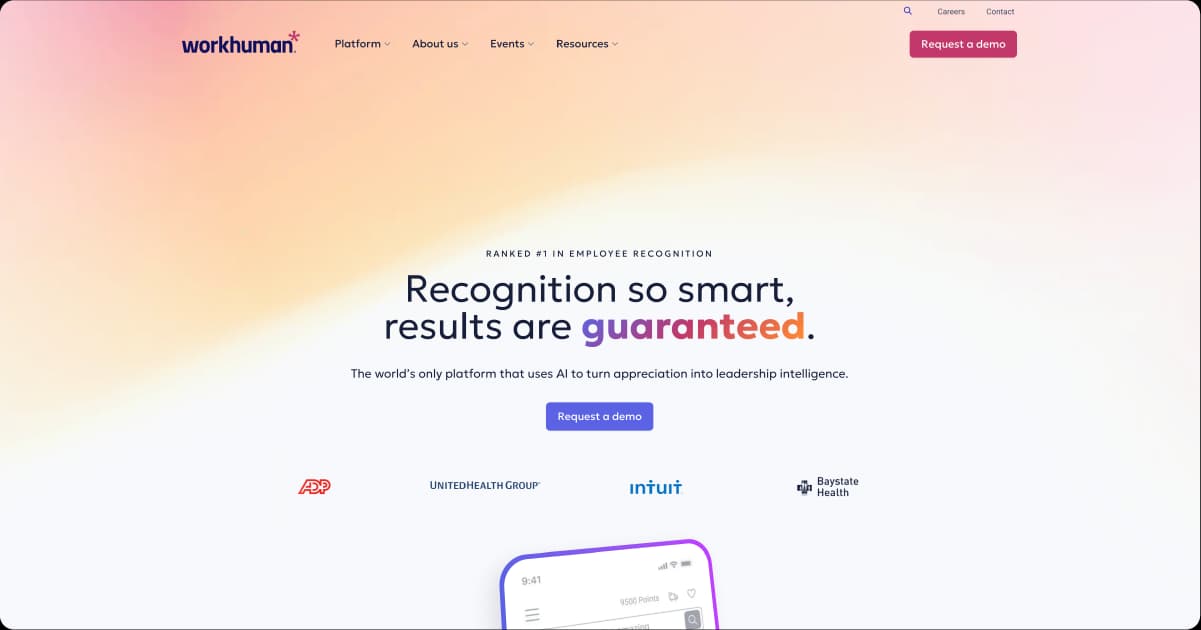
1. Workhuman – Best for turning everyday recognition behavior into continuous engagement signal
G2 rating: 4.7/5 Opens in a new tab
Pricing: Quote-based, not publicly disclosed
Trial: Free demo
Who it's best for: Mid-to-large and global enterprises where HR needs a continuous, unprompted read on culture and skills
Why it's on the list
Workhuman's AI uses recognition data to identify patterns in how employees recognize and interact with one another. These moments of appreciation are continuous and peer-generated, providing a behavioral signal that can complement periodic pulse surveys. The platform's AI Assistant is built on over 1 billion points of Human Intelligence™, along with over 25 years of recognition program data. It's also powered by your own recognition data, not a generic HR model.
Workhuman stands out for its ROI guarantee and track record of measurable returns when organizations invest at least 1% of payroll.
Key features
- Workhuman iQ™ uses real-time, on-demand analytics to mine recognition data for actionable insights into cultural health, people dynamics, and other aspects of the employee experience.
- AI Assistant™ coaches and guides HR leaders based on their own recognition data.
- Inclusion Advisor™ is an AI-powered coach that flags potentially biased language in recognition and suggests inclusive alternatives.
- Recognition Advisor teaches employees what good recognition looks like with in-the-moment coaching.
Integrations
- Outlook
- Slack
- Microsoft Teams
- Workday (native, certified)
- Open API for additional enterprise integrations
Pros
- Workhuman's AI is trained on the customer's own recognition data, not a generic HR database
- Over 8 million users
- Distributes over $1 billion in rewards to employees in more than 180 countries, with localized catalogs in over 150 countries
- Complies with the NIST AI Risk Management Framework and ISO/IEC 23894:2023, with ISO 27001:2022 and ISO 27701:2019 certification
- Documented case studies, such as Merck, which reported that 74% of employees changed their recognition messages after the Inclusion Advisor flagged potentially biased language
Cons
- Analytics dashboard can overwhelm new users
- Pricing is quote-based and not publicly available
- Relies on recognition and feedback data, with limited tools for native pulse surveys
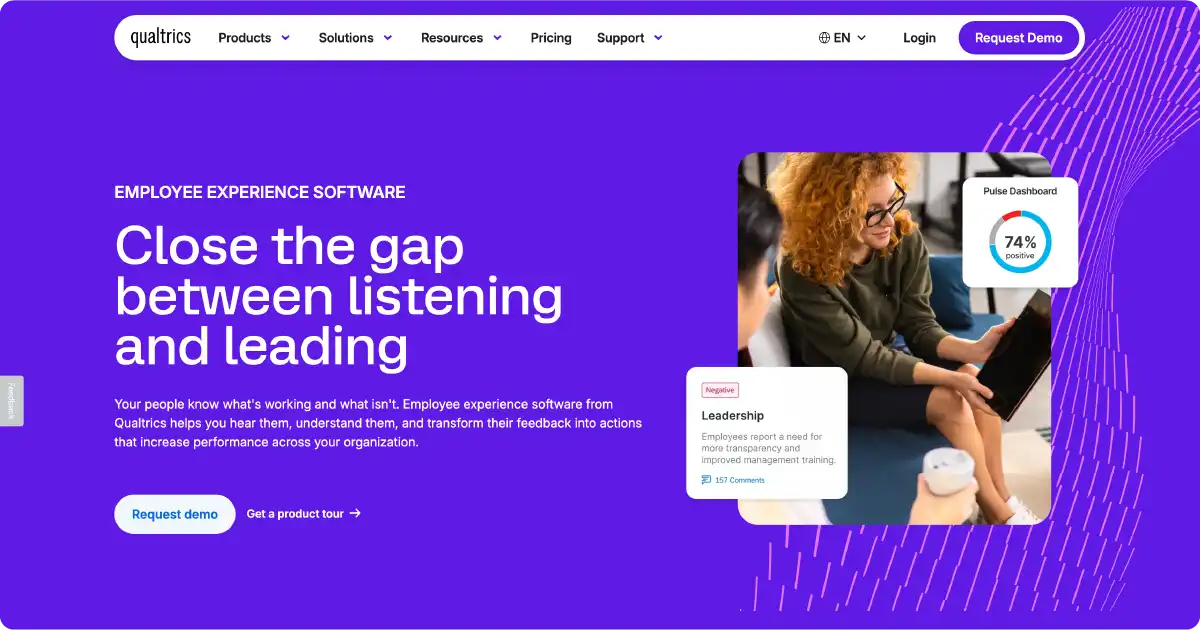
2. Qualtrics EmployeeXM – Best for research-grade experience analytics across the employee lifecycle
G2 rating: 4.4/5 Opens in a new tab
Pricing: Quote-based; estimated around $16/user/month
Trial: Demo
Why it's on the list
Qualtrics lets you design a broad range of surveys and offers extensive analytics for interpreting employee feedback. You can use its AI to summarize open-text survey responses, spot patterns in engagement data, and recommend next steps. Unlike pure engagement tools, this platform lets you use the same methodology across the employee, customer, brand, and product experience.
Key features
- Advanced analytics
- Cross-XM methodology
- Lifecycle intelligence
- Sophisticated survey design
Integrations
Around 20 integrations with popular workplace platforms, including HubSpot, Microsoft Teams, Slack, and Zendesk
Pros
- Advanced survey design and analytics
- Consistent methodology across employee and customer experience
Cons
- May be too complex for organizations that only need an employee engagement platform
- Steep learning curve
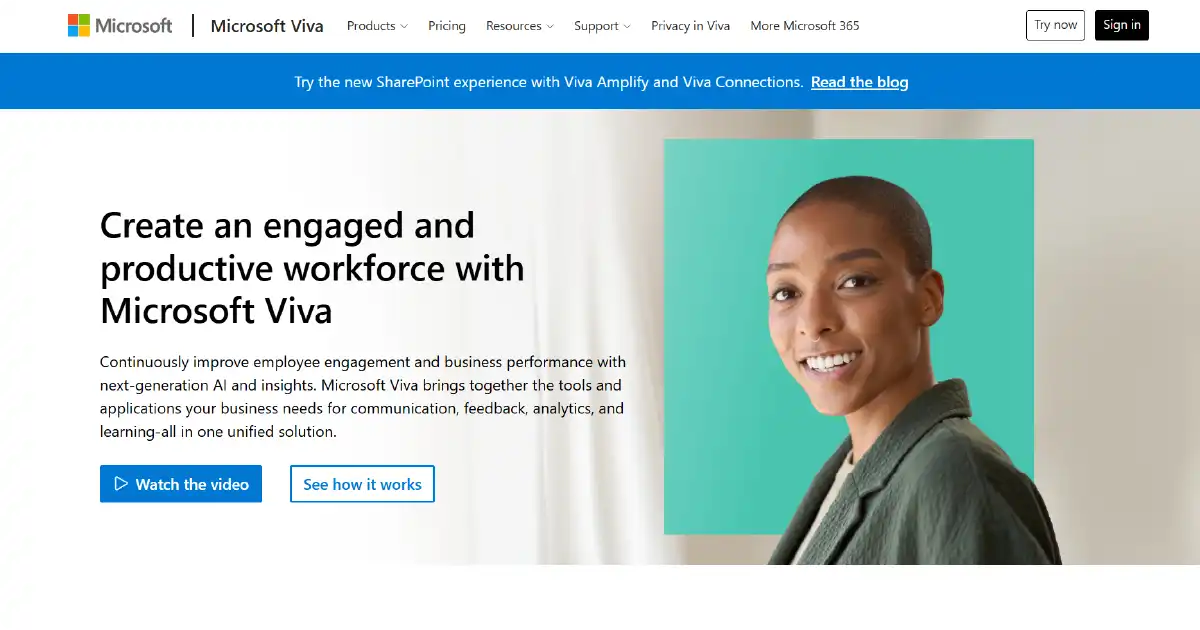
3. Microsoft Viva Glint – Best for Microsoft 365 organizations that want engagement inside Teams
G2 rating: 4.6/5 Opens in a new tab
Pricing: Starts at $2/user/month or bundled with Microsoft 365 enterprise plans
Trial: Free trial
Who it's best for: Organizations that already use Microsoft 365, because surveys are conducted through Teams
Why it's on the list
Microsoft Viva Glint lets you survey employees about their engagement directly through Teams. If your company already pays for a Microsoft enterprise plan, this software may be the easiest option for continuous listening. It also has Microsoft's compliance and security measures, reducing administrative overhead.
Key features
- AI comment summarization with NLP
- Automatic alerts for flight risks
- Recommended action plans
- Survey delivery through Teams
Integrations
Compatible with the rest of the Microsoft ecosystem, including Copilot and Viva Analytics
Pros
- Practical recommendations
- Real-time analytics
- User-friendly dashboards
Cons
- Complex user interface
- May be difficult to use with non-Microsoft products
- Modest learning curve
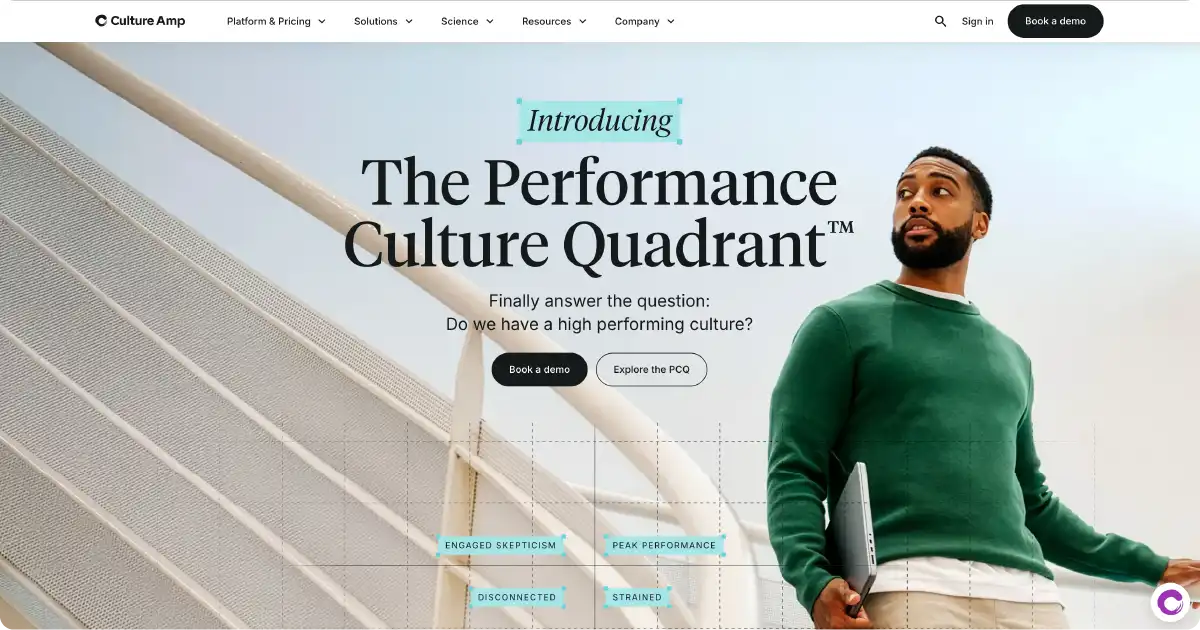
4. Culture Amp – Best for AI-analyzed engagement surveys with people-science benchmarks
G2 rating: 4.5/5Opens in a new tab
Pricing: Quote-based; estimated around $9 to $14/user/month
Trial: Free demo
Who it's best for: Mid-size to enterprise teams that want surveys, action plans, manager coaching, and benchmarking in one hub
Why it's on the list
Culture Amp helps you analyze survey data and develop step-by-step action plans to increase employee engagement. The AI Coach summarizes comments and detects themes, so you can understand what's motivating (or not motivating) your employees. The platform also includes a benchmark library, making it easy to see how your company stacks up against similar organizations.
Key features
- Action plans
- AI-powered survey analytics and reporting
- Benchmarking against thousands of companies
- Customizable survey templates
Integrations
- Greenhouse
- Microsoft Slack and Teams
- Popular HRIS, including ADP, BambooHR, Namely, and Workday
- SAP SuccessFactors
Pros
- Easy access to benchmarking data
- Intuitive UX
- Real-time feedback
Cons
- Limited customization
- Steep learning curve
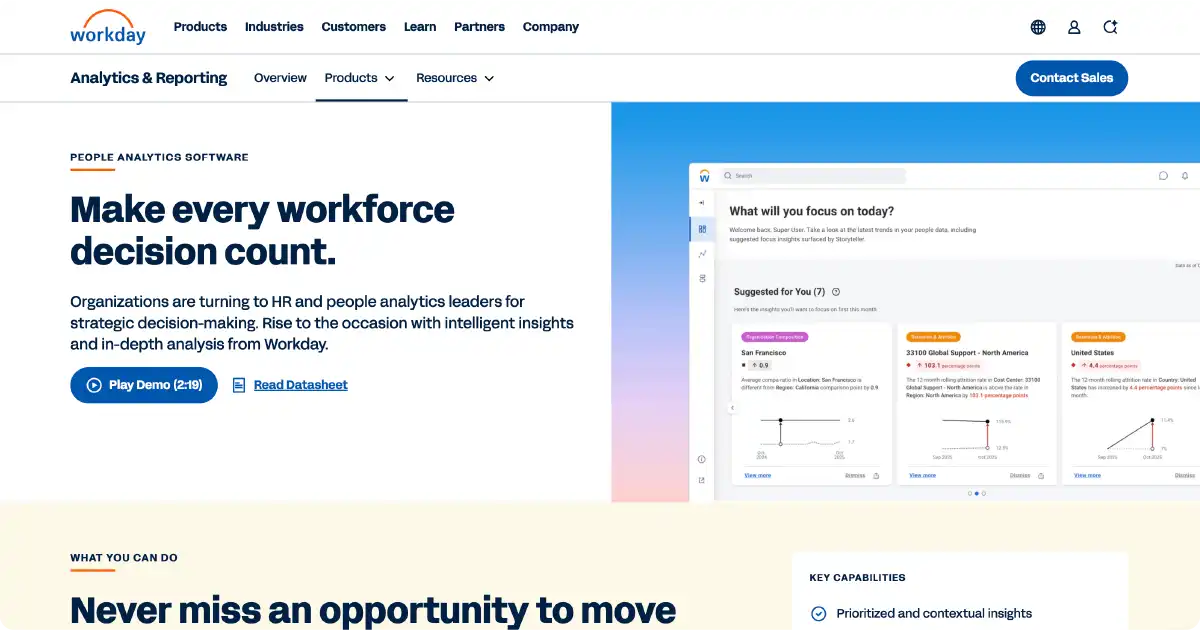
5. Workday Peakon Employee Voice – Best for continuous listening inside a Workday HCM stack
G2 rating: 4.6/5Opens in a new tab
Pricing: Quote-based pricing; estimated to start at $20,000 per year
Trial: Demo
Why it's on the list
As part of Workday, Peakon automatically gathers and analyzes employee engagement data from your Human Capital Management system. It's designed for continuous listening across teams and countries. Use it to create personalized surveys and analyze the feedback using NLP to spot factors affecting engagement. The platform also offers attrition prediction, which makes it easier to spot potential flight risks.
Existing Workday customers may also benefit from a familiar user experience.
Key features
- Frequent pulse surveys
- Personalized action plans
- Research-backed question library
Integrations
Compatible with workplace platforms like Microsoft Teams and Slack
Pros
- Attrition prediction at scale
- Syncs with Workday HCM
- User-friendly interface
Cons
- Doesn't integrate as deeply with other HRIS systems
- Frequent survey reminders can overwhelm employees
- Steep learning curve
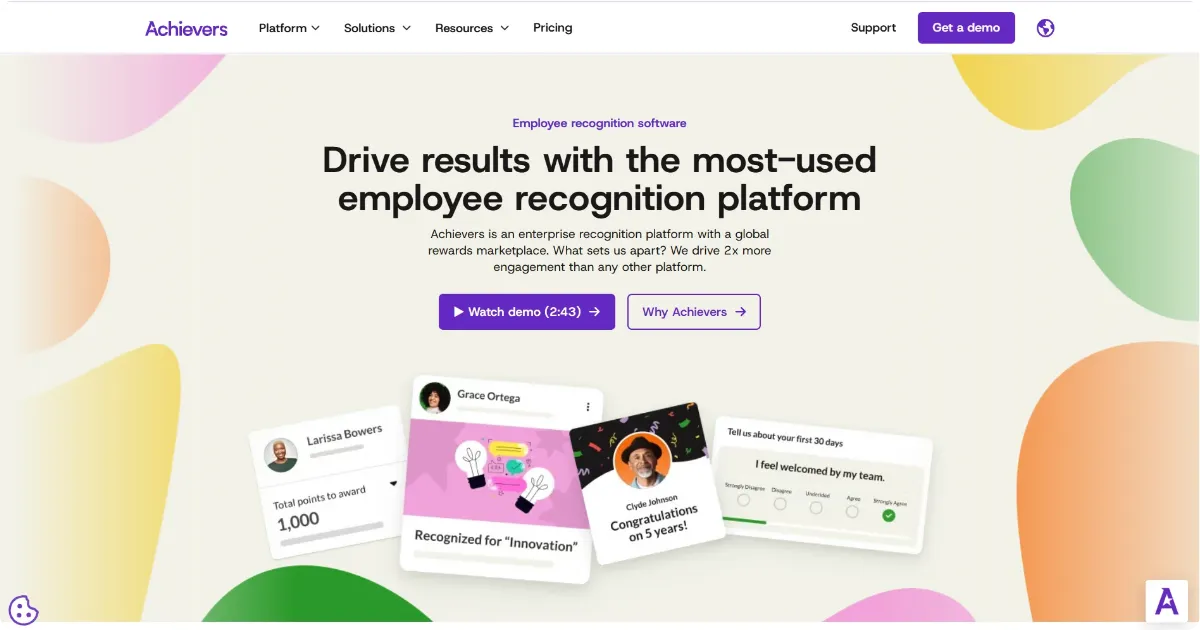
6. Achievers – Best for embedding recognition and AI nudges into the daily workflow
Pricing: Quote-based; estimated to start at $79/user
Trial: Demo
Best for: Enterprises looking to embed recognition in the tools their employees already use and that want to encourage participation with AI
Why it's on the list
Like Workhuman, Achievers combines engagement data and recognition in one platform. Achievers Intelligence uses behavioral data to analyze engagement patterns for individuals and teams. It also gathers direct employee feedback through surveys and polls.
This software stands out for its simple workflow embedding in popular platforms, including Workday and Google Workspace. It also uses AI-driven nudges to gently encourage people to recognize each other and participate in surveys.
Key features
- AI analytics for employee recognition and engagement data
- Continuous feedback with onboarding surveys, polls, surveys, and more
- Pulse surveys
- Sentiment analysis
Integrations
- HRIS systems, including ADP and Workday
- Microsoft Outlook and Teams
- Slack
- Zoom
Pros
- Advanced reporting and user-friendly dashboards
- Several types of recognition, including monetary rewards and nomination-based awards
- Smart surveys
Cons
- Confusing navigation
- Limited rewards options
- Recognition can feel repetitive
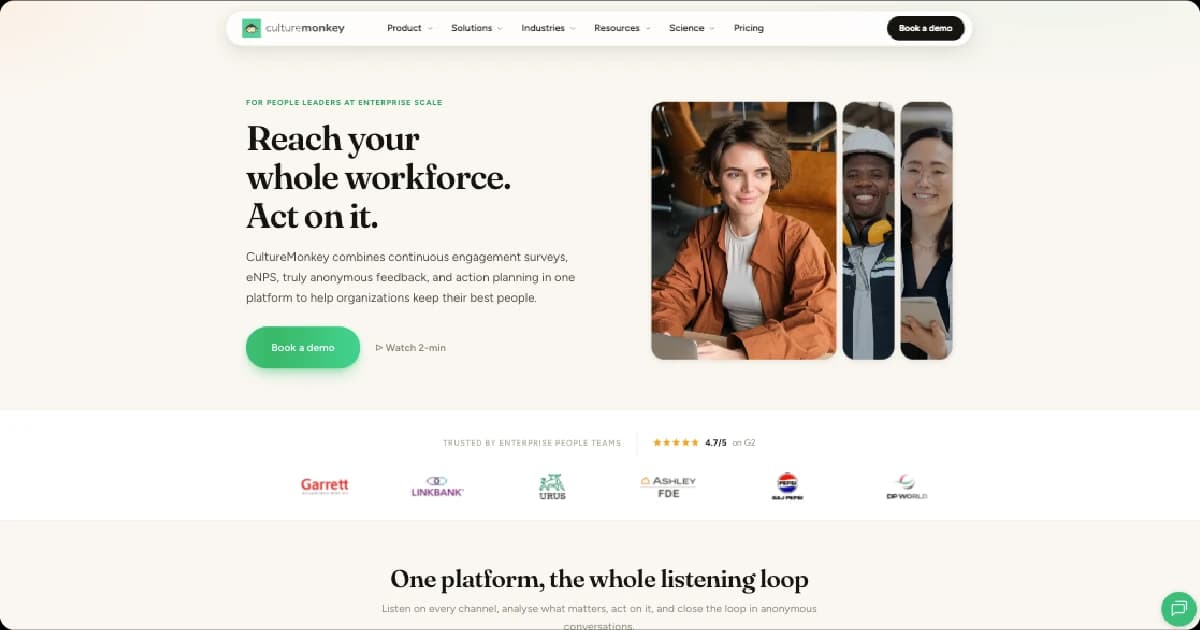
7. CultureMonkey – Best for multilingual and deskless survey reach
G2 rating: 4.7/5Opens in a new tab
Pricing: Quote-based; estimated to start around $5/employee/month
Trial: Demo
Who it's best for: Global organizations with frontline, multilingual, or non-desk employees who typically don't interact with traditional email surveys
Why it's on the list
Deskless employees don't always have the option to check their email throughout the day, making it tricky to gather their feedback. CultureMonkey addresses this common issue by sending out surveys through the channels they already use. For example, you might gather feedback from a shared kiosk on the floor or post a QR code next to the time clock.
This platform is also compatible with several different HRIS platforms, including ADP and SAP SuccessFactors. If your HR stack changes in the future, you can keep using CultureMonkey instead of revamping your entire system.
Key features
- Conversational AI assistant answers questions about engagement in natural language
- Engagement, lifecycle, onboarding, pulse, and exit surveys
- Flexible delivery options for frontline and deskless workers
- Multilingual survey delivery
Integrations
- ADP
- BambooHR
- Darwinbox
- SAP SuccessFactors
- Workday
Pros
- Multilingual and multichannel surveys for increased accessibility
- Not reliant on a single HRIS vendor
- Responsive customer support
Cons
- Difficult to filter data by age and relevance
- Limited survey customizations
8. Lattice – Best for connecting engagement signal to performance and goals
G2 rating: 4.6/5Opens in a new tab
Pricing: $4/seat/month for the Engagement package
Trial: Demo
Why it's on the list
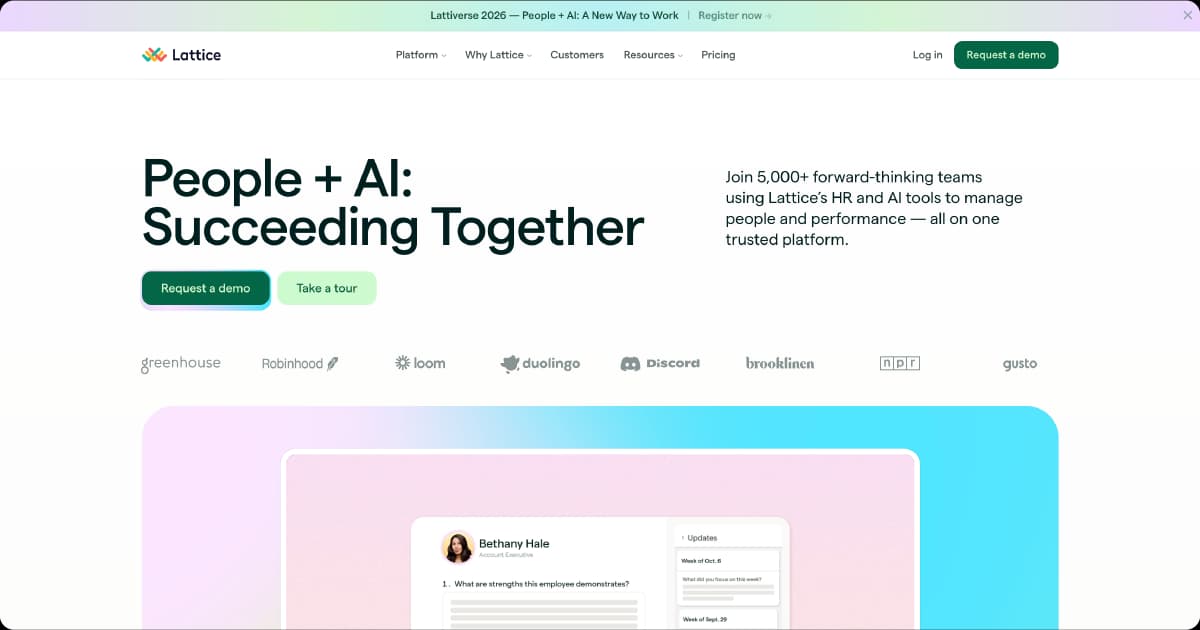
Lattice directly links engagement signals with employee performance and goal data. That makes it easier to see how employee engagement affects productivity and spot people who may need extra support.
The platform offers a variety of surveys, including employee Net Promoter Score (eNPS) and pulse surveys. The AI Assistant analyzes these responses for trends and risks. It also offers coaching to help managers use these insights effectively during performance reviews.
For instance, if an employee's engagement dips after the company rolls out a new program, the AI Assistant might suggest that they need additional training.
Key features
- AI guidance for performance reviews
- AI note-taking and drafting for feedback conversations
- Supports alignment with Objectives and Key Results (OKRs)
- Synthesizes engagement signals across goals, growth, feedback, and other areas
Integrations
- ADP
- BambooHR
- Microsoft Teams
- Namely
- Okta
- Salesforce
- Slack
- Workday
Pros
- Built-in goal-setting features
- Customizable review templates
- Detailed development analytics
- Intuitive design
Cons
- Challenging learning curve
- Limited flexibility for reporting and analytics
- Time-consuming to configure
9. WorkTango – Best for pairing survey feedback and recognition in one platform
G2 rating: 4.7/5Opens in a new tab
Pricing: Quote-based; online estimates range from $8/employee/month to $8,000 per year
Trial: Demo
Best for: Organizations that want to combine listening and recognition in one platform
Why it's on the list
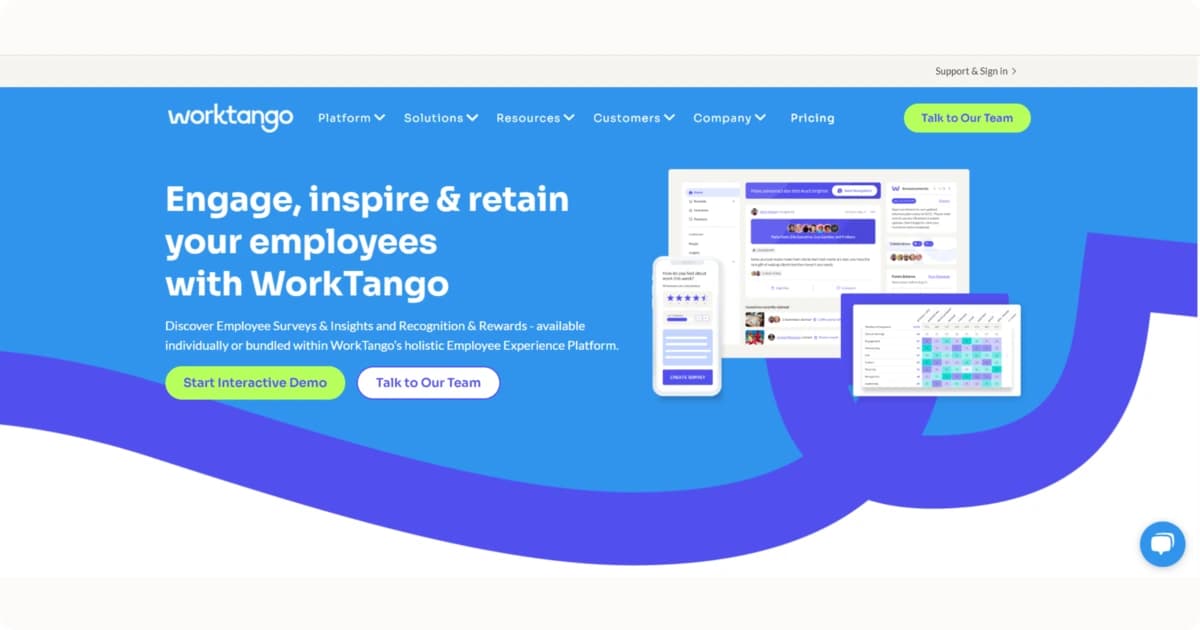
WorkTango (formerly Kazoo) combines both AI approaches to employee engagement. It lets you create unlimited surveys and use AI to analyze them for sentiment and predictive insights. It also has a recognition platform, which lets you track and reward desirable behaviors. Together, these approaches give you a fuller picture of your team's engagement without requiring you to pay for multiple AI tools.
Key features
- Action plans and dashboards for managers
- AI sentiment analysis
- Customizable surveys
- Predictive modeling
Integrations
- ADP
- BambooHR
- Google Workspace
- Microsoft Teams
- Outlook
- SAP SuccessFactors
- Slack
- Workday
Pros
- AI sentiment analysis
- Analyzes behavioral and survey signals
- Anonymous conversations
- Easy to use
Cons
- Limited customization for reports
- Limited redemption options for rewards points
- Slow performance
10. Awardco – Best for AI-assisted rewards program economics
G2 rating: 4.9/5Opens in a new tab
Pricing: Quote-based; estimated to start at $3,000
Trial: Demo
Who it's best for: Teams who want to get the maximum reward value per dollar and use AI analytics to see where their recognition budget actually goes
Why it's on the list
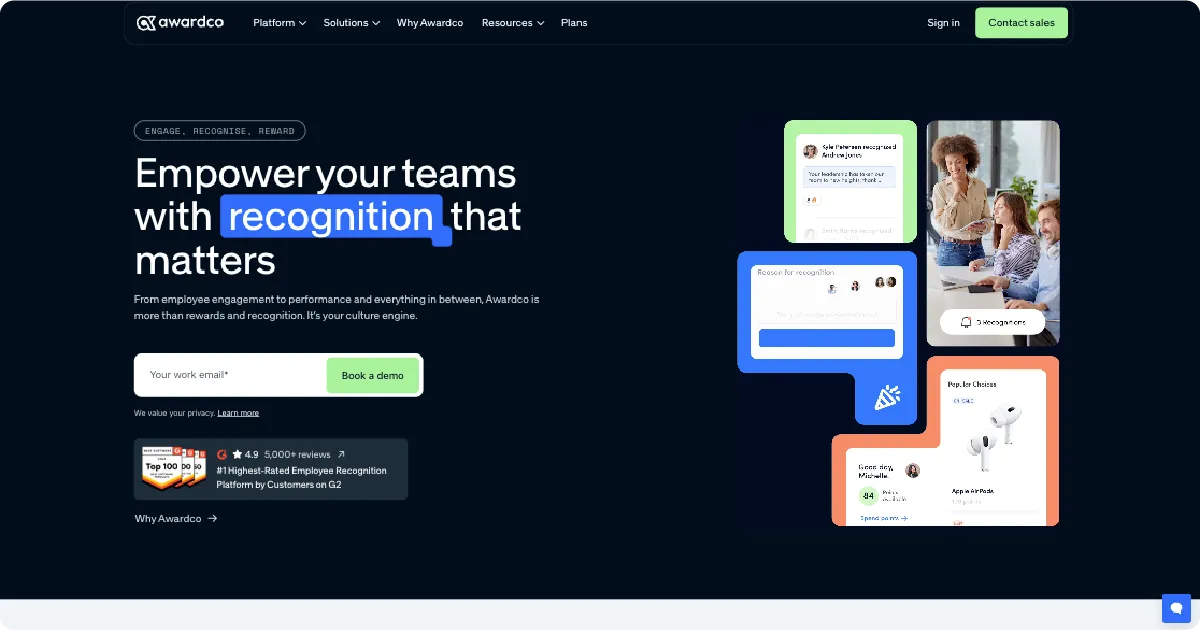
Awardco supports employee engagement with flexible recognition programs and customizable surveys. The platform partners with Amazon to offer millions of localized rewards for employees in over 180 countries. It also offers automated reward distribution, so you don't have to worry about employees missing out on the recognition they've earned.
Use Awardco Intelligence to understand who gets recognized and measure the effectiveness of your rewards program. This AI tool also analyzes engagement patterns across teams. For instance, if you notice that people who collaborate frequently tend to be more engaged, you might create more opportunities for teamwork.
Key features
- Engagement and pulse surveys
- Peer-to-peer recognition
- Real-time engagement dashboards
- Robust rewards catalog
Integrations
- ADP
- Amazon
- BambooHR
- Microsoft Teams
- Outlook
- Slack
- Workday
- Zendesk
Pros
- AI analytics for recognition effectiveness
- Easy for employees to give and redeem recognition
- Wide variety of rewards
Cons
- Lengthy setup process
- Limited customizations
- Slow loading times
Other AI engagement platforms worth considering
- Deel Engage is designed for global teams who want to combine engagement with an HR and Employer of Record (EOR) suite.
- Backed by the latest people science, Perceptyx is an enterprise-level tool that uses continuous listening to analyze engagement and encourage behavior change.
- Quantum Workplace uses surveys to measure engagement and provides narrative-style AI insights.
- Designed for small businesses and mid-market teams, 15Five features automated AI agents to analyze engagement and performance.
- Leapsome combines engagement, performance, and learning tools in one platform.
- Smaller teams can use Bonusly to quickly launch peer-to-peer recognition and monitor its cultural impact.
- Built by Zoom, Workvivo pairs internal communications with engagement analytics and recognition.
- Haiilo is an intranet and employee experience platform that uses AI to analyze engagement and sentiment signals.
- Motivosity focuses on relationship-based recognition and engagement measurement.
- With an affordable price point, ThriveSparrow is a solid option for small teams that want to track eNPS and measure employee engagement metrics.
- Factorial caters to growing small and mid-sized businesses with an all-in-one engagement and HR system.
- Engagedly employs gamification to engage employees and support learning and development.
How to choose an AI employee engagement tool
It's easy to feel dazzled by flashy features, but you don't necessarily need the most advanced AI tools to improve engagement. Instead, focus on these questions as you compare options:
- Does this AI tool analyze behavioral signals, or only survey responses?
- How frequently does the software gather data?
- Does the platform integrate with the rest of your HR tech stack?
- How much does it cost, and will you need to pay extra for certain features?
- What protections does this software have for employee data?
- Can this tool grow alongside your organization?
- What support does the vendor offer during onboarding?
Once you've narrowed your choices down to two or three options, request demos to see them in action.
How to implement an AI engagement program
Using AI for employee engagement involves more than sending out a few surveys. Follow these steps:
- Outline your engagement goals, such as reducing turnover by 10% this quarter.
- Choose two or three signals to focus on at first. These might be behavioral signals, such as recognition, or survey responses.
- Set up your chosen AI tool and connect it to your HRIS and other systems.
- Start small by gathering engagement data from a single team or data source. For instance, you might run a pilot program by tracking recognition for your marketing team.
- Use AI analytics to interpret the data, get recommendations, and track employee progress toward your engagement goals.
- Develop an action plan for employee engagement and monitor your results.
- Roll out your AI engagement program to the entire organization.
AI engagement trends in 2026
- AI anxieties hurt engagement: Employee Engagement Report, by Founder Reports, found that 49% of employees who worry about AI affecting their jobs believe that putting in extra effort is pointless. Addressing employees' concerns about AI and job security, including anxiety about potential layoffs, may help HR teams support engagement.
- Clear AI strategies are associated with stronger engagement: In organizations with clear plans for AI adoption, employees are 15 points more engaged, according to Gallup research.
- Growing emphasis on AI and human collaboration: McKinsey's "The State of Organizations 2026" report indicates that many organizations are shifting to hybrid AI-human workflows that combine AI efficiency with human judgment. This model can help HR leaders respond more effectively to employee feedback, especially for large teams.
- Rise of AI coaching: In a survey by The Conference Board, 91% of employees who received AI coaching said they'd use it again. The finding suggests employees remain engaged and aspire to achieve career goals when leveraging AI career coaching.
What AI engagement tools cost
Some vendors offer per-user pricing starting as low as $4 per month. Others use subscription models that may cost thousands of dollars per year, based on the features and team size. Here's a quick breakdown, based on official data from vendor websites:
FAQs
How can AI improve employee engagement?
AI can help improve employee engagement by continuously analyzing signals and identifying themes that might otherwise get overlooked. These tools can detect potential risks, such as infrequent recognition, and explain trends in natural language. They may also recommend ways to improve engagement, but people ultimately determine how to act on those insights.
What is the best AI employee engagement software?
The best AI employee engagement software depends on the types of engagement signals you want to analyze, including survey responses, behavioral signals, or a combination of both. Other factors to consider include AI-generated recommendations, continuous signals, integrations, responsible AI practices, and data governance.
How do you use AI for employee engagement surveys?
AI can help you analyze open-text responses for themes, create adaptive follow-up questions based on employee responses, and draft action plans. It can also identify patterns and sentiment across large volumes of employee feedback that may be difficult to spot manually.
Which AI engagement platform is best for a company with 10,000 employees?
The best AI engagement platform for large enterprises offers multi-country and multi-language support, along with strong data governance. If you're combining engagement with recognition, you should also look for a platform with a global rewards catalog.
Can AI predict employee turnover?
Several engagement platforms use machine learning to identify patterns associated with employee turnover or attrition risk, but the quality of those predictions depends on the data and signals available. Use these predictions to investigate broader workplace or culture issues instead of singling out individual employees.
Is it safe to use AI on employee feedback data?
Organizations should evaluate an AI platform's privacy, security, data governance, and anonymity protections before using it on employee feedback. Look for documented security standards, policies for how employee data is handled, and safeguards around how AI-generated insights are used. For instance, Workhuman is an ISO27001:2022 and ISO27701:2019 certified organization, which means it follows strict data privacy guidelines.
How much does AI employee engagement software cost?
While most enterprise vendors don't publish per-seat pricing, usage fees for AI employee engagement software can start as low as $4 per user per month. Costs may vary depending on the number of users, AI features, integrations, and other factors.
What's the difference between employee engagement software and employee recognition software?
Employee engagement software helps organizations understand and improve the employee experience, while employee recognition software helps employees and managers acknowledge and celebrate contributions, achievements, and behaviors. Some platforms offer both engagement and recognition features.
Support employee engagement with AI
Even the most detailed surveys don't always capture how employees actually feel. The most effective AI employee engagement tools use a combination of survey and behavioral signals to understand how people interact at work. They may also suggest specific improvements, though leaders should always have the final say in decision-making.
Get started by considering your engagement goals and what type of signal you want to measure. Once you begin collecting data, use AI to look for issues that might be hurting engagement. With an employee listening program, continuous listening and steady improvements can help you respond to your team's needs and encourage them to stay engaged.

Ryan Stoltz
Ryan is a search marketing manager and content strategist at Workhuman where he writes on the next evolution of the workplace. Outside of the workplace, he's a diehard 49ers fan, comedy junkie, and has trouble avoiding sweets on a nightly basis.
Recommended for you