
Best AI Tools for HR Teams in 2026 (and What Each One Actually Does)
by Ryan Stoltz
Last updated
14 min read
Table of contents
- Selection criteria for AI-powered HR tools
- Top 10 AI tools for HR: Shortlisted options
- 1. Workhuman Cloud — Best for AI-Powered Recognition, People Intelligence & Culture Analytics
- 2. Kvistly — Best for Employee Engagement & Interactive Training
- 3. Leena.ai — Best for Employee Support and Workflow Optimization
- 4. Eightfold AI — Best for Skills Inventory, Talent Acquisition, and Workforce Planning
- 5. Lattice — Best for Employee Development & Feedback
- 6. BambooHR — Best for All-in-One HR Management
- 7. Fetcher — Best for Talent Acquisition & Recruitment
- 8. ChatGPT and generative AI — Best for Content Generation
- 9. Visier — Best for Forecasting & Workforce Planning
- 10. BetterUp — Best for Professional Development & Wellbeing
- Free AI tool options for HR
- Choosing the right HR AI tool based on needs
- FAQs
- Choose AI HR tools your organization will actually use
Share this article
AI tools have popped up all over the workplace practically overnight. One minute, you're experimenting with writing offer letters with ChatGPT. Next, it feels like everything is suddenly intelligent, and using AI has become as commonplace as building a spreadsheet.
In McKinsey's State of AI 2025 report, 88% of respondents said their organizations used AI for at least one business function, up from 78% in 2024. Of course, that doesn't mean they're all AI-savvy. There's a big difference between using AI for one-off tasks and making it a core part of how work gets done.
In fact, McKinsey considers only 6% of organizations to be high performers with AI.
Many HR leaders realize their orgs have plenty of room to grow. When Gartner surveyed 110 Chief Human Resource Officers (CHROs) in their 2025 study “Gartner Identifies the Top Change Management Trends for CHROs in the Age of AIOpens in a new tab”, 78% agreed their workplaces must change to get the most out of AI. That could involve anything from rethinking roles to working with brand-new types of data.
The best AI tools for HR go beyond automating simple tasks such as scheduling interviews and reviewing job applications, enabling hr professionals to focus on strategic cultural initiatives. That saves time, but it's not exactly groundbreaking. Top performers use software that creates new signals: more intelligent data and ways of accomplishing HR tasks that you can only do with AI.
Workhuman® is one platform using AI to analyze culture and people on much deeper levels. This guide breaks down its key features, plus nine other tools to help you go from automation to true AI adoption.
Selection criteria for AI-powered HR tools
Using AI to revolutionize HR is the number-one priority for CHROs, according to a 2026 Gartner study on “2026 HR TrendsOpens in a new tab”. But you can't make lasting changes without the right tools. When comparing AI tools for HR, consider:
- Real AI vs. AI-washing: Top tools use AI to handle complex tasks, such as analyzing people data. Others just use buzzwords to make basic automation sound more impressive.
- AI accuracy: You've probably heard about AI tools "hallucinating" incorrect answers or making up data. Look for software with a proven track record of accurate and reliable outputs.
- Practical automation: AI is only helpful if it genuinely improves your team's day-to-day work.
- Employee experience and engagement: The best AI HR tools help employees feel more connected and involved at work, instead of pushing them away.
- Enterprise-grade governance: The last thing you want to worry about is an AI tool leaking sensitive HR data. Choose software that complies with SOC 2 and has built-in bias controls. Keeping humans in the loop also helps prevent costly errors.
- Human resources information systems (HRIS) integration: Look for AI tools that are compatible with the tech you're already using. Otherwise, you may waste time duplicating HR processes and data.
- Straightforward rollout and user adoption: Software with intuitive features and interfaces usually has a small learning curve. That means your HR team will spend less time onboarding and trying to figure out which button does what.
- Pricing: While there are free AI tools for HR, most platforms have paid tiers. Make sure you understand the pricing model and any hidden costs. Small organizations may start with pay-per-user pricing, then upgrade to an enterprise plan as they scale.
See also: The Ultimate Guide to HR Analytics Tools and Software
Top 10 AI tools for HR: Shortlisted options
1. Workhuman Cloud — Best for AI-Powered Recognition, People Intelligence & Culture Analytics
Key features
- Workhuman iQ with AI Assistant: generative-AI prompts surface culture, skills, retention, and performance insights in real time
- Skills intelligence derived from observed peer recognition — no self-reporting or assessment required
- Team-level and org-wide trend monitoring across departments, regions, and time
- iQ Snapshots: embedded insights cards that surface in the flow of recognition, visible to managers and employees
- Recognition Advisor: real-time AI coaching that helps employees write more specific, inclusive, and impactful recognition messages
- Topics: maps how strategic initiatives are showing up in live recognition behavior
- Conversations: performance check-ins, continuous feedback, and quarterly reviews
- Broad integration support, including Workday, SAP SuccessFactors, and other leading HCMs
- Built-in Inclusion Advisor and DEI analytics for bias-aware recognition
Pricing
Custom
What it does
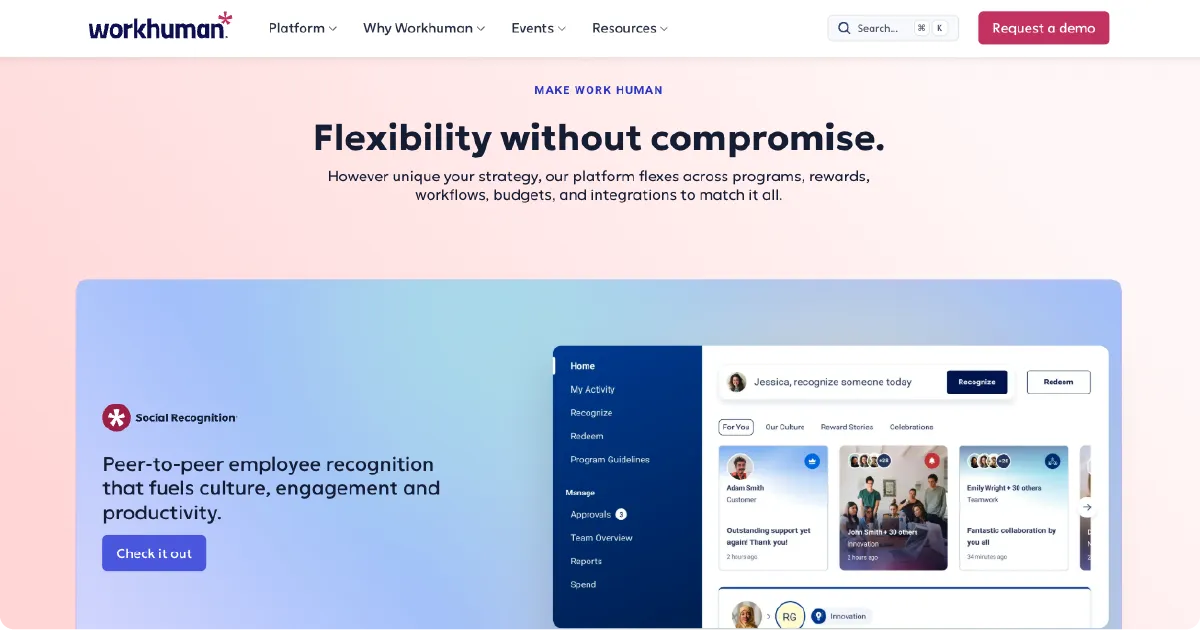
Workhuman is the only AI platform in HR built on a data type no other vendor has access to: peer-to-peer recognition behavior.
While most tools on this list mine resumes, survey responses, or time-clock records, Workhuman iQ synthesizes recognition data alongside a wide range of organizational data from integrations, including Workday, plus 25 years of recognition consulting practice documentation, to give leaders and managers real-time observations into the state of their people and culture.
The result is something genuinely different from a dashboard or a sentiment survey: a single source of truth for evaluating how culture is actually lived across an organization, updated continuously as employees recognize one another.
Two distinct audiences get meaningfully different value. Senior HR leaders get a macro view: the daily health of the company's culture, the measurable impact of the recognition program, and trend lines tracked across departments, regions, and time.
People managers get a team-level lens: skill gap identification, internal promotion, and transfer candidates surfaced from peer behavior rather than manager opinion, and a holistic picture of team dynamics that no performance review cycle could produce on its own.
AI capability that matters
The Workhuman AI Assistant is trained on the world's first recognition-specific language model, fueled by 100M+ data points. It doesn't just surface a static report; it responds to natural-language prompts, monitors trends over time and across the organization, and delivers succinct AI-generated summaries that HR leaders and managers can absorb and act on immediately.
Ask it who your strongest internal candidates are for a new role, where collaboration is weakest, or how recognition has affected new-hire retention over the last 12 months — and it answers in plain language, not a pivot table.
Where it fits in your stack
Workhuman is a complement to your HCM, not a replacement for it. Its Workday integration means recognition and people-intelligence data flow into your existing system of record. Tools like Visier (#9 on this list) surface workforce analytics from transactional data; Workhuman adds the behavioral layer — what employees actually observe and value in each other — that transactional data can never capture.
Bottom line
2. Kvistly — Best for Employee Engagement & Interactive Training
Key features
- AI quiz generator
- Leaderboards to encourage friendly competition
- Real-time engagement and sentiment analysis
- Risk mechanics for gamification
Pricing
Free plan with up to 10 players per game and three quizzes. Paid plans start at around $43 (37 €) per month with unlimited quizzes.
What it does
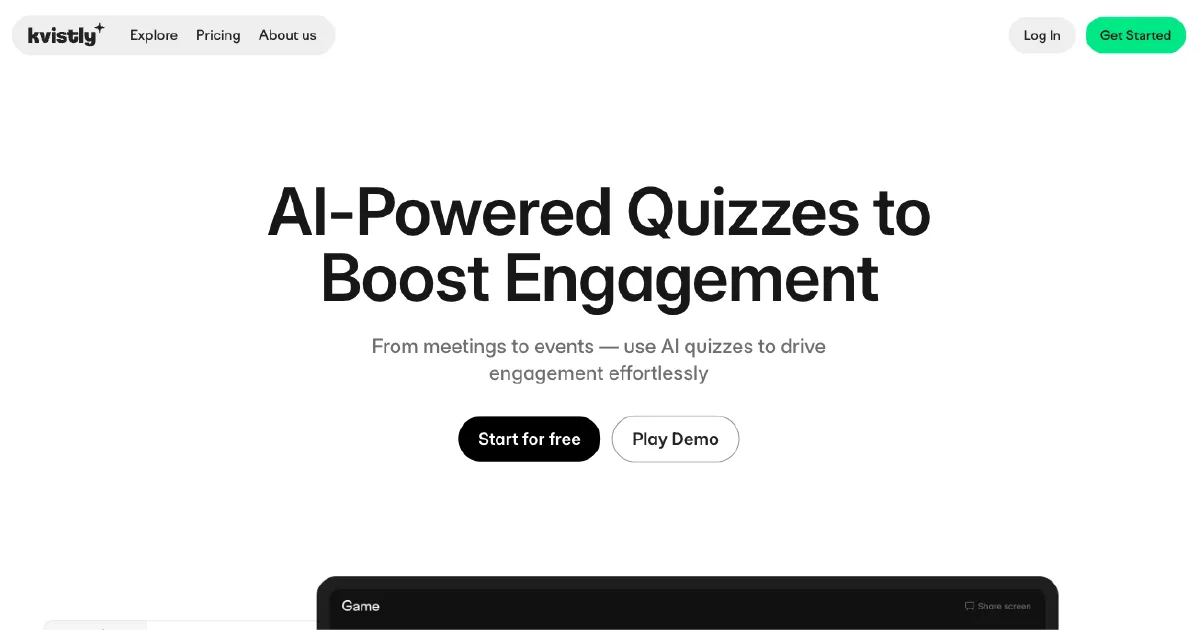
People often love to share their opinions, but it's not always easy to hear from everyone during meetings. Kvistly helps engage your entire team with AI-powered quizzes. Its AI assistant can generate questions based on a specific topic or your own content.
Kvistly is an excellent option for small and mid-sized organizations that want more active participation. Use it to encourage engagement during training and team-building activities. For example, you could upload an employee handbook and quiz new hires about key policies. That's much more memorable than a boring slide deck.
It also lets you share quick pulse surveys. You could create quizzes to check in with your team after a leadership change or a new schedule.
AI capability that matters
Kvistly's AI assistant creates custom quiz questions in seconds based on your content. You can upload documents to test your team's knowledge and track their progress over time. That's faster than skimming through a 20-page PDF to write questions yourself. The pulse surveys it can generate give you a way to monitor employee sentiment in real time.
Where it fits in your stack
Use Kvistly to gather engagement and sentiment data quickly. Once the responses flow in, Workhuman can help you analyze trends and suggest ways to improve them. For instance, if your marketing team's morale drops, more recognition could help reverse that trend. However, Kvistly has limited reporting and exporting tools, so you might need to use external platforms to extract data.
Bottom line
Kvistly lets you liven up your next all-staff meeting or training session with fun, gamified quizzes and surveys. Along the way, you'll collect valuable engagement data.
3. Leena.ai — Best for Employee Support and Workflow Optimization
Key features
- 24/7 chatbot
- Case escalation
- Data analytics and AI recommendations
- Integrates with HR tools
- Learns from your knowledge base and policies
Pricing
Custom
What it does
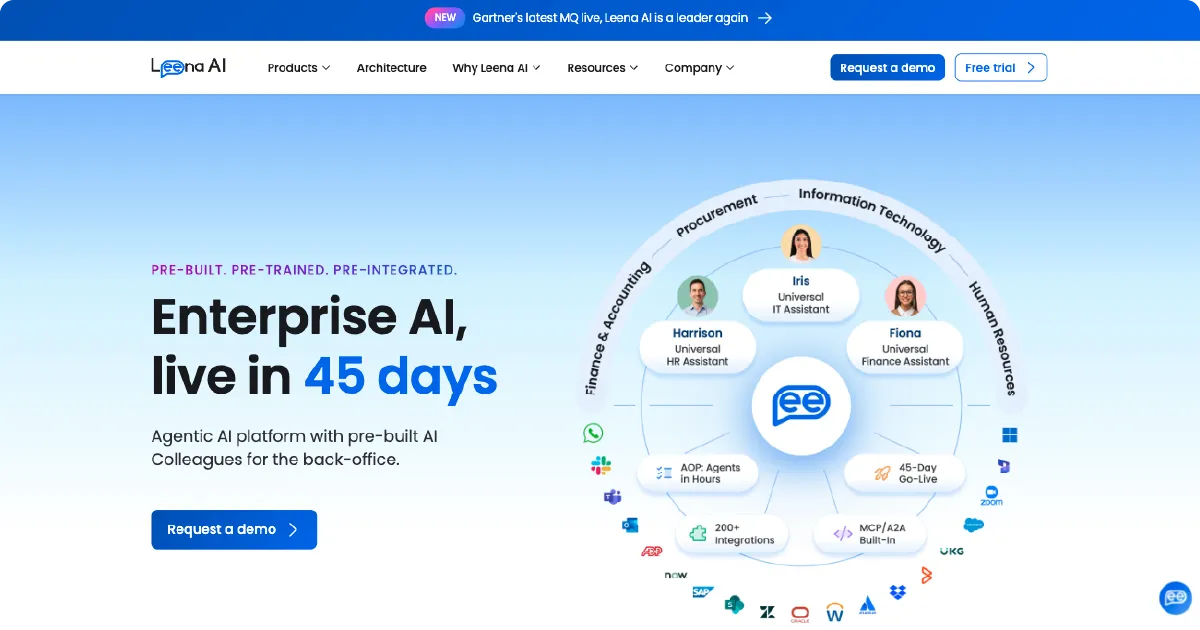
Most HR teams deal with a constant barrage of questions and requests from employees. With Leena.AI, you can hand off these routine HR support tasks to AI Colleagues.
These AI assistants talk directly with employees and provide immediate support. They can check PTO, answer simple questions about benefits, update payroll details, and more. That means fewer HR tickets and more satisfied employees.
AI capability that matters
This software's agentic AI offers instant support for employees. It handles routine tasks, such as nudging new hires to complete onboarding paperwork and submitting vacation requests. If a request is too complex for the agent, it routes it to the appropriate person. This intelligent automation keeps workflows moving smoothly and lightens your HR team's to-do list.
Where it fits in your stack
Leena.AI works alongside your existing HR tools to offer front-end support. With proper document mapping, it always shares up-to-date information. It also triggers actions based on employee requests. For example, someone can ask the AI Colleague to enroll them in health insurance instead of going through the helpdesk.
Bottom line
Leena.AI is a versatile frontline assistant that cuts down on repetitive HR tickets and helps your employees get answers faster.
4. Eightfold AI — Best for Skills Inventory, Talent Acquisition, and Workforce Planning
Key features
- AI interviewer
- Candidate rediscovery
- Career pathing
- Integrates with SAP SuccessFactors and other popular HR tools
- Internal mobility recommendations
Pricing
Not publicly available
What it does
You need employees with the right skills, not the shiniest resume. Eightfold AI uses talent intelligence to help you hire and promote the best people for each role.
Traditional applicant tracking systems (ATS) focus on filtering candidates out. By contrast, Eightfold AI is a talent intelligence platform that relies on large language models (LLMs) to analyze skills and potential, not just keywords. It uses this information to match candidates and current employees to the right roles.
This can help reduce bias and reveal talent that might otherwise get overlooked. Maybe someone you hired as a graphic designer has all the necessary skills for a marketing management role.
Eightfold AI is a solid option for enterprises that hire for many positions. Instead of sifting through endless applications, your HR team can use AI to spot top contenders quickly and accelerate the hiring process. It's also helpful for organizations that prioritize internal mobility. However, you'll need to provide plenty of historical data, such as performance metrics, for the most accurate suggestions.
AI capability that matters
This platform uses agentic AI for skill mapping across your organization. This feature spotlights talent gaps, so you can recruit the right people. It also supports better succession planning and professional development. For example, if your IT team lacks cloud architecture experience, you might offer to pay for certifications or hire an expert.
Where it fits in your stack
Eightfold AI assists you in inventorying your workforce's skills and making smarter hiring decisions. Combine it with Workhuman's Human Intelligence™ to spot and promote top performers within your organization. It also helps fill skill gaps before they affect performance.
Bottom line
With its agentic AI recruiters, Eightfold AI can empower your HR team to make faster, more informed hiring decisions.
5. Lattice — Best for Employee Development & Feedback
Key features
- AI writing assistant
- Employee-facing AI agent for career questions and advice
- Growth plans
- Manager coaching
- Performance tracking and summaries
Pricing
Starts at $11 per seat per month. However, you'll need to pay extra for certain features, including Core AI and career tracking.
What it does
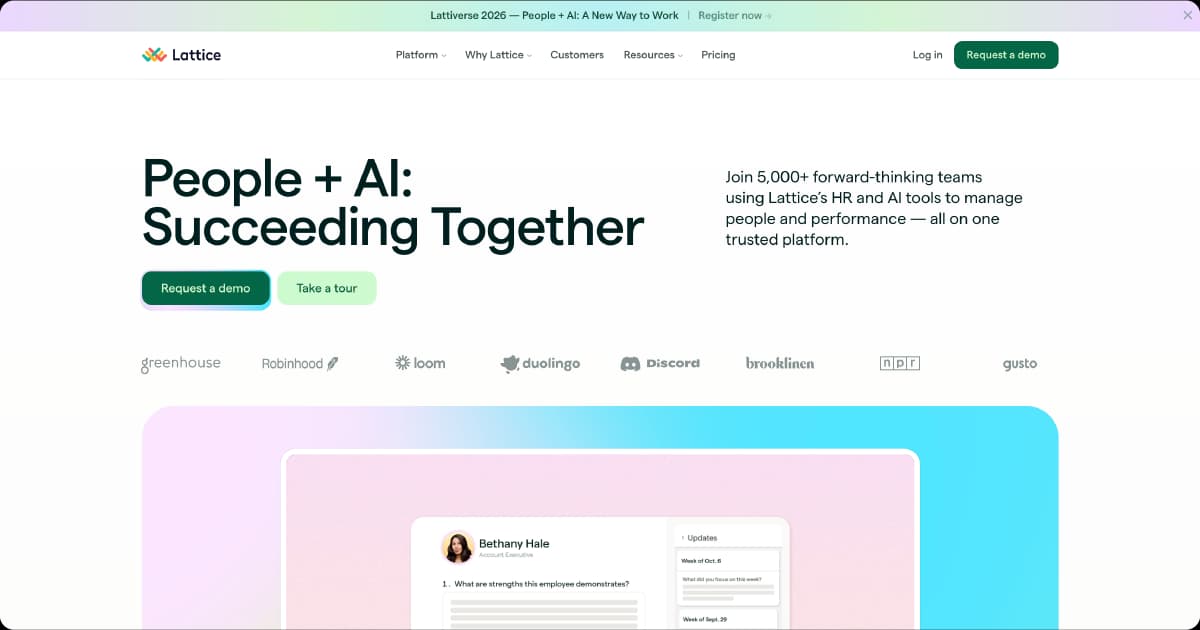
Lattice uses AI to analyze employee performance and help managers provide better feedback.
For managers, Lattice makes it easier to provide continuous feedback. It tracks employee and team performance, so leaders can keep a close eye on their progress. There is also support for drafting performance reviews and growth plans. Say an employee's emails often come across as abrasive, and their manager isn't sure how to frame this feedback. The AI can suggest tactful phrasing.
AI capability that matters
Lattice's AI uses performance data to support growth and continuous feedback. It tracks employees' skills and accomplishments, so managers can see their progress over time. It also helps leaders quickly write feedback and performance reviews.
Where it fits in your stack
Add Lattice to your managers' toolkits to help them provide more personalized and constructive feedback. It pairs well with social recognition platforms. For example, Workhuman tracks employee contributions and accomplishments across your organization. With Lattice's AI assistant, you can turn that data into clear feedback.
Bottom line
Lattice is useful for managers wanting to provide more detailed and timely feedback, but costs can add up quickly as your team grows.
6. BambooHR — Best for All-in-One HR Management
Key features
- AI-powered reporting
- Turnover risk predictions
- Compensation insights
- Core HR record management
Pricing
Pricing starts at $10 per employee per month, with add-on packages for features such as payroll and benefits administration.
What it does
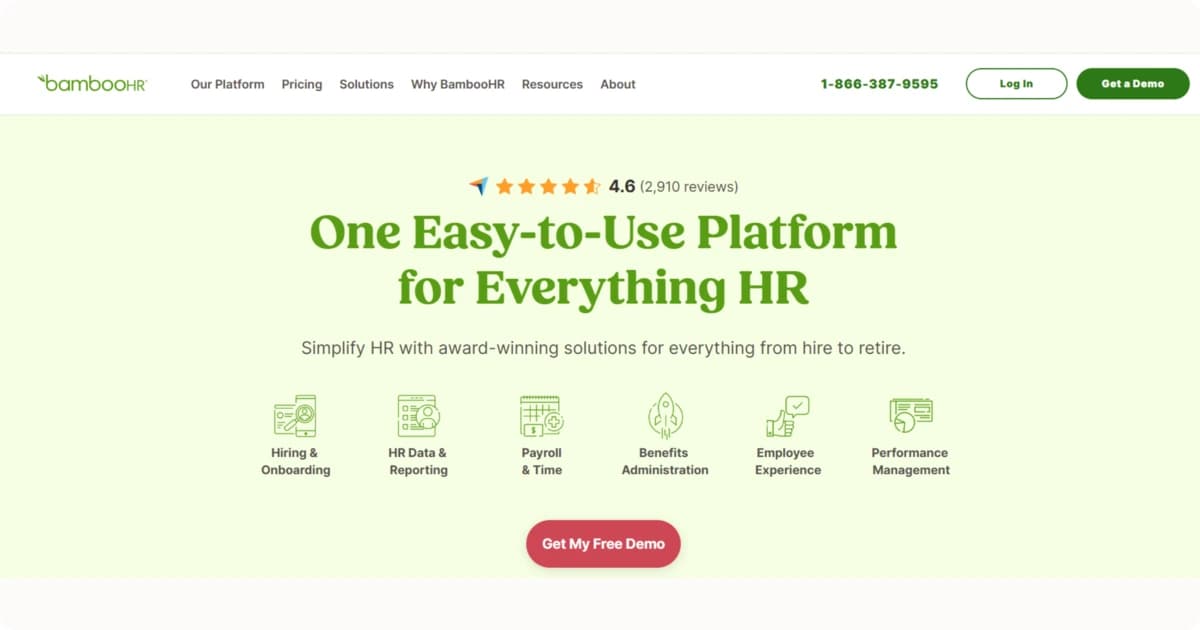
Some organizations prefer to keep their tech stacks small instead of relying on a patchwork of different tools. BambooHR is an all-in-one AI HR software that combines hiring, payroll, record management, and performance management.
By managing and storing all your HR records in one spot, the platform makes it easy to analyze data with the built-in AI analytics. It can help with everything from comparing compensation with competitors to predicting turnover risks.
BambooHR is a good option for small-to-medium businesses with modest tech budgets. Everything lives in one platform, which makes onboarding simpler. Plus, you won't need to worry about integrating different platforms. However, lower tiers have limited analytics, so you may need to upgrade for deeper insights.
AI capability that matters
AI-powered reporting is one of the platform's standout features. It uses conversational AI to answer questions and reveal trends in HR data. For example, you could ask, "Which employees are the most at risk for burnout?" or "Why did retention decrease in 2025?" The AI also suggests next steps to turn that data into action.
Where it fits in your stack
BambooHR is designed to be the heart of your tech stack, but it doesn't have a built-in recognition program. Consider combining it with a platform like Workhuman to reward your employees' contributions. Lower tiers also offer limited analytics, so you might need to upgrade or integrate with other tools.
Bottom line
BambooHR is a jack-of-most-trades platform that covers all the essentials, though you may need to pair it with other tools for recognition and advanced analytics.
7. Fetcher — Best for Talent Acquisition & Recruitment
Key features
- Automated outreach via email
- Candidate scoring
- Diversity goals
- Recruitment analytics
Pricing
Starts at $379 per month, with enterprise pricing available for high-volume teams
What it does
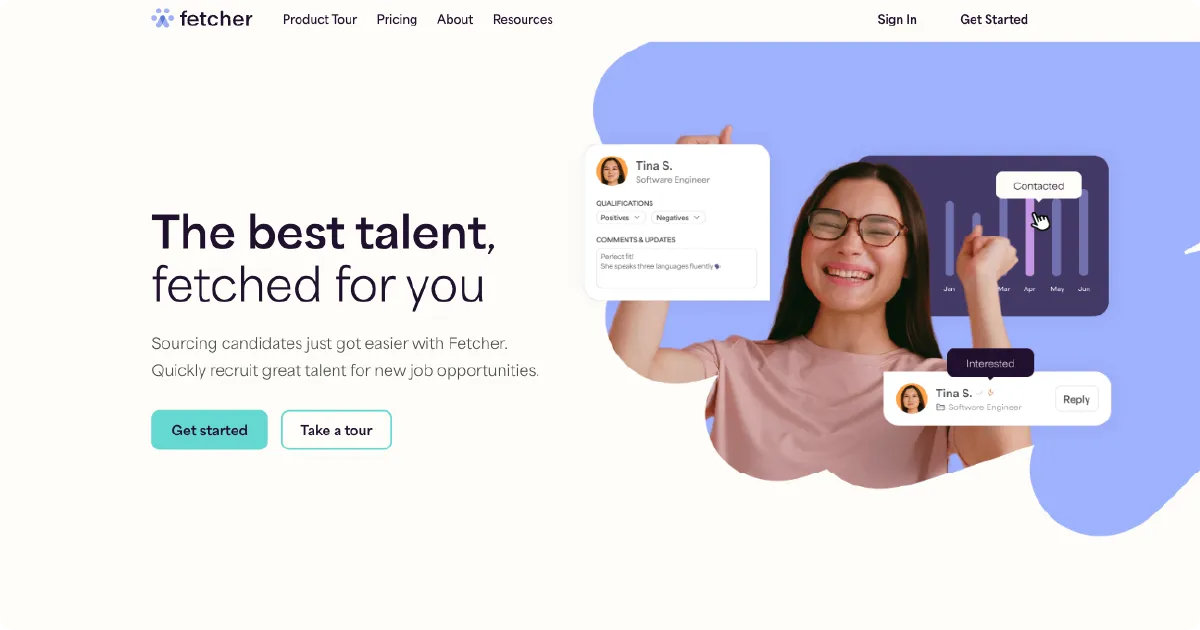
You don't need to sit around hoping that the perfect candidates will come across your job ad. Fetcher uses AI to build curated lists of top talent and automatically send them outreach emails.
Use this tool to create a pipeline of promising talent, even when you're not actively hiring. Suppose an employee in a niche role plans to retire. Fetcher can help you identify qualified people now and gauge their interest. That way, you can start building relationships early instead of scrambling to fill roles. For more competitive positions, AI helps screen and score inbound candidates.
AI capability that matters
Fetcher stands out for its automated email outreach. These messages can help you connect with top candidates and pique their interest in your roles. If they respond, AI will continue the conversation and flag the most promising leads.
Where it fits in your stack
This tool is built for the beginning of your talent pipeline. It integrates with ATS and candidate relationship management (CRM) software to help you source top candidates. However, it doesn't provide any support once you actually hire them, so you'll need additional HR tools for onboarding and beyond.
Bottom line
Fetcher is useful for teams that struggle to recruit experts, but you may not need it if you already have a steady stream of applicants.
8. ChatGPT and generative AI — Best for Content Generation
Key features
- Content generation, such as drafting job descriptions
- Online search
- Responds to prompt engineering for more tailored outputs
- Summarization of policies and other documents
Pricing
Free version with limited memory and uploads. Paid versions start at $8 per month.
What it does
ChatGPT has become one of the most popular ai technology in the workplace tools, and for good reason. It can generate many types of HR content, from job ads to memos and policies. You can also upload documents for more personalized outputs.
Offload routine writing tasks to ChatGPT. If you're hiring new employees, the chatbot can help you write interview questions and create templates for offer letters. When it's time to onboard your recruits, draft their training materials with AI.
ChatGPT comes in handy for teams that spend a lot of time generating content. Just be sure not to feed it sensitive or confidential data. As OpenAI's privacy policyOpens in a new tab states, it may disclose user data to vendors, marketing partners, affiliates, and other third parties. That raises serious privacy concerns, especially if you're handling private employee data.
AI capability that matters
ChatGPT is a go-to tool for content generation. Use it to draft practically any written content, including emails, employee handbooks, FAQs, and slide decks. If you don't get the right output the first time, try rephrasing your request.
Where it fits in your stack
This software won't replace traditional HR tools, but it does help you create content for other systems. For instance, if you're writing recognition messages for your team, ask ChatGPT to suggest heartfelt phrasing. Then run your draft through Workhuman's Inclusion Advisor to catch any implicit bias, such as praising a female employee for her "nurturing" attitude.
Bottom line
ChatGPT makes content creation less time-consuming, but ethical usage is key.
9. Visier — Best for Forecasting & Workforce Planning
Key features
- AI agent
- Combines data from many different sources
- Succession modeling
- Turnover forecasting
Pricing
Custom
What it does
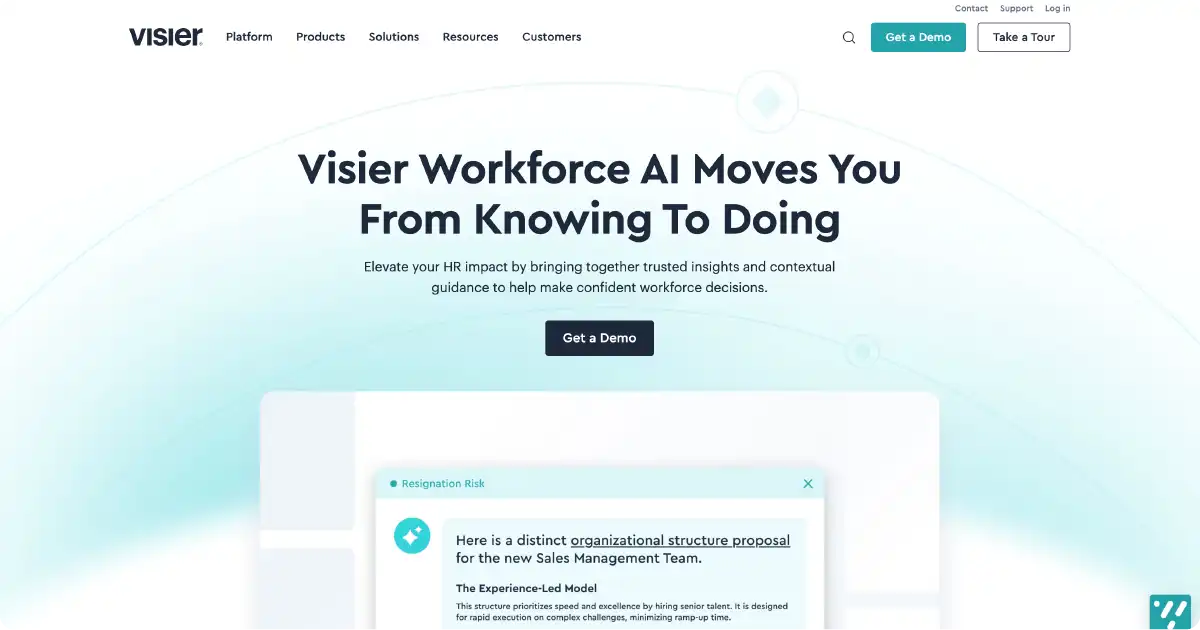
Visier is an AI-powered workforce intelligence platform. It uses people analytics to help you understand team dynamics and forecast future needs. That's especially useful for workforce planning. For example, you could create a succession model to predict future skills gaps.
AI capability that matters
Visier offers support with Vee, an AI agent. Ask questions in natural language to get instant insights into your workforce. It only draws from your own data, so its answers are always relevant and accurate. For example, you might say, "What's causing my sales team's productivity to dip?" or "Is turnover going up or down this year?" Vee also gives practical advice to put your data to work.
Where it fits in your stack
Visier plugs into your HR systems to gather and analyze data you already have. That can make setup complicated, especially if you're working with many different data sources. You may also need to clean and organize your information before you can fully use it.
Bottom line
If your organization has vast amounts of data, Visier can help you see the big picture and plan ahead. However, it may be overkill for smaller organizations.
10. BetterUp — Best for Professional Development & Wellbeing
Key features
- AI and human coaching for easy scaling
- Multilingual coaching in over 200 languages
- Progress tracking
- Strategic alignment with your organization's goals and values
- Wellbeing nudges to help users build healthy habits
Pricing
Custom per-user pricing
What it does
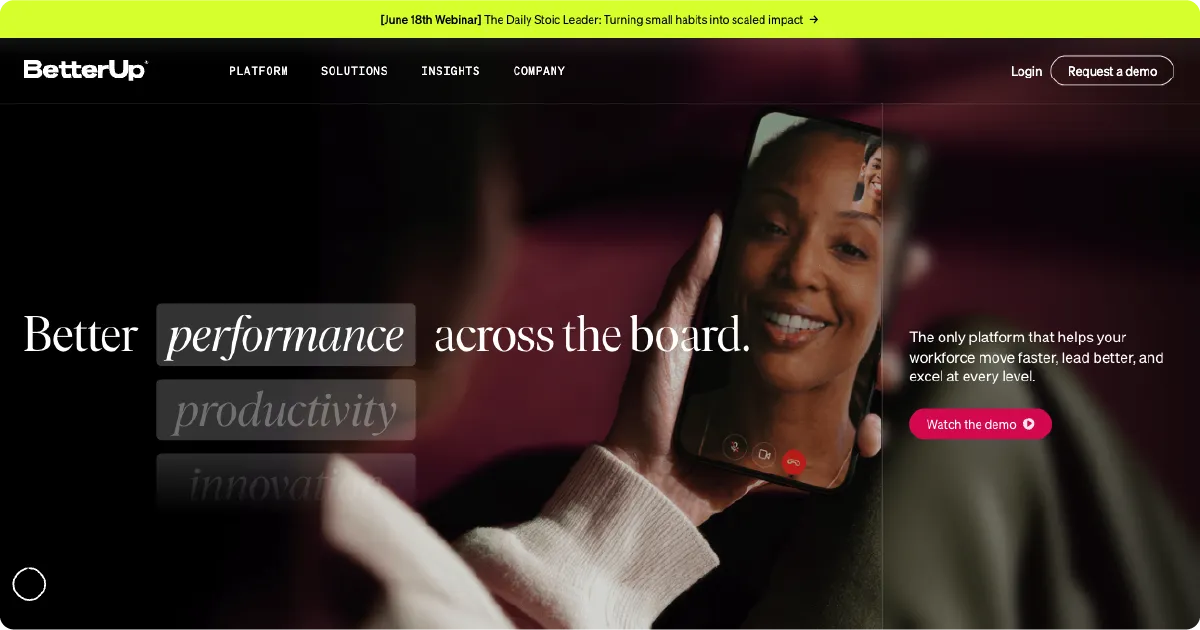
Even the best managers don't have unlimited time to mentor employees. With BetterUp, your entire team can get one-on-one AI coaching whenever they like. It provides over 100 AI experiences, from conversations about the user's goals to roleplay. It also supports employee wellbeing by recommending specific activities to build resilience.
BetterUp is a great fit if your organization is investing in leadership growth and talent management. For example, if you're building a succession pipeline, this platform can help you nurture promising employees within your organization. It's also useful for executives who need support managing their time or leading change.
AI capability that matters
BetterUp's AI coach was developed by behavioral scientists and trained on over 5 million real coaching sessions. It helps employees plan their careers and focus on the skills that interest them. An aspiring product manager, for instance, might use roleplaying to practice giving feedback or communicating with picky clients. The AI coach tracks progress, too, so you can see how the training is going.
Where it fits in your stack
BetterUp complements your learning and development tools by offering personalized AI coaching. While it can't replace a heart-to-heart chat with a human mentor, it helps employees upskill and focus on their career growth. It also gathers valuable coaching data, which you can analyze with platforms like Workhuman. However, progress takes time, so expect to track results for a while to see your program's impact.
Bottom line
If you're committed to employee development, BetterUp's AI coaching offers custom support without increasing headcount.
Free AI tool options for HR
You don't need to splurge to take advantage of new tech. Try these free AI tools for HR:
- ChatGPT and Google Gemini assist with research and content generation.
- Grammarly can proofread content like offer letters and memos.
- Effy.AI helps teams manage performance and track goals.
- Otter AI automatically transcribes and summarizes meetings, such as interviews with job candidates.
Choosing the right HR AI tool based on needs
With so many AI tools for human resources, it's not always easy to pick the right software. These factors will help you narrow your options.
Primary use case
Start by considering your main goal or challenge. If you're dealing with hiring bottlenecks, invest in software that supports AI in recruitment first. For retention issues, try an AI for employee engagement in hr tool, while deploying software across operational HR functions can reduce tickets.
Company size and scale
For small businesses, an all-in-one HRIS may offer the most value. Large enterprises often need specialized platforms, such as Workhuman, for people analytics.
Data and security requirements
Protect your data by choosing a vendor that complies with SOC 2 and has a transparent data processing agreement. Some organizations also prefer AI models that run on their own servers or in a private setup. These security measures help prevent costly data leaks.
Pilot and rollout best practices
Resist the urge to go all-in with your new HR software right off the bat, especially if your team isn't used to this technology. Go slow by running a short pilot with a single tool. For example, you might use BetterUp to coach new hires or Fetcher to source candidates for a leadership role.
Be sure to include all your stakeholders in the pilot, including HR, managers, employees, IT, the legal department, and, in some cases, clients. Gather feedback from these people throughout the process to spot issues early.
FAQs
What are the benefits of AI tools for HR?
HR AI tools improve efficiency by automating routine tasks, such as screening applicants and processing benefits forms. They also help HR professionals make better decisions and spot trends in their workforce.
What should HR teams focus on when choosing AI tools?
Look for AI software that produces accurate outputs, safeguards your data, has an easier learning curve, and improves efficiency. Cost is another key consideration, especially for small businesses.
What are the main challenges with AI tools for HR?
Setting up AI tools is one of the biggest challenges for HR teams, especially if you have a complex tech stack. Some organizations may also rely too heavily on AI instead of drawing on human intuition and personal experiences.
How can organizations measure the success of AI HR software?
Measure the impact of your AI HR tools by tracking key metrics, such as HR ticket volume, productivity, retention rates, and time to hire.
Choose AI HR tools your organization will actually use
The last thing you want to do is splurge on a fancy AI tool, only to see it gathering metaphorical dust in six months. Avoid this issue by looking for software that fills gaps in your existing tech stack or workflows. For example, if your support team is overwhelmed by tickets, an AI agent can help lighten their workload.
Once you've chosen your first AI tools for HR, start small with a pilot program. Use input from employees to make tweaks before you roll it out. And be sure to keep gathering feedback, especially during the first year. After all, implementation is only the beginning of your program.
Ready to learn more? Request a demo today.

Ryan Stoltz
Ryan is a search marketing manager and content strategist at Workhuman where he writes on the next evolution of the workplace. Outside of the workplace, he's a diehard 49ers fan, comedy junkie, and has trouble avoiding sweets on a nightly basis.
Recommended for you