
Seven Workplace Trends That Had Our Customers Buzzing at Workhuman Live
by Erika Roemer
Last updated
4 min read
Table of contents
- 1. All aboard the Change Management train. 🚂
- 2. Predictive analytics is “magic.” 🪄
- 3. Sisu abounds in HR. 💪
- 4. Recognition is everyone’s responsibility. 💯
- 5. Take care of your managers to take care of your culture. 💡
- 6. Recognition is a moment – and a movement. ✨
- 7. When it comes to culture, we’ll never hear “pencils down.” ✏️
Share this article
We talk a lot about recognition and building an engaged workforce here on this blog. But what does it mean to actually drive cultural change every day? Turns out, Workhuman Live is an incredible place to hear those stories, from the practitioners themselves!
At Workhuman Live 2026, I had the opportunity to meet some of our Workhuman customers, sit in on their sessions, join their award ceremony, and even interview a few leaders for some future stories we plan to share with you (that are going to be ahhmazing).
Here are five of the latest workplace trends I picked up from these cultural energizers, backed by some of our latest research. Let’s dig in!
1. All aboard the Change Management train. 🚂
In the Community Corner that was part of our Customer Day, event attendees answered two questions, “What is your team rallying around?” or “What are you the MVP of?”
Common themes included empathetic leadership, AI, engagement, performance, and notably, change management.
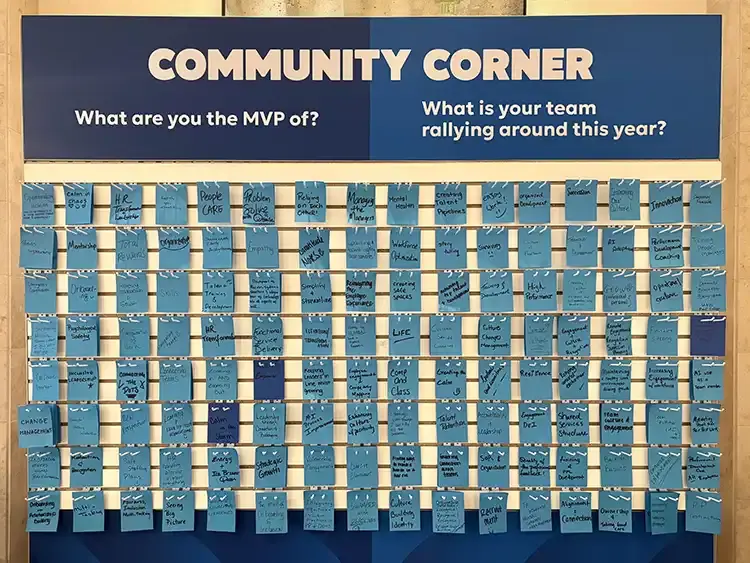
Change management, aka enabling all your people to get from a current state to a future desired state, has never been more important. This is something that was reiterated later in that day’s panel discussion with leaders from Moody’s, Sanofi, and Cisco.
Ted Kezios from Cisco shared a story about how they’re helping celebrate and enable AI adoption through a monetary peer-to-peer recognition challenge. Raj Verma from Sanofi added on, sharing how recognition is a cultural lever – critical to supporting global changes they’re going through as an organization. And Lisa Monoco from Moody’s shared how they view recognition as a well-being initiative, a valued part of effective change management.
My takeaway? If HR is the conductor of the change management train, recognition can act as the railway signal system. It can show employees where the organization is headed and reinforce the right path forward.
2. Predictive analytics is “magic.” 🪄
On the first afternoon of the conference, Workhuman® CEO Eric Mosley unveiled a major product innovation built on our recognition data: Workhuman Future Leaders™. This patent-pending AI model can predict VP+ promotions years before organizations make those decisions.
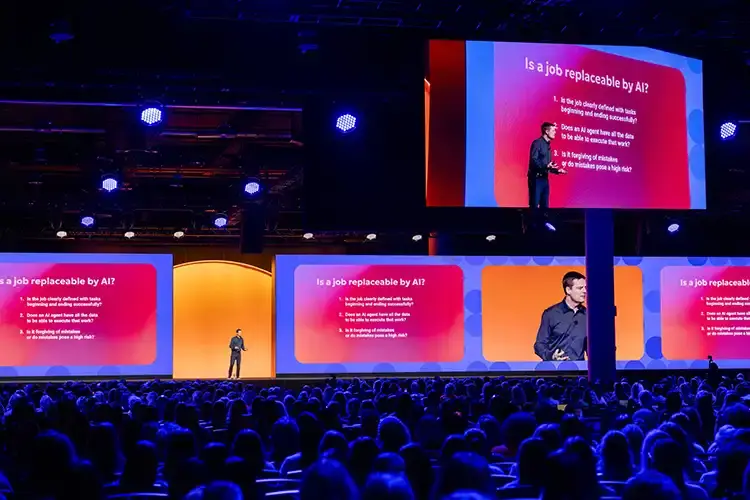
I actually had the opportunity to attend a customer session who had seen a preview of Future Leaders. Of the sneak peek, she explained, “I really did get chills. I felt like it was like magic. And I think this is just the beginning of what's to come with AI.”
Throughout the week, I heard lots of similar sentiments about the future of AI and how it will impact people analytics. In one session, Workhuman iQ People & Analytics Manager Isha Vicaria shared her findings from recent natural language processing (NLP) research and how those will inform the future of recognition analytics:
Recognition data from Workhuman once provided descriptive and diagnostic people analytics; now it’s beginning to offer predictive, prescriptive, magical people analytics. As our customer happily exclaimed, this is just the beginning.
3. Sisu abounds in HR. 💪
In Angela Duckworth’s keynote session, she shared a word I had never heard before: sisu.
It’s the Finnish word for grit, determination — and the extraordinary effort it takes to never give up.
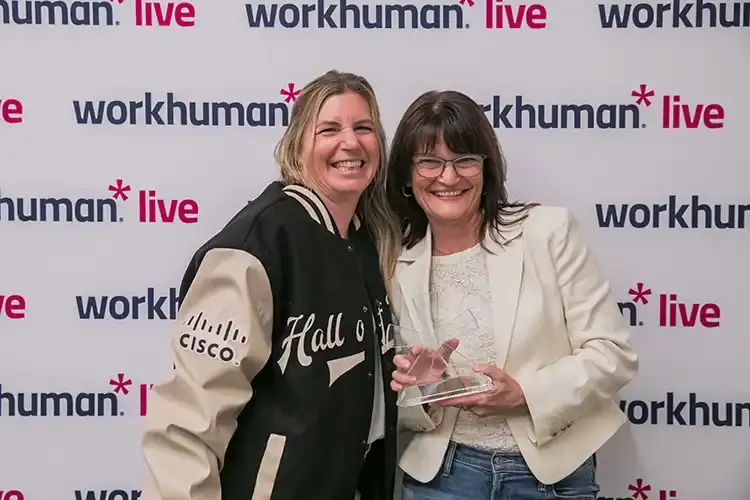
I couldn’t help but think of the Customer Awards we gave out the night before. These customers had results like:
Our award winners drove cultural and organizational change that took persistence, strategy, and sustained effort – the very things that make up sisu.
4. Recognition is everyone’s responsibility. 💯
In Manulife’s session, Melinda Drexler shared that every 38 seconds someone at Manulife is recognized. In 2025, that was more than 800,000 moments.
The recognition program was created to help drive culture and engagement, and to promote strategic alignment to organizational values. Manulife wanted a global, streamlined, equitable and consistent program – one that could scale.
Melinda detailed how recognition has transformed from a “moment” to “muscle memory” – creating a direct impact on talent outcomes.
5. Take care of your managers to take care of your culture. 💡
Meisha-Ann Martin, VP of People Analytics at Workhuman, highlighted the positive impact recognition can have on managers – the often unsung culture carriers – in her session.
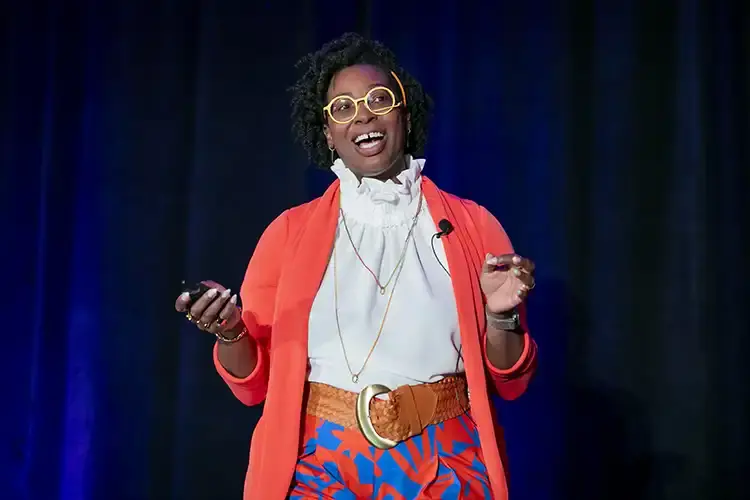
To me, these stats demonstrate we shouldn’t use recognition to reinforce unsustainable sacrifice, but rather to build a culture that promotes human wellbeing.
6. Recognition is a moment – and a movement. ✨
In our customer panel for mid-sized and growing organizations, each panelist described a moment when their old recognition system (gift cards, catalogs, emails) just wasn’t enough; and how a failed moment went on to launch a movement.
Erica Lied from Ridgeline shared how she and her team built Props, their Workhuman-powered recognition program with the employee experience top of mind: employees voted on the program name, awards were aligned to core values, and anyone could nominate anyone. The results spoke for themselves: 87% of employees received an award in the last year, 65% sent an award, and a majority of recognition is peer-to-peer.
Another interesting story she shared was how Ridgeline has reached 100% employee adoption of AI tools. Erica credits this to their recognition movement – including monthly AI innovation awards, recognition for experimentation and curiosity, and Team Awards that celebrate using AI effectively.
At Mortgage Connect, Jaclyn Renner sought to prove that recognition could reduce turnover and improve performance, while saving money. Seven months after launch, she showed strong adoption, high exec engagement, and shared how meaningful reward stories have boosted employee morale and connection. She also shared a full-circle moment: the executive most skeptical of the program became its biggest user.
At APG Federal Credit Union, Teshia Davis was so successful in launching a Workhuman program at her last role, that her CEO hired her to rebuild it at a new organization. Her key lessons for creating an internal recognition movement? Start with the why, get stakeholder buy-in early, partner with marketing and brand teams, and use data to drive adoption.
7. When it comes to culture, we’ll never hear “pencils down.” ✏️
In a session led by Akamai’s Khalil Smith, Khalil defined “workplace culture” as “the way things get done here.”
He shared how awareness, behaviors, community, and systems are fundamental to shaping a strong workplace culture. One quote of his I wrote down that I felt captured the high stakes of a quality workplace culture was this: “If you don’t treat people well, they will quit and leave, or they will quit and stay.”
Khalil said something else that stuck with me, too.
“There’s never a moment where you say, pencils down. We figured out our culture.”
The throughline of every conversation I had with our customers was exactly that. When doing the work – the real work of building and shaping organizational cultures – there’s always more to dig into. There’s always more that can change for the better.
Erika Roemer
Erika Roemer is a writer, editor and dog mom to Oscar the Boston Terrier. She oversees the customer evidence and proof points program at Workhuman.
Recommended for you