ROI of Employee Recognition: Benefits, Data, and Business Impact
by Mike Lovett
Last updated
3 min read

Table of contents
Share this article
What is the ROI of employee recognition, and why does it matter? The ROI of employee recognition comes from measurable gains in engagement, retention, productivity, and culture. When recognition is consistent, visible, and tied to business priorities, it reduces turnover costs, increases performance, and turns everyday appreciation into a strategic driver of business outcomes.
What drives ROI in company culture change? Small, consistent shifts over time.
Major change rarely happens in one fell swoop, bur rather is the result of dozens or even hundreds of incremental improvements that build toward a tipping point. Achieving that tipping point of ROI requires patience, clarity, and sustained investment.
Workplace culture follows the same pattern. It takes time to meaningfully improve the employee experience. However, organizations can accelerate that progress with a scalable solution: social recognition.
Recognition strengthens connection, community, and psychological and physical safety. As a result, organizations see better collaboration, improved engagement, and longer employee tenure. These outcomes compound over time, but only with consistent effort and investment.
What does good recognition look like?
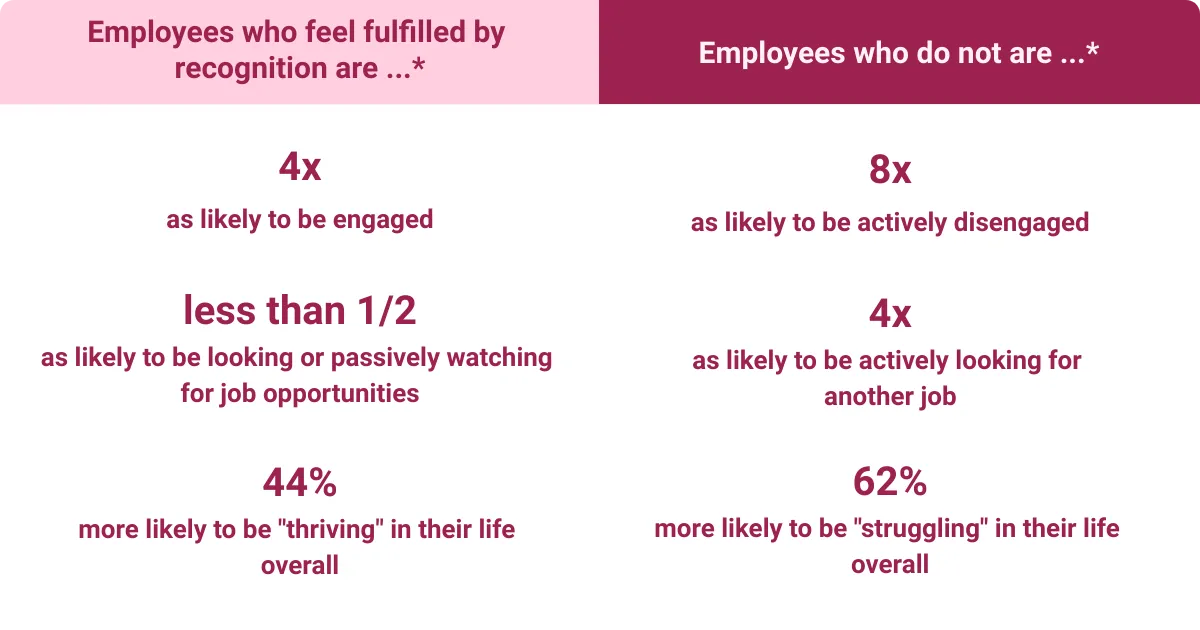
Our research with Gallup shows that recognition is most effective when it follows five guidelines. Recognition can’t be just a perfunctory “thank you.” It needs to be fulfilling, authentic, personalized, equitable, and embedded. It needs to be in line with how an employee would actually want to be recognized.
And lastly, it needs to be an organizational habit. Recognition that meets all five criteria is as good as it gets. Recognition that doesn’t? Well, it gets worse the fewer you hit.
How much should companies invest in employee recognition?
We’re glad you asked.
At this threshold, the return on recognition becomes exponential, far surpassing the effects of one-time merit increases.
Where does the ROI of recognition show up?
As recognition investment increases, so do business performance metrics like retention, engagement, and performance.
Recognition connects people and creates a community. A community is a tough thing to walk away from, so you increase your odds of being a desired place to work. Recognition helps people see how their work connects to the goals and long-term vision of the company, so you decrease the chances of employees questioning if anyone even cares what they do.
We’ll let you guess if the employees who feel more connected to their colleagues and more valued for their contributions perform better than the employees who don’t.
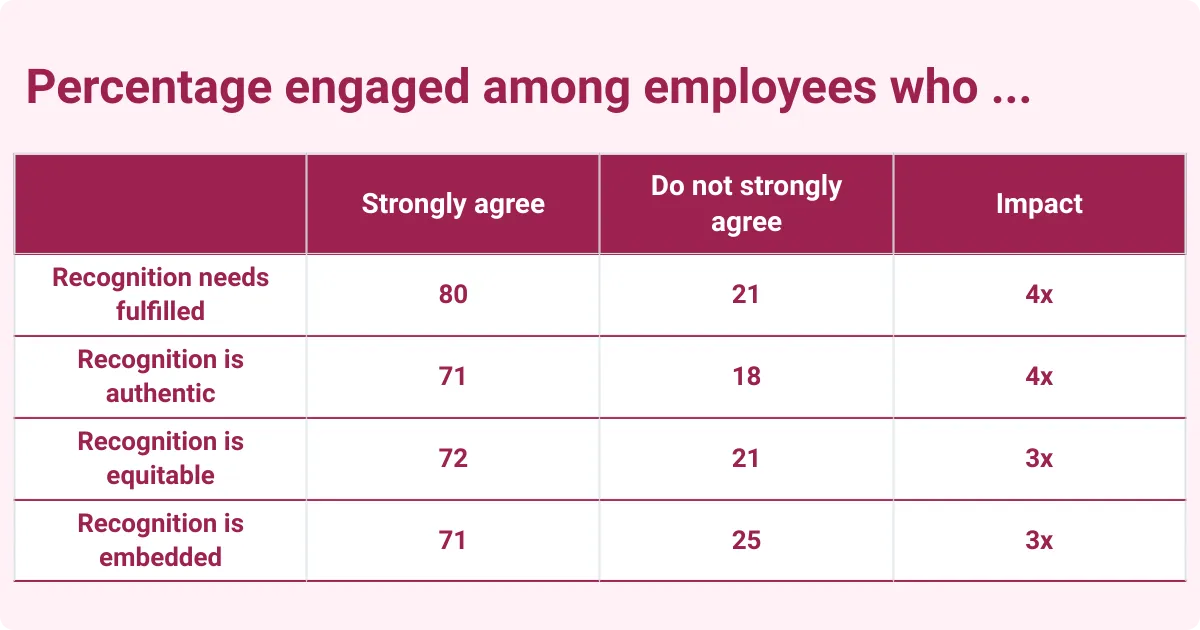
So, at the individual employee level, you are strengthening the aspects of work that engage and connect people and reducing what leaves them unmotivated and looking for the exits. Now, let’s see what it looks like at scale.
The compounding returns of employee recognition
Workhuman iQ data modeling indicates that recognition funding at 1% of payroll is the budgetary sweet spot for positively impacting these metrics.
Customers in this range have the data to show how sweet it really is.
Cisco has seen a 3x reduction in turnover with frequent recognition, funded at 1% of payroll. Even more impressive, the technology leader has experienced a 4.5x lower flight risk for employees tenured at one to three years who have robust recognition experiences.
FirstTech, whose recognition program is funded at 1% of payroll, has found that employees who give recognition are 2x less likely to leave the organization than those who only receive recognition – and those who receive recognition are 2.5x less likely to leave than those who have never been recognized.
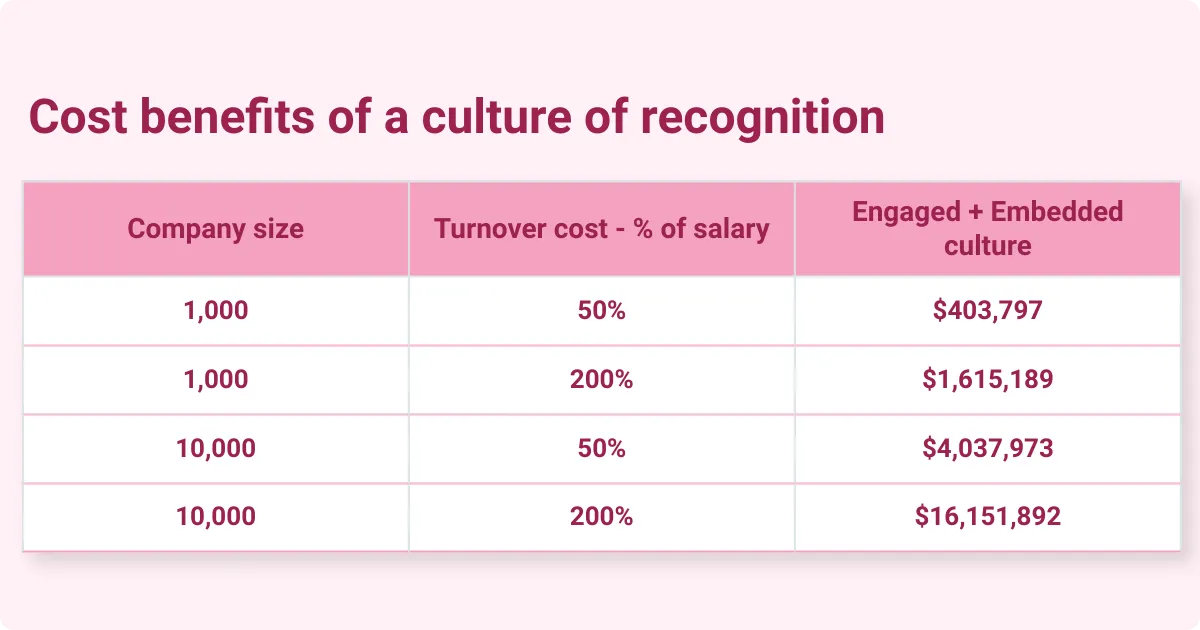
Gallup and Workhuman's research report, Unleashing the Human Element at Work: Transforming Workplaces Through Recognition, shows that a 10,000-person company can save up to $16.1M in turnover costs annually by investing in recognition.
Additional research, From Praise to Profits: The Business Case for Recognition at Work, shows that recognition improves business outcomes through safer workplaces and decreased absenteeism. This translates to a healthier, more productive workplace overall. All these positive shifts add up to something big.
How Human Intelligence future-proofs your business
Each week brings a flurry of recognition moments. That flurry is a double-edged sword. It’s great that employees are collaborating, celebrating achievements, and reaching milestones across the organization.
But it can be a lot to keep track of, and employees can end up feeling lost in the shuffle. Recognition messages that would have clued you in on who was a top performer or who has developed new skills are lost to the ether.
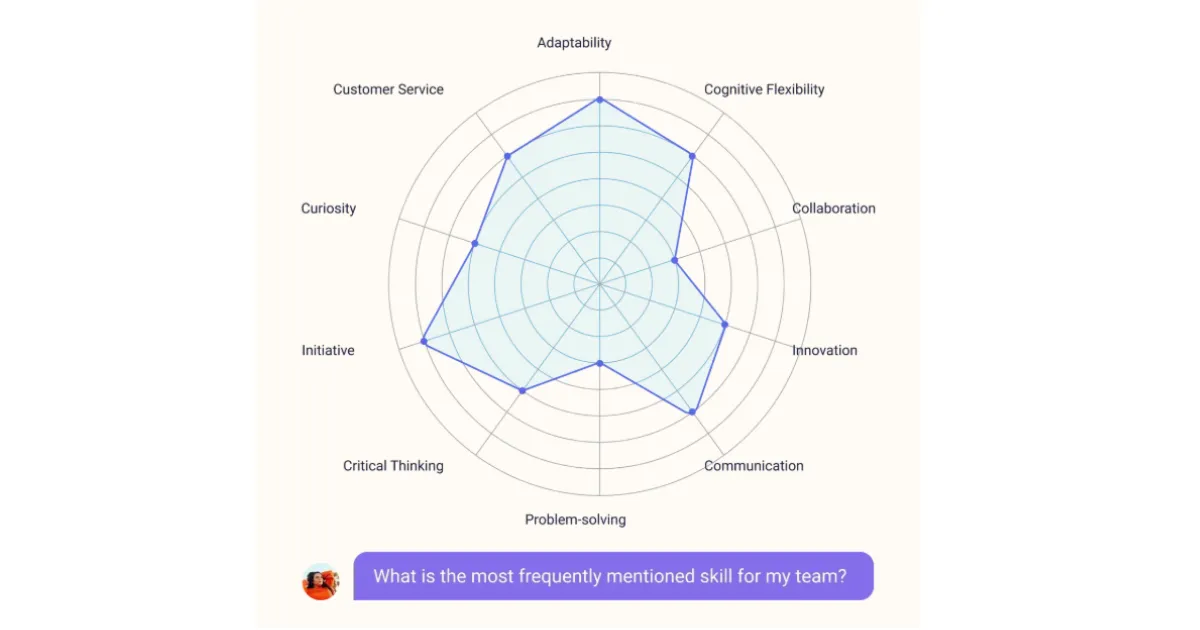
One of the greatest returns on your recognition investment is that talent management is no longer a guessing game.
Recognition is an investment, not a cost
Recognition programs get categorized as a cost, but really, they’re an investment. You are investing in your people. The cost comes in not doing anything at all.
When employees are empowered to participate in the recognition and reward process, the result is more engaged, higher-performing employees. They feel seen and valued for their individual and collective impact on the business, and they shape the organizational culture.
An organization that prioritizes recognition and gratitude in the workplace or one that doesn’t, which would you rather lead?
It’s time to recognize the power of gratitude. Learn how Social Recognition can empower employees.
FAQ: ROI of Employee Recognition
What is the ROI of employee recognition?
The ROI of employee recognition comes from improvements in retention, engagement, productivity, and culture. These gains reduce costs and increase performance, making recognition a measurable business driver.
How does employee recognition reduce turnover?
Recognition helps employees feel valued and connected to their work. This reduces disengagement and makes employees less likely to leave, lowering hiring and onboarding costs.
Can employee recognition really impact business performance?
Yes. Recognition highlights and reinforces key behaviors, improves engagement, and increases productivity, all of which contribute directly to business outcomes .
How do you measure the ROI of recognition programs?
Organizations typically measure ROI through metrics like retention rates, engagement scores, productivity levels, and cost savings from reduced turnover.
What makes a recognition program effective?
The most effective programs are frequent, specific, visible, and aligned with business goals. These elements ensure recognition drives behavior and not just sentiment.

Mike Lovett
Mike is a senior content marketing specialist at Workhuman where he writes about the next era of the workplace. Outside the workplace, he’s an avid gardener, a frequent biker, a steadily improving chef, and a fantasy sports fanatic.
Recommended for you