
Lead and Let Live: Strategies for Becoming a Better Leader
Last updated
3 min read

Table of contents
Share this article
Great leaders aren’t just towering figures with lofty ideas and strong charisma. They’re also galvanizers, people who can uplift others to their own highest potential. Leaders don’t just lead – they also let their people live (and thrive) on their own.
Barbie Brewer, the first chief culture office for GitLab, Inc., recently spoke on this at Workhuman Live in Austin. Speaking to the crowd, she emphasized how anyone can be a great leader with a bit of work and a can-do attitude. Let’s dive into how to lead and let live.

Characteristics of great leadership
A great leader isn’t just one thing. Leaders need to have the right mix of traits in order to lead with a steady hand and have people follow.
According to Barbie Brewer, great leadership is made up of several characteristics:
- Honesty: It's always the best policy. Be direct with your people. It’s a sign of respect. Honesty also helps build trust, which is vital for any organization and leader.
- Grit: Tap into it and never let go. Having a growth mindset means having the resilience to go along with all the bumps and challenges along the way. A great leader isn’t afraid to get their hands dirty and deal with the setbacks that are inevitable with growth and change.
- Humility: Resist the urge to always be right. No one is ever right 100% of the time, despite best efforts and intentions. Know that you can’t know what you can’t know. Uphold collaboration as a vital tool for a thriving organization. Show gratitude to those who can step in and fill in with their expertise where you might lack experience.
- Receptiveness: Good leaders know there is always room for improvement. Ask for feedback and actually heed it. Surround yourself with people who have different areas of expertise than you and seek them out when it comes time to make decisions.
- Neutrality: Own your bias, but know that your opinion isn’t the end-all-be-all for the company. Do your best to be impartial in decision-making, prioritizing the good of the company and your employees above all else. Seek other trusted opinions to cover your blind spots.
- Boldness: “Knowing when to redirect and course-correct isn’t giving up. It’s demonstrating resilience, flexibility, and discernment,” says Brewster. Take risks. Be adaptable. You don’t need to be fearless, but in order to leave your mark, you do need to be courageous.
- Constructiveness: The best leader is more of a coach than a manager. Find ways to coax out the best in people. Develop an eye for potential and know how to foster growth in both individuals and teams.
Building trust is key
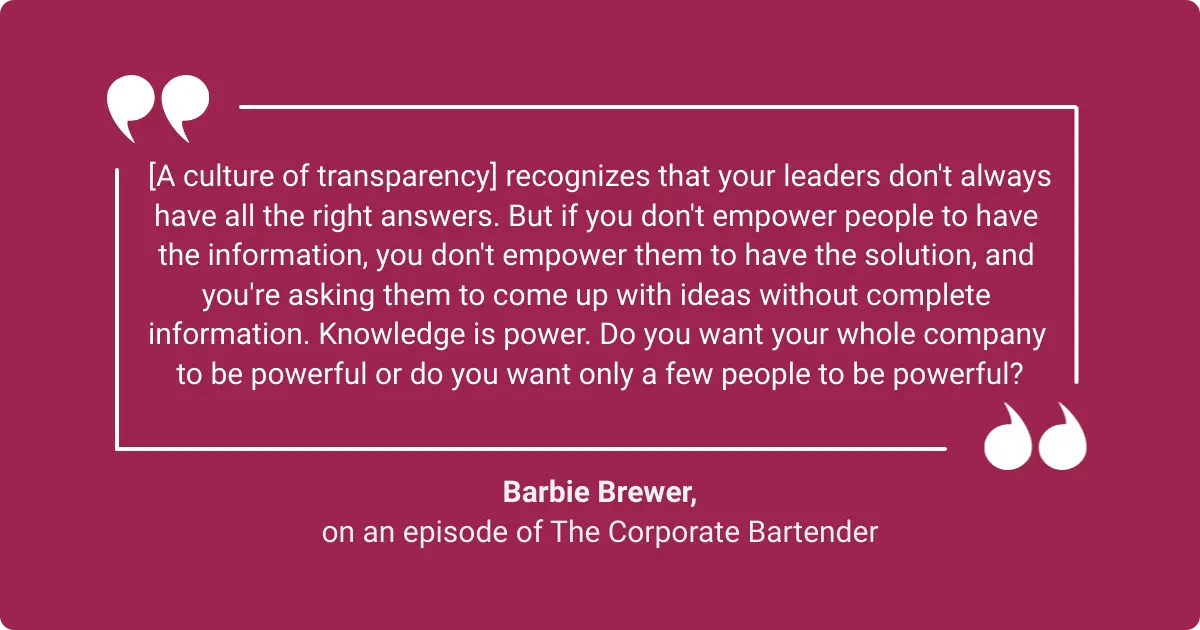
Trust is the bedrock of any successful organization. As a leader, it's important to be open and honest about what's going on, good or bad. Sharing revenue numbers, for example, might be nerve-racking. You might think it'll cause fear if you're sharing your revenue numbers as a company and aren't going to hit your goals.
It might very well stir up a little fear, but overall, it's a net positive because employees will be more aware of the hard decisions that need to be made and won't feel blindsided.
Being open about numbers could also encourage top employees to go into problem-solving mode and figure out solutions to the problem.
To build and maintain trust, have integrity in all that you do. Part of this includes embodying your company’s cultural pillars to model it for the rest of your team. Use the same tools as they do, like employee recognition, to celebrate this behavior in others as a means of reinforcement. Praise and appreciation from leadership are always prized, and doling it out the same way everyone else does makes it feel like a level playing field.
Similarly, you can use a platform like Conversations to offer feedback and be transparent. This is where you can house your monthly check-ins and keep up with employees’ projects. Use this time to empower people to be autonomous and show them the power they have within themselves. Good leaders are often powerful mirrors.
Equal opportunity
Equality is about more than just treating everyone fairly – it’s about equity. Equity means each person receives fair treatment, access, and advancement. This means that opportunities aren’t necessarily “equal” across the board because different groups have different obstacles to overcome.
This includes benefits like parental leave. If you have equitable parental leave for all types of parents, then your bias against hiring a young woman who is recently married gets nullified by the fact that all parents have the same leave time.
Recognition is also a great tool to boost equity. Focusing on high-quality work and behavior rather than personality is a good way to mitigate bias. It’s also a powerful tool for advocacy and uplifting people whose work might otherwise go unnoticed. As a leader, it’s up to you to ensure that employees across the board are being recognized and appreciated.
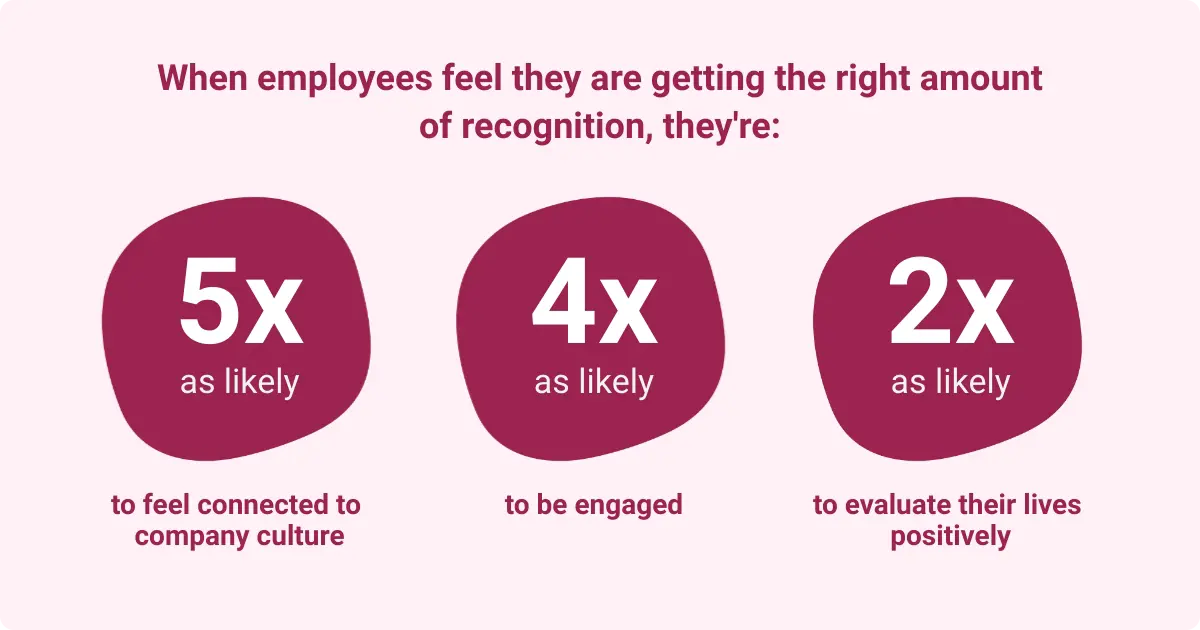
Workhuman Cloud® has the first and only real-time DEI solution featuring in-the-moment coaching focused on behavioral change. Combined with the power of employee recognition, the platform has the power to amplify voices across the organization and promote equity by offering visibility into achievements by historically overlooked employee groups.
Whether you have your own leadership aspirations or are already in a leading role, cultivating more of these characteristics is bound to help you be a more well-rounded and valued team member.

Maeve Ginsberg
A wellness enthusiast and the mid-day walk’s #1 fan, Maeve champions work-life balance.
Having gone from a corporate job to self employment, Maeve has lived through countless working styles. This evolution forced confrontation of her own limiting beliefs, eventually breeding a completely individualized approach to work and productivity.
As a Senior Copywriter, Maeve often writes on workplace wellbeing and strives to advocate for all workers and leaders to find small yet significant ways to make their work lives healthier and more fulfilling.
Offline, Maeve enjoys testing new cuisines and hanging upside down off walls (also known as bouldering).
Recommended for you