
Hybrid Work Schedules: What They Are, Why They Matter, and How to Make Them Work
Last updated
9 min read
Hybrid work combines independence and in-office collaboration to balance the flexibility of remote work with the support of an office community. It's rapidly transforming the modern workplace by blending virtual and physical spaces, simultaneously prioritizing employee well-being and operational efficiency.
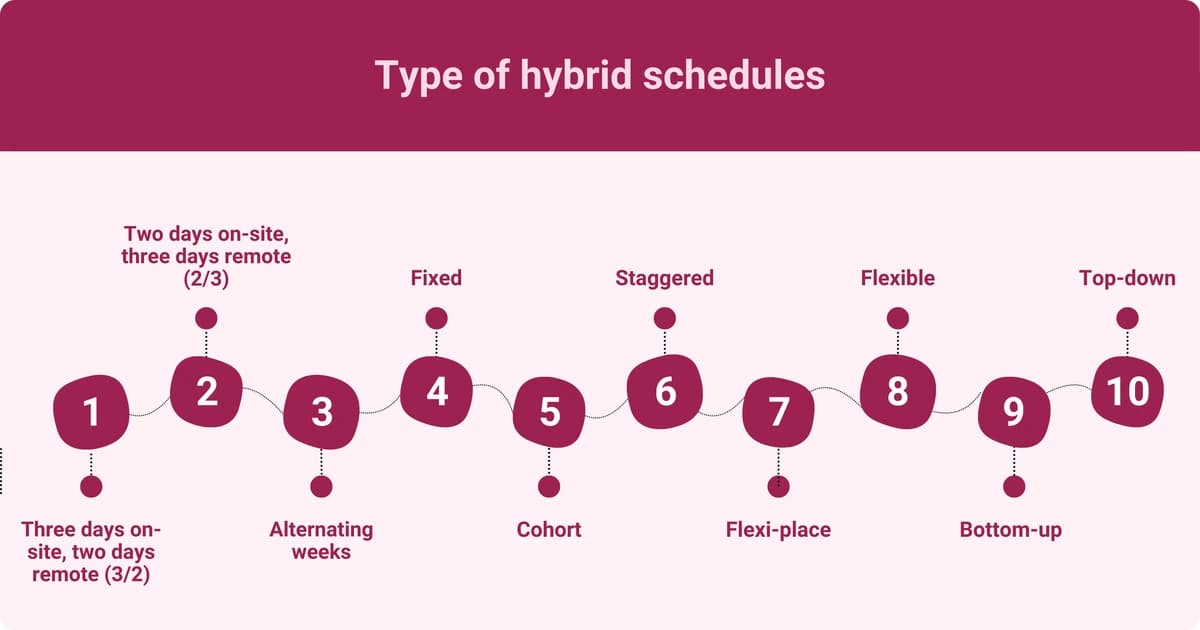
Organizations are seizing this opportunity to change their workplace approach, with Gallup’s global hybrid work indicatorsOpens in a new tab reporting that more than half of employees in the United States are on a hybrid work schedule. In this post, we'll explore what hybrid work is, its impacts on companies and employees, and how to implement it in your organization.
What is a hybrid work schedule?
Employees on a hybrid work schedule split their time between working from the office and another location, often their homes. This flexible arrangement allows for collaboration, communication, and in-person meetings while also giving people a say in their work location.
Hybrid work schedules are among the most popular trends in remote work because they offer employees greater work-life balance and enable companies to reduce overhead costs.
Many industries are embracing hybrid work models. For example, some healthcare facilities leverage telemedicine and teleconferencing technology to offer hybrid schedules to staff, administrators, and medical professionals. Many tech and life sciences employers also allow employees to work remotely for part of the week, requiring them to come into the office for meetings and appointments on specific days.
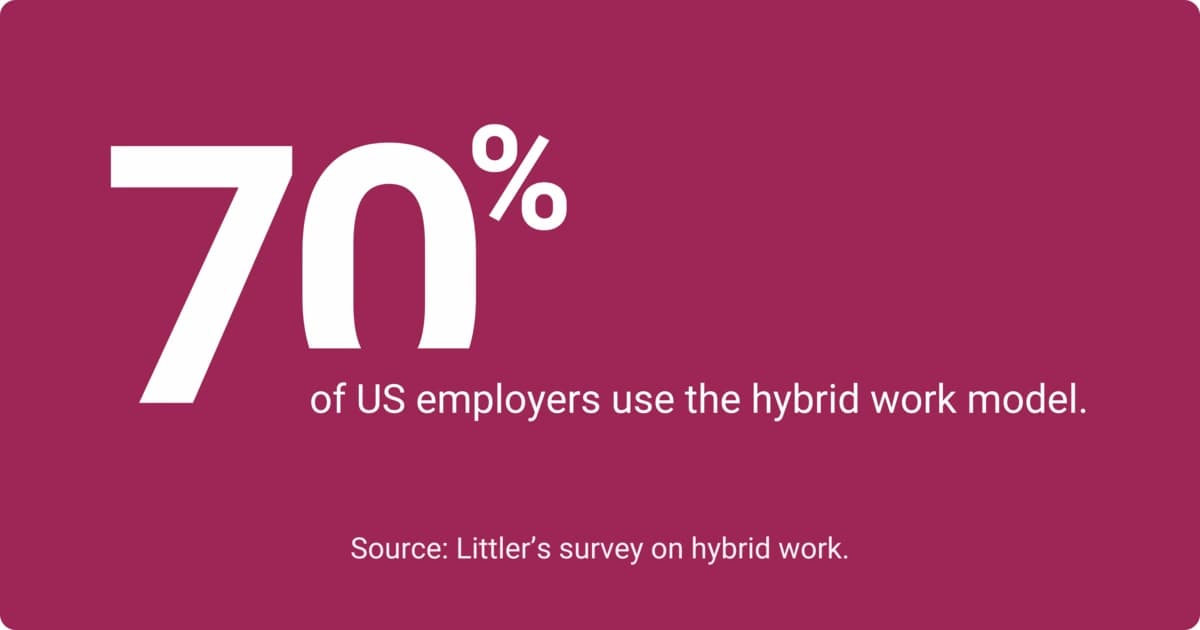
10 examples of hybrid schedules
Hybrid work schedules vary significantly from one organization to the next, with many opting for more time on-site, others focusing on remote work, and some equally dividing the two. Your company can choose the model most appropriate for your industry, size, and operational needs and adapt it as needed.
1. Three days on-site, two days remote (3/2)
One of the simplest hybrid work schedules is the 3/2 model, which requires employees to work from the office three days of the week and two days remotely. It's easy to remember and creates consistency for management and employees, but it generally isn't as appropriate for companies hoping to downsize their physical space.
The 3/2 schedule works especially well in industries such as finance and IT, which involve frequent in-person meetings as well as independent work that employees can do from home.
2. Two days on-site, three days remote (2/3)
The 2/3 hybrid model operates on the same principle as 3/2, but employees spend more time working remotely than on-site. It's straightforward and creates a routine, but some employees may find the extended time off-site challenging.
Companies in areas such as marketing and sales are especially well-suited to a 2/3 schedule because employees spend a lot of their time on individual tasks, such as content creation, lead generation, and client calls.
3. Alternating weeks
With an alternating hybrid work schedule, employees spend one week in the office and the next week remote. This gives them a break from the office while still providing ample opportunities for team-building and collaboration.
Some companies worry that employees won't maintain productivity and performance levels from week to week. Alternating weeks is a good option for Human Resources (HR), recruiting, and training jobs.
Employees working in these fields can schedule in-person tasks, such as workshops and interviews, and use remote time for policy development and implementation, online training sessions, and onboarding support.
4. Fixed
Companies implementing a fixed hybrid work schedule select specific days when employees will work in the office. You can give employees initial input on their schedules, but they can't opt for different days from week to week.
This makes scheduling more predictable and allows you to plan meetings farther out, but some employees may find the lack of flexibility frustrating.
Healthcare organizations, which may need to schedule patients weeks or months in advance, can benefit from this kind of fixed schedule. It gives patients, providers, and staff a sense of stability and prevents confusion.
5. Cohort
Creating cohorts is another approach to hybrid work arrangements. You'll split your employees into groups or teams and have them come into the office on different days or weeks. For example, one team might come in on Monday and Tuesday, and another on Wednesday and Thursday, while Friday is a remote day for everyone.
This helps reduce office density without giving up important face-to-face time. Cohorts are an excellent option for large teams working in limited spaces, but they can create scheduling difficulties.
6. Staggered
Organizations can maximize schedule flexibility with a staggered hybrid model. This option not only allows employees to spend some time working remotely but also to adjust their work times to fit their needs. For example, some people might come to the office early in the morning and leave in the afternoon, while others may arrive later and stay until evening.
Staggered schedules can work well in industries where you want to spread coverage across the day, such as sales and IT. However, they can also create communication gaps, particularly if employees who need to work together are rarely in the office at the same time.
7. Flexi-place
With a flexi-place schedule, individual employees can make last-minute decisions about their schedules, using a desk reservation system to claim an on-site workspace. As long as employees complete their required in-office hours, they can choose to work remotely at any time without providing advance notice.
The biggest advantage of flexi-place scheduling is the opportunity to significantly downsize your physical space. On the other hand, planning team meetings and brainstorming sessions can be harder.
8. Flexible
If your organization wants to give employees maximum control, you can allow them to choose both where and when they work. Rather than setting their schedule, you tell teams how many days per week they need to spend in the office and let them decide when to work remotely. This demonstrates your trust, but it can create hurdles when setting up meetings and appointments.
9. Bottom-up
Bottom-up hybrid models give teams the freedom to decide which days they spend in the office. The organization sets a goal for on-site hours, and the team works together to determine what works for them and to optimize their productivity.
This means different teams can come into the office on different days, allowing you to cut back on physical office space. In some situations, it can be difficult to effectively allocate space and schedule company-wide meetings or training sessions.
10. Top-down
As the name suggests, decisions about top-down hybrid scheduling come from management and supervisors in your organization. The company decides which days employees will work remotely and when they'll come to the office, setting the same schedule for all employees or varying it for different teams. This scheduling system is often easier to manage and makes office operations more predictable.
Because top-down schedules are in the hands of the organization, they can create resentment among employees who are unhappy with their assigned in-office days. This sentiment can also affect recruitment, particularly among in-demand candidates who are looking for more flexible scheduling arrangements.
Benefits of hybrid work schedules
When done well, a hybrid workplace can enhance the work experience for everyone involved, including employees, customers, and management. The advantages differ depending on what model you use, but most organizations see similar positive outcomes.
Reduced operational costs
According to Statista report on commercial property pricesOpens in a new tab, prices have doubled from 2010 to 2023. As a result, companies have increasingly looked for ways to minimize space utilization and cut back on costs.
Many kinds of hybrid work schedules allow employers to reduce their rent by moving to smaller, less expensive spaces. In addition, organizations with company-wide remote work days can lower utility bills and require fewer parking spaces.
Enhanced employee retention
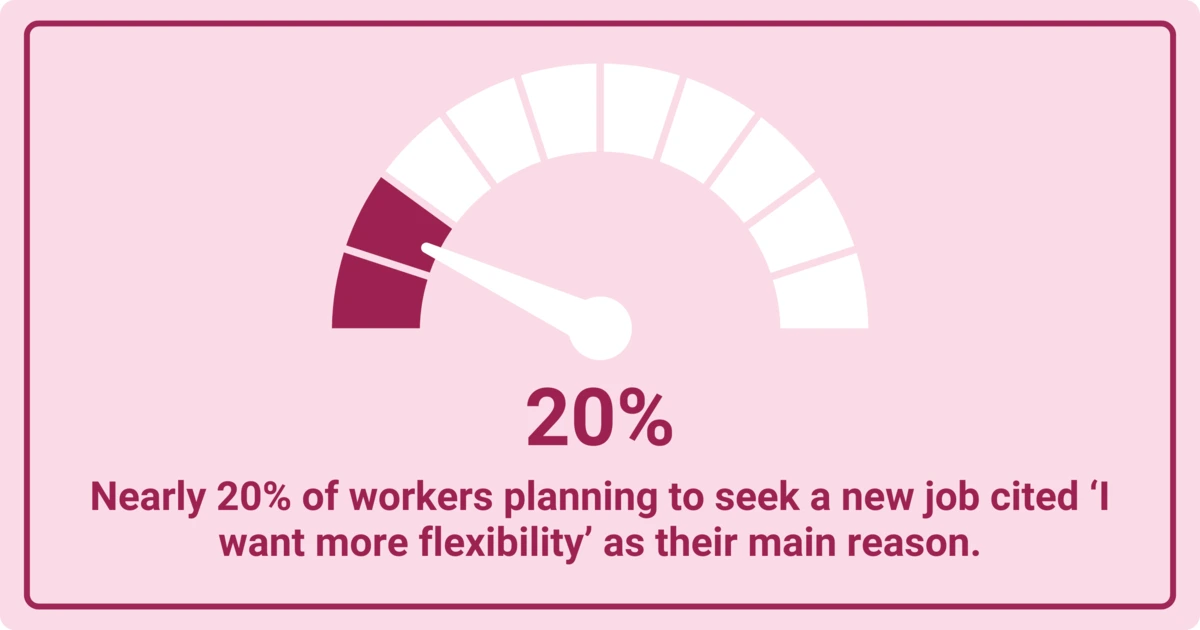
Another advantage of hybrid work is the ability to minimize turnover. Employee retention saves money, prevents operational disruptions, and improves productivity. According to a study published in Nature, hybrid work improves job satisfaction and reduces quit rates by as much as one-third. Nearly 20% of workers planning to seek a new job cited ‘I want more flexibility’ as their main reason.
Increased employee productivity
Business success often rests on productivity levels. While some companies worry their employees won't get any work done unless they're in the office, research shows the opposite is true. In a survey by International Workplace Group, 75% of CEOs reported that hybrid schedules improved productivity in their businesses.
Wider talent pool
S&P Global Market Intelligence published a paper titled ‘Return to Office Mandates and Brain Drain’ that reveals that companies requiring employees to return to the office full-time are struggling to fill positions and experiencing higher turnover rates. A hybrid work schedule is an appealing benefit for many job candidates, helping you attract top talent in your industry.
Enhanced work-life balance and overall wellbeing
Employees have different preferences when it comes to remote and in-office work, but hybrid schedules are generally ideal for improving employee wellbeing. Adding variety to the work environment, respecting employees' need for personal time, and giving them agency helps prevent burnout and stress.
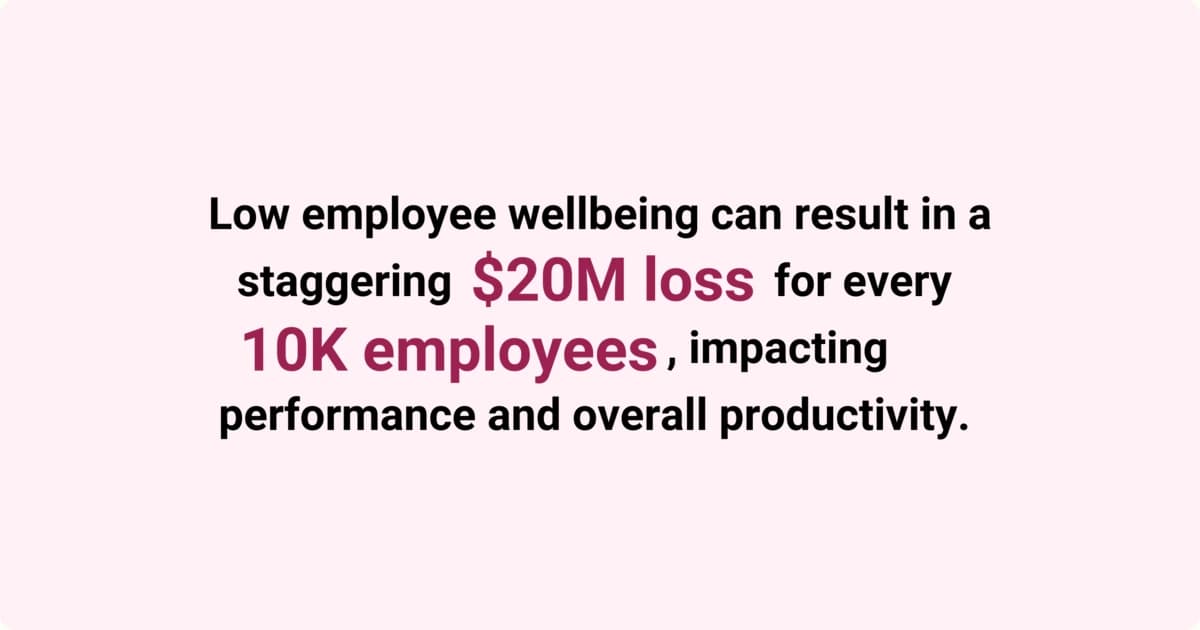
In addition to making life better for your employees, improving well-being is also important to your bottom line. Employee well-being research from Gallup shows companies experience $20 million of lost opportunities for every 10,000 workers due to struggling or suffering employees.
How do you structure a hybrid schedule?
Deciding how to implement a hybrid work model is a big step, particularly if your organization has taken a more traditional approach in the past. Following a few key practices and guidelines will help you design an effective schedule.
Define clear hybrid work policies
Clarity is key when implementing a hybrid work model. Begin by establishing policies outlining how your schedule will work, how many days employees should be in the office, and who decides which days they'll work remotely. Policies also often include performance metrics, expectations, and procedures for requesting schedule changes.
Identify roles and responsibilities
Putting the right person in charge of scheduling can lower the risk of complications and confusion. Once you have made an overall plan for your hybrid model, decide who will be responsible for overseeing it. You can select a single person or choose individuals to manage separate teams. In addition, let your HR and IT teams know how they'll support employees on hybrid schedules.
Establish core in-office workdays
If you're using a top-down model, determine what days employees will be in the office and what they should focus on while there. For example, in-office days might include team and department meetings, brainstorming sessions, project updates, and client meetings. Encourage employees to take advantage of these days to generate ideas, solve problems, and develop relationships.
Utilize hybrid scheduling tools
Technology simplifies hybrid scheduling, helping keep employees on track and minimizing errors. You can use online tools to handle room scheduling, communication, desk booking, and community-building activities. Some platforms can also recommend ideal in-office days based on team progress and needs.
Consistently evaluate progress and adapt the hybrid schedule
Develop a culture of continuous feedback within your organization where you regularly seek input from your team about your hybrid work model. Examine their productivity and ask for thoughts on what might prevent them from collaborating and communicating effectively. As issues arise, adapt your hybrid schedule to address them, positioning employees to succeed without unnecessary stress due to scheduling issues.
Provide training for managers and employees
Although hybrid work schedules are becoming more common, they're still an adjustment for many people. When you implement a hybrid model, ease the transition by offering training sessions to employees at all levels. Demonstrate how to use scheduling and remote team collaboration tools. In addition, provide information about how to troubleshoot technology issues and contact IT when working remotely.
Challenges of hybrid work (and how to solve them)
In-person collaboration and communication issues
Remote employees sometimes feel isolated from their coworkers, affecting team cohesion and decreasing motivation. Build connections within each team and the company as a whole by organizing daily or weekly virtual stand-up meetings. These sessions are often brief, with teams giving updates about their progress and bringing up concerns.
Maintaining company culture
In addition to isolation, reduced in-person interactions can also lead to weaker team bonds and difficulty developing a shared sense of mission and values. Build a culture of connection by holding regular virtual and in-office team-building activities, such as online game nights, virtual coffee chats, or hybrid town hall meetings.
Virtual team icebreakers can also help employees feel more comfortable with one another, particularly when they initially join the group.
Security and compliance risks
One of the biggest challenges of managing remote employees is ensuring they understand and avoid compliance risks. Privacy regulations, such as the General Data Protection Regulation (GDPR) and the Health Insurance Portability and Accountability Act (HIPAA), outline requirements for handling sensitive information. Failing to follow them could result in fines, lawsuits, and decreased customer trust.
Confirm employees are following the appropriate procedures to protect information by conducting compliance audits, which reveal vulnerabilities and potential violations. In addition, periodically review security and compliance policies to determine whether they align with current regulatory requirements and industry standards.
Hybrid work schedule template
Hybrid work schedules often sound overwhelming, but they're relatively simple in practice. Consider this example of a 3/2 hybrid schedule with cohorts:
| Team | Monday | Tuesday | Wednesday | Thursday | Friday |
| A | In office | In office | Remote | In office | Remote |
| B | Remote | In office | In office | Remote | In office |
| C | Remote | In office | Remote | In office | In office |
In this example, each team comes into the office three days a week, and everyone comes together on Tuesdays to have cross-team meetings and discuss project goals and concerns. This kind of template is a good starting point for your hybrid work model, but your organization can adapt it as needed.
The future of hybrid work schedules
Hybrid work has existed for decades, but it continually changes as new technology emerges. For example, Artificial Intelligence (AI) supports smart scheduling by analyzing data to improve space utilization, resource allocation, and employee satisfaction. In the future, platforms with predictive scheduling will make it easier to anticipate needs based on work and customer volumes.
As part of AI, automation will make significant changes to hybrid work. When companies automate scheduling and workflow management, employees can focus on more important tasks. Advancements in virtual reality also make it easier for employees to collaborate while working remotely, offering a more immersive experience and allowing them to interact more naturally.
These tools will help you balance flexibility and productivity — but only if employees understand them. Promoting upskilling in advancing technology keeps your team up-to-date on updates and developments, and how they can optimize hybrid work schedules.
Conclusion
When you decide to make the shift to a hybrid work schedule, don't feel boxed in by a specific model or template. Start with a solid foundation and build from there, creating a flexible but practical schedule tailored to your unique challenges, needs, and objectives.

Workhuman Editorial Team
More by Workhuman Editorial TeamRecommended for you