
Best Employee Rewards Software Platforms to Compare in 2026
by Ryan Stoltz
Last updated
9 min read
Table of contents
- Comparison table
- Top 12 employee rewards software platforms for 2026
- How to choose the best employee rewards software
- Key features to consider in employee rewards platforms
- Integrations that boost adoption and engagement
- Matching rewards to your company culture
- Measuring ROI and engagement impact
- Tips for successful implementation and adoption
- Frequently asked questions
Share this article
Fifteen years ago, managers were likely to hand out gift cards to reward hard-working employees. Maybe they would add a unisex T-shirt or a coffee mug with the company logo. Those gestures were appreciated, but they were not always personal, equitable, or easy to scale.
Employees now expect more choices. According to Fiserv's Q4 2024 Gift Card GaugeOpens in a new tab, 72% of employees prefer cash as an incentive, and 58% want prepaid gift cards. Many organizations also offer flexible rewards catalogs with merchandise, experiences, charitable giving, and localized options for global teams.
A modern recognition and rewards platform helps organizations recognize and incentivize employee contributions. The best platforms automate recognition moments, make reward redemption easy, and give HR leaders data to understand program adoption, budget use, and business impact.
For many organizations, employee rewards software overlaps with employee recognition software because the strongest platforms combine appreciation, reward choice, automation, and reporting.
This guide compares 12 employee rewards software platforms by buyer fit, reward flexibility, global fulfillment, milestone recognition, integrations, analytics, and pricing transparency. It is designed for HR, Total Rewards, Employee Experience, and People Leaders who need to compare options quickly without losing sight of program outcomes.
Here is a quick look at the top platforms covered in this guide:
- Workhuman® - best for enterprise and global strategic recognition with flexible rewards and service milestones.
- Awardco - best employee recognition software for organizations prioritizing zero-markup catalog rewards and retail fulfillment.
- Matter - best for lightweight recognition inside Microsoft Teams and Slack.
- Motivosity - best for peer-to-peer giving, employee recognition feeds, and engagement analytics.
- WorkTango - best for recognition, rewards, employee surveys, and feedback in one platform.
- Snappy - best for corporate gifting and curated employee gift fulfillment.
- Terryberry - best for service awards, symbolic recognition, and custom physical awards.
- Qarrot - best for gamified challenges, incentive campaigns, and leaderboards.
- Connecteam - best for deskless and distributed teams that need mobile-first rewards.
- Cooleaf - best for recognition tied to wellness, learning, engagement, and other employee challenges.
- Bucketlist Rewards - best for experience-based rewards and personalized incentives.
- Kudos - best for values-based social recognition, points, badges, and people analytics.
Comparison table
Top 12 employee rewards software platforms for 2026
To compare the best employee rewards platforms, we reviewed each platform against five buyer criteria: reward catalog flexibility, global and localized fulfillment, recognition and milestone workflows, integrations that support adoption, and analytics or budget controls.
Pricing, catalog size, integrations, and country availability can change, so verify current details with each vendor before making a final decision.
Best employee rewards software by use case
1. Workhuman - Best for enterprise and global organizations that need social recognition, automated service milestones, and a flexible rewards catalog in one platform.
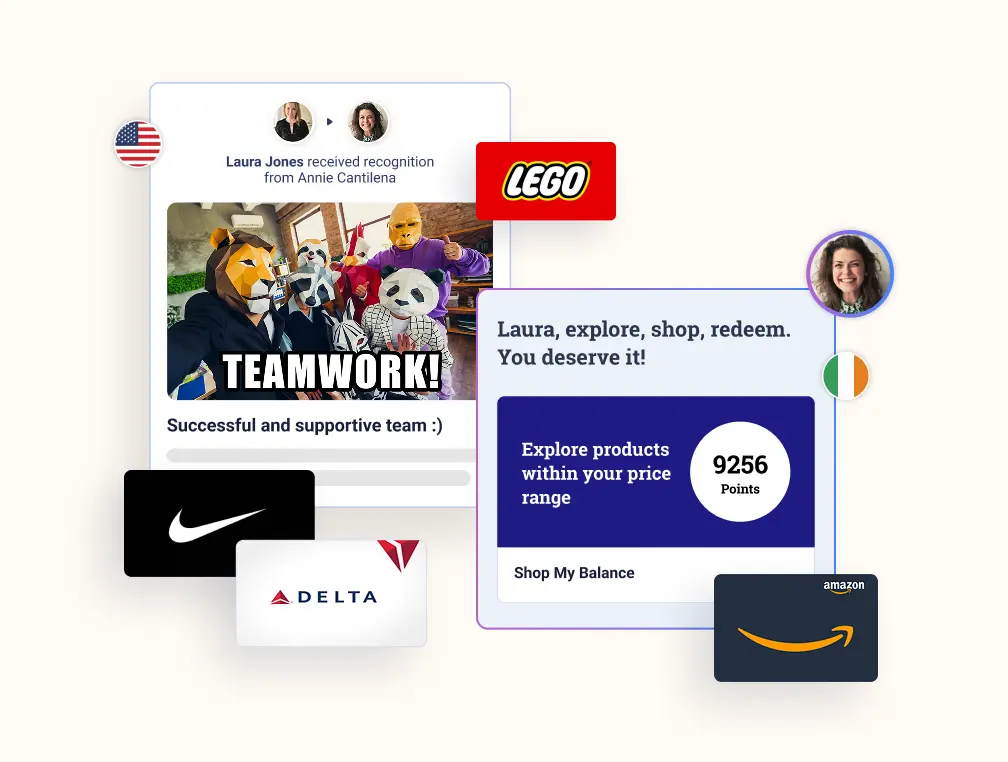
Why it stands out: Workhuman combines peer-to-peer recognition, milestone automation, behavioral analytics, and a global rewards store so companies can connect recognition to values, inclusion, culture, and business performance.
Key features:
- Employee recognition platform for peer-to-peer, manager-led, and milestone moments
- Automated service milestone recognition
- Global rewards store with localized reward options
- Workhuman iQ analytics for recognition and workforce insights
- Inclusion Advisor to help reduce bias in recognition messages
- Integrations with HR and collaboration tools, plus multilingual support for global teams
Rewards available: Gift cards, merchandise, travel and experiences, charitable donations, and localized reward options.
Integrations: HR and collaboration tool integrations, including recognition inside Microsoft Teams.
Pricing: Custom pricing.
Consider this platform if: Choose Workhuman when recognition needs to scale globally, support inclusive participation, and produce measurable human data leaders can use to improve culture, alignment, and retention.
2. Awardco - Best for organizations that want broad reward choice, retail-style redemption, and clear control over reward spend.
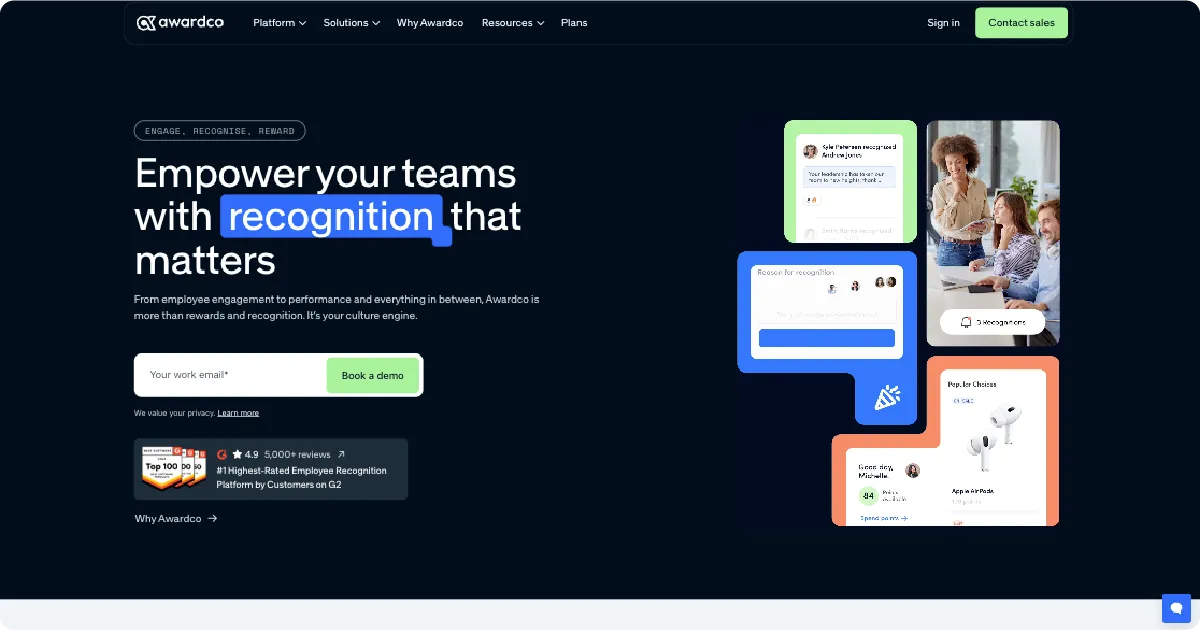
Why it stands out: Awardco is a rewards-first platform known for its Amazon Business partnership, zero-markup positioning, and large catalog approach.
Key features:
- Amazon Business and retailer-backed reward catalog
- Zero-markup reward redemption model
- Lifestyle spending accounts for recurring benefits
- Automated milestone recognition
- Branded swag and external recognition options
Rewards available: Merchandise, lifestyle spending account purchases, branded swag, and other catalog rewards.
Integrations: HRIS and workplace integrations vary by package; verify against the current vendor documentation.
Pricing: Contact for pricing
Consider this platform if: Consider Awardco if catalog breadth, cost control, and reward fulfillment are higher priorities than deep recognition analytics.
3. Matter - Best for small and midsize teams that want recognition to happen inside Slack or Microsoft Teams.
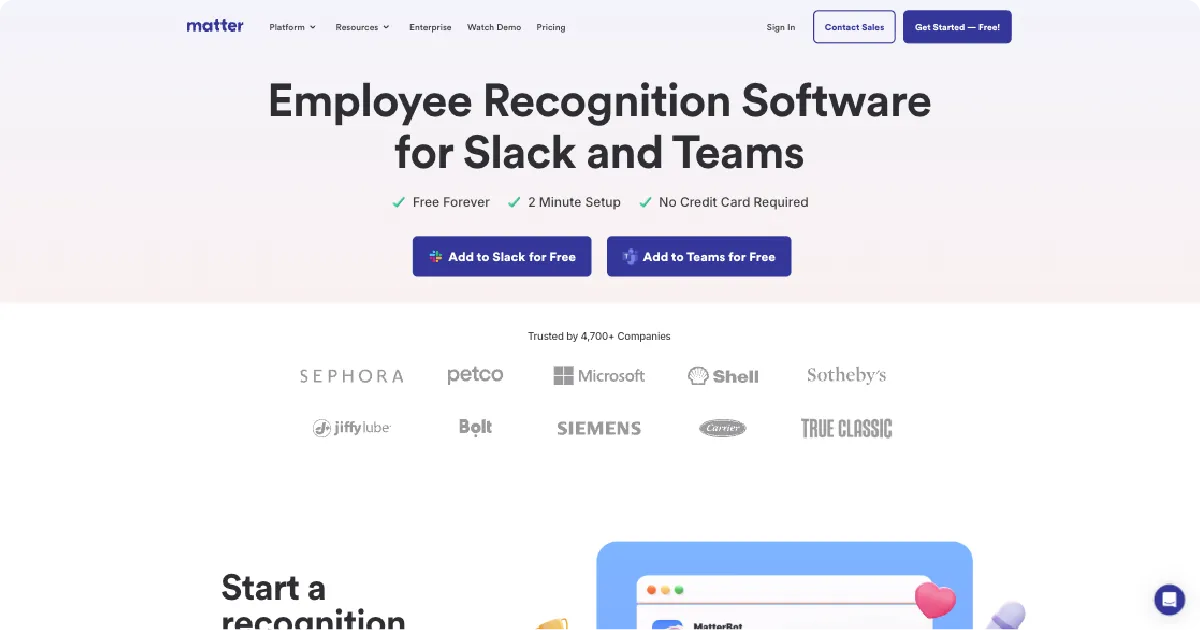
Why it stands out: Matter keeps recognition lightweight by bringing kudos templates, weekly prompts, and reward redemption into collaboration tools employees already use.
Key features:
- Peer-to-peer kudos in Slack and Microsoft Teams
- Customizable recognition templates tied to company values
- Feedback Friday prompts to encourage weekly participation
- Birthday and work anniversary automation
- Pulse surveys, analytics, and team challenges
Rewards available: Cash rewards through payment providers, gift cards, prepaid cards, company swag, and charitable donations.
Integrations: Microsoft Teams and Slack.
Pricing: Free trial available; paid plans start at $1 per user per month.
4. Motivosity - Best for teams that want peer-to-peer giving, a social recognition feed, and employee sentiment insights.
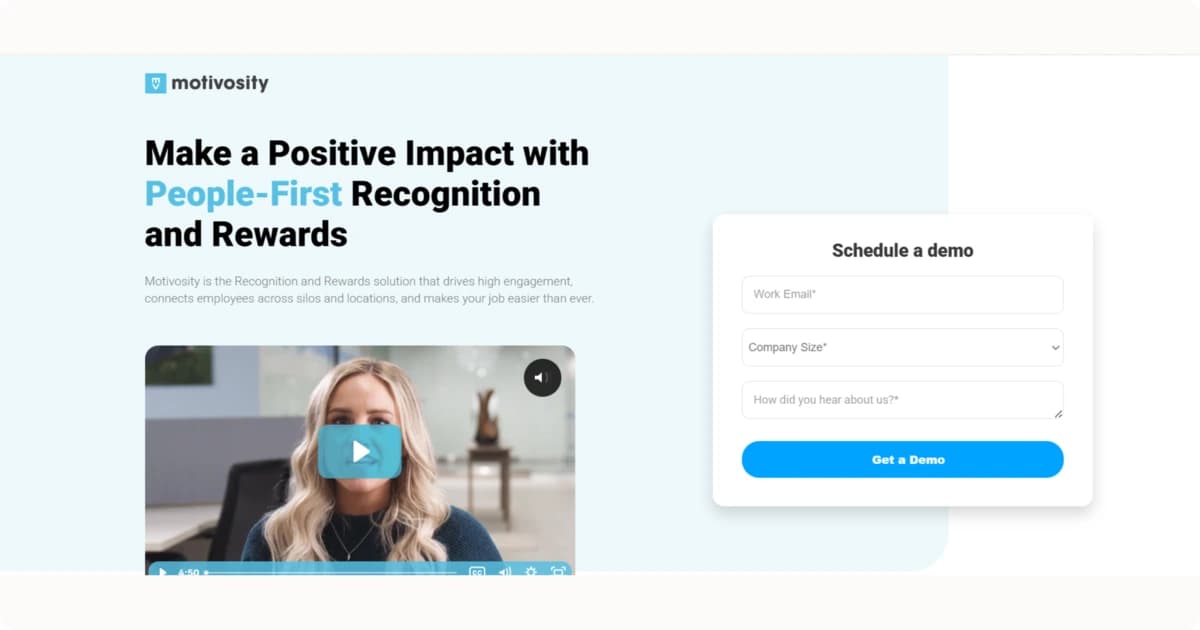
Why it stands out: Motivosity combines peer allowances, public recognition, achievement awards, and engagement analytics to help employees recognize one another frequently.
Key features:
- Monthly peer-to-peer giving allowance
- Companywide recognition feed
- Achievement awards for performance and milestones
- Customer or service shout-outs
- Pulse surveys and sentiment analytics
Rewards available: Amazon and other merchandise, company swag, Visa cards, and travel experiences.
Integrations: Integrations vary by plan; verify current options with the vendor.
Pricing: Custom quote required.
Consider this platform if: Motivosity is a fit for companies that want everyday gratitude and peer-driven rewards to be visible across the organization.
5. WorkTango - Best for companies that want employee recognition, rewards, surveys, and feedback tools in one platform.
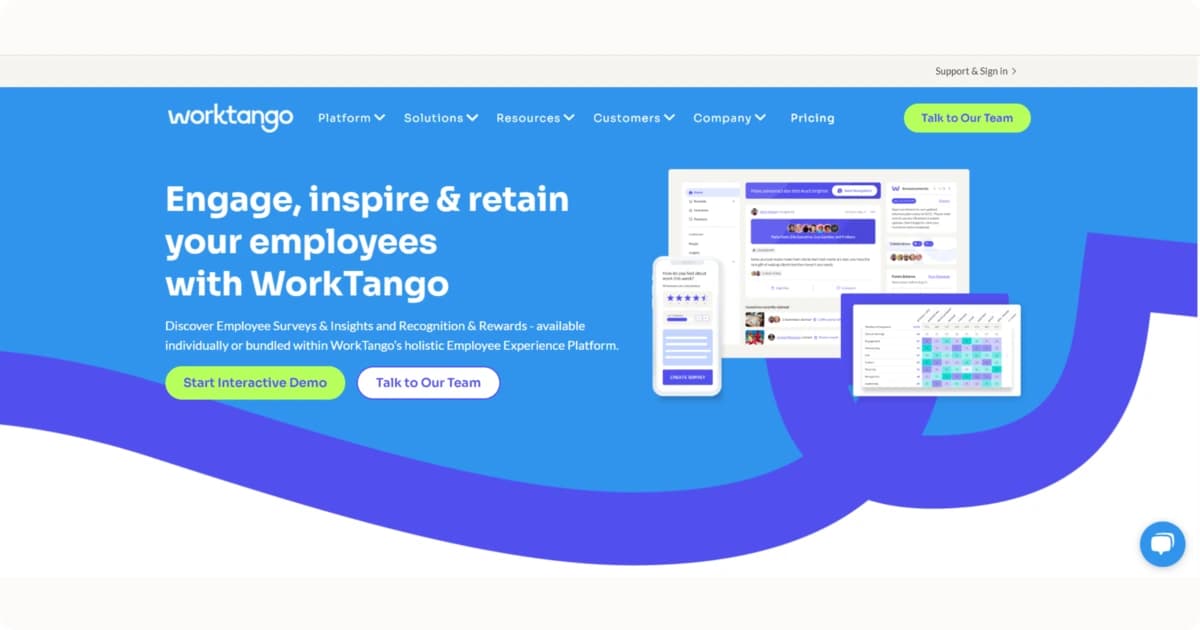
Why it stands out: WorkTango brings recognition and employee voice together, helping HR teams connect appreciation, feedback, and employee engagement signals.
Key features:
- Peer recognition and award nominations
- Microsoft Teams and Slack recognition workflows
- Global rewards marketplace and custom rewards catalogs
- Pulse surveys and engagement dashboards
- Reporting, budgeting, and manager feedback tools
Rewards available: Physical merchandise, gift vouchers, charitable donations, experiences, and custom rewards.
Integrations: Microsoft Teams, Slack, and HR-related integrations
Pricing: Custom pricing for recognition, surveys, or combined packages.
Consider this platform if: WorkTango is a fit when rewards are part of a broader employee listening and engagement strategy.
6. Snappy - Best for organizations that need corporate gifting and curated gift fulfillment rather than a full strategic recognition platform.
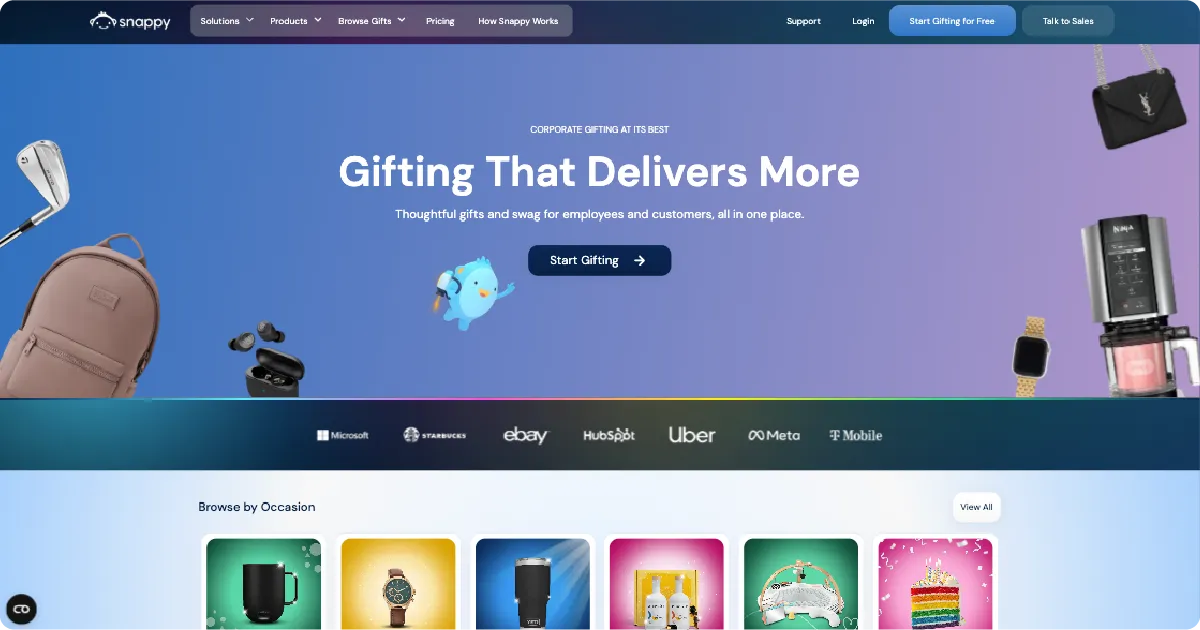
Why it stands out: Snappy helps teams send personalized gifts for onboarding, milestones, celebrations, and other employee moments.
Key features:
- Curated gift collections
- Employee gift claiming workflow
- HRIS-triggered gifting for birthdays, anniversaries, and milestones
- AI gifting assistance
- Custom swag and global delivery options
Rewards available: Curated gifts, branded swag, merchandise, and personalized employee gifts.
Integrations: HRIS integrations for automated gifting
Pricing: Free basic gifting plan and enterprise-level paid options
Consider this platform if: Snappy is a fit when the primary need is gift fulfillment, not a full recognition, analytics, and service milestone program.
7. Terryberry - Best for organizations that want service awards, symbolic recognition, custom awards, and physical keepsakes.
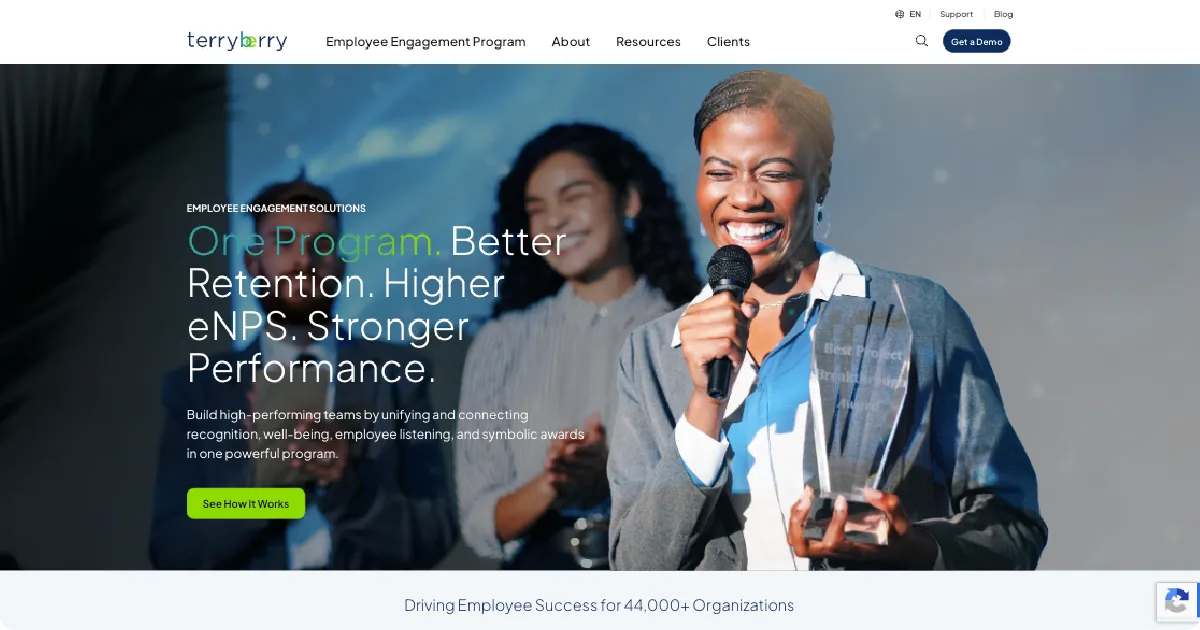
Why it stands out: Terryberry supports manager-driven recognition, milestone programs, service awards, surveys, and custom recognition products.
Key features:
- Milestone and service award programs
- Recognition feeds
- Engagement and pulse surveys
- Custom plaques and engraved awards
- Symbolic awards team for custom physical awards
Rewards available: Amazon products, custom plaques, service awards, symbolic awards, and other recognition items.
Integrations: Microsoft Outlook, Slack, and Teams
Pricing: Custom pricing.
Consider this platform if: Terryberry is a fit when long-tenure recognition and custom physical awards are central to the program.
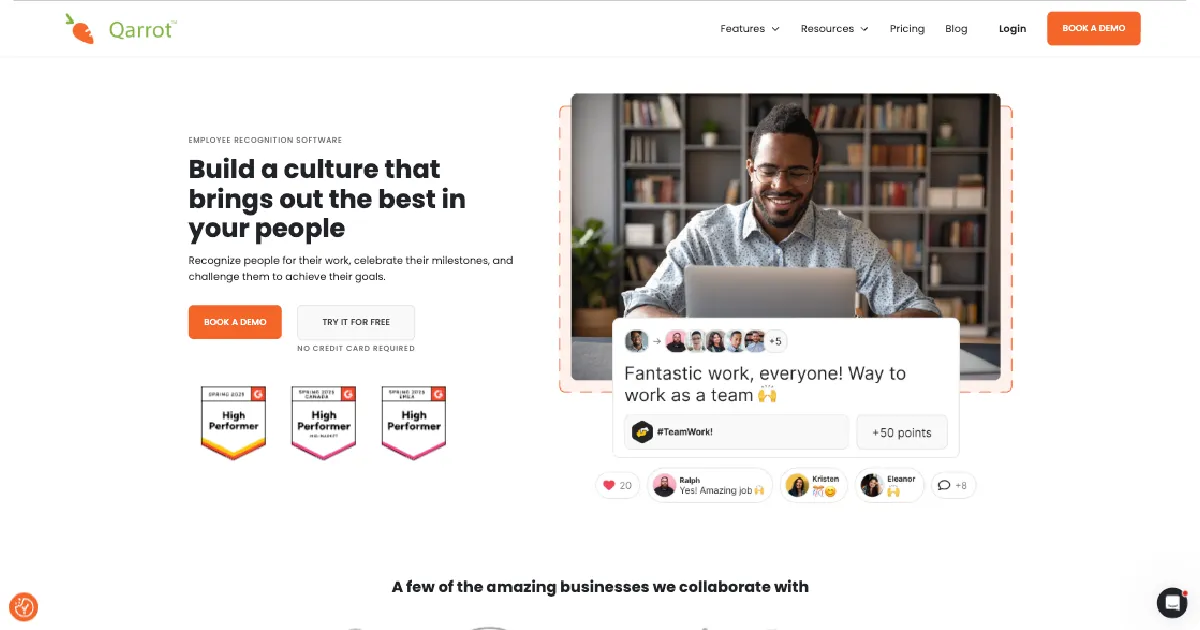
8. Qarrot - Best for teams that want gamified incentives, short-term campaigns, sales contests, and leaderboards.
Key features:
- Incentive Campaigns
- Team and individual leaderboards
- Points and badges
- Spot awards and milestone recognition
- Public recognition feed
Rewards available: Points, badges, and reward redemption options configured by the organization.
Integrations: Microsoft Teams and Slack
Pricing: Starts at $4 per user per month
Consider this platform if: Qarrot is a fit for focused incentive campaigns, especially when teams respond well to visible goals and competition.
9. Connecteam - Best for deskless, frontline, and distributed teams that need rewards inside a mobile-first employee management app.

Why it stands out: Connecteam is broader workforce management software with recognition and token-based rewards built into everyday mobile workflows.
Key features:
- Mobile-first employee management app
- Token-based rewards system
- Manager, team, and shift-level recognition
- Gift card and merchandise redemption
- Workforce communication and operations tools
Rewards available: Gift cards and merchandise.
Integrations: Broader workforce management features vary by plan
Pricing: Free for up to 10 employees; paid plans start at $29 per month
Consider this platform if: Connecteam is a fit when recognition needs to be part of broader mobile workforce management for deskless teams.
10. Cooleaf - Best for organizations that want recognition connected to wellness, learning, and engagement challenges.
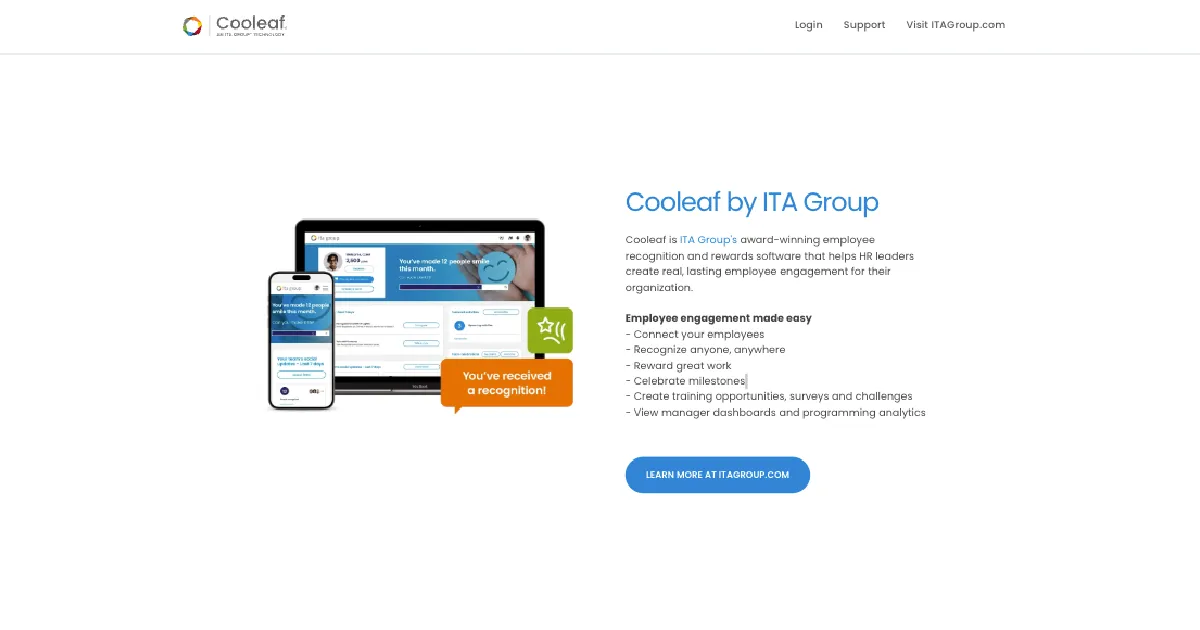
Why it stands out: Cooleaf combines social recognition, engagement campaigns, wellness programs, learning initiatives, and reporting tools.
Key features:
- Peer nominations and social recognition
- Wellness and learning challenges
- Fitness device and learning management integrations
- Reporting tools for recognition and engagement trends
- Program initiatives that support collaboration and wellbeing
Rewards available: Merchandise, charitable donations, and other configured reward options.
Integrations: Fitness devices, learning management systems, and other integrations
Pricing: Contact for pricing.
Consider this platform if: Cooleaf is a fit when rewards are part of a broader engagement, wellbeing, and behavior-change strategy.
11. Bucketlist Rewards - Best for companies that want experience-based rewards and personalized employee incentives.
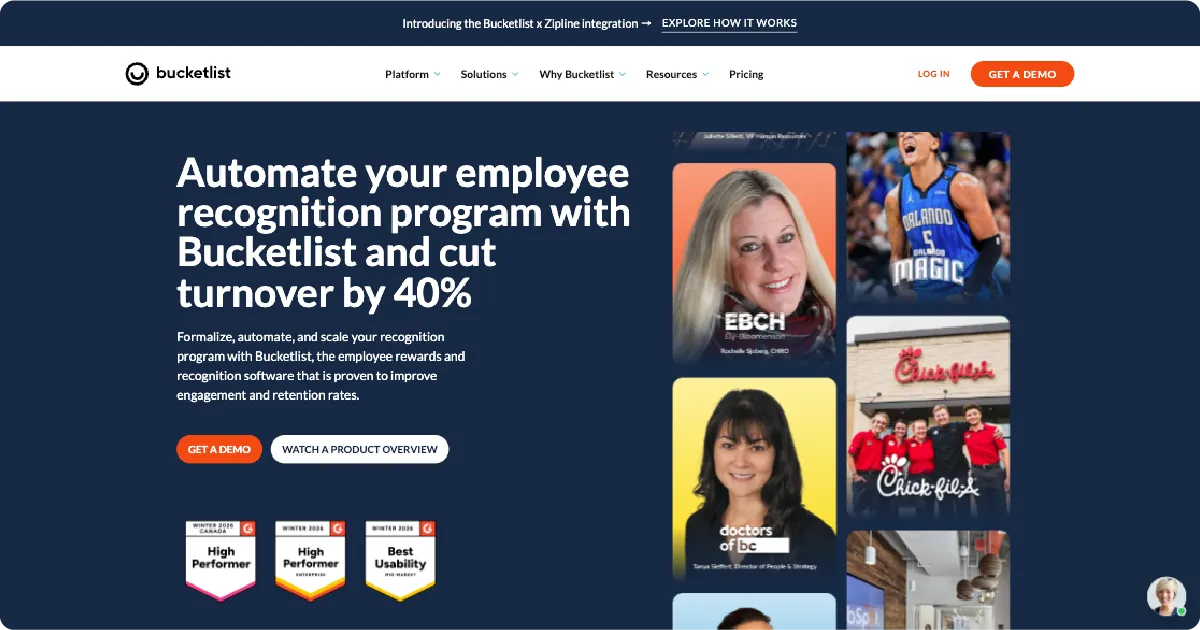
Why it stands out: Bucketlist Rewards focuses on memorable employee rewards, including experiences, development options, gift cards, and global fulfillment.
Key features:
- Experience-based rewards catalog
- Professional development rewards
- Automated milestone recognition
- Budget controls and data analytics
- Personalized recognition messages and manager-driven recognition
Rewards available: Experiences, professional development, gift cards, and charitable donations.
Integrations: Integrations and fulfillment details vary by package.
Pricing: Contact for pricing.
Consider this platform if: Bucketlist Rewards is a fit when the employee reward strategy emphasizes memorable experiences and personal choice.
12. Kudos - Best for culture-focused organizations that want values-based recognition, points, badges, and people analytics.
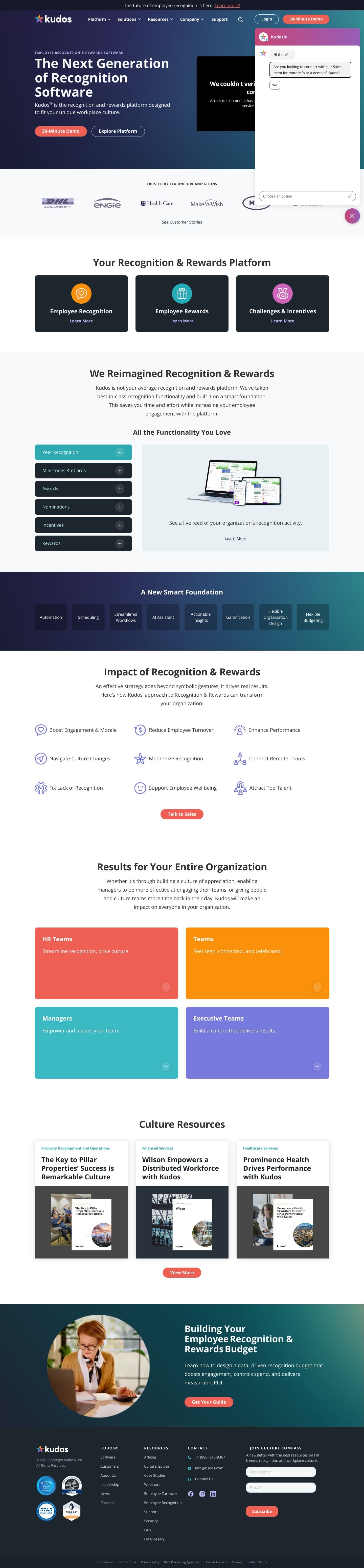
Why it stands out: Kudos connects recognition to company values and gives teams a public recognition feed, dashboards, and reward redemption options.
Key features:
- Values-based social recognition
- Awards, points, and customizable badges
- Public recognition feed
- People analytics and real-time dashboards
- Integrations with workplace and HR tools
Rewards available: Merchandise, experiences, and other configured rewards.
Integrations: Microsoft Outlook, Slack, Workday, and other tools
Pricing: Custom pricing based on employees and features.
How to choose the best employee rewards software
You do not need to demo every platform on this list to find the right fit. Use these steps to narrow the field before you request demos or pricing.
- Define the business outcome. Clarify whether the program should improve retention, strengthen culture, support service milestones, increase engagement, or reinforce specific behaviors.
- Decide what types of rewards employees should be able to choose. Strong programs usually include a mix of gift cards, merchandise, experiences, charitable giving, branded rewards, and non-monetary recognition.
- List must-have platform requirements. Prioritize integrations, global fulfillment, budget controls, mobile access, analytics, data privacy, and localized reward options.
- Test the top two options. Demos and trials help you see how recognition fits into daily workflows and whether employees can redeem rewards easily.
- Run a pilot with a representative group. A small pilot helps you evaluate adoption, reward redemption, manager participation, and employee feedback before a broader rollout.
Key features to consider in employee rewards platforms
As you compare options, prioritize recognition features that make recognition easy to give, meaningful to receive, and measurable for HR and business leaders.
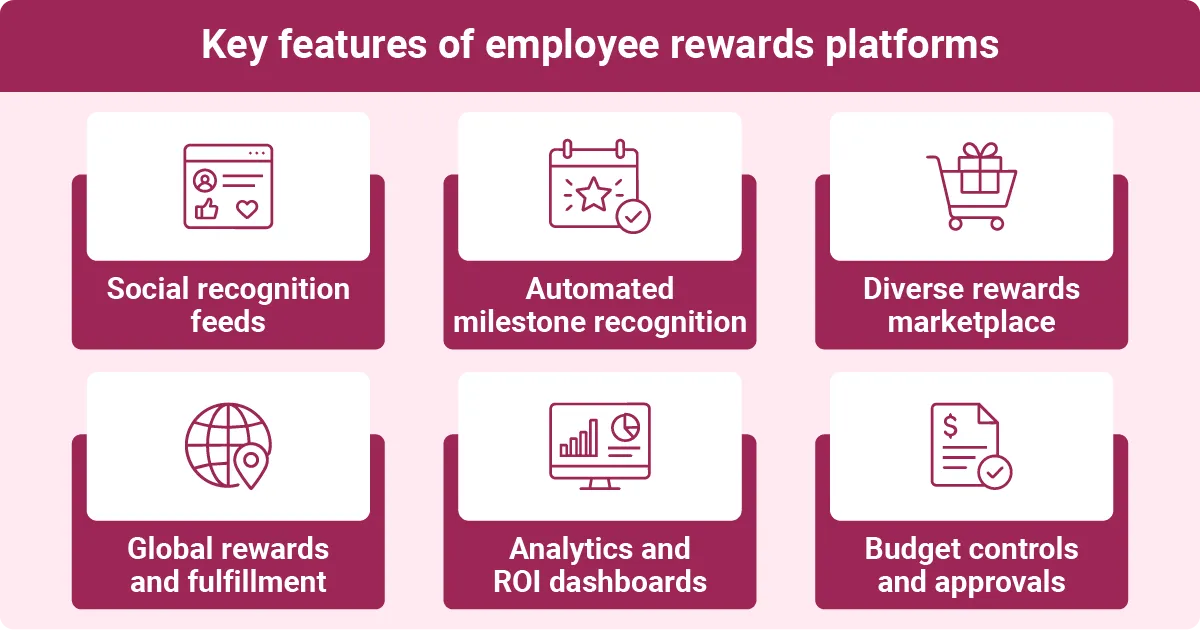
- Social recognition feeds: Activity streams help employees and managers share visible praise and build recognition into everyday work.
- Automated milestone recognition: Scheduled moments for anniversaries, birthdays, promotions, onboarding, and major achievements help teams avoid missed opportunities.
- Diverse rewards marketplace: Effective platforms support employee choice across gift cards, merchandise, experiences, charitable donations, branded rewards, and non-monetary recognition.
- Global recognition and fulfillment: International teams need localized rewards, equitable award values, and fulfillment options across the countries where employees work.
- Analytics and ROI dashboards: Reporting helps HR track participation, redemption, budget use, retention signals, sentiment change, and recognition quality.
- Budget controls and approvals: Admin tools should help teams set budgets, manage approvals, and keep recognition spending aligned with program goals.
Integrations that boost adoption and engagement
Before you commit to a platform, make sure it works with your existing collaboration, HRIS, communication, and payroll tools. Adoption improves when employees can participate in an employee reward and recognition program without leaving the tools they already use.
For example, Workhuman lets users give recognition within Microsoft Teams. Instead of opening a separate app, employees can recognize a peer while checking messages or preparing for a call. Integrations also improve data quality by connecting recognition activity to the systems where employees already spend time.
Matching rewards to your company culture
The best employee incentive programs offer rewards that feel relevant to the people receiving them. Over time, that relevance increases program participation because employees can choose options they actually value.
For global teams, confirm that the vendor can support the countries where employees live and work. Ask about local fulfillment, tax handling, currency and points equivalency, reward availability, and whether award values are adjusted for purchasing power.
Measuring ROI and engagement impact
Smiles after recognition matter, but they do not tell the full story. To understand whether your rewards program is working, look for analytics that connect recognition activity to participation, retention, sentiment, and budget use.
ROI dashboards may track metrics such as:
- Budget use
- Participation rates
- Recognition reach and frequency
- Redemption frequency
- Retention impact
- Sentiment change
- Manager and team-level participation
Workhuman iQ helps leaders analyze recognition data and surface insights about program performance, skills, culture, retention, and inclusion. That makes recognition more than a feel-good activity; it becomes a source of human data leaders can use to improve business performance.
Tips for successful implementation and adoption
A sustainable rewards and recognition program takes planning, manager enablement, and ongoing optimization. These tips can help your team launch with confidence:
- Get executive and manager buy-in by connecting recognition to organizational goals.
- Start with a pilot group that reflects different roles, locations, tenures, and work styles.
- Offer short training resources so employees know when and how to recognize each other.
- Promote mobile and collaboration-tool integrations to reduce friction.
- Monitor early usage, participation, redemption, and feedback so you can adjust the program quickly.
- Refresh the rewards catalog and recognition prompts over time to keep the program relevant.
See how recognition drives measurable ROI. Request a demo today.
Frequently asked questions
What types of rewards should I offer to engage employees effectively?
The most effective rewards programs offer a range of options, so employees have meaningful choices. Popular rewards include gift cards, merchandise, branded swag, charitable donations, cash or prepaid cards, experiences, and non-monetary recognition such as badges or public appreciation.
How can I ensure global fulfillment and inclusivity in an employee rewards program?
Choose software with localized reward options in the countries where your employees work. Ask vendors about local fulfillment, tax handling, currency or points equivalency, culturally relevant rewards, multilingual support, and tools that help recognition feel fair and inclusive.
What role do analytics and reporting play in choosing rewards software?
Analytics help HR leaders understand whether employees are participating, whether rewards are being redeemed, which teams are engaging, how budgets are used, and whether recognition patterns connect to retention, sentiment, or performance outcomes.
How often should employee recognition be given for the best impact?
Recognition works best when it is specific, timely, and frequent enough to become part of the culture. Use automated milestones for birthdays, anniversaries, onboarding, and promotions, and encourage peer-to-peer recognition for everyday contributions.
Can rewards platforms support both monetary and non-monetary recognition effectively?
Yes. Strong programs usually combine monetary rewards, such as gift cards or merchandise, with non-monetary recognition, such as social praise, badges, symbolic awards, and values-based appreciation. The right mix depends on your culture, budget, and employee preferences.

Ryan Stoltz
Ryan is a search marketing manager and content strategist at Workhuman where he writes on the next evolution of the workplace. Outside of the workplace, he's a diehard 49ers fan, comedy junkie, and has trouble avoiding sweets on a nightly basis.
Recommended for you