
16 Examples of Effective Employee Incentive Programs
Last updated
11 min read

Table of contents
- What are employee incentive programs?
- What are the roles and benefits of employee incentive programs?
- 16 Examples of effective employee incentive programs
- Best practices for implementing an incentive program
- Workhuman: Turning recognition into real results
- Final thoughts
Share this article
Reigniting engagement isn’t easy. Teams are stretched, turnover is high, and motivation feels uneven across the organization. HR leaders everywhere are looking for practical ways to rebuild energy, reinforce great work, and help people feel excited about their contributions again.
Employee incentive programs can be one of the most powerful levers for creating that kind of positive, productive environment. But here's the challenge: the world of incentives is crowded. From monetary to non-monetary, team-based to individual, long-term to moment-in-time – there’s a lot to sort through. And choosing the right approach can feel overwhelming.
This guide will walk through 16 effective employee incentive program examples, unpack why they work, and share practical tips to help you build a program that’s fair, motivating, and sustainable.
Ready to re-energize your workforce? Let’s dive in.
What are employee incentive programs?
Employee incentives programs are structured ways to reward employees for their contributions and achievements, giving recognition real weight and impact. By pairing appreciation with tangible rewards, these programs reinforce positive behaviors, strengthen motivation, and help people feel genuinely recognized for their contributions.
Incentives can take many forms. Some are immediate and energizing, like spot awards or performance bonuses. Others build over time, such as points employees earn and redeem for something personally meaningful.
Regardless of the format, the goal is the same: reinforce what’s working, spark motivation, and help employees feel genuinely seen and supported.
In fact, Workhuman's research study on The Tangible Value of Appreciation found that, when rewards carry real monetary value, engagement rises by 21% and belonging by 28%.

What are the roles and benefits of employee incentive programs?
The role of an employee incentive program may vary from one situation to another, but its core purpose remains the same: to positively influence and reinforce the behaviors and contributions that matter most.
One of the biggest advantages of incentive and recognition programs is their ability to produce measurable business results. When rewards are meaningful, consistent, and aligned with what employees value, organizations see stronger engagement, higher productivity, and lower turnover.
Here are some of the advantages of these programs:
Improve productivity rates
When rewards are tied to clear, achievable performance targets, employees' focus sharpens. They have a stronger sense of purpose, accountability, and direction.
The result? Higher productivity and faster goal achievement.
When people can see how their work contributes to priorities and leads to meaningful rewards, they’re more committed and more willing to go the extra mile. While outcomes vary based on how well the program aligns with measurable goals, our research shows employees with a very positive rewards experiences are 2x more likely to feel motivated overall.
Tip: Use a mix of short-term and long-term incentives to keep energy high throughout projects, not just at milestones.
Help retain top talent and loyal employees
Turnover continues to be one of HR’s most persistent challenges, with current reports estimate average turnover at 57.3%Opens in a new tab. In other words, for every 10 people that you hire, only about four may stay in a given period.
High turnover is costly – constantly hiring and training replacements can add up to $11 billionOpens in a new tab lost annually. Well-designed incentive programs can reduce that burden by strengthening employee loyalty and increasing employee retention, especially among top performers.
Our new study on the tangible value of appreciation found that employees with a positive rewards experience are 19x more likely to recommend their organization as a great place to work, and frequent reward redemption drives 34% higher belonging – both strong predictors of long-term retention.
When recognition and rewards align with what employees value, top performers are more likely to stay and contribute to the company’s success.
Tip: Regularly survey employees to understand which rewards and recognition experiences they value most and adjust incentives as needs evolve.

Boost employee morale and motivation
Employee engagement and motivation are powerful drivers of organizational success. When people feel energized about their work, everything improves – productivity, creativity, and even attendance.
In fact, a report by GallupOpens in a new tab shows that engaged teams are up to 14% more likely to be productive, while disengaged employees can cost their organization around 18% of their annual salaryOpens in a new tab in lost productivity.
According to the Everest Group report, employees who receive authentic recognition are 9x more likely to be engaged and 12x more likely to feel connected to company culture.
Matching your team’s needs with the right incentive program can spark meaningful improvements: more attention to detail, lower absenteeism, and greater enthusiasm for achieving results together. When recognition is timely and rewards feel meaningful, employees are more likely to sustain positive momentum day to day.
Tip: Enable in-the-moment recognition opportunities to maintain daily morale. Workhuman also found frequent redemptions increase employees' love for their program, their sense of belonging, and the likelihood they'd recognize someone else – amplifying the impact of each meaningful moment.
Build a culture of positive behavior and shared momentum
Lasting performance comes from a culture where people feel motivated, supported, and connected to a shared purpose. Incentives help HR shape the behaviors that define a company’s culture and create a shared momentum on organizational priorities.
When reward programs align with team needs, you’ll see real shifts in daily habits: more focus and participation during meetings, fewer absences, and greater enthusiasm for working together toward shared goals. Employees who say their rewards reflect their culture, values, and interests are 3x more likely to love their program (The Tangible Value of Appreciation), showing that culturally-aligned recognition reinforces engagement and shared purpose.
Tip: Pair incentives with specific, authentic messages of gratitude that highlight both effort and impact so employees can directly connect their behaviors to the culture you're building.
Encourage teams to collaborate on group projects
In addition to personal and competition-based incentive programs, you can use team-based incentives and peer-to-peer recognition to make collaboration visible and rewarding.
Incentives for group achievements motivate employees to work together, share knowledge, and support one another in meeting shared goals. Peer-to-peer recognition adds another layer by enabling employees to acknowledge each other’s contributions and reinforcing a culture of cooperation and build psychological safety.
Group incentives help teams create stronger bonds and enjoy working together – benefits that often extend well beyond the incentive program itself. They’re also a powerful long-term investment in team cohesion and trust.
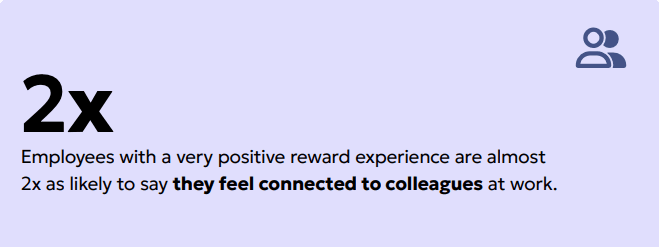
Tip: Encourage managers to highlight examples of effective collaboration in team meetings or internal communications, turning recognized behaviors into learning opportunities that others can emulate.

16 Examples of effective employee incentive programs
There’s a wide variety of examples when it comes to effective employee incentive program ideas. Some of them offer a financial incentive while others are non-monetized. In this section, we’ll take a closer look at those different forms of incentives and how they work:
1. Awards and rewards based incentive programs
According to a recent survey into employee satisfaction at work, the majority of respondents wanted more recognition at work to stay engaged. That same report found around 37 percent of employees say that recognition is the most important thing to them.
One of the best ways to give your employees the recognition they deserve is by using an award based incentive program that keeps up with employees’ contributions in real time and grants them various rewards according to their achievements.
Find out how Social Recognition from Workhuman can build a culture of appreciation at your organization.
2. Remote/hybrid workplace-friendly programs
This one is a unique classification of incentive programs that include incentives specifically designed for remote and hybrid workplaces. One of the biggest challenges of these lines of work is ensuring employees are interested and engaged.
For that reason, using monetary rewards and non monetary incentives like outdoor gatherings, shoutouts, and notes of appreciation can positively impact the dynamics of the workplace and increase employee engagement.
Workhuman helps distributed teams feel connected by embedding recognition into tools like Microsoft Teams, Outlook, and Slack, so remote and hybrid employees can give and receive recognition in the flow of work and redeem rewards through a global catalog that works in almost any location.
3. Referral bonuses
A referral bonus is a type of monetary incentive in which you reward employees who recommend or bring in quality talent and job candidates to work for your company.
According to a reportOpens in a new tab by CareerBuilder, 82% of employers find this type of incentive the highest in terms of return on investment with 88% finding it the best way to recruit top talent.
Of course, not all candidates will end up being hired (only around 6%), so employers usually pay the bonus only after successful onboarding and spending a few months with the company.
4. Profit sharing
Profit sharing is one of the most popular incentive programs out there in which the company pays the employee(s) upon making profits.
This incentive plan is highly versatile and can be executed in a variety of ways. Additionally, it has the additional benefit of boosting the employee’s motivation and productivity level while aligning with the company’s long-term goals.
5. Travel incentives
Incentive travel is another great way to motivate your employees and keep them engaged. It comes in a wide variety of forms from business trips and team building retreats all the way to fully paid vacations in overseas countries.
Additionally, a simpler form of travel incentives may include discounts on hotels and flights, reimbursements, pocket money, free rental cars, and similar perks.
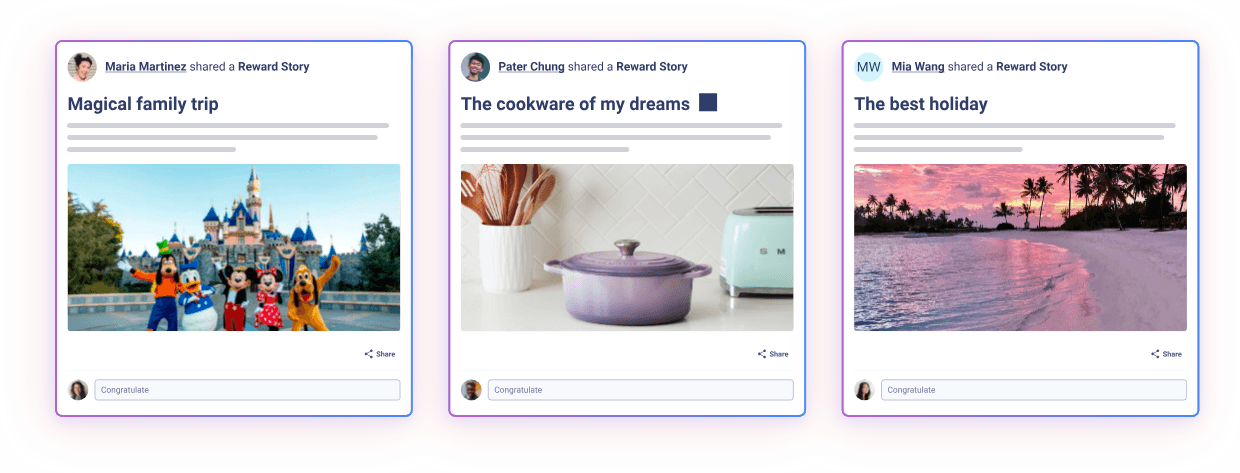
Workhuman customers often use the Workhuman Store to let employees save up for meaningful travel experiences. Cisco employees, for example, have used Connected Recognition awards redeemed through the Workhuman catalog to fund family trips to destinations like Disneyland, turning small, frequent awards into unforgettable experiences.
6. Fringe benefits
Fringe benefits, also known as “employee benefits”, are a type of incentive that includes different types of non-wage compensation and perks.
These can include a variety of items, but among the most common elements are paid vacation days, health insurance, child care, retirement plans, club memberships, and other items that are included or not included in the salary package.
7. Suggestion incentive
A lot of companies and organizations are willing to pay a lot of money to research and incorporate new ideas that can bring more success and profits. Since your employees are familiar with the inner workings of the business, their ideas can be quite valuable and that is where suggestion incentives come in handy.
This one rewards engaging and proactive employees who suggest new methods or out of the box techniques to solve work challenges. Some companies are also more focused on the engagement part of the suggestions, as employees who feel valued have better morale and higher productivity levels.
Workhuman programs allow leaders to spotlight ideas and innovations in social recognition feeds, amplifying smart suggestions and making innovators visible across the organization. Customers like Merck use features such as Inclusion Advisor to ensure suggestion recognition messages are inclusive and free of bias, which supports both innovation and equity.

8. Tuition assistance
Tuition assistance, also known as reimbursement, is a type of type of employee benefit in which the employee is granted a specific predetermined amount of money upon continuing or completing specific courses toward a degree or education credit.
These programs benefit both parties because employers get to invest in the long term benefits of the company by improving the knowledge and loyalty of their people, while employees get to develop and learn new methods that help them excel in their jobs.
Workhuman research finds that when employees are recognized for upskilling and applying new skills, they report higher psychological safety and clearer paths to growth, which in turn increases loyalty and retention.
9. Employee stock ownership plans
Another type of employee benefit that comes with a variety of advantages is the employee stock ownership plan, in which the employee earns an equity stake in the company they work for.
The main perk of this incentive program is aligning the employee's values with the business goals and increasing loyalty toward the company. It also helps in increasing employee retention and decreasing turnover rates.
10. Engagement and teamwork incentives
This one is a versatile type of incentive that is granted when employees are engaging with their teams. This can be in the form of a simple employee or team bonus for being proactive and taking initiative or for collaborating and helping other team members solve a challenging problem.
Workhuman customers like Eaton have used global recognition programs to strengthen collaboration across regions and functions, achieving participation rates above eighty percent and creating recognition moments as frequently as every sixty five seconds worldwide.
11. Training and development program incentives
Training your employees will not only help them develop their own skill set and show you care about their growth, it also has a massive impact on your business profitability. These programs are another great long term investment in your workforce. Reports have found that proper training can boost revenue.
Providing chances for your employees to develop their skills through high quality training programs is an excellent incentive that can also boost employee engagement and retention rates.
Recognition multiplies this effect. When employees love their recognition program, outcomes across the board improve, including motivation, belonging, ability to complete tasks, strategic alignment, understanding company values, and NPS scores.
12. Gifts and gift cards
Gifting your employees and using gift cards as a reward adds a unique touch that some bonuses and benefits may not achieve. They are a great way to let your employees know that you appreciate them on a personal and professional level.
And, with gift cards, employees can use them to pick the gift themselves, which makes them even more valuable and practical.
13. Career development opportunities
Workhuman and Gallup researchOpens in a new tab shows that those receiving high-quality recognition are 45% less likely to leave their job within two years and 65% less likely to be actively looking for or watching for another job opportunity.
14. Extra vacation days incentive
Time off helps reduce employee stress and burnout and boosts engagement and morale. It's one of the best incentives there is for increasing employee and workplace well-being.
15. Flexible working options
Another excellent form of non-financial incentive that you apply is rewarding your employees with better flexibility at work. This includes allowing them to adjust their working hours and work from home on certain days.
This incentive is often ideal for parents and caregivers who are already highly stressed and will benefit greatly from a policy like this.
16. Company Outings
Another non-materialistic incentive that helps in building a sense of community among your team members is organizing team outings. These can be a simple picnic, a camping trip for team members, or even an after-work hangout in a bar. Outings give the workforce a chance to unwind while building stronger bonds between them outside of a working environment.
Many Workhuman customers use Social Recognition to celebrate team achievements before, during, and after these events, helping the positive energy of an outing carry back into everyday work and reinforcing a culture of appreciation.

Best practices for implementing an incentive program
Now that you know more about some of the best incentive program examples, here are some recommendations for making any incentive program successful.
Make it easily accessible
The easier it is for employees and managers to use the incentive program, the better employee incentive programs work. Ensure the process for giving and receiving recognition is simple, intuitive, and available where work happens. Make sure there are easy outlets to give all types of incentives and that managers are equipped with the resources they need - both the time and money - to make the incentives count.
Build it into the culture
Embed your incentive program into the company culture. For example, when it comes to employee recognition, think of it as a ritual. Create regular, expected moments to highlight wins and reinforce values, so recognition becomes part of everyday work rather than a one-off event.
Train management
Managers are an important conduit of employee incentive plans. Set clear expectations around how often managers should recognize contributions, and give them practical guidance on how to do it well. Help managers understand the impact meaningful recognition can have on employee motivation and business performance.
Incentivize based on what your team is looking for
You should consider communicating with your team when deciding on the right employee incentive to offer employees. Use surveys, focus groups, or listening tools to understand what motivates different segments of your workforce. What motivates one employee might not motivate another, so it's important to offer choice where possible.
Keep things simple
Having simple but consistent incentives are much better than extravagant ones that are rarely announced. Clarity and frequency matter more than complexity. Even with a limited budget, non-monetary incentives – like growth opportunities or flexible scheduling – can still drive meaningful impact.
Make the incentives personal whenever possible
Group incentives are great for improving teamwork, but you should also focus on the personal aspect from time to time. Tailor recognition to the individual’s efforts, strengths, or values to make it feel more sincere and memorable.
Leverage the winner status occasionally
Since there are different types of incentive programs, a lot of them can be personal, but you can also design them in the form of competition. Occasional friendly competition can motivate some employees, as long as it's fair, transparent, and aligned with company values. Make sure you recognize everyone’s contributions – not just the top performers – to maintain a positive environment.
Consider other factors and consequences
Lastly, make sure that you look at the chosen incentive programs from all available angles, including financial, legal, ethical, and functional perspectives. Evaluate the long-term sustainability, administrative requirements, and equity implications of each incentive. Doing this upfront ensures the program drives value across the organization.
Workhuman: Turning recognition into real results
Built for the way people work
Workhuman integrates recognition directly into daily workflows so appreciation is simple and consistent. Employees can recognize one another in Microsoft Teams, Outlook, Slack, Workday, and more, keeping motivation in the flow of work.
Reward choice that motivates
The Workhuman Store gives employees the freedom to redeem points for what matters most. Options include merchandise, travel, charitable giving, and culturally relevant rewards across global regions.
Data that proves impact
Real-time dashboards reveal participation, engagement patterns, and cultural health. Leaders can track what drives performance and act quickly when support is needed.
Intelligence that improves performance
AI-powered writing suggestions make recognition more thoughtful and inclusive. Predictive analytics surface early warning signals like morale or turnover risk.
Culture and performance, working together
Organizations using Workhuman see higher engagement, lower turnover, and stronger alignment to values. Recognition becomes a strategic driver of performance and growth.
Recognition should feel human. Workhuman makes it transformative.
Final thoughts
Effective incentive programs motivate teams and strengthen culture, and Workhuman makes it easy by turning recognition into meaningful, performance-aligned rewards. Incentives do not need to be purely financial. With Workhuman, employees can choose rewards that matter to them through a global catalog and peer-driven recognition that feels personal, authentic, and impactful.

Workhuman Editorial Team
More by Workhuman Editorial TeamRecommended for you