
Best Employee Feedback Software: 15 Top Tools for 2026
by Ryan Stoltz
Last updated
12 min read
Table of contents
- What is employee feedback software?
- Best employee feedback tools at a glance
- Comparison table
- Methodology: how we evaluated these tools
- 1. Workhuman Conversations
- 2. Lattice
- 3. Culture Amp
- 4. 15Five
- 5. Leapsome
- 6. Qualtrics Employee Experience
- 7. Workday Peakon Employee Voice
- 8. Betterworks
- 9. Workleap (Officevibe)
- 10. Eletive
- 11. PerformYard
- 12. Trakstar
- 13. WorkTango
- 14. Reflektive (PeopleFluent)
- 15. Engagedly
- How to choose the right employee feedback software
- Frequently asked questions
Share this article
Choosing the right employee feedback software is one of the most consequential technology decisions an HR leader can make. The best platforms do more than collect survey responses. They help managers act on feedback, connect coaching to everyday work and build continuous habits that support alignment, development, and business performance.
In this guide, we have compared 15 leading employee performance feedback tools across feedback versatility, manager enablement, analytics depth, integration breadth and enterprise scalability. Whether you are a midmarket HR director replacing annual reviews or a global CHRO creating a culture of feedback, this list explains where each platform fits best in 2026.
What is employee feedback software?
Employee feedback software helps organizations collect, analyze, and act on employee input through employee engagement surveys, 360-degree reviews, continuous check-ins, peer feedback, recognition, anonymous channels, and manager conversations. The strongest tools turn employee signals into timely action, so feedback becomes part of how people grow and how teams improve performance.
Best employee feedback tools at a glance
- Best overall for recognition-integrated feedback: Workhuman Conversations
- Best for performance management: Lattice
- Best for engagement analytics: Culture Amp
- Best for enterprise listening: Qualtrics Employee Experience
- Best for manager check-ins: 15Five
- Best for 360-degree feedback workflows: PerformYard
Comparison table
Pricing note: Pricing is based on publicly available vendor information where available and is subject to change. Custom enterprise pricing may vary by seats, modules, contract length, implementation requirements and support needs.
Methodology: how we evaluated these tools
Evaluating employee feedback tools requires more than scanning feature lists. We assessed each tool against five criteria that reflect what matters when feedback software is deployed at scale:
- Feedback types supported: We evaluated support for pulse surveys, 360-degree reviews, continuous check-ins, peer recognition, anonymous channels and ad hoc feedback. Platforms that treat feedback as multidirectional and always on scored higher.
- Manager enablement: Feedback only drives change when managers act on it. We looked for coaching prompts, 1:1 meeting frameworks, nudges and manager resources that translate data into better development conversations.
- Analytics depth: We prioritized employee sentiment analysis, attrition signals, heat maps, benchmarks and the ability to segment data by team, tenure and demographics.
- Integration breadth: Feedback software should connect to HRIS platforms and communication tools such as Slack and Microsoft Teams. We considered native integrations and API flexibility.
- Enterprise scalability: We considered multi-language support, role-based permissions, security and the ability to support large, distributed workforces.
We reviewed publicly available product pages, pricing pages, feature documentation and integration information, then grouped tools by the use case each appears best suited to serve. The rankings reflect the strongest fit across the criteria above, with extra weight given to platforms that help managers act on feedback rather than simply collect it.
1. Workhuman Conversations

Who is Workhuman Conversations best for?
Workhuman Conversations is best for enterprise organizations that want employee satisfaction metrics, feedback, recognition and manager conversations to reinforce one another throughout the year.
Why I picked Workhuman Conversations
Many feedback tools start with a survey and expect culture to follow. Workhuman Conversations is different because it connects continuous conversations to Workhuman's strategic recognition ecosystem. That matters because recognition moments already show what employees value, contribute and achieve. When managers can use that context in feedback and development conversations, appreciation becomes a performance driver rather than a standalone program.
The value is not simply collecting more feedback. It is giving managers better context for the conversations that shape alignment, growth and performance. For a related look at structured multi-rater approaches, see our roundup of 360-degree feedback tools.
Key features
- Continuous conversations that help managers keep feedback timely and specific
- Feedback and development context connected to Workhuman recognition moments
- Conversation structures for priorities, notes, and follow-up actions
- Connection to Social Recognition® for a more unified employee experience
Pros
- Connects feedback to strategic recognition rather than treating it as a separate workflow.
- Helps managers make appreciation, coaching and development part of a continuous habit.
- Strong fit for global organizations that already see recognition as a business-performance lever.
- Can reduce feedback fatigue by putting conversations closer to meaningful employee moments.
Cons
- Not designed as a standalone survey-first platform for large annual engagement studies.
- Custom pricing requires contacting sales for a quote.
- Best value is obtained when paired with the broader Workhuman recognition suite.
2. Lattice
Who is Lattice best for?
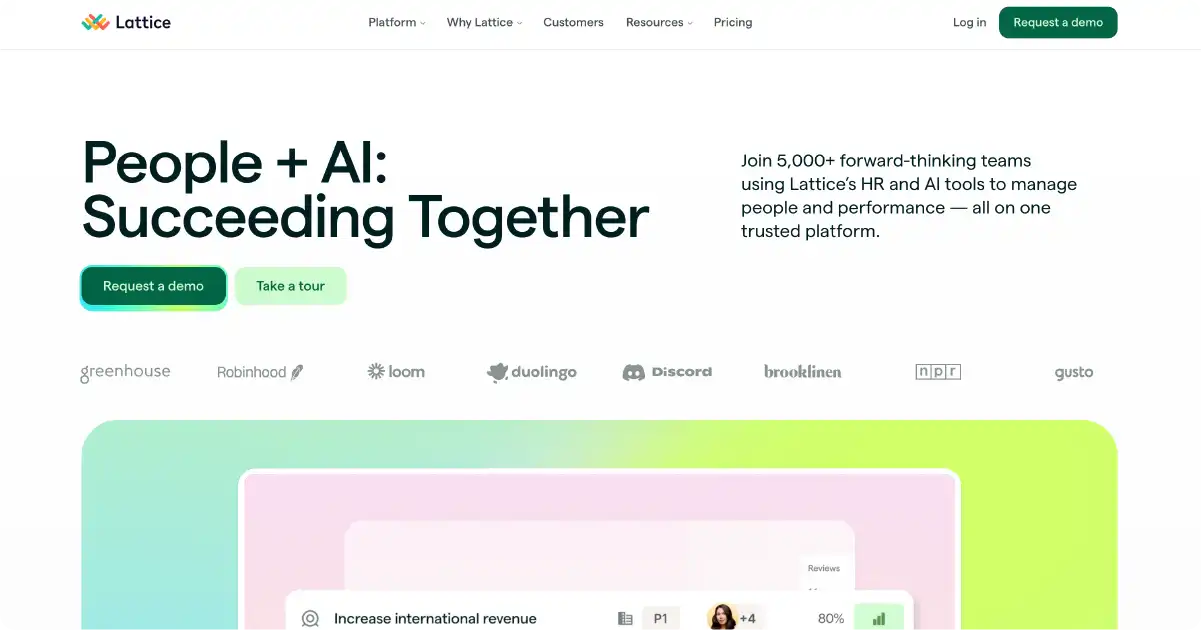
Lattice is a strong fit for midmarket and growing companies that want a single platform connecting performance reviews, goal management, engagement surveys and continuous feedback.
Why I picked Lattice
Lattice has built a cohesive performance-and-feedback ecosystem. Its strength is tying feedback directly to OKRs and performance cycles so input has a clear line of sight to business priorities. The 1:1 meeting module gives managers structured agendas and a place to connect recent feedback with goal progress.
Key features
- Engagement and pulse surveys with benchmarking
- 360-degree and peer feedback tied to review cycles
- OKR and goal tracking with cascade views
- 1:1 meeting agendas and updates
- Competency matrices and career development tracks
Pros
- Tight connection between goals, feedback, and reviews
- Intuitive interface with relatively low admin friction
- Useful analytics and department-level heat maps
- Flexible modular packaging for companies adding capabilities over time
Cons
- Per-module pricing can escalate as features are added
- Recognition features are functional but not as deep as dedicated strategic recognition platforms
- Some advanced analytics and enterprise needs may require higher-tier packaging
Integrations: Slack, Microsoft Teams, BambooHR, Rippling, Workday, Salesforce, Jira, and API options.
3. Culture Amp
Who is Culture Amp best for?
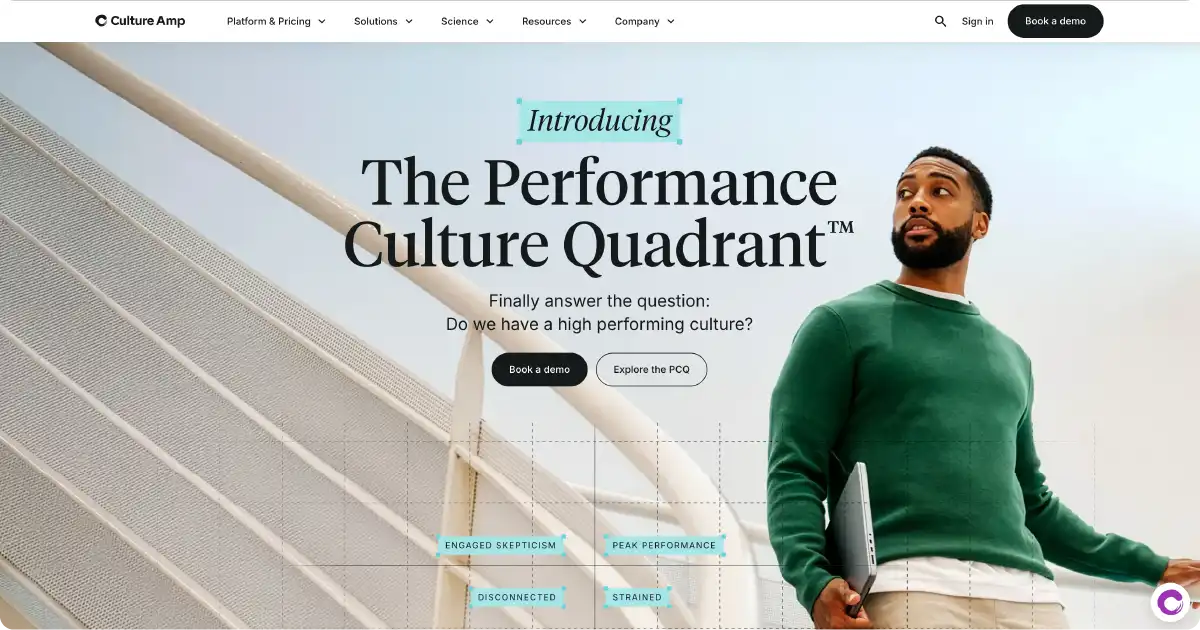
Culture Amp suits organizations that prioritize validated engagement measurement, benchmarking and manager action planning.
Why I picked Culture Amp
Culture Amp is especially strong for companies that want survey science and practical next steps. Its question library and benchmarking can give HR teams context for interpreting engagement results, while action-planning workflows help managers move from insight to accountability.
Key features
- Engagement, pulse and lifecycle surveys with validated question sets
- Benchmarking across a broad customer dataset
- Manager-level action planning with suggested focus areas
- Skills Coach microlearning for managers
- 360-degree and multi-rater feedback
Pros
- Strong survey methodology and benchmarking
- Clear action-planning workflows
- Useful data visualization with demographic filtering
- Manager development resources integrated into the platform
Cons
- Performance management features may feel less central than survey capabilities
- Custom pricing can be harder for smaller teams to model
- Continuous feedback flows may feel less fluid than check-in-first platforms
Integrations: Slack, Microsoft Teams, BambooHR, Workday, Personio, Namely, Jira, and SSO providers.
4. 15Five
Who is 15Five best for?
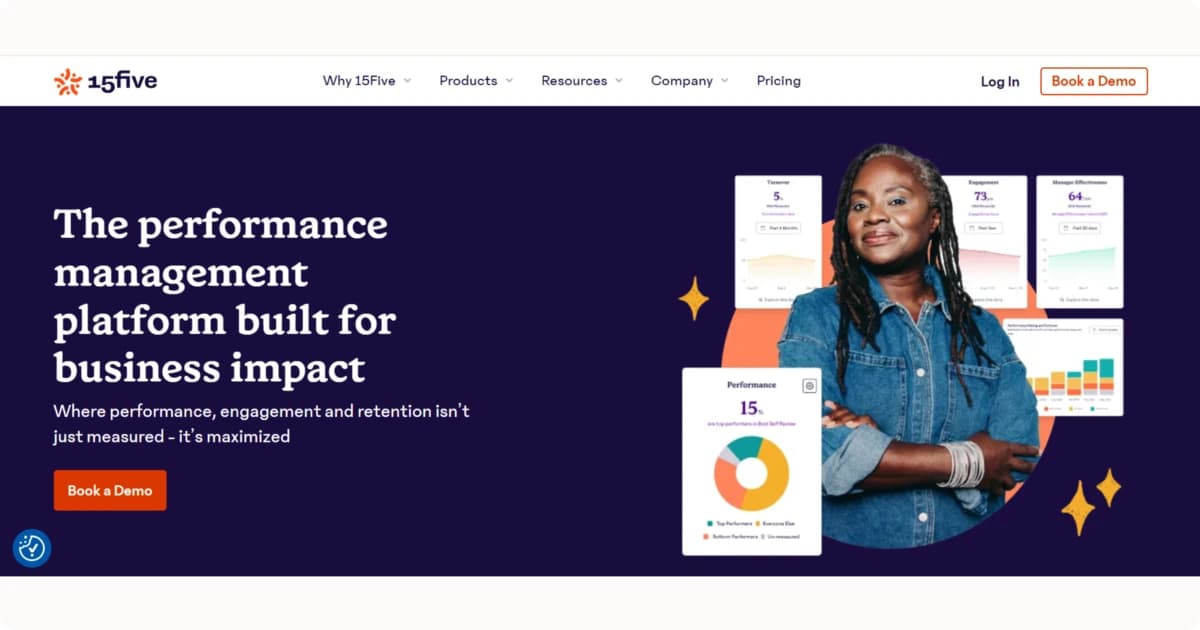
15Five is a strong fit for organizations that want to improve the manager-employee relationship through weekly check-ins, coaching and performance conversations.
Why I picked 15Five
15Five is built around lightweight check-ins that capture wins, challenges, pulse ratings and priorities in a format employees can complete consistently. The Best-Self Review® centers self-reflection and strengths, while manager resources help leaders turn recurring input into better conversations.
Key features
- Weekly check-ins with customizable templates
- Best-Self Review for strengths-based reviews
- Manager coaching hub with training resources
- Peer recognition through High Fives
- Engagement surveys with eNPS tracking
Pros
- Lightweight check-in experience
- Differentiated review approach with Best-Self Review
- Strong coaching resources for managers
- Public entry pricing for Engage and Perform modules
Cons
- Analytics are less sophisticated than some enterprise-grade listening platforms
- Recognition features are basic compared with dedicated strategic recognition suites
- Best fit may be organizations that prioritize manager routines over complex enterprise listening programs
5. Leapsome
Who is Leapsome best for?
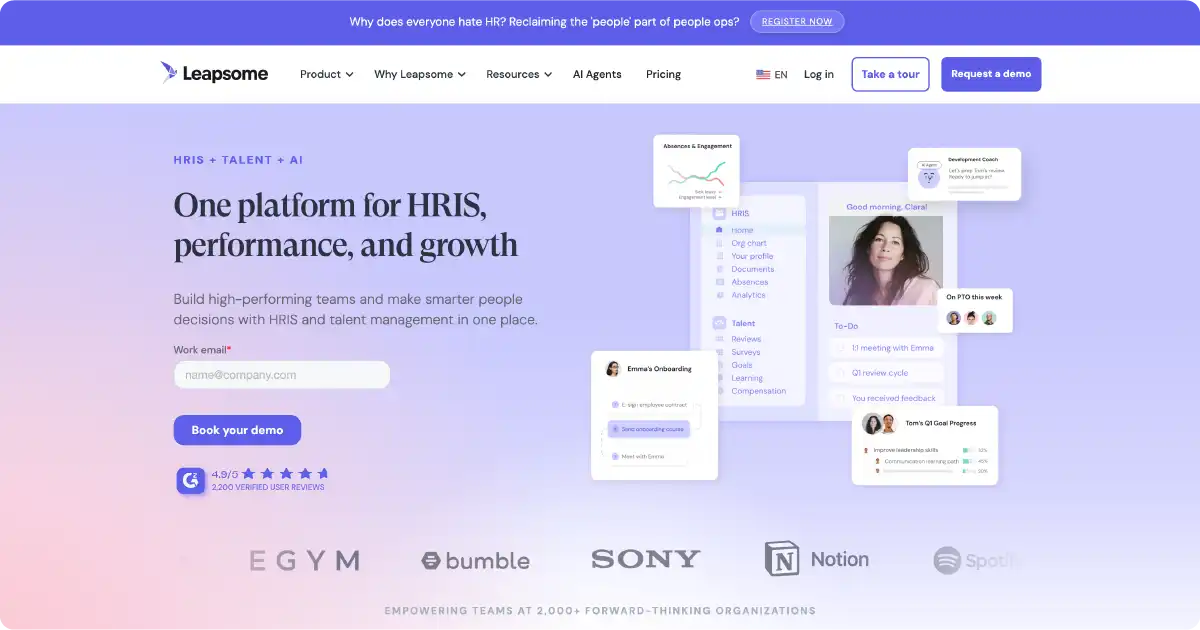
Leapsome is best for European and global midmarket companies seeking an all-in-one platform for reviews, engagement, learning, and OKRs.
Why I picked Leapsome
Leapsome combines 360-degree reviews, engagement surveys, learning paths, OKR tracking and compensation workflows in a single product family. Its modular model appeals to organizations that want to consolidate people enablement tools without giving up depth in core performance workflows.
Key features
- 360-degree reviews with customizable competency frameworks
- Engagement and pulse surveys with AI-generated recommendations
- OKR and goal management with alignment visualization
- Learning paths and course creation
- Compensation and promotion workflows
Pros
- Broad functionality across performance, engagement and development
- Strong fit for distributed and European organizations
- AI-assisted insights can speed action planning
- Modular packaging supports phased adoption
Cons
- Quote-based pricing depends on employees, modules and contract length
- Complex reporting may require support for advanced setups
- Mobile experience may be less central than desktop workflows
Integrations: Slack, Microsoft Teams, Workday, BambooHR, Personio, PayFit, Jira, and SCIM provisioning.
6. Qualtrics Employee Experience
Who is Qualtrics Employee Experience best for?
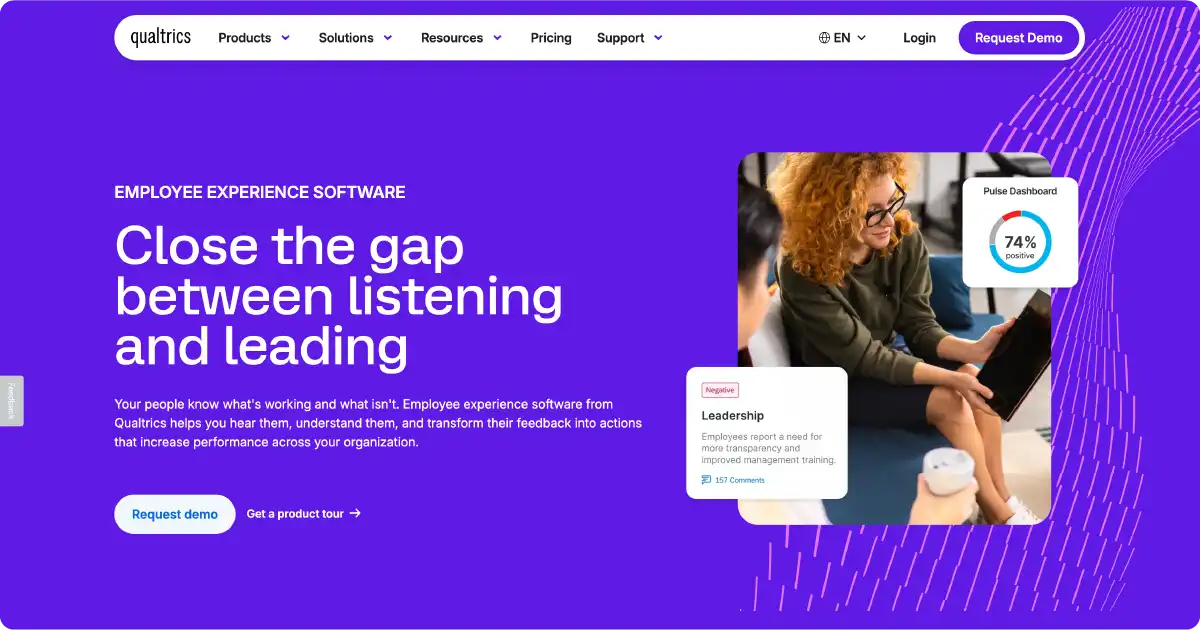
Qualtrics is built for large enterprises that need research-grade survey methodology, advanced analytics and complex listening programs.
Why I picked Qualtrics Employee Experience
Qualtrics is a heavyweight employee listening platform. It supports advanced analyses such as driver analysis, text analytics and predictive workforce insights that can help HR leaders understand broad employee experience patterns. Cross-domain dashboards can connect employee feedback with customer and operational signals for broader business context.
Key features
- Engagement, lifecycle, pulse and ad hoc surveys with branching logic
- Predictive attrition and flight-risk modeling
- Text analytics with natural language processing
- Dashboards linking employee and customer experience data
- Role-based dashboards for executives, HRBPs and managers
Pros
- Advanced analytics environment for enterprise listening
- Cross-domain correlation capabilities
- Flexible survey design and methodology support
- Global scalability for complex listening programs
Cons
- Enterprise pricing and implementation requirements can be significant
- Requires analytics maturity to extract full value
- Continuous check-ins are less central than listening and research workflows
Integrations: SAP SuccessFactors, Workday, ServiceNow, Slack, Microsoft Teams, Tableau, and API options.
7. Workday Peakon Employee Voice
Who is Workday Peakon Employee Voice best for?
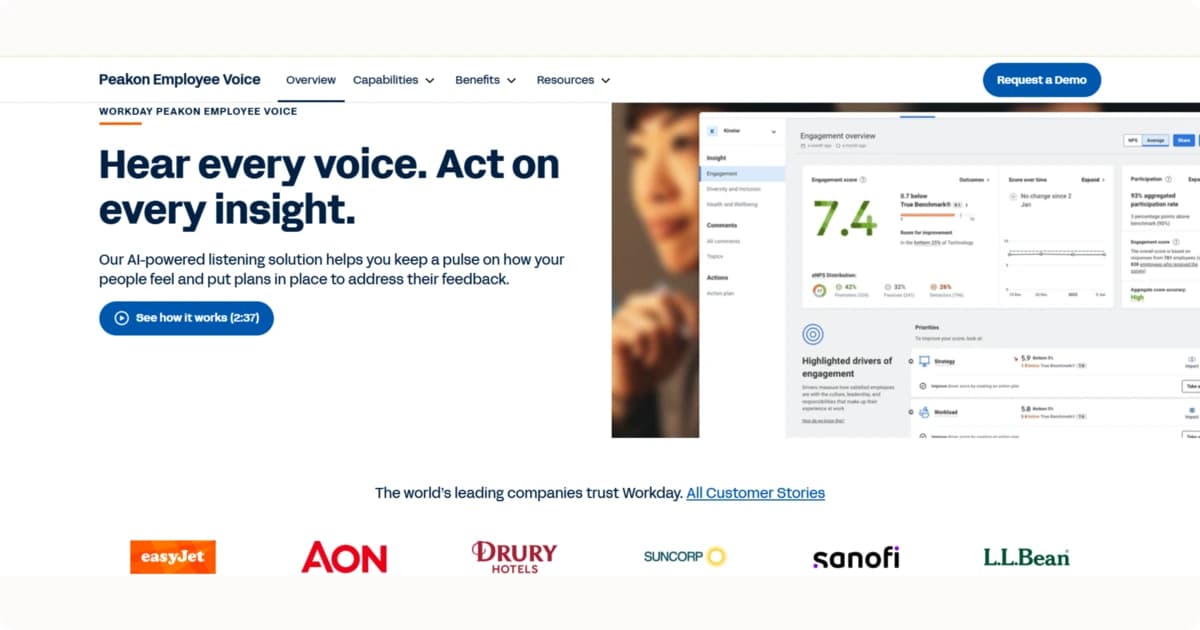
Workday Peakon is a natural fit for organizations already using Workday HCM that want continuous listening embedded in their talent ecosystem.
Why I picked Workday Peakon Employee Voice
Peakon is designed around continuous listening and manager action. Its listening cadence can help reduce survey fatigue, and confidential comment workflows give employees a way to raise issues while allowing managers to respond appropriately. The strongest value appears when employee voice data connects directly to Workday people data.
Key features
- Continuous listening programs and pulse surveys
- Confidential two-way conversation threads
- Attrition and engagement trend insights
- Real-time dashboards with benchmarking
- Driver analysis for engagement levers
Pros
- Strong fit for Workday HCM customers
- Listening cadence helps manage survey fatigue
- Confidential feedback features can encourage honest feedback and growth mindset
- Useful benchmark and driver-analysis capabilities
Cons
- Best value often depends on broader Workday ecosystem adoption
- Less flexible for organizations centered on non-Workday HRIS environments
- Performance review and 360-degree features are not the primary focus
8. Betterworks
Who is Betterworks best for?
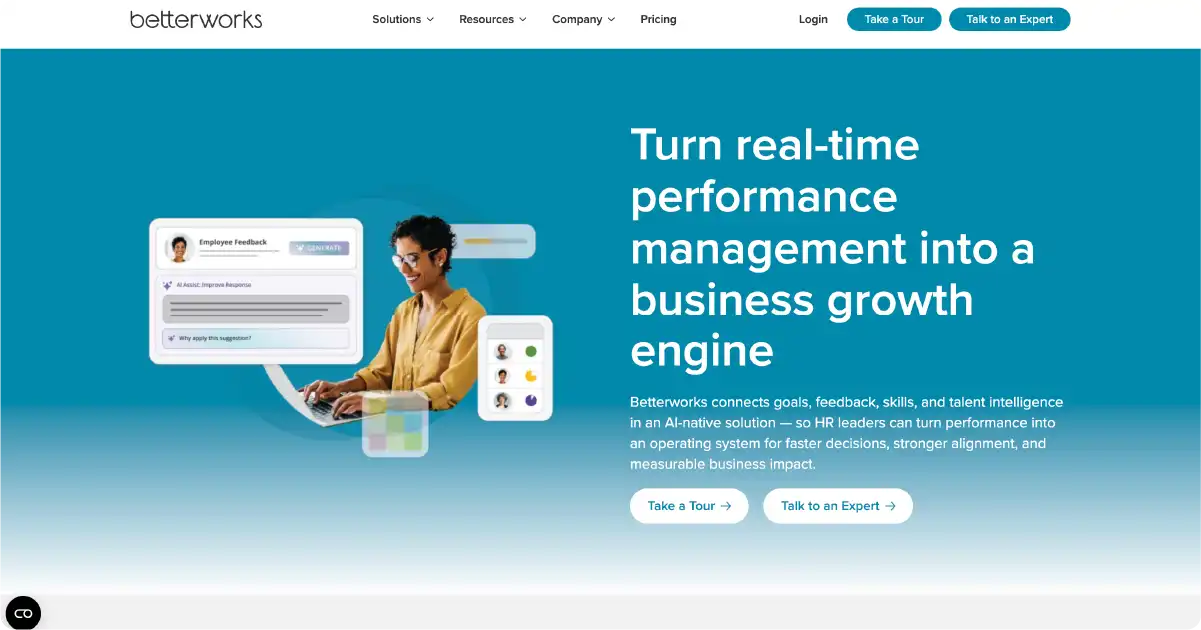
Betterworks is designed for enterprise organizations that want to connect continuous feedback and check-ins to strategic goal alignment and performance calibration.
Why I picked Betterworks
Betterworks stands out for calibration and goal-aligned performance workflows. Calibration sessions, distribution views and manager comparison tools help large organizations create more consistent review outcomes. Continuous feedback tied to goals creates a documented trail that can make formal reviews more useful and less dependent on recency bias.
Key features
- Continuous feedback tied to OKRs and goals
- Calibration tools with distribution and nine-box views
- Structured check-ins with goal progress tracking
- Engagement surveys and pulse checks
- Talent review and succession planning support
Pros
- Strong calibration support for enterprise reviews
- Good OKR methodology and alignment visualization
- Contextual feedback tied to goals
- Enterprise customer success support
Cons
- User interface may feel more functional than modern
- Engagement survey depth may lag dedicated listening platforms
- Large implementations can require significant planning
Integrations: Workday, SAP SuccessFactors, Microsoft Teams, Slack, Salesforce, and SCIM provisioning.
9. Workleap (Officevibe)
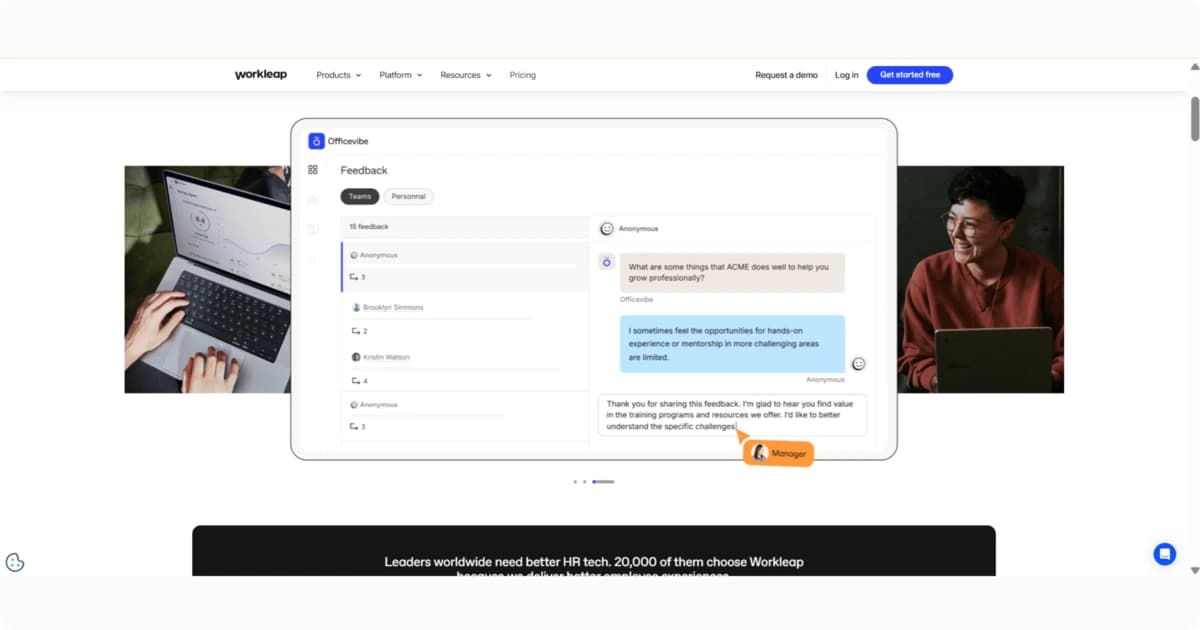
Who is Workleap (Officevibe) best for?
Workleap is a fit for small-to-midsize organizations that want people insights, engagement surveys, recognition and manager tools in a lower-friction package.
Why I picked Workleap (Officevibe)
Workleap now positions its offering around people intelligence, engagement surveys and manager support, with recognition and Good Vibes included in its broader feature set. That makes it useful for teams that want faster time to value than a complex enterprise implementation but need more structure than informal feedback channels.
Key features
- Engagement surveys and feedback workflows
- Recognition and Good Vibes
- Performance reviews and goals
- AI analyses, summaries and chat
- Manager tools and people insights
Pros
- Accessible packaging for smaller organizations compared with large enterprise suites
- Combines engagement feedback with recognition and manager workflows
- Clean user experience for teams starting with listening programs
- Enterprise tier available for organizations above 250 employees
Cons
- Pricing and product packaging have shifted, so confirm the current Officevibe/Workleap configuration
- Analytics may be less deep than Qualtrics or Culture Amp for complex enterprise research programs
- Performance management depth may not match dedicated performance platforms
Integrations: Slack, Microsoft Teams and Workleap ecosystem products; confirm HRIS and API requirements during evaluation.
10. Eletive
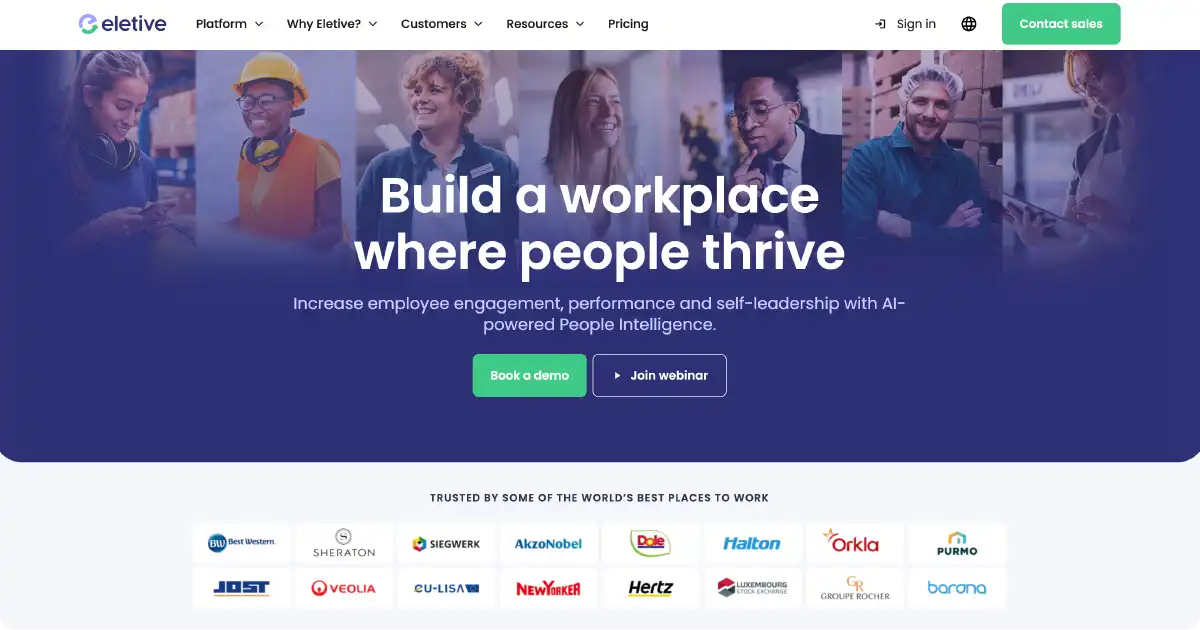
Who is Eletive best for?
Eletive is ideal for organizations that want to empower employees with self-leadership tools and real-time engagement dashboards.
Why I picked Eletive
Eletive focuses on developing organizations and individuals in parallel. Employees can access advice and dashboards, while managers see heat maps, trends and action-planning guidance. This distributes accountability for engagement across the organization instead of leaving HR alone to interpret survey results.
Key features
- Real-time engagement dashboards for employees and managers
- Employee and manager advice
- Pulse and engagement surveys with heat map visualization
- Self-leadership tools and personal development suggestions
- 360-degree feedback, OKRs and 1:1s in higher tiers or add-ons
Pros
- Differentiated self-leadership approach
- Action guidance helps translate insights into behavior change
- Clear heat maps for managers and executives
- European roots may appeal to multinational organizations
Cons
- Pricing requires contacting sales
- Benchmarking depth may be smaller than larger listening platforms
- Performance features may depend on tier or add-on configuration
11. PerformYard
Who is PerformYard best for?
PerformYard is best for midmarket companies that want a clean, focused platform for performance reviews and 360-degree feedback.
Why I picked PerformYard
PerformYard focuses on core performance workflows and does it well. Its flexible 360-degree module supports multi-rater reviews with configurable anonymity and simple review cycle creation. HR teams can launch review cycles quickly, while employees encounter a straightforward interface that supports completion.
Key features
- Flexible 360-degree feedback with configurable rater groups
- Customizable review cycles, including annual, quarterly, and project-based reviews
- Goal tracking with progress updates
- Continuous feedback and recognition
- Employee engagement, meetings, and surveys available as add-ons
Pros
- Simple setup for 360-degree reviews and performance cycles
- Transparent pricing for core performance management
- Responsive customer support and implementation support
- Straightforward user experience
Cons
- Engagement, meetings, surveys and AI are separate add-ons, so full cost depends on package
- Analytics are more basic than data-heavy enterprise platforms
- Limited L&D depth compared with all-in-one people enablement suites
Integrations: BambooHR, ADP, Gusto, Namely, Paylocity, UKG, and API access.
12. Trakstar
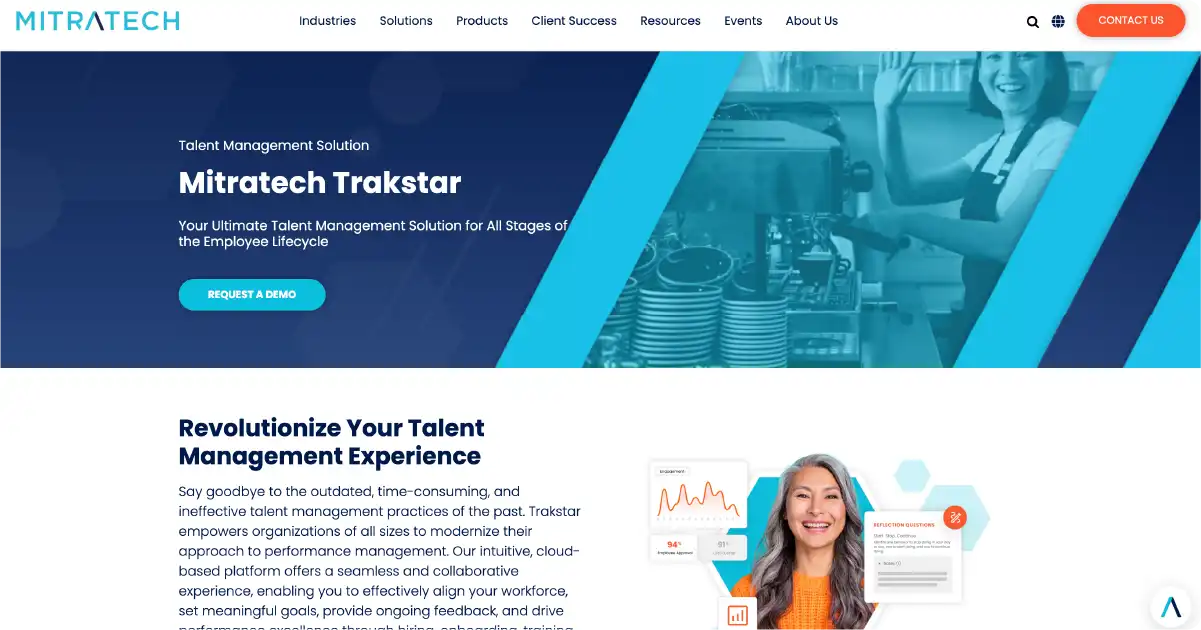
Who is Trakstar best for?
Trakstar suits organizations in regulated industries, government and compliance-sensitive environments that need structured performance reviews with documentation.
Why I picked Trakstar
Trakstar focuses on structured, documentation-friendly performance management. Multi-rater feedback, succession planning and competency-based reviews are supported by audit trails and reporting features that can help organizations with formal review requirements.
Key features
- Multi-rater and 360-degree feedback
- Competency-based review templates
- Succession planning and talent mapping
- Documentation and audit trails
- Goal setting with alignment tracking
Pros
- Strong structure for formal performance processes
- Customizable competency frameworks
- Succession planning adds strategic value
- Useful for organizations with documentation-heavy requirements
Cons
- User interface may feel dated compared with newer tools
- Engagement and pulse survey capabilities are not the central strength
- Pricing requires a personalized quote
Integrations: BambooHR, ADP, Namely, Slack, Google Workspace and API access.
13. WorkTango
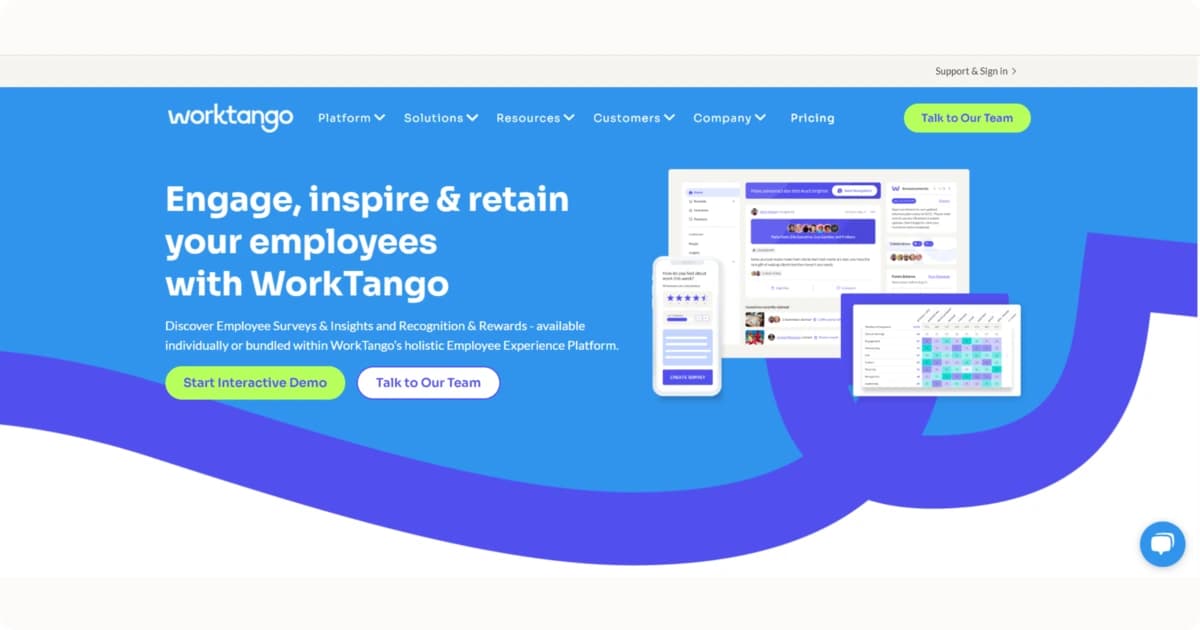
Who is WorkTango best for?
WorkTango is a good fit for organizations that want employee surveys, recognition, and rewards unified in a single employee experience platform.
Why I picked WorkTango
WorkTango combines employee voice with recognition and rewards to reduce point-solution sprawl. Its Surveys & Insights capabilities support engagement measurement, action planning, and anonymous conversations, while its Recognition & Rewards product adds peer-to-peer recognition, incentives, milestones, and a rewards marketplace.
Key features
- Engagement and pulse surveys with analytics
- Recognition and rewards with a marketplace
- Anonymous conversations
- Action planning tools and manager guidance
- eNPS and sentiment tracking
Pros
- Unified surveys-plus-recognition model simplifies HR tool stacks
- Strong fit for organizations that want voice and recognition together
- Rewards marketplace adds tangible choice to recognition moments
- Implementation support for survey design and program rollout
Cons
- Performance review capabilities are less robust than specialized performance platforms
- Initial configuration can feel complex
- Pricing requires requesting a quote
14. Reflektive (PeopleFluent)
Who is Reflektive (PeopleFluent) best for?
Reflektive is best considered by organizations evaluating PeopleFluent talent-suite capabilities or seeking feedback workflows embedded in tools employees already use.
Why I picked Reflektive (PeopleFluent)
Reflektive has historically focused on reducing friction by letting employees give and request feedback in the flow of work, including email and messaging contexts. Because the product is associated with the broader PeopleFluent ecosystem, buyers should confirm current packaging, integrations and roadmap before treating it as a standalone employee feedback tool.
Key features
- Real-time recognition and feedback workflows
- Performance reviews with customizable templates
- Goal management and check-ins
- Analytics dashboards with team and individual views
Pros
- Embedded feedback can reduce friction for employees
- Real-time recognition keeps feedback timely
- Connection to a broader talent suite may add value for existing PeopleFluent customers
- Useful for managers who resist separate feedback tools
Cons
- Current packaging and standalone availability should be confirmed
- Engagement survey features are basic compared with dedicated listening platforms
- Standalone value may be limited without the broader PeopleFluent ecosystem
Integrations: Slack, Microsoft Outlook, Google Workspace, Workday, and PeopleFluent suite.
15. Engagedly
Who is Engagedly best for?
Engagedly is suited for midmarket organizations that want gamification and social elements in feedback, performance and development processes.
Why I picked Engagedly
Engagedly differentiates itself through gamification, recognition, and development modules. Badges, points, and leaderboards can make participation feel more engaging, while mentoring and learning capabilities help organizations connect feedback themes to development action.
Key features
- Gamified feedback with badges, points and leaderboards
- Multi-rater and 360-degree feedback
- Integrated LMS and learning paths
- Mentoring and coaching modules
- OKR and goal management
Pros
- Gamification can encourage participation
- Mentoring module connects talent development to feedback
- Learning tools help turn insight into action
- Modular pricing gives buyers options by use case
Cons
- Gamification may not suit every culture
- Analytics depth is more limited than enterprise listening platforms
- Some modules may feel less polished than specialist vendors
Integrations: Slack, Microsoft Teams, BambooHR, ADP, Gusto, Zoom, and API access.
How to choose the right employee feedback software
The right employee feedback platform depends on what your organization needs feedback to do. Survey-first tools are strong when HR needs statistically rigorous listening programs. Performance-first tools work well when feedback should feed reviews, goals, and calibration.
Recognition-integrated tools are strongest when the goal is to make feedback more human, timely and connected to the everyday moments that shape culture.
For enterprise organizations ready to connect recognition, feedback, and performance conversations, Workhuman Conversations offers a more human path to continuous effective employee feedback. It helps make feedback part of the way employees are seen, managers lead, and teams align around what matters most.
Frequently asked questions
What is employee feedback software?
Employee feedback software enables organizations to collect, analyze, and act on input from employees using pulse surveys, 360-degree reviews, continuous check-ins, peer recognition and anonymous channels. The best platforms also help managers turn insight into development conversations and action plans.
How does recognition-integrated feedback differ from survey-first feedback?
Survey-first platforms begin with structured questionnaires and reports. Recognition-integrated feedback connects feedback to appreciation and everyday recognition moments, giving managers more context for timely, specific, and development-focused conversations.
What features should I prioritize when choosing feedback software?
Prioritize multiple feedback channels, manager enablement tools, analytics, integrations with HRIS and communication platforms, role-based permissions, security, and scalability. Enterprise buyers should also evaluate implementation support, data residency, language requirements, and how easily managers can act on insights.
What is the best employee feedback software for enterprise companies?
The best enterprise employee feedback software depends on the primary use case. Workhuman Conversations is a strong fit for organizations that want feedback connected to strategic recognition. Qualtrics is strong for enterprise listening programs, Lattice and Betterworks are strong for performance-linked feedback, and Culture Amp is strong for engagement analytics.
What is the difference between employee feedback software and employee engagement platform?
Employee feedback software focuses on collecting and acting on employee input across check-ins, reviews, peer feedback and conversations. Employee engagement software often focuses more heavily on measuring engagement through surveys, benchmarks and action plans. Many modern platforms include both sets of capabilities.
Can employee feedback software reduce turnover?
It can help, especially when feedback leads to timely manager action, recognition and development conversations. Feedback software should not be treated as a standalone turnover fix; it works best when paired with strong manager habits, clear career pathways, higher job satisfaction, and a culture where employees see that their input leads to action.

Ryan Stoltz
Ryan is a search marketing manager and content strategist at Workhuman where he writes on the next evolution of the workplace. Outside of the workplace, he's a diehard 49ers fan, comedy junkie, and has trouble avoiding sweets on a nightly basis.
Recommended for you