What’s in and what’s out for 2026?
Our research-backed predictions for the future of work 🔮
The New York Times called 2025 relentless, and I can’t get that word out of my head. Most of us are still processing the whiplash that was the change after change after change that made up last year.
Our latest research, Recognition Playback: 5 Lessons from 2025, further revealed what we could collectively benefit from leaving behind – and what’s even more worthwhile to embrace in the year ahead.
And who doesn’t love (hate?) an annual In/Out list? Below, I’ve unpacked all of Workhuman’s research-backed predications for the new year.
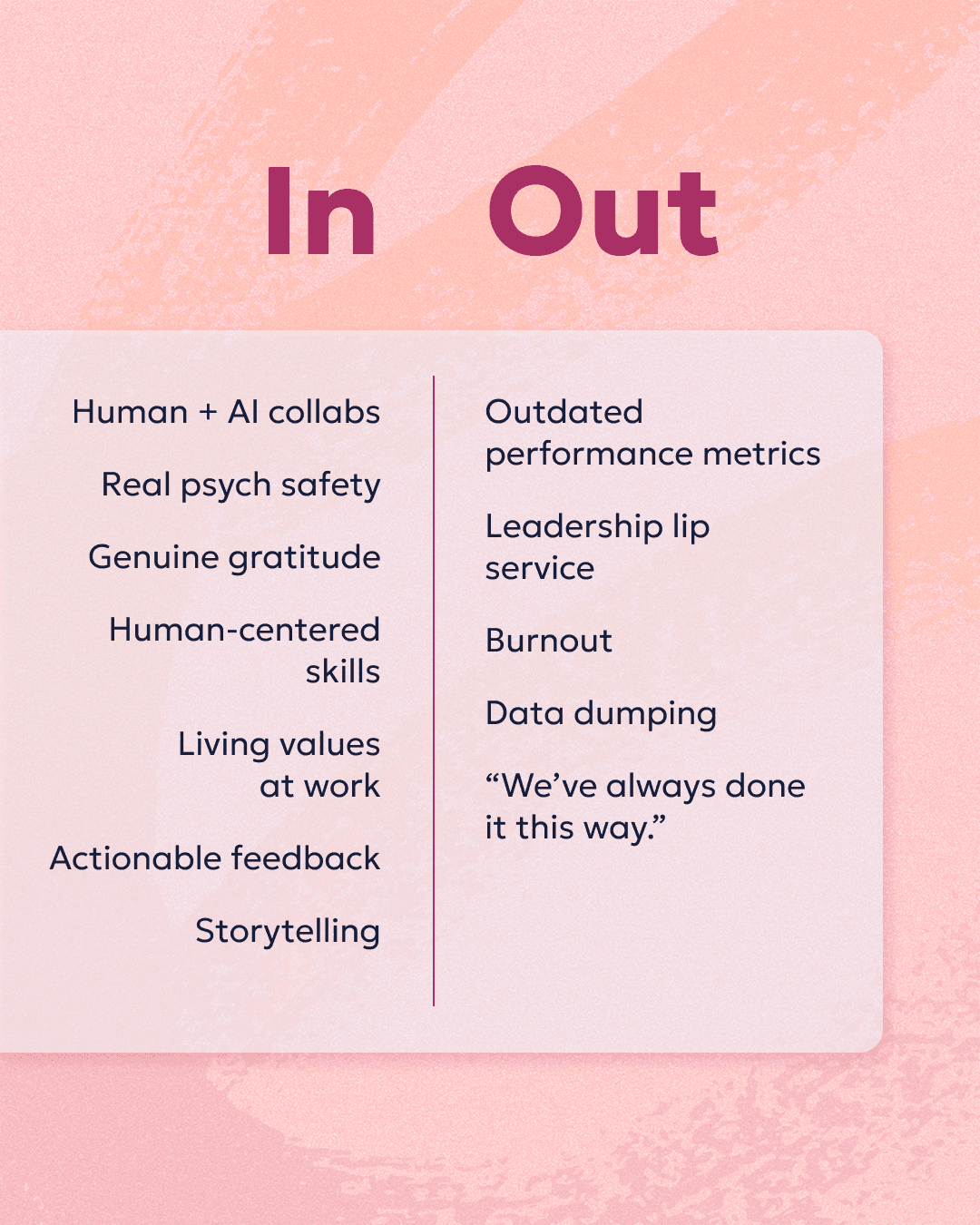
IN: Human + AI collaboration
At the end of 2025, GallupOpens in a new tab found that almost a quarter (23%) of U.S employees frequently use AI at work, and about 10% of those surveyed said they use it daily. In our own review of recognition data, we can corroborate that mentions of ‘AI’ in recognition messages doubled last year. As AI adoption rises, it’s now or never to reflect on how work design will simultaneously evolve. In 2026, we predict human + AI collaboration will transform the way we work in three core ways:
- Redefine how work gets done: The scale and scope of what we can achieve at work is changing. Connection, collaboration, and capability are the three areas that Workhuman foresees the most dramatic impacts from AI in 2026.
- Reshape the structure of work: Leaders at every level can use AI to automate repetitive tasks and optimize information flow. This frees up our time to rethink how we lead as humans – with alignment, inclusion, and shared goals as our guiding principles.
- Create new pathways for leadership: With the right data, AI can systematically build representation by helping leaders match the right skills, people, and technologies to the right problems. This will allow hidden skills and future leaders to emerge.
What human skills matter most in an AI world?
Skills that can't be automated – like creativity or empathy – are the real differentiator in an AI economy. Recognition data from our platform can reveal which human-centered skills are most visible, and how frequently different skills are recognized vs how highly they're valued.
Read up on the top skills of the future in the recent World Economic Forum report (featuring research from Workhuman), New Economy Skills: Unlocking the human AdvantageOpens in a new tab.
OUT: Outdated performance metrics
Behavioral science is redefining how organizations measure and sustain performance – and AI is changing how we collect, analyze, and present that data story. Out are the dense spreadsheets, static reports and KPI soup. In is authentic people data (information captured about and from employees) served up in digestible insights via AI.
What people data are we paying attention to in 2026?
Psychological safety.
We predict a focus on strengthening and quantifying psychological safety for improved outcomes. For example, in our report, Recognition as an Engine for Strategy, we found that:
- Employees thanked in the past month report psychological safety scores 21% higher than those who haven't been thanked recently.
- Employees with high psychological safety are 27% to 40% more likely to understand and align with their company values and strategic initiatives.
Motivation, appreciation, and recognition.
Validated as key drivers of employee engagement, wellbeing, and inclusion, we foresee increased attention to how recognition, motivation, appreciation and rewards will drive desired behavior. In fact, some of our latest research proves that loving recognition drives outcomes. Specifically:
Employees who love their recognition program score dramatically higher on outcomes such as:
- Belonging: 93% vs. 58%
- Engagement: 94% vs. 71%
- Alignment: 91% vs. 65%
- Understanding values: 95% vs. 83%
Value alignment.
Workers who understand their organizations’ values report higher performance, belonging and clarity.
In our report, Recognition as an Engine for Strategy, we found that:
- People who have a recognition program are 17% more likely to understand company values and have 23% higher goal alignment.
- When recognition is connected to strategic initiatives, workers are 129% more likely to understand how their work contributes compared with those whose recognition isn’t linked to strategic initiatives.
- Those whose recognition is linked to strategic initiatives are 5× more likely to feel “very invested” in company priorities.
How are leaders effectively using people data right now?
As AI transforms work and traditional tools fall short, leaders need better visibility into how culture, values, and performance really play out day to day. The People Data Playbook explores how executives at companies like Cisco and bp are using authentic people data to build faster, fairer, and more human organizations.
IN: Storytelling
New and dynamic performance metrics coupled with the arrival of mainstream AI tools are also creating a shift in how we consume the influx of available information. Whether it’s banning PowerPoint decksOpens in a new tab or hiring storytellersOpens in a new tab, the skill of telling a compelling narrative is officially a competitive advantage for businesses.
In 2026, companies (and employees) who thrive will position themselves as authorities who can interpret complex stories and distill the key insights. Less raw data, more expertise.
Here are a few ways Workhuman customers can tell new, impactful stories powered by Human Intelligence®:
Getting ahead of burnout.
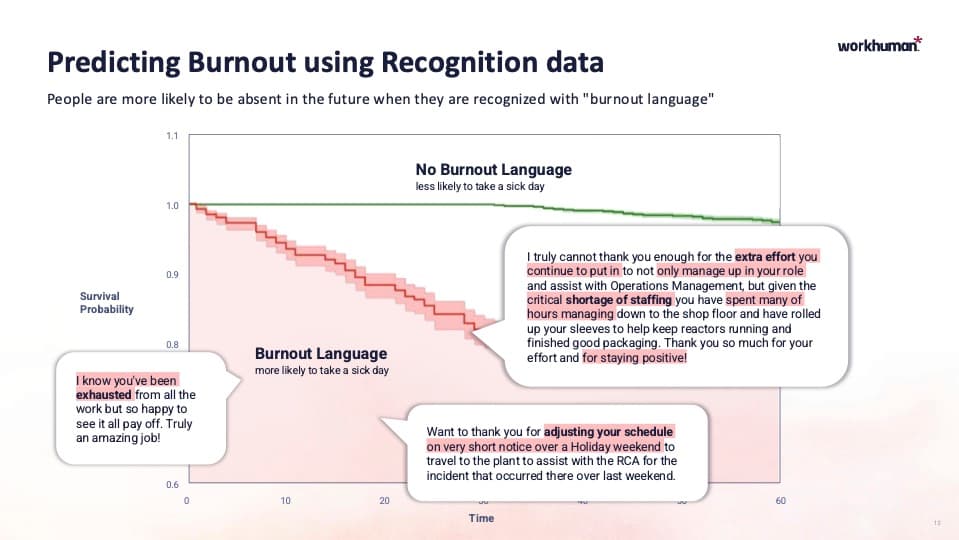
Researchers at Workhuman have found employees are more likely to take a sick day in the future when they are recognized with burnout language. Whether it’s looking at a direct report’s recognition moments for words that demonstrate a strained work-life balance, or using Inclusion Advisor to correct biases that promote an unreasonably high expectations on one another, Workhuman recognition data can be used to help identify and get ahead of burnout before it’s too late.
Mapping cultural alignment to strategic initiatives.
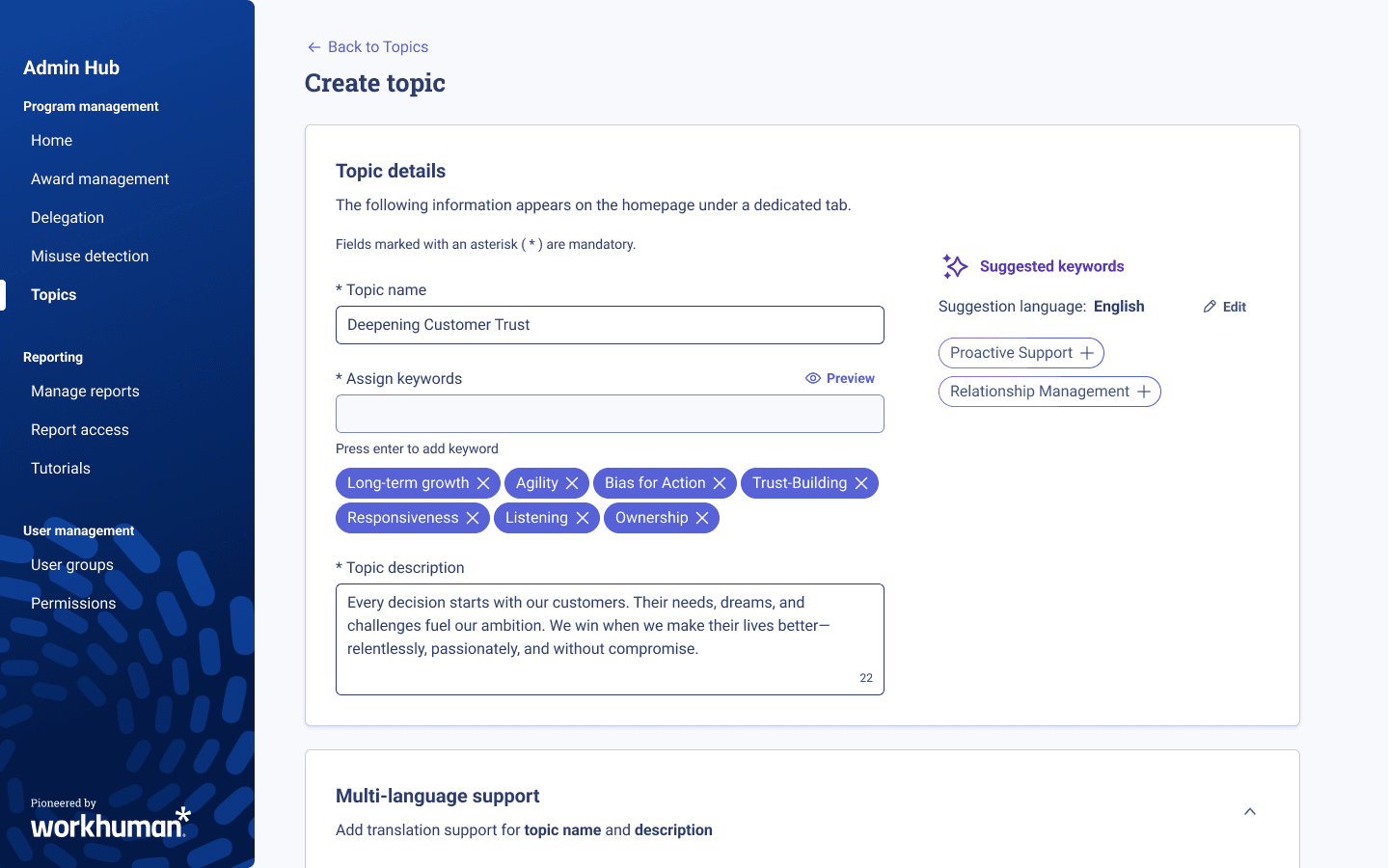
Program managers can now create TopicsOpens in a new tab to track strategic initiatives through recognition messages. Through natural language processing, recognition moments are then collated – revealing the internal champions driving strategic impact and becoming a living map of cultural alignment. Recognition becomes an effective feedback loop: first it reinforces company values, then it provides that added visibility into what behaviors are actually being practiced in the day to day.
Tracking emerging dynamics after an acquisition.
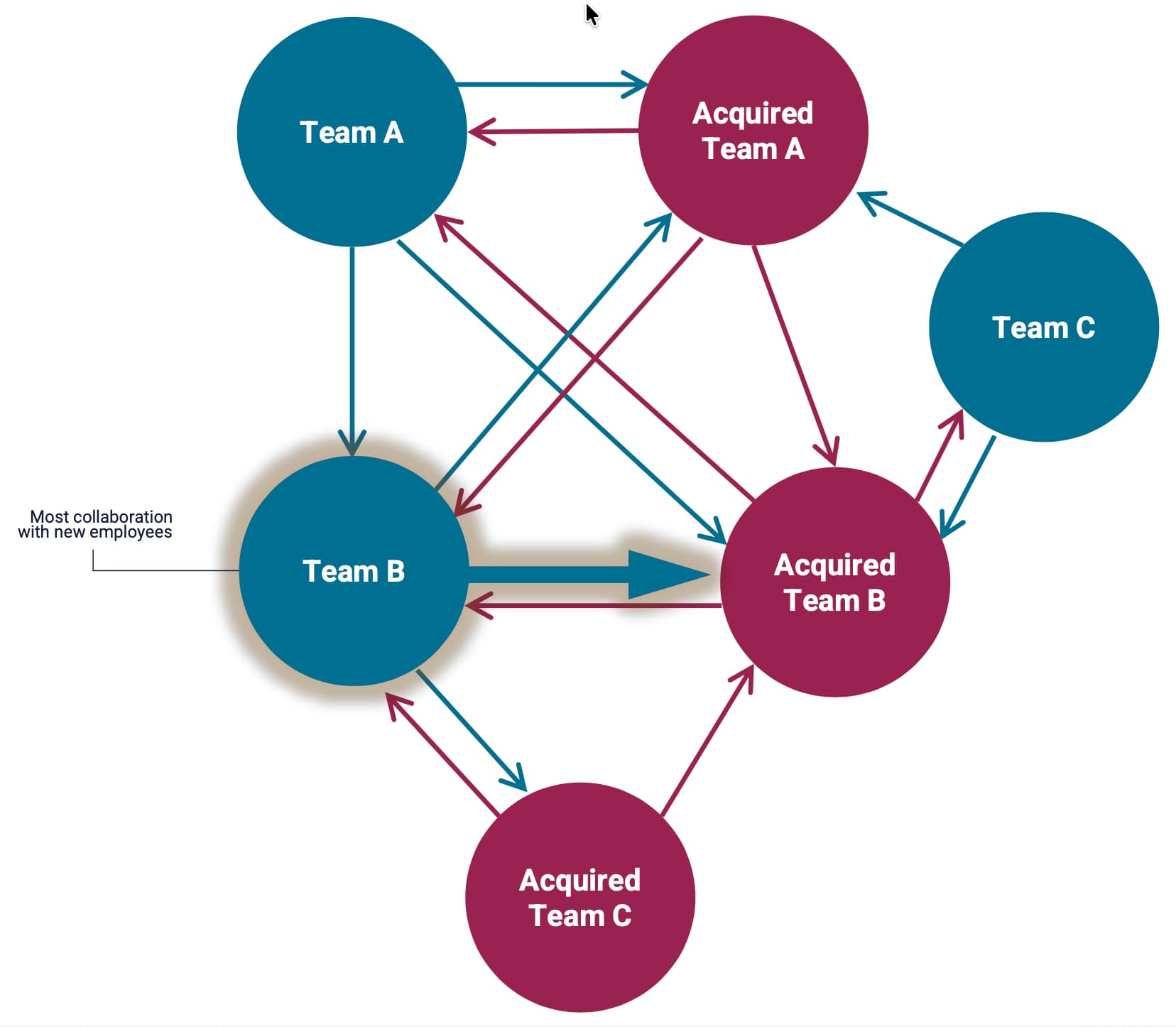
Recognition data can be used to show how work gets done, how connections are made, and how departments are integrating in a time of change. It is a consistent way for individuals and teams to stay connected. Plus, the data is invaluable – giving leadership a clear view of how employees are supporting each other. For this customer, Workhuman data showed that Team B is collaborating the most across newly integrated groups.
“The data we get from the recognition platform is gold. We can see who is being recognized, who is recognizing others, and which countries or business units are using the platform more or less, so we can coach them on using recognition as a culture lever to build trust.”
OUT: Leadership lip-service
"Leadership without moral courage is just weak tea." - Kelly Jones, Chief People Officer, Cisco
We are done with weak tea. Employees by and large want to see courage – and support – in their workplace. How do we know? In our review of 2025 data, the skill most recognized across messages on the Workhuman platform was “supportiveness.”
According to GallupOpens in a new tab, about 70% of a team’s engagement is attributable to their manager. And that influence can be positive or negative – the same study also found the primary cause of the decline in workplace engagement is the decline in management engagement.
Focusing on manager coaching, engagement, and morale isn’t just a worthwhile investment – it’s essential work. Here are three ways leaders can support middle managers, not just with words, but with actions.
Prove culture still matters.
In Deloitte’s 2025 Gen Z and Millennial SurveyOpens in a new tab, researchers found that more than four in 10 Gen Z and millennial workers believe managers are responsible for fostering a positive and inclusive work culture. But only about two in 10 believe that is happening. Senior leaders should prioritize clear communication about goals, transparency and frequent recognition to shape a thriving culture that develops future leaders.
Create opportunities for growth.
McKinsey & Company’s Women in the Workplace 2025Opens in a new tab report notes the arrival of an “ambition gap” – only 80% of women want to be promoted, compared to 86% of men. The report found that uneven sponsorship and career support, a higher citation of personal responsibilities, and promotion penalties for remote working are additional contributing factors to gender inequity at work. To close the ambition gap, organizations must assess and address their root causes of inequity and prioritize fostering opportunities for all employees to advance their careers.
Train new managers.
Unfortunately, less Gen Z workers are aspiring to be managers. In fact, one surveyOpens in a new tab found that 52% of Gen Z employees are intentionally avoiding management. And honestly, we get it. From post-pandemic adjustments, the heyday of remote work, the advent of AI, and the rise of global downsizing – disruptions of work have been relentless. If organizations want to see new leaders rise up, it’s essential to provide guidance and support to emerging leaders in their new roles. To get started, check out The Ultimate Guide to New Manager Training in 2026.
January is the time to lean into all the clichés: reset your intentions, focus in on your goals, and figure out what matters most to you and your organization. If you’re asking me, all these predictions boil down to one throughline: the wellbeing of your people. In 2026, don’t lose sight of the fact that your greatest resource is – and always will be – the humans who make the work possible in the first place.
About the author
Erika Roemer
Erika Roemer is a writer, editor and dog mom to Oscar the Boston Terrier. She oversees the customer evidence and proof points program at Workhuman.