ChristianaCare: How Recognition Connects Patient Care & DEI
Discover how ChristianaCare is exploring the link between recognition and patient satisfaction scores, plus how they’re tapping into Workhuman iQ data, a Microsoft Teams integration, and video recognition to bring recognition to every caregiver.
Social Recognition
Table of contents
- Exploring the link between recognition and patient satisfaction scores
- Leveraging Workhuman iQ data to elevate DEI and wellbeing initiatives
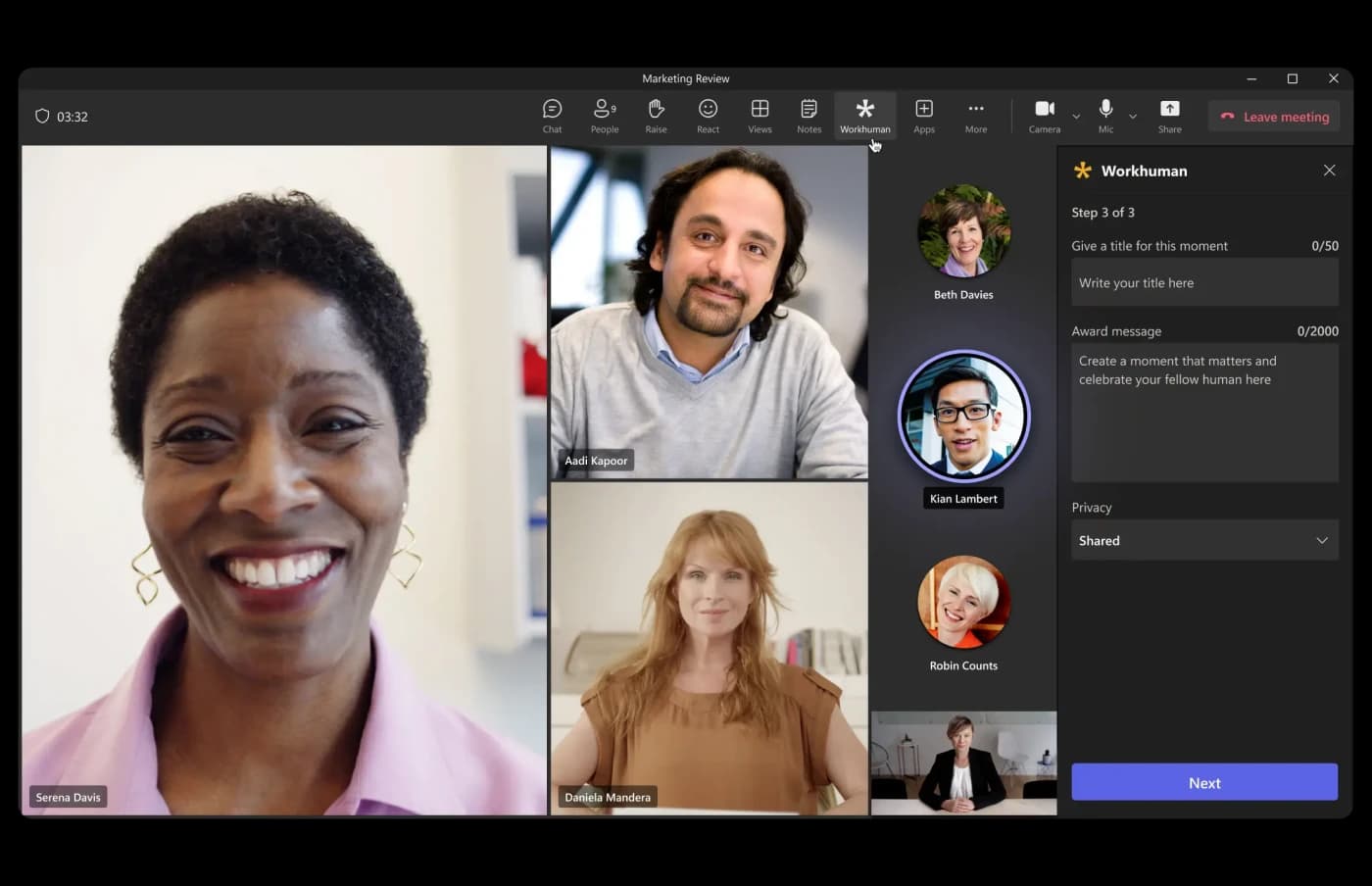
- Embedding recognition in the flow of work for ChristianaCare workers who use MS Teams
- Enabling frontline workers to participate in Social Recognition
Share this article
Headquartered in Wilmington, Delaware, ChristianaCare is one of the largest healthcare providers in the mid-Atlantic region. More than 13,000 caregivers work across three full-service hospitals and numerous other healthcare facilities.
In this interview with Kristin Peters, Senior HR Programs Specialist, she shares how ChristianaCare is using recognition to support its vital caregivers. Keep reading for a transcript of the video interview.
Exploring the link between recognition and patient satisfaction scores
"We know that research says that recognition is an important component of patient satisfaction scores. We also know that in order for our caregivers to take care of our patients, we need to take care of our caregivers. So right now, what we're thinking about is the indirect impact behavior change might have on those scores. For example, if we were to send recognition or use recognition to amplify a really great patient-caregiver experience, would there be an indirect impact to the people who are reading that? Will they learn, and then change their own behaviors as a result?"
Leveraging Workhuman iQ data to elevate DEI and wellbeing initiatives
"The relationship between recognition, DEI and wellbeing at ChristianaCare was actually a very big focus of ours for the last fiscal year. So much so that we wove it into our strategic plan. We actually began having a lot of dialogue with those two groups and and it's really been quite a wonderful journey over the last year with them. We did work together before, but now it's just completely elevated. We cross-promote each other's work in a new way, we share data, we focus together in new and exciting periods. I think about Workhuman iQ, and that's just going to elevate these conversations further."
Embedding recognition in the flow of work for ChristianaCare workers who use MS Teams
"We integrated Teams earlier this year and for the segment of population that uses teams it's very popular, they really enjoy it. I hear all the time from people, 'I love teams. I love doing my recognition there. I'm never going to send it anywhere else now.' It's definitely been really great."
Enabling frontline workers to participate in Social Recognition
"How do you enable employees who aren't at a desk to participate in Bravo? I happen to think that this is an important part of an inclusion conversation because we need to be able to give every caregiver the opportunity to participate in the same way, regardless of where they work.
In healthcare, there's a lot of people who don't sit at a desk all day or they don't get access to their phones until the end of their shift. What we're thinking about right now is: how can we bring gratitude to them?
We're in the middle of piloting the mobile gratitude station—which is really just an iPad on a stand—but the idea is is that we'd be able to take this to areas of the organization where there's low participation rates and take it to places where caregivers are already gathering in large numbers, like a big meeting for example.
The other really nice thing about this station is that you can have video recordings done on an iPad really easily and this could be really helpful for people whose preferred communication method isn't sitting and typing out a message.
We also encourage our managers to incorporate gratitude at the end of all their meetings so the caregivers have time to sit and think about who they're grateful for and then have the opportunity to send the message. We ask them to do this because we hear a lot that one thing that people need is time to be able to sit and do that. If you're at a role that doesn't have a computer in front of you all the time and you don't have the time to sit and think about it, being able to do that at the end of the meeting is really just a gift."
This transcript has been lightly edited for written clarity.

“How do you enable employees who aren't at a desk to participate in Bravo? I happen to think that this is an important part of an inclusion conversation because we need to be able to give every caregiver the opportunity to participate in the same way, regardless of where they work.”
Recommended for you