
Cultivating Team Health: A PETALS Approach
by Greg Hanley
Last updated
2 min read

Table of contents
- Introduction
- PETALS Framework - What is it?
- What exactly does it measure?
- How PETALS Works
- Implementation Steps:
- Wrapping Up: What to Expect
Share this article
“Imagine our engineering department as a collection of gardens, each yielding beautiful (healthy) blooms alongside some pesky weeds. Instead of tackling the entire garden at once, let's start by tending to our own plot. Together, we'll cultivate a greener, healthier landscape, one step at a time.”
Introduction
Greetings & Salutations!
As an Engineering Manager, I recognise the importance of closely monitoring our Team Health. This ensures we catch any issues early and address them within the team promptly.
To help me monitor team health, I took some time to investigate existing solutions which are:
- Effective
- Proven
- Seamless
- Low-investment for participants
- Anonymous
- Actionable
- Repeatable
From this, I came across the PETALS Framework, created by Si Jobling.
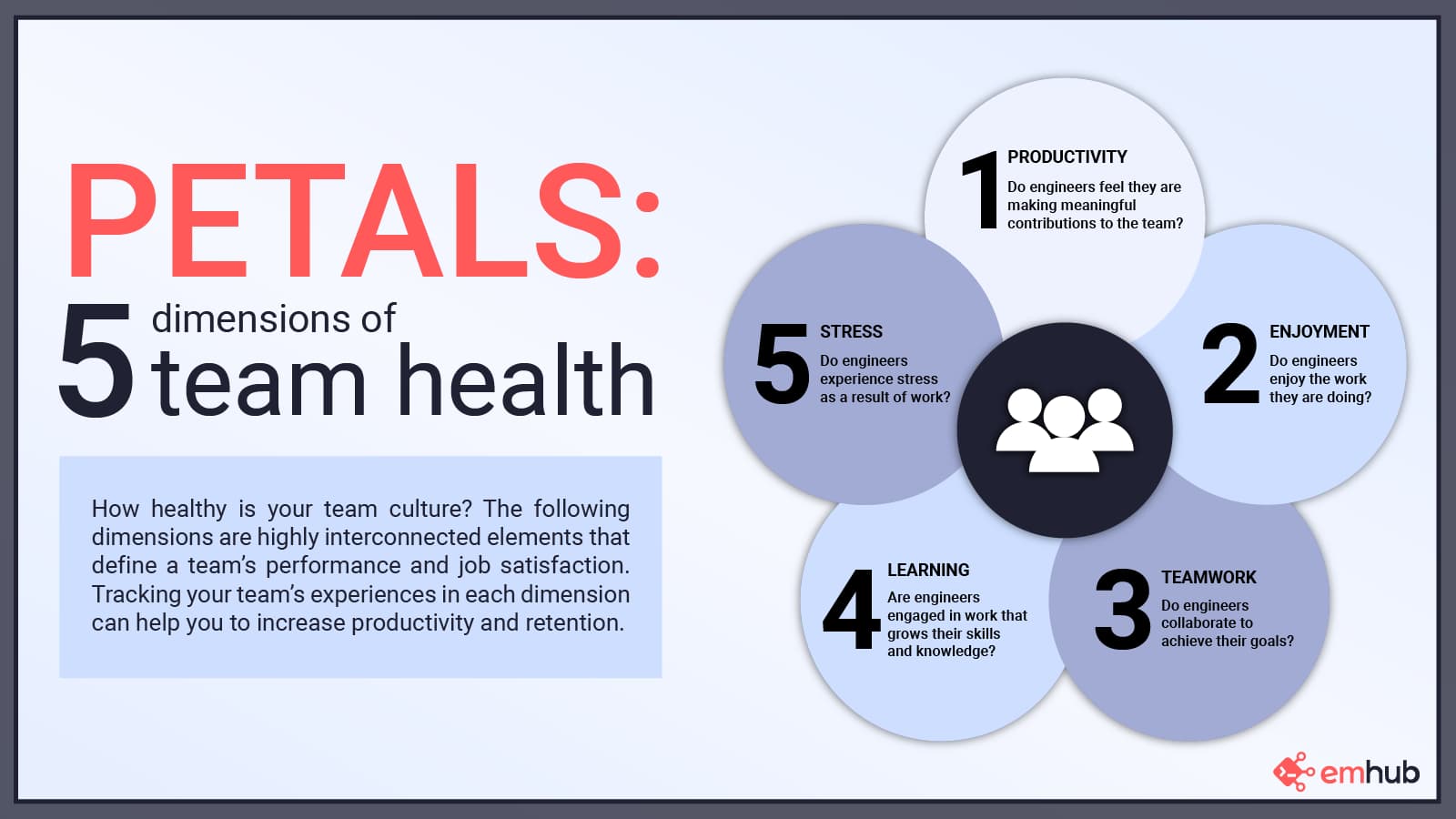
Image credit: https://sijobling.com/petals/
Si Jobling is an experienced Tech Leader, and leveraging his knowledge made this framework a compelling option for us at the squad/team level. This framework stood out as a compelling option for enhancing team health at the squad/team level. I want to share this with you because I believe it can significantly benefit your teams by promoting continuous improvement and fostering a healthier, more productive work environment.

PETALS Framework - What is it?
- Simple framework to help Engineering Teams become more aware of their overall health.
- Data-informed for continuous improvement and enhancing team health.
- Fuel for conversations amongst the team in Retrospectives and other team ceremonies.
What exactly does it measure?
PETALS represents key areas of Team Health measurement:
- Productivity
- Enjoyment
- Teamwork
- Autonomy*
- Learning
- Serenity - Originally “Stress”, but we felt a high score for “Serenity” would indicate low “Stress”.
*Not implemented, 5 core metrics used.
These measurements help us identify and address real problems, driving improvement and fostering a healthier work environment.
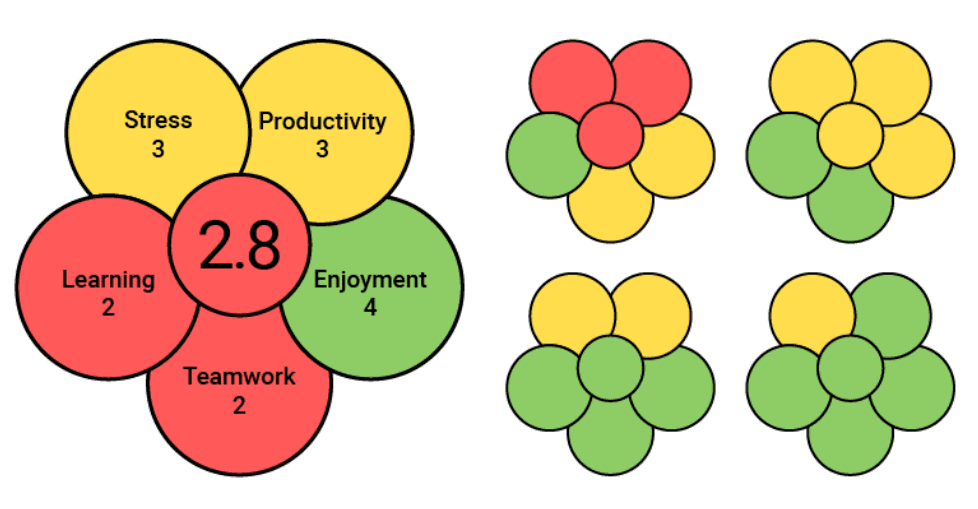
Image credit: https://sijobling.com/petals/
How PETALS Works
At Workhuman, we deployed PETALS with a blend of automation and manual effort, using a fortnightly cycle. Here’s how:
- Microsoft Forms - Creation of the lightweight PETALS survey.
- Microsoft Excel - Persistence of the survey results, which is automatically populated through the integration with the Microsoft Forms.
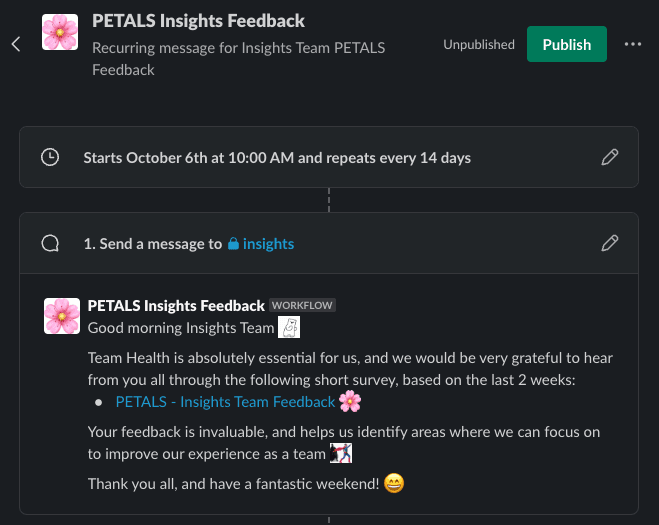
- Slack - Automated delivery of the PETALS Survey on a once-per-sprint/fortnightly cycle
- Miro/LucidSpark - Presentation of latest results, used alongside our Retrospective sessions to fuel conversation and discuss opportunities for improvement at the squad/team level.
- Confluence - Documentation of results for posterity, enabling a single view of trends and ongoing PETALS survey results.
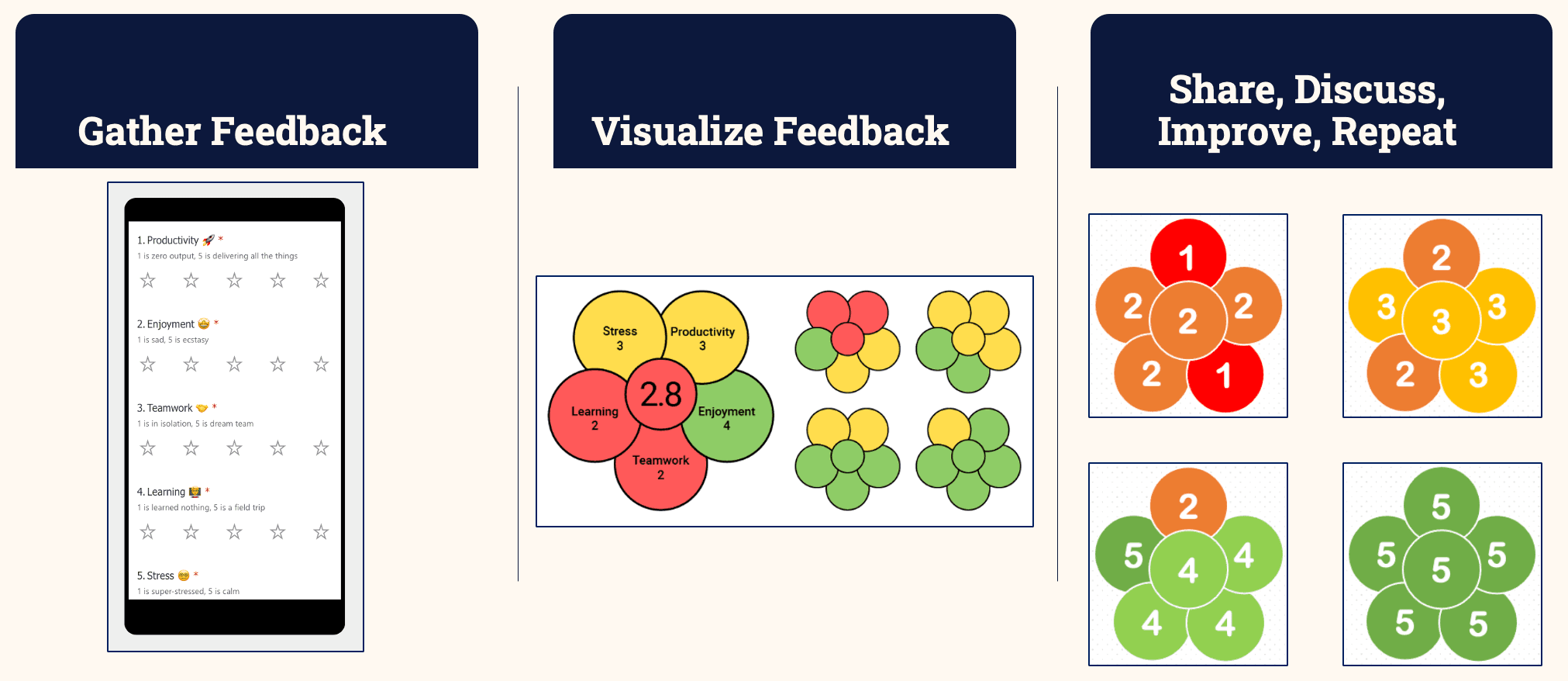
Image credit: https://sijobling.com/petals/
Implementation Steps:
1. Gather Feedback
Slack Workflow in place to deliver PETALS survey link (Microsoft Form) every 2 weeks (end of Sprint).
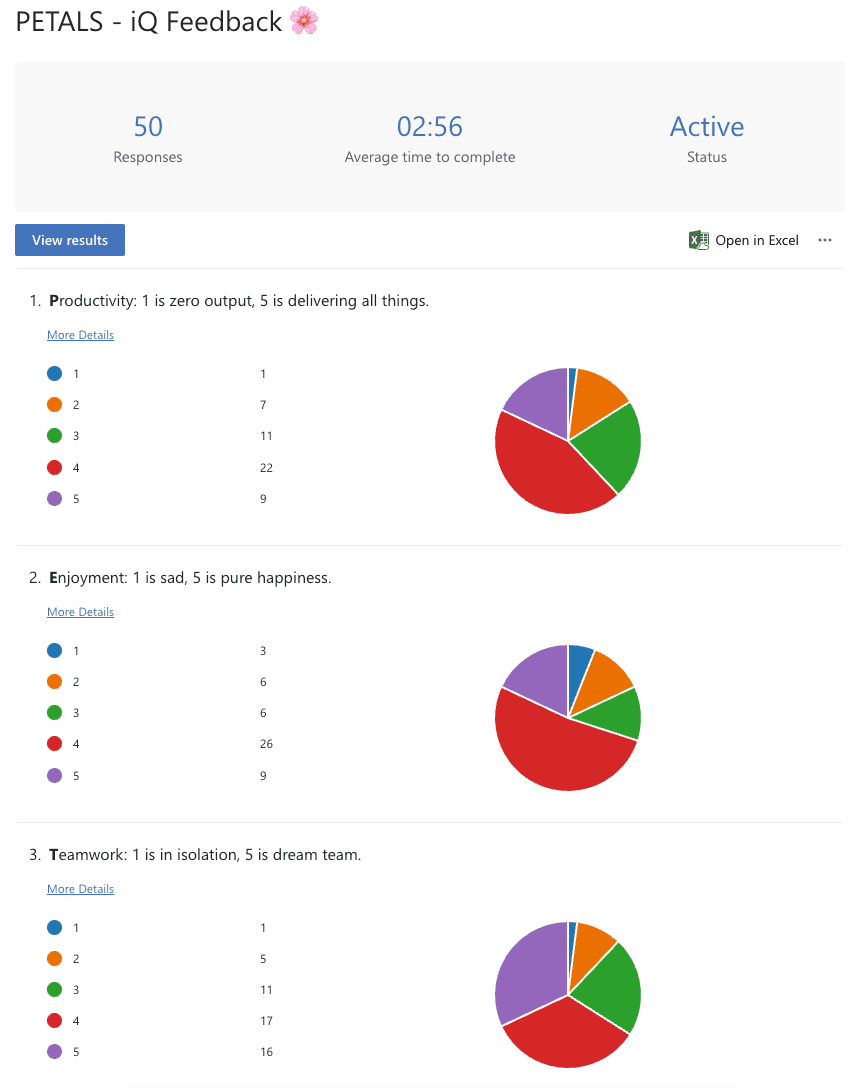
2. Visualise Feedback
Gather results from latest PETALS survey responses, ahead of team Retrospective.
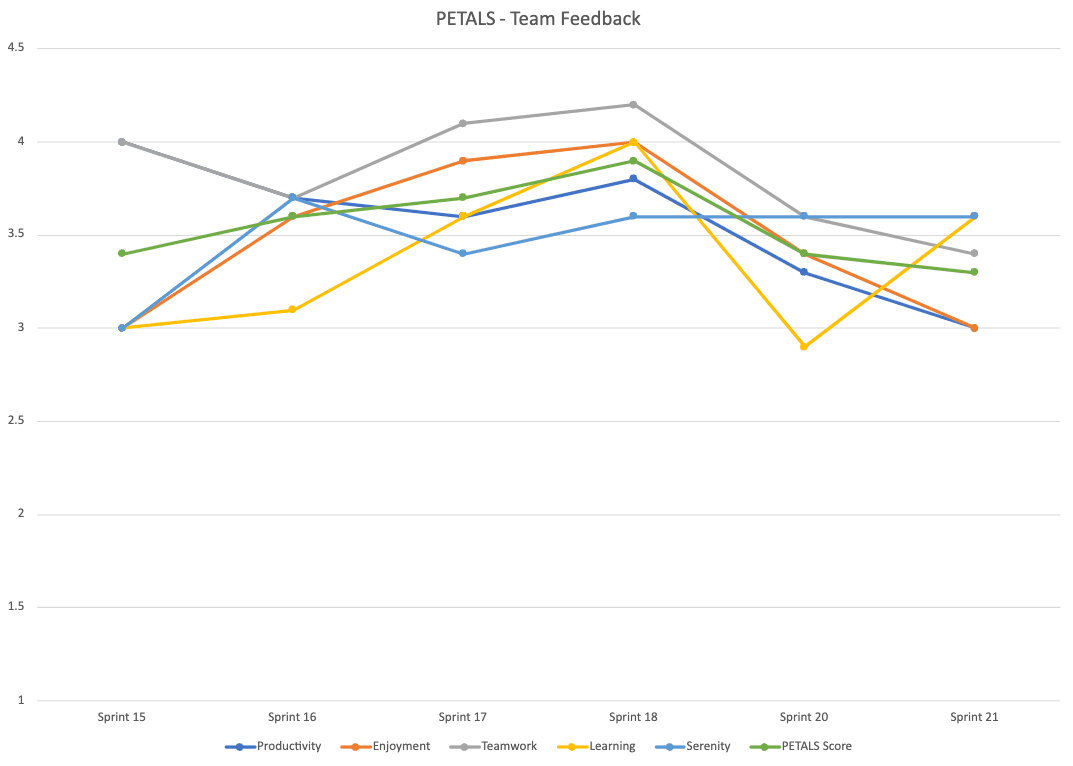
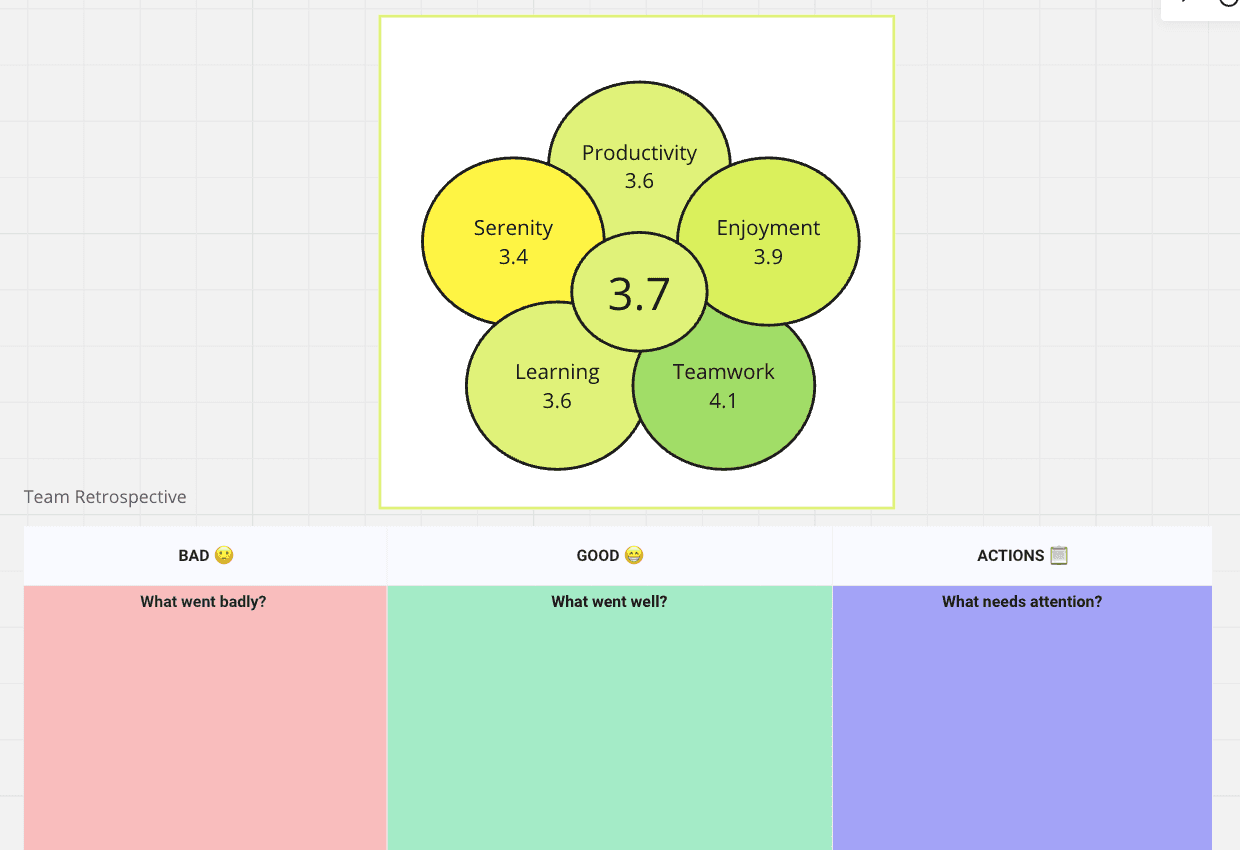
3. Share, Discuss, Improve, Repeat
- Share the latest results appropriately – e.g. in Team Retrospectives
- Make data-informed decisions to identify gaps and focus areas
- Agree on tangible actions to improve lower-scoring areas
- Repeat at the end of next sprint (e.g. 2 weeks), aiming for continuous improvement and celebrating success!
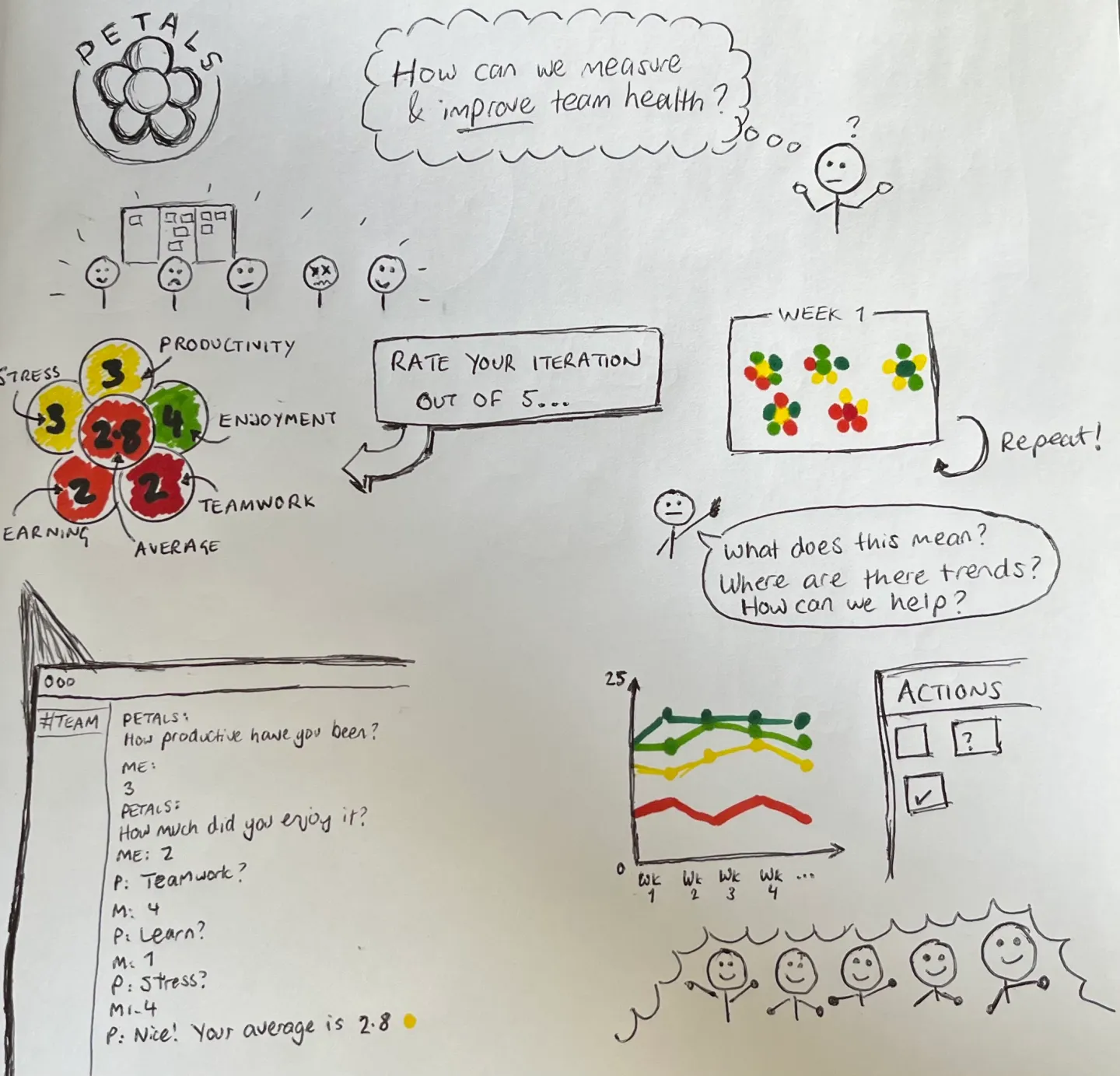
Image credit: https://sijobling.com/blog/pop-petals/
Wrapping Up: What to Expect
The PETALS Framework offers a focused, localised view of Team Health. While external factors and emotional responses can influence feedback, PETALS helps shine a light on problematic areas within the team. It’s not a silver bullet, but it provides a pragmatic approach to improving team health.
Remember, striving for improvement rather than perfection is key to managing expectations and fostering a positive, healthy team environment.
Together, let’s cultivate a thriving engineering team, one step at a time.

Take action on what can be improved- nobody wants their flower to die, or burn entirely!
You must be comfortable with variable results - the flower will die at times, and the flower will bloom again!
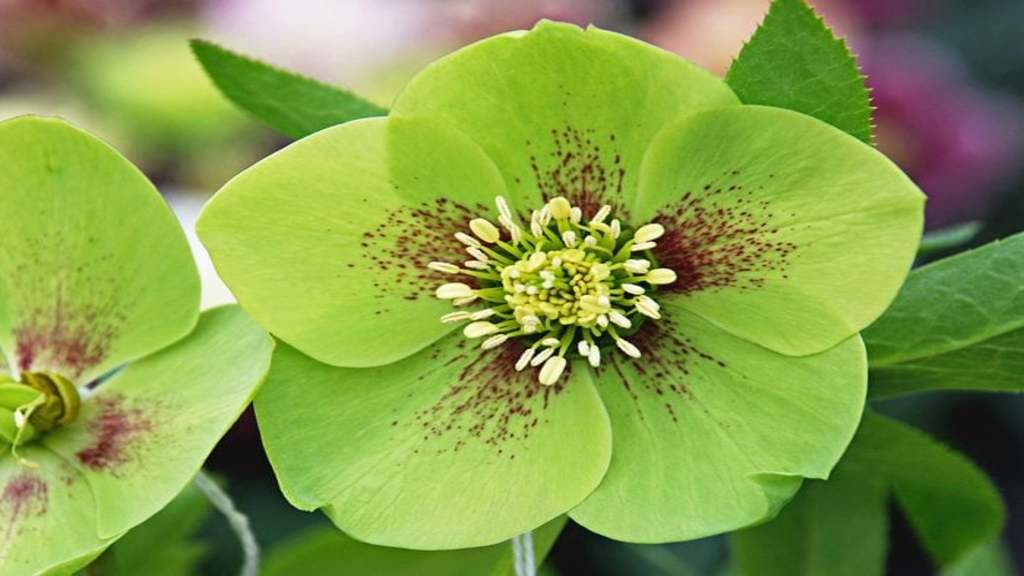
The aim is to take action to move towards a blooming, green flower representing Team Health.