
The Ultimate Guide to New Manager Training in 2026: Courses, Programs, and Best Practices
by Ryan Stoltz
Last updated
11 min read

Table of contents
- What is new manager training, and why is it important?
- Key new manager training topics and essential skills to cover in training
- Types of new manager training programs to consider
- The best new manager training courses available in 2026
- How to choose the right manager training program for first-time managers
- Free vs. paid manager training programs for new managers: What’s the difference?
- How to build a new manager training program
- Choosing the right training program for your success
Share this article
Making the leap from employee to manager involves more than shuffling all your desk decorations over to the fancy corner office. It's a whole new mindset and set of responsibilities.
New manager training gives first-time leaders the skills they need to oversee and engage others. These programs typically focus on interpersonal and leadership abilities that managers need to guide their teams.
For example, someone you promoted internally may already know all your organization's processes inside and out. When it comes to giving feedback, though, they feel lost — or worse, say something harsh. Training gives them the tools they need to thrive in their new role.
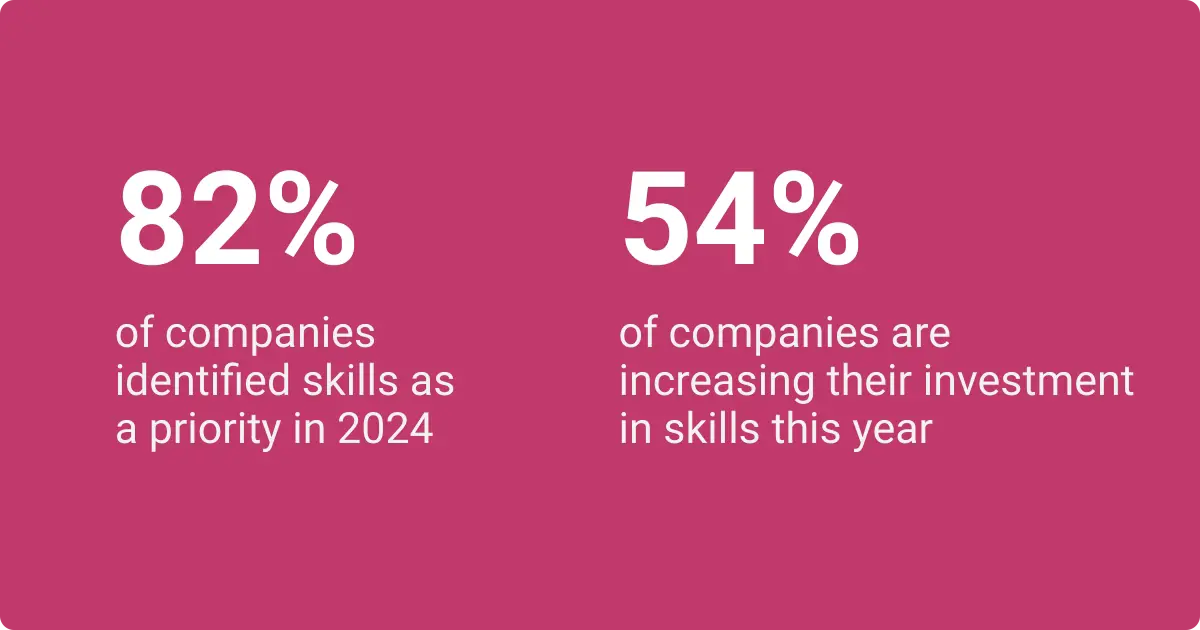
With 54% of companies spending more on skill development, a manager training program is key to developing empowered leaders who can help grow your company and rally their teams.
What is new manager training, and why is it important?
These programs are usually designed for first-time leaders, like a software developer who just got promoted to technical lead. However, new hires who have previously worked in management roles may also benefit from this training.
For instance, a less-than-stellar communicator may have skated by at a small business if their employees learned how to decipher their confusing emails. But put them in charge of a larger team, and suddenly no one knows what's expected of them. Training helps get everyone on the same page from the start.
Proper training builds more successful and inspiring leaders. According to the Center for Creative Leadership article "Why Is Leadership Development Important? 4 Reasons to InvestOpens in a new tab", 86% of managers stated that their overall leadership effectiveness improved after completing a training program.
Good managers also boost employee engagement. As Ben Willmott, Head of Public Policy at CIPD, observes, "Managers who treat people fairly and provide effective feedback and support, while also developing their staff and helping employees to work together, are likely to have happier, healthier and higher performing teams."
Reduced turnover is another benefit of training new managers. The Randstad Workmonitor observes that almost one in three (31%) employees have quit a job because it didn't offer career progression opportunities. When you help your leaders upskill, they're more likely to stick around.
Professional development helps your bottom line, too. ADP Research’s findings from its research note, People at Work, back this - it says that people who receive training are 3.3 times more likely to describe themselves as highly productive. If a team is scrambling to complete a significant project, a strong leader can help them stay focused and deliver it on time.
Key new manager training topics and essential skills to cover in training
Ideally, managers will stay with your company for a long time and keep growing into higher leadership roles. A new manager training program helps them build a flexible toolkit that they can use with any team or project. That way, they're not starting from scratch every time you give them a new challenge.
These core manager skills will help set your new managers up for success throughout their careers.
Leadership skills development and decision-making
Some people may seem like "natural" leaders, but it's actually a skill that takes time and effort to learn. That's why you won't see many kindergartners rallying their classmates to run an illicit candy company on the playground.
Leadership skill building involves more than training managers on giving orders. Start by introducing them to leadership frameworks and styles. These models are blueprints for interacting with and guiding employees:
- Autocratic leadership sometimes gets a bad rap because it gives the manager all the decision-making power. Some people don't like the strict hierarchy, but it's effective during crises and other high-pressure situations that require fast decision-making.
- Visionary leadership focuses on inspiring teams to give their best and work toward shared goals. It's a forward-looking approach that constantly drives employees to achieve a vision, but not in a bullying or forceful way. It's about making people feel purposeful.
- Kotter's model is an eight-step process for leading change. It involves building momentum, overcoming barriers, and turning short-term wins into permanent transformation.
- The Prosci ADKAR model is another framework for managing major changes. It stands for Awareness, Desire, Knowledge, Ability, and Reinforcement.
Encourage new managers to choose leadership styles that fit their personality and your organization's needs. An avid rule follower may love the structure of Kotter's model, while an enthusiastic extrovert could thrive as a visionary leader. Similarly, an autocratic style may suit a manager in charge of a massive concert, but frustrate employees at a creative agency.
Managers also spend a significant amount of time making decisions, from choosing how to solve a tricky client problem to picking who to schedule for a Christmas Eve shift. Teach practical techniques, such as:
Give your trainees the opportunity to practice these tactics with role-playing games and simulations.
Communication skills
If you've ever tried to interpret a garbled memo or vague feedback, you know that effective communication is absolutely essential for managers. Without it, employees may feel confused or even struggle to complete tasks.
A training program should cover these communication skills for workplace success:
- Active listening: Good communication is a two-way street between managers and team members, not an endless deluge of orders. Teach managers how to pay close attention to body language and engage with the other person's message. If an employee says a project is going well, but their eyes get shifty, it's time to ask follow-up questions.
- Giving constructive feedback: Strong communicators provide detailed and specific feedback in a collaborative, not critical manner. Say, for instance, a team member isn't pulling their weight on a project, and other employees feel resentful. "Let's brainstorm ways for you to contribute more to the social media campaign" will likely get a better reception than "Can't you see that you're letting everyone down?"
- Negotiation: Even the best collaborators can disagree about priorities or how to approach a problem. Great managers listen to all sides and help them reach a compromise that works for everyone.
- Written communication: Give new managers tips for writing clear and concise memos, reports, and other documents. Templates can help them learn the expectations of each genre, while AI grammar tools prevent embarrassing typos, like "Happy Frday!"
Time and task management
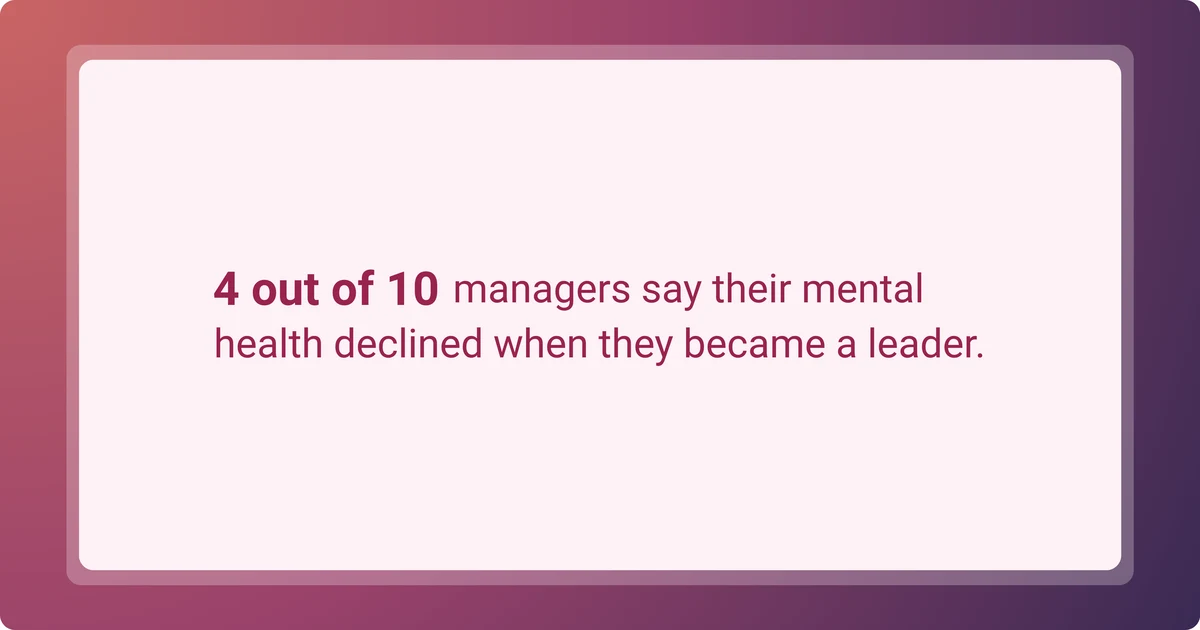
Let's face it: Stepping into a management role can be a fast track to burnout and frustration. The Deloitte Insights article, ‘Is there still value in the role of managers?’, stated that four out of 10 managers say their mental health declined when they became a leader.
Learning how to balance tasks can help new managers stay on top of their responsibilities and feel less overwhelmed. Encourage them to use tools like the Eisenhower MatrixOpens in a new tab to decide which tasks to focus on and in what order. Answering an urgent client email? Do it right away. Meanwhile, ordering printer toner or following up with a vendor can get delegated.
The Pomodoro technique is another highly effective time management hack. It alternates periods of intense focus with short breaks, helping leaders power through their to-do lists. You should also encourage managers to set healthy work-life boundaries. No 3 a.m. emails or weekend work marathons.
Performance management skills and feedback
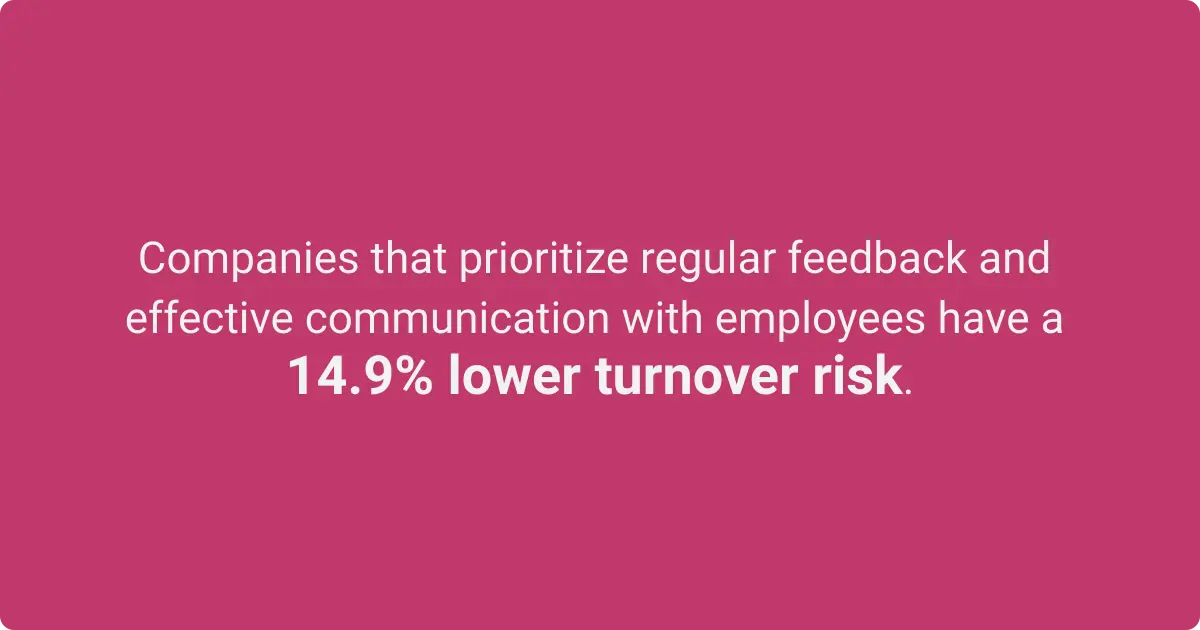
Constructive feedback is a gift. When shared tactfully, even criticism can build trust and strengthen the manager-employee relationship. However, providing genuinely useful insights isn't always easy, especially for new leaders. Keep it strictly positive, and the employee won't know how to get better; say something too harsh, and they might shut down completely.
Start by using the SMART framework to set specific and measurable goals together. For example, a junior sales representative may aim to make $20,000 in sales this quarter or connect with 30 new leads in January. Based on these goals, managers can choose appropriate metrics — such as revenue or number of consultations — to track their performance.
Share coaching models for managers to help them navigate these discussions tactfully. The GROW model, for instance, has four steps: Goal, Reality, Options, and Way Forward. This simple approach keeps conversations positive by focusing on productive solutions, not what the employee is doing wrong.
Experienced managers can also recommend career development opportunities for employees, so they have tangible resources to help achieve their goals.
Team building and motivation
Have you ever worked in a team where everyone is in sync and enjoys working together? That doesn't happen by accident. A great manager was probably at the helm, motivating all the members to collaborate.
Here are a few tactics that new managers can use to build a positive work culture:
- Use recognition software to celebrate small wins, and invite all employees to shout out each other's successes.
- Invite workers to self-organize into informal teams when they need to solve problems. For example, two employees could band together to address a client's complaint quickly, instead of waiting for the manager to delegate tasks. That's a more efficient and empowering way of project management.
- Celebrate personal milestones, such as new children and marriages, to build empathy among team members.
Emotional intelligence and conflict resolution
Feelings shape relationships, so leadership training should also nurture emotional intelligence. New managers can use journaling or reflection diaries to become more self-aware of their own feelings and make thoughtful decisions.
When it comes to interpersonal relationships, role-playing exercises are a fun way to build rapport with employees. These scenarios could include conflict resolution scenarios, so employees can practice challenging and understanding each other's ideas in risk-free settings.
Types of new manager training programs to consider
There's no universal right way to teach manager job skills. It depends on your company's resources, preferences, and how much time you want to spend on training. Here are three formats to consider.
Online new manager training courses
When it comes to convenience and flexibility, online programs are the clear winner. Managers can upskill at their own pace, often from the comfort of home. Digital courses are also typically more affordable than paying for an on-site trainer. For smaller organizations that only train one or two managers at a time, this option may make the most sense.
Platforms like the Center for Creative Leadership and the Harvard Business School offer paid manager training. You can also find free options on edX and Coursera.
In-person training for new managers
Face-to-face training may happen on-site at your organization, or you could send new managers to a leadership boot camp. This format offers valuable networking opportunities with other early-career professionals. Plus, trainees can receive real-time feedback for faster growth.
Hybrid new manager training programs
Some organizations combine e-learning with in-person workshops. For example, new managers could complete an online leadership course and attend face-to-face public speaking seminars. This approach offers more flexibility than in-person training and enables you to devote extra attention to the most critical management skills for your company.
The best new manager training courses available in 2026
Manager training programs require a significant investment of time and often money. Research options carefully before you commit. Here are a few reputable options to consider.
Top online courses
Many e-learning platforms offer leadership training, including:
Top in-person workshops and seminars
For a more immersive experience, consider one of these in-person training programs for new managers:
- SHRM Talent: This annual conference offers leadership and talent management training for human resources professionals. Participants can attend events in person or livestream them at home.
- American Management Association (AMA): Take in-person courses on critical thinking, emotional intelligence, and other core leadership skills.
Some professional organizations also offer face-to-face, industry-specific workshops. For instance, McKinsey Academy offers in-person management training for consultants and business professionals. These programs enable emerging leaders to grow their professional networks and learn about management trends in their sectors.
Hybrid programs
Hybrid training gives you the best of both options: the flexibility of online training and the opportunity to form meaningful connections in person. The Harvard Division of Continuing Education and the Innovative Leadership InstituteOpens in a new tab both offer hybrid leadership training.
How to choose the right manager training program for first-time managers
There's no shortage of leadership training courses, but they're not all created equal. Some are designed for high-level execs, while others focus narrowly on one or two skills. Whether you're an aspiring manager or an employer, these considerations will help you choose the right opportunities for development at work.
Assess your needs and learning style
Before you start researching programs, take the time to inventory your current skills. There's no point investing in a public speaking course if you already know how to deliver SNL-worthy monologues.
Rate your proficiency for critical leadership skills, such as:
- Communication
- Conflict resolution
- Emotional intelligence
- Performance management
- Time management
Ask a trusted mentor to look over your ratings and provide feedback. You might score your time management skills as excellent, but your supervisor could say they're only fair (and remind you of that deadline you missed last month).
Consider program format and delivery
The type of management program matters just as much as the concepts and skills it covers.
In-person courses are the most immersive and useful for networking, followed by hybrid programs. However, you may need to travel if there are no programs available in your immediate area.
While some companies will cover these costs, others may require you to pay out of pocket. Weigh the potential return on investment (ROI) — such as a salary bump or promotion — before you pay for anything.
On the other hand, online courses are much more accessible. They also let you learn at your own pace, which is ideal if you're juggling upskilling with your current job. However, you may have fewer opportunities to interact with your instructors and peers.
Compare cost and value
You might assume that the most expensive programs offer the most value, but that's not always true. It all comes down to the skills you need and your career goals.
If you have C-suite ambitions or need industry-specific training, consider a premium program like Dale Carnegie. These institutes often have a strong track record of producing innovative leaders, and they may have robust alumni networks that you can tap into.
After all, the last thing you want to do is splurge on a $3,000 leadership course, only to discover in six months that you're actually more interested in another career path.
Free vs. paid manager training programs for new managers: What’s the difference?
While some new manager training programs are completely free, others charge thousands of dollars for a single seminar or course. Weigh these benefits and drawbacks before you hand over your credit card.
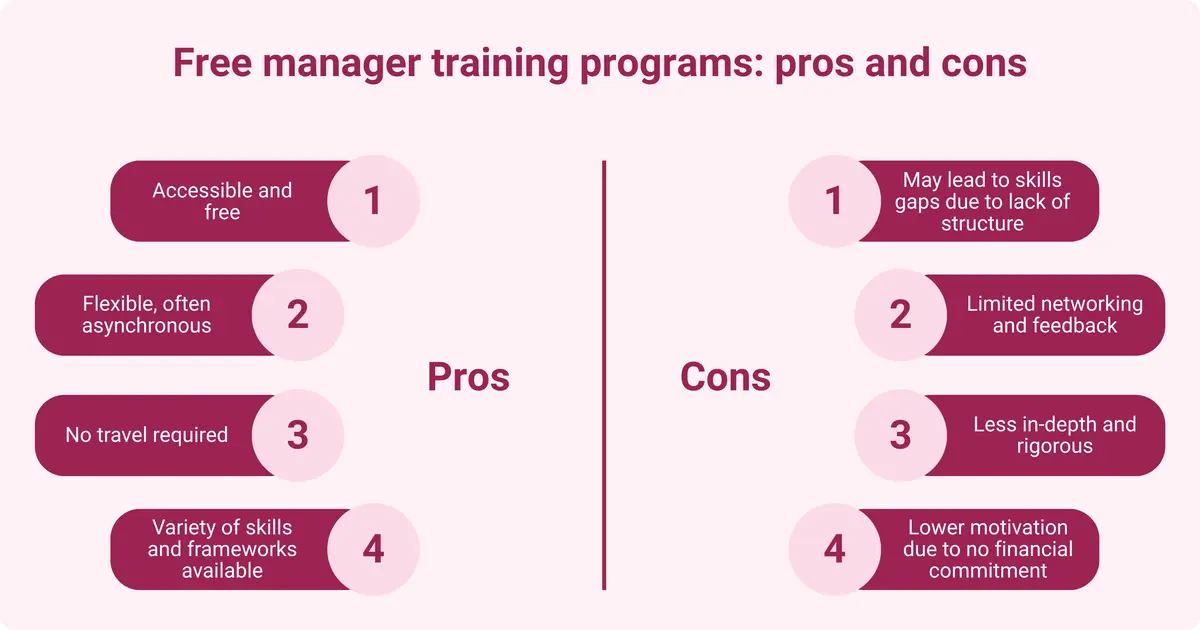
Pros and cons of free programs
Plenty of platforms offer free resources for emerging leaders, including LinkedIn Learning and Nonprofit Ready.
Pros:
- Can explore different skills and leadership frameworks
- Incredibly accessible
- Often asynchronous, which is ideal for busy professionals and career pivoters
- No need to travel
Cons:
- Could lead to skills gaps, especially if you're stitching together courses from different platforms
- Learners may feel less motivated to complete a free course, since there's no upfront investment
- May not be as in-depth or rigorous as paid training
- Often lack a networking component
- Usually, don't include one-on-one coaching or feedback
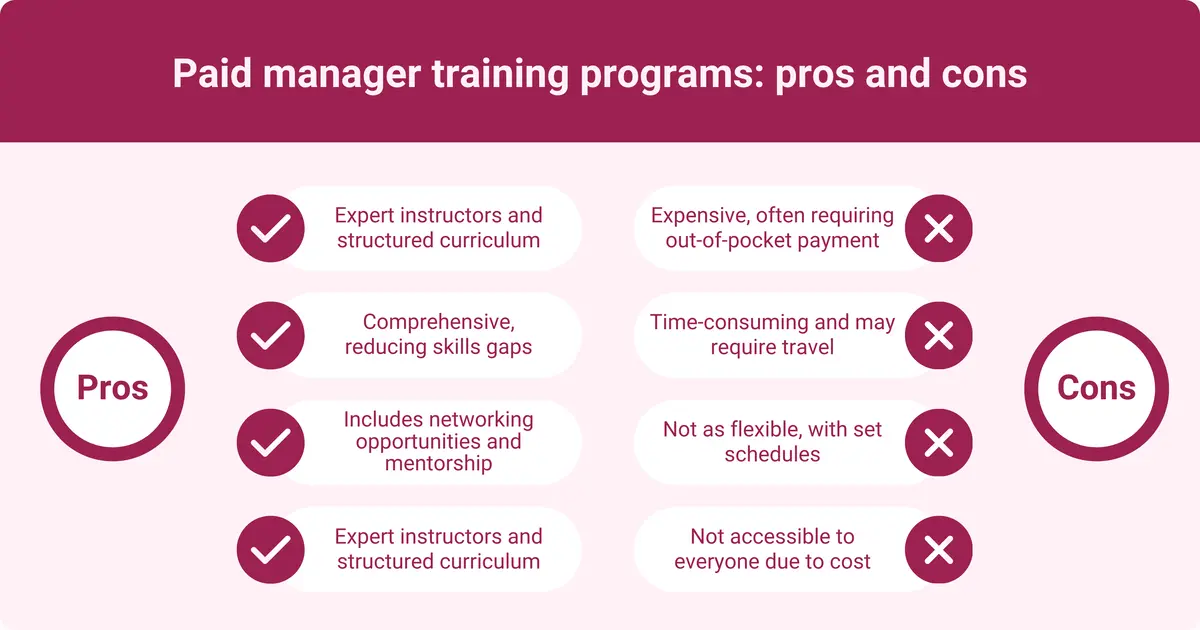
Pros and cons of paid programs
Dale Carnegie, the AMA, and other organizations offer paid training and professional development opportunities for new managers. These experiences could involve one-off workshops or intensive, weeks-long classes.
Pros:
- Get access to expert instructors with extensive management experience
- Have comprehensive curricula, reducing the risk of skills gaps
- Participants typically receive individual feedback and mentorship
- Some offer certifications, which can help your resume stand out to potential employers
Cons:
- Can be pricey, especially for professionals who have to pay out of pocket
- Often require a longer time commitment than a free online course
- May involve travel
- Not accessible to everyone
How to build a new manager training program
If you can't find a program that matches your needs exactly, you could always design one from scratch. This gives your organization total control over the skills and leadership frameworks that new managers learn. It can also help build camaraderie among your leadership team, because everyone will share the same experiences and knowledge.
Here's how to get started:
Define key objectives
Before you begin mapping out the curriculum or mentally rehearsing role-playing scenarios, set clear goals for your training program. These objectives should match your organization's overall needs and mission.
Here are a few questions to ask yourself:
- What sort of behaviors and values does a good manager have?
- What does success look like for a new manager?
- What challenges do our managers face?
Use these answers to shape your goals. Do you want new managers to start innovating right away? Aim to shape them into visionary leaders. If they often struggle to earn team buy-in, focus on developing emotional intelligence.
Identify core competencies
Spell out the essential management skills your leaders need to succeed. These vary between industries and roles. A customer service manager, for instance, needs strong conflict resolution skills to handle irate customers. Meanwhile, a product manager may spend most of their time wrangling cross-functional teams and meeting clients.
Ask your current managers for input. You may assume that strong time management skills are a number one priority, but they actually recommend spending more time on communication.
Choose training formats
You don't need to lock yourself into a single format. Combine in-person workshops for critical skills, such as giving feedback, with online courses. You can also provide one-on-one coaching with a mentor. Mixing up the delivery modes lets you offer more flexibility and helps engage people with different learning styles.
Develop a structured curriculum
Don't bombard your trainees with too much information at once. Break your training up into bite-sized modules that focus on key management areas. A one-week program might look something like this:
Include plenty of hands-on activities, such as case studies and role-playing scenarios. These experiences allow managers to practice their new skills immediately in a judgment-free zone.
Provide constructive feedback and ongoing support
Like any new employee, managers need actionable feedback to improve. Schedule regular check-ins throughout the training program to give suggestions and encouragement. A trainee who's struggling to keep up with the materials, for instance, may benefit from a few friendly time management tips.
Even brief meetings can have a huge impact on morale. Employees who meet their supervisors at least once a week are 1.5 times more likely to be highly engaged.
Use assessments to measure the effectiveness of your training and make sure managers are mastering the concepts. And don't abandon your trainees when the program finishes. Keep providing mentorship and learning opportunities in the coming months and weeks to support their long-term growth.
Choosing the right training program for your success
Hiring a new manager is an investment in your organization's future. A well-prepared leader will inspire your employees and help your company grow, while people without the right skills could damage morale.
Set your leaders up for success with a new manager training program. Look for opportunities that fit their personal and professional goals. Some might jump at the chance to take a writing course, while others want to strengthen their team-building skills.
Take the first step by using Workhuman iQ to recognize your employee's existing strengths and match them with a mentor. Then, figure out your budget and start researching leadership programs that fit.

Ryan Stoltz
Ryan is a search marketing manager and content strategist at Workhuman where he writes on the next evolution of the workplace. Outside of the workplace, he's a diehard 49ers fan, comedy junkie, and has trouble avoiding sweets on a nightly basis.
Recommended for you