
Four Takeaways from Bersin’s New Report: Backed by our Customers
by Erika Roemer
Last updated
3 min read
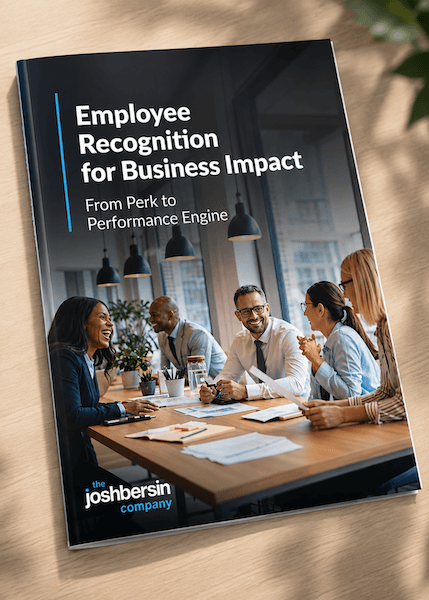
The latest report from The Josh Bersin Company has just been published to our resource center. Employee Recognition for Business Impact: From Perk to Performance Engine investigates just what makes a recognition program most effective, and what high-quality, meaningful recognition can unlock for an organization.
Arch Capital and Micron also talk about their Workhuman recognition program design, the behaviors they encourage, and the culture they’ve built from successful recognition programs. Let’s dig into the four key takeaways from the report, along with the customer proofs that back up those big ideas.
1️⃣ Recognition is an intelligent engine
The paper finds that recognition has become so much more than simply a way for employees to thank one another. In 2026, a strategic employee recognition program helps guide organizations through business changes, improves employee performance, and provides valuable people data to surface workforce trends and insights. The paper cites two real-world examples of how recognition has evolved to support initiatives such as:
Post-merger Integration
"Arch Capital used Applause during one acquisition in which the cutover period was lengthy and involved intense, deadline-driven work. Recognition helped keep teams motivated throughout the integration while reinforcing the behaviors needed for success: collaboration across legacy organizations, ownership, and resilience in the face of ambiguity. At the same time, the platform introduced Arch’s culture and values to employees joining through the acquisition. By embedding core values into recognition moments, Applause demonstrates what matters most at Arch and provides a steady stream of examples—projects, behaviors, and cross-team contributions—that bring those values to life for both existing and newly acquired employees.”
AI and Other Large-Scale Transformations
"Micron used recognition to support its AI transformation by presenting ‘Bravo’ awards to winners of its AI hackathon. This not only provided positive reinforcement to the winners themselves; it also showcased the innovative work of the winning teams across the organization.”

“Recognition allows connection… it’s a way that the recipient can feel valued, appreciated, and acknowledged for the work they do. And it goes a long way toward building bridges, increasing motivation, and enhancing our culture.”
2️⃣ Recognition best practices create more meaningful experiences and richer insights
We spend a lot of time researching what makes recognition most effective. This report validates the best practices we know to be true: a peer-to-peer, funded recognition program that is accessible to all employees drives business results. The report expands on this by highlighting ways our customers are creating meaningful employee experiences:
Make the Program Equitable
“Micron, for example, was intentional about ensuring its Bravo program met the pay equity standards the company has achieved across 18 different axes. To support this goal, Micron uses its platform’s award advisor, along with recognition advisor capabilities for bias and fraud detection, to help ensure rewards reflect the right value, reinforce the right behaviors, and are not influenced by favoritism.”
Allocate Adequate, Flexible Budget for Meaningful Recognition
“Micron allocates a significant funding pool to its recognition program, encouraging employees to spread awards across multiple recognitions rather than concentrating them on one or two larger awards. This approach broadens participation and increases the program’s overall effectiveness.”
3️⃣ Organizations can deliberately recognize strategic initiatives to strengthen outcomes
We know from our 2025 Workhuman Global Research: Alignment that people who have a recognition program are 17% more likely to understand their company values, and 23% more likely to feel aligned with their company's strategic initiatives.
Furthermore, that same research found when recognition is tied directly to strategic initiatives, employees are 5× more likely to feel very invested and 129% more likely to understand how their work contributes to overall success in achieving those goals. To make those stats a reality, organizations must be intentional about their recognition program design, and how they tap into recognition to support their larger business strategies. The report highlights several key factors, including:
Align Recognition to Core Values and Business Priorities
“Micron and Arch Capital have core values embedded in their recognition platforms. They are also using recognition as a key motivator behind major business priorities such as AI hackathons, technology rollouts, and other highly cross-functional initiatives, keeping employees motivated and engaged in the projects that matter most. Advanced analytics then enable these organizations to look at who is participating in these initiatives, which teams are most engaged, and where contributions and impact are emerging—insights that might otherwise be invisible.”
The Role of Leaders in Reinforcing Recognition Behaviors
“At Micron, the CEO and CHRO sent a recognition message to every employee on World Gratitude Day, demonstrating that recognition is everyone’s responsibility, not just a manager’s. Meanwhile, Arch Capital regularly reviews recognition participation data and sends targeted reminders to leaders who have not recognized anyone in the past 30 days, reinforcing the expectation that leaders model the desired behaviors first.”
Position Recognition as a Strategic Business Priority
“Micron Technology’s journey illustrates this evolution. The semiconductor company deliberately shifted from recognition as a “use it or lose it” budget exercise at the end of each year to an always-on, visible mechanism for executing strategy. Endorsed by the CEO, the company positioned its new program, “Bravo,” as a continuous investment in performance, collaboration, and culture. It brought this strategy to life by tagging recognition to core values, deliberately recognizing AI innovation, and rewarding participation in initiatives such as employee resource groups that strengthen company culture.”

“The program has taken hold: someone receives recognition every six minutes through Applause, with strong peer-to-peer participation. Employee engagement remains high, attrition is low, and employees often cite recognition as a reason they are willing to go above and beyond.”
4️⃣ Recognition data is an untapped goldmine
What makes recognition a goldmine? It is a trove of rich, authentic people data delivered in real-time. It also unearths and highlights the skills that are actually making a difference. The report highlights several ways recognition data provides unique insights to organizations, such as:
New Collaboration Patterns
“At Arch Capital, for example, leaders use recognition network analysis to see where collaboration and connectivity are strongest across the organization.”
Honest Culture Audit
“Micron and Arch Capital all prompt employees to link recognition to a core value, helping ensure the behaviors being celebrated reflect what the company values most.”
Always On, Bringing Values to Life
“Arch Capital Group has similarly embedded recognition into everyday work. Its always-on program ties awards directly to the company’s core values, using recognition as a continuous way to reinforce desired behaviors, strengthen engagement, and sustain a high-performance, values-driven environment.”

Erika Roemer
Erika Roemer is a writer, editor and dog mom to Oscar the Boston Terrier. She oversees the customer evidence and proof points program at Workhuman.