
Best Team Building Software: 7 Top Platforms Compared for 2026
by Ryan Stoltz
Last updated
9 min read
HR leaders are struggling to address a serious connection gap among employees. Implementing the best team building software brings them back together by creating virtual spaces for informal interactions and peer-to-peer recognition.
Hybrid and distributed teams have fewer opportunities for informal team collaboration, communication, and peer support, and baseline engagement is suffering as a result. According to Gallup, only around one-third of employees are actively engaged at work, and occasional virtual team-building events aren't enough to fix a problem of this scale.
A team-building platform makes consistent recognition and communication possible for teams working from different locations. Explore the seven top team-building software options, ranked by critical factors such as features, integrations, and user reviews. You'll also learn what to expect from software pricing and how to choose the right solution for your organization.
What is team building software?
Team building software is a digital tool designed to improve workplace engagement and strengthen employee relationships. Unlike task management platforms, team building software focuses primarily on workplace relationships, recognition, and engagement. It prioritizes ongoing connection through peer recognition, milestone celebrations, feedback, and social features.
This type of employee recognition software serves a different purpose than project management platforms, virtual games, and hosted events. It's especially vital for hybrid and distributed teams working from multiple locations and time zones.
Unlike sporadic team building activities for work, team building tools allow for regular interactions during the normal workday, so employees can build genuine connections over an extended period of time.
Smooth access is important. Forcing employees to open a separate application or site to participate in team building activities is cumbersome and can end up feeling more like a mandated exercise than authentic relationship building.
Most modern team building and employee engagement platforms exist inside the tools employees already use, including Slack and Microsoft Teams, which encourages participation.
The 7 best team building software platforms
1. Workhuman
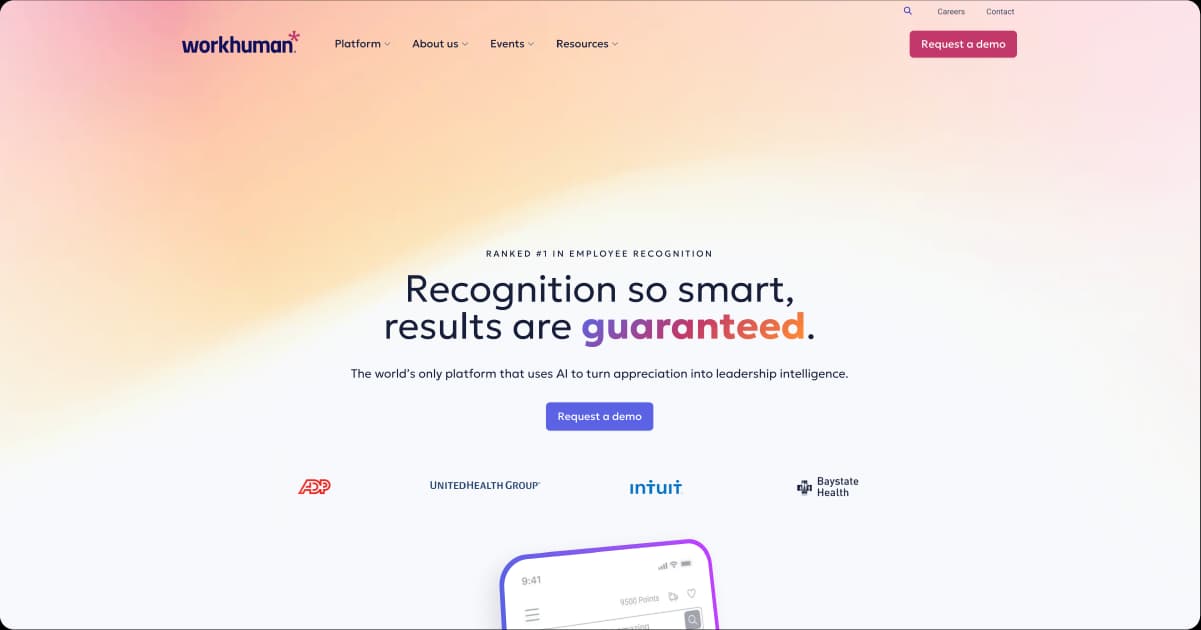
Best for: Global enterprises implementing employee recognition programs to improve team connections across all workforces, including hybrid, frontline, and multinational teams
Why it stands out: Workhuman offers a unified platform featuring peer-to-peer Social Recognition®, Service Milestones®, and Workhuman iQ analytics. It goes beyond scheduled events, making virtual team building ideas a continuous part of employees' daily workflows.
Workhuman specializes in deployments for enterprise organizations.Cardinal Health's implementation of a global social recognition programOpens in a new tab, with mobile access for offline and frontline workers, demonstrates the potential level of reach unmatched by event-based tools.
G2's 2026 evaluationOpens in a new tab names Workhuman as the best team building platform for enterprise recognition programs, and the platform has a 4.8 user rating onCapterraOpens in a new tab. Reviewers praise the software for its ease of use and its ability to encourage teamwork and boost employee morale.
Key features:
- Social Recognition with values-based peer-to-peer awards
- Service Milestones for anniversaries and other life events
- Workhuman iQ analytics with insights into connection, culture, and retention signals
- Inclusion Advisor for bias-aware recognition messages
- Global rewards marketplace
- Native integrations with many popular platforms
Rewards available: Merchandise, gift cards, experiences, and charitable donations through a global rewards marketplace
Integrations: Slack, Microsoft Teams, Workday, Outlook, and major HRIS platforms
Pricing: Custom pricing
Consider this platform if: You're creating a strategic, company-wide team building program with executive sponsorship and need it to reach desk, frontline, and international employees.
2. Matter
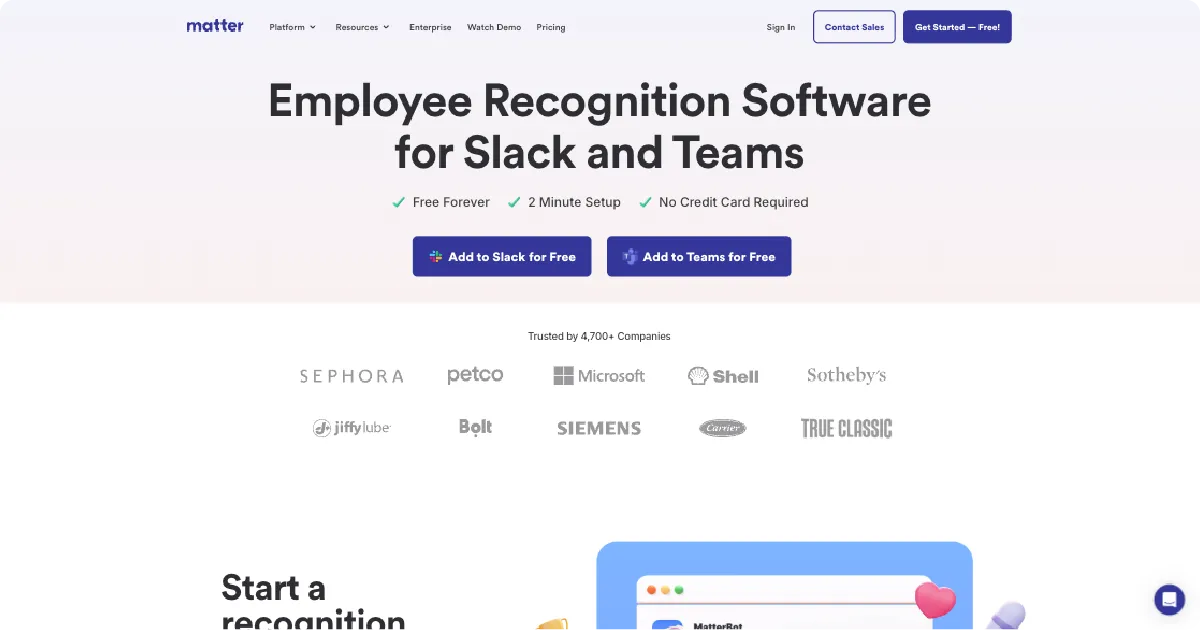
Best for: Companies that rely on Slack and Teams and need a straightforward tool for recognition and celebrations without a separate portal
Why it stands out: Matter is designed specifically for employees on Slack and Teams, allowing them to share virtual kudos using templates and customizable messages. It also offers survey capabilities so company leaders can collect data and strengthen engagement levels.
Matter is rated 4.7 out of 5 on G2Opens in a new tab, with strengths in frictionless feedback loops, kudos, and habit-forming micro-interactions. On CapterraOpens in a new tab, it has a 4.6, primarily for the low cost and user-friendly format. Reviewers say that the platform helps build a positive team culture inside the chat tools where employees already spend their time.
Key features:
- Built-in kudos for Slack and Microsoft Teams
- Automated birthday and anniversary celebrations
- Feedback Friday rituals and prompts
- Peer feedback and skill recognition
- Simple reward redemptions
Rewards available: Gift cards and custom rewards, such as perks and experiences, redeemable directly from Slack or Teams
Integrations: Slack and Microsoft Teams
Pricing: Custom pricing
Consider this platform if: You want an easy entry point to recognition and your employees live in Slack or Teams.
3. Bonusly
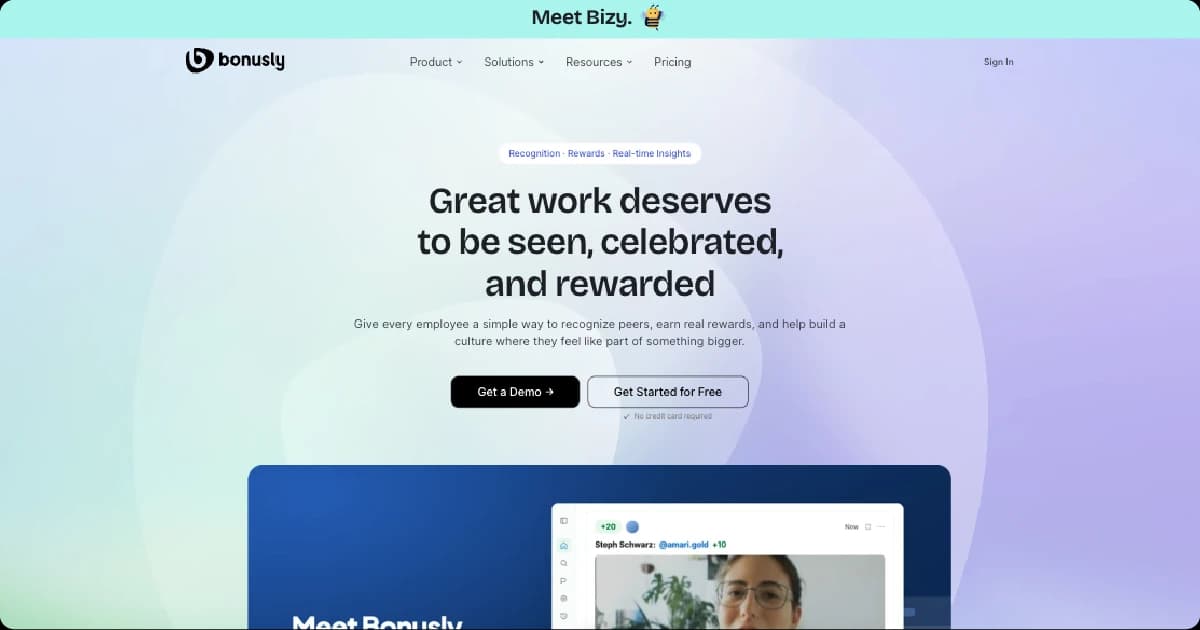
Best for: Companies prioritizing high adoption rates and easy day-to-day peer recognition within the tools employees already use
Why it stands out: Bonusly emphasizes recognition where work already happens, in Slack, Microsoft Teams, and email. This structure helps drive daily participation and long-term community connections. With tools such as recognition highlights, leaders have visibility into employee engagement and interactions.
Bonusly has a 4.7 user rating on G2Opens in a new tab and an 8.5 composite score on SoftwareReviewsOpens in a new tab. Users appreciate how easy and fast it makes recognition.
Key features:
- Peer-to-peer micro-bonuses tied to company values
- Recognition options in Slack and Teams
- Automated milestone and anniversary celebrations
- Rewards catalog with a variety of options
- Participation and engagement analytics
Integrations: Slack, Microsoft Teams, email, and HRIS platforms
Pricing: $5 per user per month or custom pricing for the platform, plus a separate rewards budget
Consider this platform if: You want to roll out your program quickly and prefer visible daily recognition activity without a complex implementation.
4. Motivosity
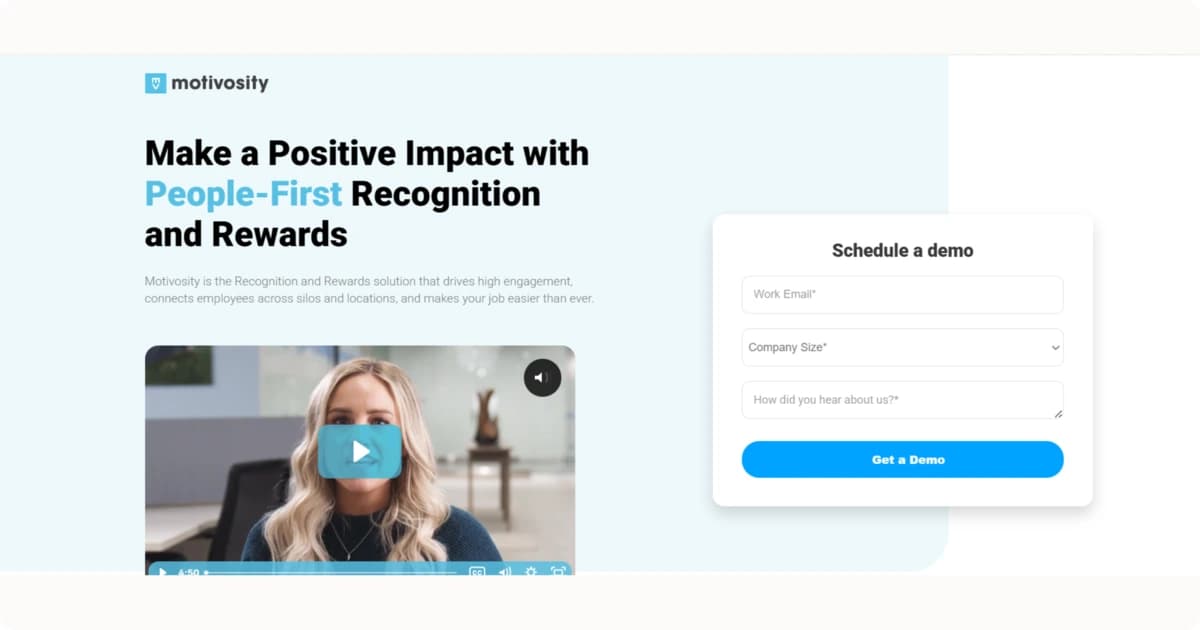
Best for: Mid-size companies that want a platform with peer appreciation, manager-employee connection, and a community feel
Why it stands out: Motivosity approaches team building as a form of social networking, with a platform that makes it enjoyable to offer kudos and congratulations. Employees can not only post messages recognizing their team members but also like and comment on other posts, creating a network of support and appreciation.
Motivosity is one of the most consistently named platforms and has strong user reviews, with a composite 7.9 out of 10 on SoftwareReviewsOpens in a new tab and a 4.8 out of 5 on CapterraOpens in a new tab. Users highlight how it encourages recognition across all levels of the organization, from entry-level employees to executives.
Key features:
- Peer-to-peer appreciation with small spending allowances
- Personality profiles and interest-based connection
- Manager tools for spot bonuses and awards
- Recognition feed with social interactions and employee milestones
- Appreciation Intelligence AI features
Rewards available: Appreciation dollars funded by employers and employees, redeemable for gift cards, charitable donations, swag, travel, and local items
Integrations: Slack, Microsoft Teams, and HRIS platforms
Pricing: Custom pricing
Consider this platform if: You want employees and managers to embrace your recognition program and actively participate.
5. Kudos
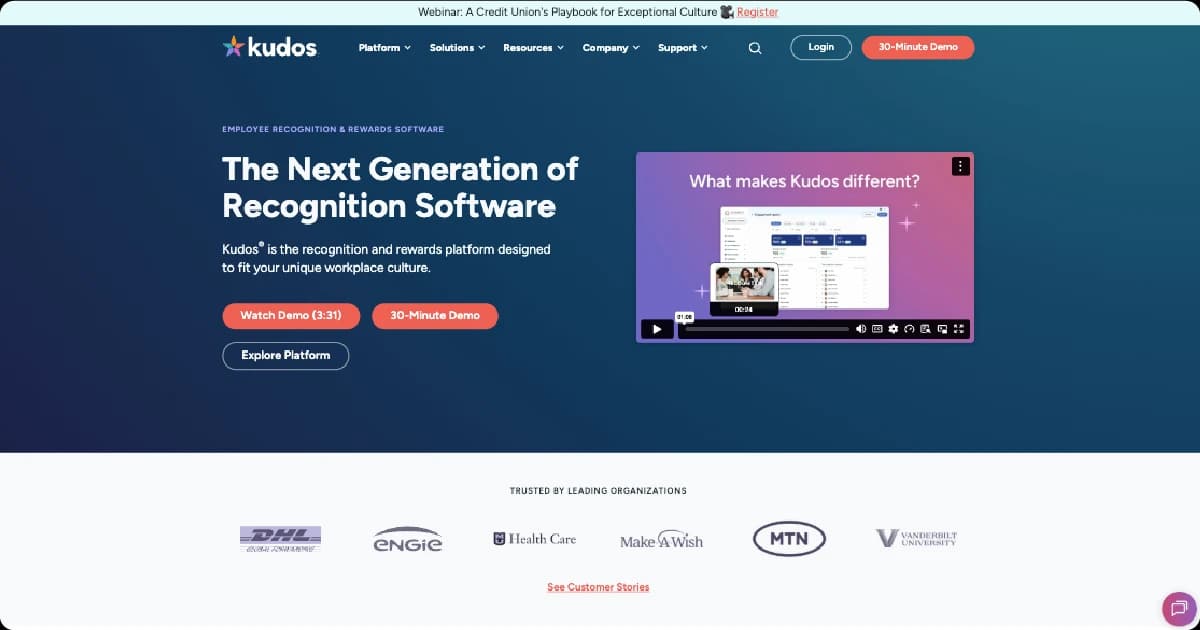
Best for: Organizations looking for values-based recognition with strong culture analytics and a consistently top-rated user experience
Why it stands out: Kudos automates milestone celebrations and offers AI assistance for employees writing recognition messages for their peers. Leaders can track recognition activity with a live feed and create gamified challenges and incentives.
Kudos holds one of the strongest live scores in SoftwareReviews'Opens in a new tab 2026 Employee Rewards and Recognition category, with an 8.8 out of 10 composite rating that includes a 9.0 customer experience score. Reviewers describe the platform as reliable and productivity-enabling.
Key features:
- Peer-to-peer and top-down recognition
- Culture and sentiment analytics to measure team performance and participation
- Milestone and anniversary automation
- Optional points and rewards catalog
- Team dashboards for managers
Rewards available: Optional points redeemable for gift cards, merchandise, custom rewards, and experiences
Integrations: Slack, Microsoft Teams, Outlook, and HRIS platforms
Pricing: Custom pricing
Consider this platform if: You want recognition aligned with company values along with actionable insights from analytics.
6. Awardco
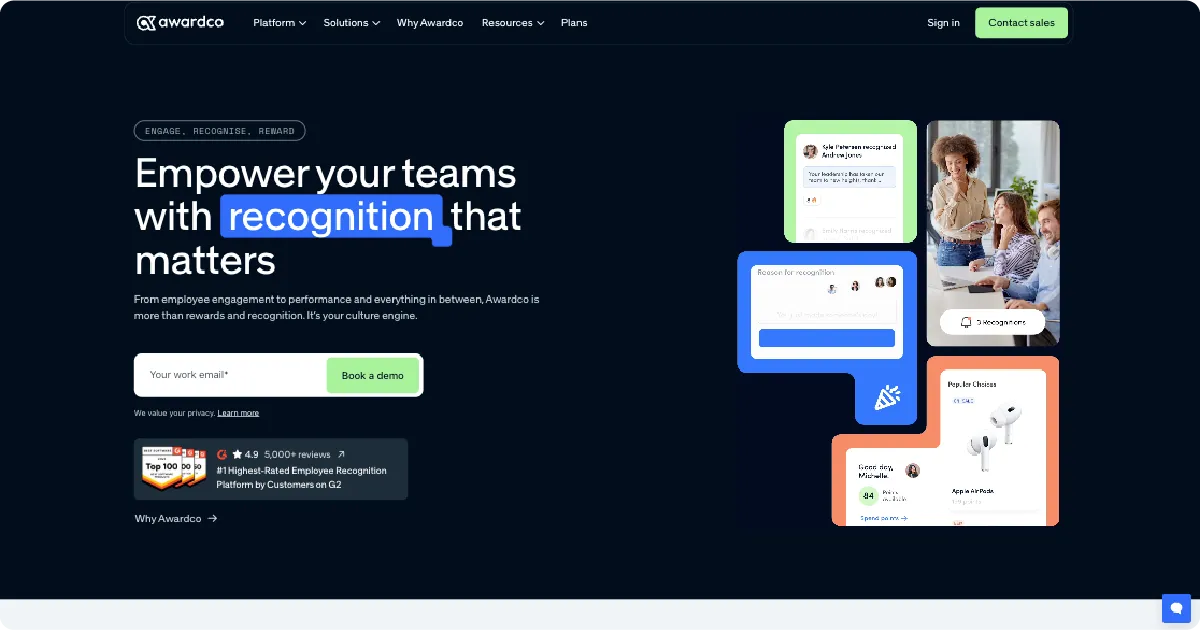
Best for: Large organizations that want recognition backed by a massive catalog of rewards employees are happy to receive
Why it stands out: With a wide range of currencies and languages, as well as local rewards, Awardco enables companies to treat employees equitably no matter their location. Company leaders can manage a variety of reward programs and give spot recognition using a unified dashboard.
Awardco gets a 4.9 out of 5 on Capterra Opens in a new tab and is praised for solving the reward-quality problem of legacy incentive programs by connecting recognition to an Amazon-scale catalog. It also offers strong backend reporting and automated milestone tracking.
Key features:
- Recognition tied to an Amazon-integrated reward network
- Automated service milestone tracking
- Lifestyle spending and incentive programs
- Robust admin reporting
- Budget controls by team and region
Integrations: Slack, Microsoft Teams, HRIS platforms, and Amazon Business
Pricing: Custom pricing
Consider this platform if: Reward choice and redemption value are vital to improving your employee participation.
7. Workvivo
Best for: Hybrid companies that need community, internal communications, and recognition in one employee experience hub
Why it stands out: Workvivo, now part of Zoom, combines internal communications, employee engagement tools, recognition, and analytics in a mobile-first platform. It acts as a digital campus, bridging remote team members and in-office staff, and is a strong option for distributed and frontline organizations.
On G2Opens in a new tab, Workvivo has a review score of 4.8 out of 5, with users emphasizing its modernized interface and ease of use. It has a similar score of 4.7 on CapterraOpens in a new tab, primarily due to its chat and messaging capabilities and strong customer service.
Key features:
- Social intranet feed with recognition built in
- Leadership town halls and activity streaming
- Native chat across locations and devices
- Community spaces and interest groups
- Engagement analytics
Rewards available: Recognition badges and shout-outs, with rewards depending on configured integrations
Integrations: Zoom, Slack, Microsoft Teams, and HRIS platforms
Pricing: Custom pricing
Consider this platform if: You want a broader digital employee hub where recognition rides on top of communication and community.
Comparison table
How much does team building software cost?
The price of team building software generally ranges between $3 and $10 per employee per month. However, you can find lower or higher prices depending on the complexity and features you need.
Typical pricing structures
HR software providers generally use one of three pricing structures:
- Per-employee subscriptions: Many platforms use a subscription model, with companies paying a set price per employee per month. This type of pricing is often better for smaller or mid-sized organizations.
- Flat monthly fees: Some systems are available for a set fee for the entire company or a certain team size, such as up to 50 employees. Providers who charge set fees based on employee counts often charge less per head as you scale.
- Custom enterprise quotes: Larger organizations receive customized quotes, often bundling a variety of tools or features, such as analytics, integrations, onboarding, and support. Enterprise companies should evaluate the system based on the total value, including reward markup policies, global fulfillment, analytics depth, and implementation support.
When researching prices, keep in mind that you can often save money by choosing annual billing, which usually discounts 20-30% of the software fee.
Other cost factors to consider
If you're looking for budget flexibility, some team building platforms offer additional ways to adjust your pricing:
- Free tiers and trials: Many tools offer free versions with a cap of 5 to 100 users before requiring companies to move to paid plans. Free plans generally include minimal features, and scaling teams often discover they've outgrown them when they are stuck using workarounds or doing excessive manual data entry.
- Tool-depth tiers: Certain platforms offer different price bands based on features. For example, simple chat-native recognition bots have a lower price point than continuous engagement and recognition suites, and hosted virtual event platforms are billed per person per session rather than as a monthly subscription.
- Rewards budgets: Recognition platforms generally separate the software fee from the rewards budget, so the total cost of ownership includes both. While this is an additional investment, Workhuman research shows that when rewards carry real monetary value, belonging rises 28% and engagement rises 21%.
How to choose team building software for a hybrid workforce
To select the right team building software for a hybrid or remote team, prioritize tools that enable deliberate connections and consistent recognition. Employees should receive feedback regularly rather than all at once during a performance review or exit interview, and they should have ample opportunities to build relationships with their coworkers.
In addition, look at these specific aspects of each platform:
- Integration: Avoid adding another login to your employees' plates. Choose a platform that works inside the collaboration tools employees already use, including Slack and Microsoft Teams.
- Async and frontline reach: Hybrid teams need asynchronous recognition and connection. Choose a platform with mobile access; 44% of employees say a simple mobile-friendly process is the most enjoyable part of rewards, and it's particularly important for frontline and deskless workers.
- Continuous over episodic: Prioritize platforms that build connection daily through recognition, milestones, and feedback loops rather than scheduled events. According to a Workhuman study, 59% of workers cited less human connection as the cause of pandemic-era strain, alongside elevated anxiety (37%) and isolation (31%), much of which you can alleviate with daily connection opportunities.
- AI assistance: Strong team building platforms increasingly use AI for personalization, sentiment insight, and bias-aware recognition. Gartner's 2025 HR survey found 45% of managers report AI improved teamwork as much as expected.
- Manager enablement: Look for options with sentiment dashboards, coaching prompts, and retention signals that empower frontline leaders. These data-driven insights are crucial when managing a hybrid team and make it easier to support your employees.
- Consolidation: Organizations facing subscription fatigue increasingly prefer one platform that combines recognition, rewards, milestones, and listening over a stack of standalone apps. To improve employee wellness and offer equitable recognition, look for a solution that respects time zones and protects against digital burnout.
- Measurement: Define your organization's most important success metrics, such as participation rates, cross-team recognition, and retention movement. Confirm the platform has native reporting capabilities for those specific points.
Choose a team building platform that not only fits your budget but also addresses each of these needs.
FAQs
What is the difference between team building software and virtual team building activities?
Virtual activities are one-off events, such as games, exercises, or icebreaker sessions. Team building software is a tool for ongoing recognition and community development. It allows you to track engagement and provides the necessary infrastructure for employees to easily connect from a distance.
Does team building software work for frontline and non-desk employees?
Team building software can be very effective for frontline and non-desk employees as long as the platform is mobile-friendly and doesn't require a desktop computer. Look for tools that employees can use during short break times and from any location.
How do you measure the ROI of team building software?
To calculate the ROI of your team building software, add the direct and hidden expenses, including subscription fees, setup costs, and rewards budgets. Next, look at key metrics, such as turnover, productivity, and absenteeism, and determine the change from pre- to post-implementation. Finally, use this formula to get your ROI:
(Gains - Cost)/Cost
How long does it take to implement team building software at an enterprise?
Implementing a team building platform usually takes four to 12 weeks, but the specific timeframe depends on your organization and the tool you choose. For instance, companies in highly regulated industries may have a longer implementation because of security bottlenecks. Some organizations also use a pilot program or phased rollout, which extends the overall timeline but helps prevent bugs and resolve issues before the full-scale deployment.
Can team building software replace in-person team building events?
Team building software is perfect for continuous connection and can fill the gap between physical meetups for remote or distributed teams. Many companies opt for a hybrid approach to recognition and employee interaction, hosting occasional in-person events along with daily online opportunities to communicate and check in.

Ryan Stoltz
Ryan is a search marketing manager and content strategist at Workhuman where he writes on the next evolution of the workplace. Outside of the workplace, he's a diehard 49ers fan, comedy junkie, and has trouble avoiding sweets on a nightly basis.
Recommended for you