
Are We Recognizing Extra Effort or Everyday Overload?
Last updated
4 min read

“Thank you for continually going above and beyond” is a familiar opening to a recognition message, and usually a welcome one. Someone noticed the effort, understood what it took, and wanted to say thank you.
In one anonymized message featured in Workhuman’s 2026 Recognition Intelligence Report, the next sentence adds something important:
“As with most days recently, our workload often exceeds our staffing and manpower.”
The message goes on to thank the team for its compassion, attention to detail, and calm presence. The appreciation is sincere and so is the description of a team regularly handling more work than its staffing can support.
For leaders trying to understand employee wellbeing, both parts deserve attention. The team delivered, and someone explained the conditions under which they did it.
Read past the accomplishment
A completed project tells you that work got done, but it may not reveal very much about the evenings, missed breaks, or difficult trade-offs that made it possible.
Recognition messages sometimes contain those details because the person writing knows what happened along the way. They saw a colleague cover a gap, take on additional responsibilities, or stay available when the team needed help.
Workhuman’s report examines what that language can reveal about strain at work. Its model looks for language associated with sustained demands, including excessive workload, schedule pressure, unclear responsibilities, exhaustion, inadequate resources, and expectations that make successful performance feel unattainable.
The report is careful about what those observations mean:
“The result isn’t a diagnosis of burnout. It’s a signal in the recognition record: language that suggests strain may be sitting underneath successful delivery.”
A thank-you for working late doesn’t establish that someone is burned out, but it does give a manager something worth understanding, especially when patterns emerge.
When an exception starts sounding familiar
Most teams have demanding stretches. A launch approaches, a colleague is unexpectedly out, or a problem needs immediate attention. People help, and their effort deserves recognition. The question is what happens after the immediate pressure passes.
In the staffing example, “most days recently” is the phrase that changes the picture. It suggests that the difficult conditions have become familiar enough to mention almost in passing. Sure, the team’s calm response is appreciated, but the workload keeps exceeding the people available to handle it.
A manager reading that message has an opportunity to address the tension. How often is this happening? What work is being deferred? Are the same employees repeatedly covering the shortfall? What would bring the workload closer to what the team can reasonably deliver?
Those questions can accompany the thank-you. Appreciating someone’s effort and addressing the conditions that required it belong in the same conversation.
Otherwise, each successful day can make the arrangement look more workable than it feels to the people sustaining it.
The personal cost can be easy to miss
Another recognition message describes an employee working over Thanksgiving weekend after the team discovered a budget problem. The colleague praises their ownership, persistence, and ability to bring the right people together.
The message closes:
“Thank you so much for all the sacrifices you made over the long weekend to get us where we needed to be.”
There is real achievement here. The employee took responsibility and helped resolve a difficult situation. But there was also a personal cost, which the writer explicitly acknowledges.
For a leader, the useful next step is to understand how that situation arose. Was this an unusual emergency? Did the employee have support and time to recover afterward? Could an earlier decision or clearer process have reduced the need for holiday work?
While the recognition message can’t answer every question, it can preserve context that might otherwise disappear once the budget is back on track.
A recurring signal across the recognition record
The wellbeing analysis sits within a broader study of 2,620,471 English-language recognition messages from 35 Workhuman customers across seven industries, spanning January 2025 through June 2026.
Burnout-related language fluctuated substantially during that period, ending at approximately 17.2% of recognition messages in June 2026. The report emphasizes the persistence of the signal rather than a steady upward trend.
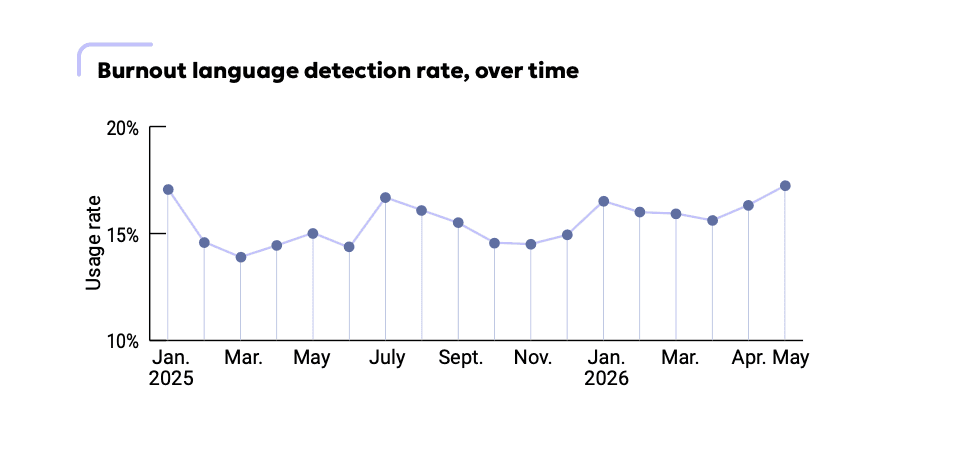
That figure describes detected language in messages. It does not mean that 17.2% of employees were experiencing burnout.
What makes the finding useful is the opportunity to examine recurring descriptions of strain. A single message may reflect an exceptional week, but a pattern of messages describing excess workload or constant availability gives an organization a reason to look more closely.
Industry results also varied. Strain-related language appeared in 19% of recognition messages in healthcare services, 18% in manufacturing, and 12% in biotech and pharmaceutical. These differences show where demanding work conditions were more visible in the recognition record, rather than establishing the prevalence of burnout in those industries.
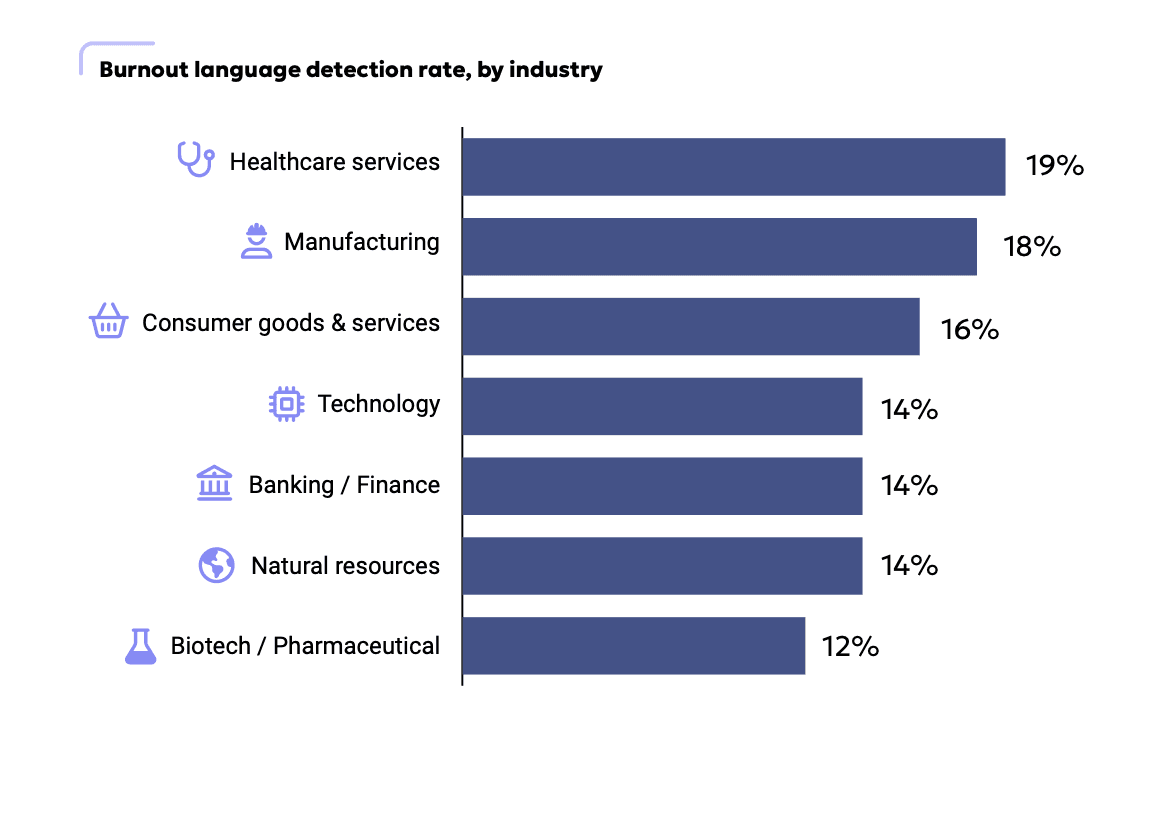
For an individual organization, the practical value comes from understanding its own patterns and the work behind them.
Different pressures need different responses
“Wellbeing” is a broad category while the problems affecting it can be quite specific.
A team with unclear ownership may spend hours duplicating work or chasing decisions. Another team may understand its responsibilities perfectly and simply lack enough people to meet demand. An employee expected to respond at all hours faces a different problem from someone trying to reconcile conflicting instructions.
The report separates strain into six dimensions: work overload, work-life imbalance, impossible standards, insufficient resources or support, unclear role responsibilities, and emotional or physical exhaustion.
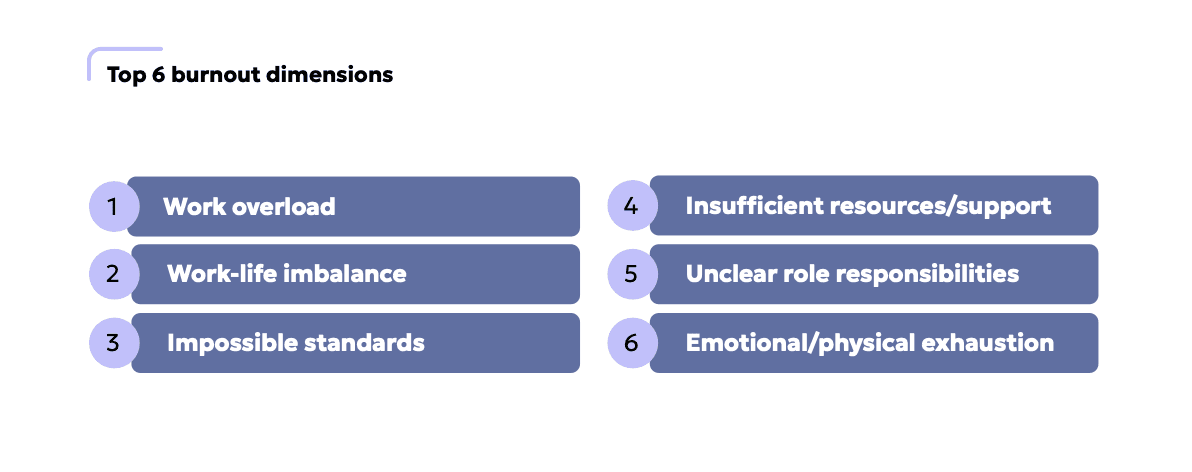
That detail helps leaders ask better questions. If recognition repeatedly mentions colleagues stepping in outside their responsibilities, it may be worth examining role clarity or coverage. If messages regularly celebrate weekend availability, leaders can investigate how deadlines, escalation practices, and staffing affect time away from work.
These are possible lines of inquiry, not conclusions a message can establish on its own. Conversations with employees and other workforce data provide the context needed to decide what should change.
The point is to move from a broad concern about wellbeing toward a clearer understanding of the pressure people are describing.
Let the thank-you lead to conversation
There’s a reason people write these messages. A colleague helped, a team held things together, someone made a difficult day more manageable, and the writer wanted them to know it mattered.
That appreciation is valuable and reading closely gives leaders a chance to respond to the rest of the story, too.
When the same kinds of sacrifice keep appearing, a manager can acknowledge the contribution and ask what would make the work more sustainable. That might lead to a conversation about priorities, staffing, ownership, or expectations about availability.
Employees shouldn’t have to stop delivering before the demands on them become visible. Sometimes they’re already there, in the words someone used to say thank you.