Adhocracy Culture: A Blueprint for Dynamic Organizational Success
Table of contents
- What is adhocracy culture?
- What are the four types of organizational cultures?
- Key characteristics of adhocracy culture
- Advantages of adhocracy culture
- Disadvantages of adhocracy culture
- Adhocracy culture examples from notable companies
- The role of leadership in adhocracy culture
- How to measure the effectiveness of adhocracy culture
- Unlock employees’ full potential with a dynamic culture
Imagine a workplace that feels more like a creative playground than a rigid office. Employees can experiment, develop new ideas, think creatively, and take bold risks – no one’s holding back. And before long, your team has developed an audacious plan. Welcome to the world of adhocracy culture.
In a business environment where creativity and agility carve a competitive edge, adhocracy culture offers a way to tap into your team's full potential.
Instead of following the traditional hierarchical model, your company adopts a dynamic approach that prioritizes innovation, flexibility, speed, and the ability to adapt to changes. The structure is flat, so decision-making is decentralized to reduce bureaucratic delays.
But how do you make an adhocracy work for your team? If you’re an HR leader, operations manager, SMB owner, or enterprise executive, you can mold a workplace culture where creativity thrives.
From core characteristics and pros and cons to implementation strategies and real-world application, this article explains adhocracy culture and how you can implement it in your organization.
What is adhocracy culture?
An adhocracy culture is a dynamic organizational work culture that prioritizes flexibility, innovation, and decentralized decision-making over rigid hierarchies and top-down control.
To put everything into context, imagine a team of experts who come together, explore bold ideas, experiment, and take risks to tackle challenges without waiting for layers of approval.
Such an environment encourages autonomy and empowerment, as team members can take initiative and contribute to your company’s success.
In fact, an ad hoc organizational culture is well-suited to the modern workplace, especially when you consider that employee-manager challenges account for 50% of turnover, as discussed in Gallup's insight article, Employees Want a Lot More From Their Managers.Opens in a new tab
Adhocracy can also give you a strategic edge in a world that demands agility, innovation, inclusivity, and speed. It lets you create a workplace environment where your team feels included and empowered to act instead of just following.
What does adhocracy culture focus on?
Adhocracy culture centers on agility at work and less on official authority to encourage entrepreneurial thinking among employees. The organization has loosely defined corporate levels, and teams share leadership. There is a strong emphasis on empowering individuals to:
- Own their work
- Pitch bold ideas
- Pursue new opportunities
- Experiment without fear
- Take risks
This entrepreneurial mindset allows businesses to respond to emerging challenges swiftly and seize new opportunities.
At the same time, an adhocracy prioritizes customer needs. Instead of following rigid processes or getting caught up in internal politics, teams focus on developing solutions that address real customer demands. Your organization can then offer products and services that meet evolving market demands to improve customer experiences.
Industries best suited for an adhocracy culture
While adhocracy culture can be conducive to creativity and adapting to change, it’s best suited for specific industries:
- Rapidly changing markets, such as the tech sector, where staying relevant requires constant experimentation and flexibility
- Highly competitive industries like consumer electronics, where companies must differentiate quickly
- Customer-driven sectors, such as e-commerce, where decentralized decision-making helps teams respond directly to evolving demands
- Innovation-heavy fields like biotechnology, where success depends on fresh thinking, risk-taking, and continuous product or service development
What are the four types of organizational cultures?
A positive culture in the workplace can improve employee satisfaction, productivity, recruitment, and retention. In fact, according to a Gallup study, when your employees are strongly connected to your organization’s culture, they’re 3.7 times more likely to be engaged at work.
It also states that they are 5.2 times more likely to recommend your organization to potential employees, 37% more likely to thrive, 68% less likely to feel burned out at work very often, and 55% less likely to be looking for a job.
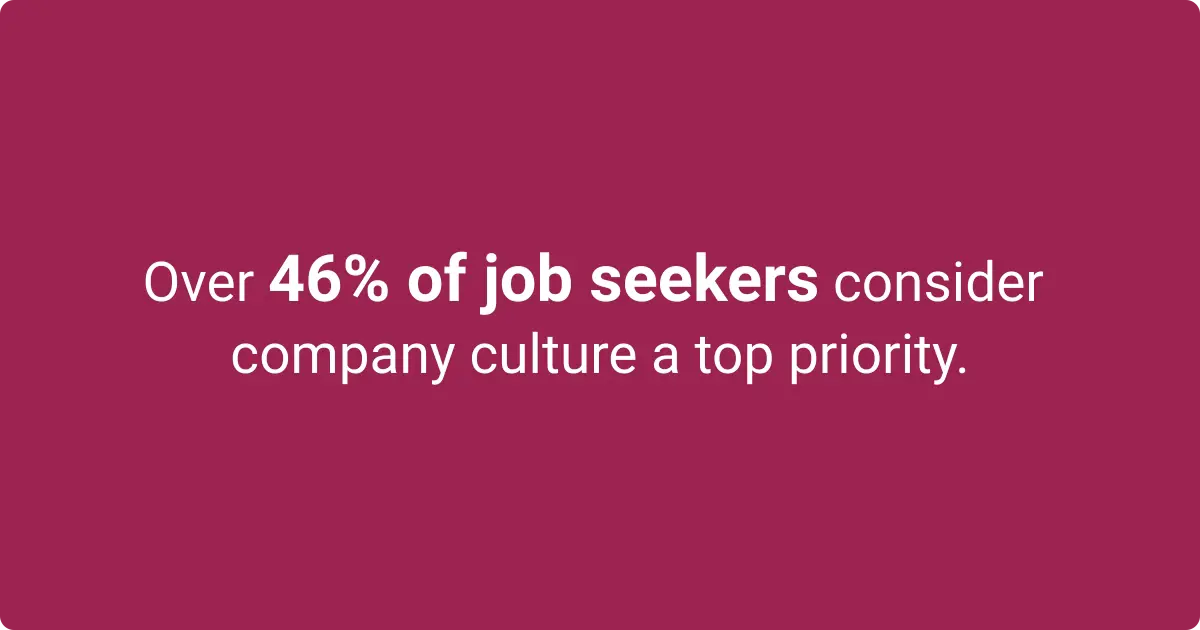
Those stats add to one clear conclusion: Business leaders should be aware of and actively shape culture to align with their company’s goals and values. According to the Competing Values Framework, you can adopt four types of organizational cultures:
Adhocracy culture
Adhocracy is a dynamic and entrepreneurial culture often adopted in the tech and marketing industries. It encourages employees to think creatively, experiment, take risks, and generate new ideas.
Decision-making is decentralized to allow employees to make bolder decisions, promote agility, and encourage quick decision-making. Adhocracy is generally suitable for high-growth organizations or businesses looking to disrupt industries.
Clan culture
The clan culture is a family-like workplace environment where teamwork, collaboration, and a sense of community rule the day. Leadership is often seen as supportive and nurturing, and success is defined by employee satisfaction and internal cohesion.
Clan culture is perfect for industries like education, family companies, nonprofits, and purpose-driven organizations, where slow and steady wins the race. It’s also a great model for large legacy companies with tremendous brand equity.
Market culture
Market culture is competitive and result-oriented. It emphasizes productivity, market dominance, winning, external success, and the bottom line. Sales-driven organizations are an obvious example of market culture, but the structure is also helpful in highly competitive industries such as:
- Real estate
- Retail
- Software
- Investment banking
- Media and entertainment
Hierarchy culture
Hierarchy culture prioritizes structure and formality. It’s built on clearly defined roles and a chain of command. Leadership focuses on control and consistency and prioritizes stability, efficiency, and predictable outcomes.
This structured culture is common in the military but can also be effective where reliability and safety are paramount or in highly regulated industries. Finance, legal, health, manufacturing, and industrial companies appreciate the order hierarchy cultures offer.
How adhocracy culture differs
Adhocracy encourages experimentation and embraces uncertainty as a path to innovation. While clan culture seeks inward cohesion, hierarchy focuses on structure, and the market pays attention to outcomes, adhocracy constantly seeks new ideas, trends, and opportunities.
Key characteristics of adhocracy culture
Adhocracy culture is defined by its dynamic, flexible, and innovation-driven environment, which emphasizes outcomes over procedures. But what exactly distinguishes this organizational culture?
Flexibility and adaptability
In adhocracy culture, employees are encouraged to pivot quickly in response to new challenges, market trends, technologies, and emerging opportunities. They don’t have to consult chains of command or policies before adapting to changes.
What’s more, employees' roles are agile. Instead of playing one role, they can step in and contribute to projects suited to their skills. They can self-organize and try different ways to accomplish tasks or solve problems without a supervisor’s permission.
Decentralized decision-making
Authority and decision-making are distributed throughout the organization, often based on expertise and situational relevance rather than formal roles or hierarchy. No single group or person holds all the power. Instead of waiting for instructions from upper management, those closest to the work often make the decisions.
Innovation and creativity
Adhocracies have a higher tolerance for failure than other workplace cultures. Employees understand that they can explore untested concepts, experiment, take calculated risks, and make honest mistakes. To that end, team members can make bold decisions that challenge the status quo.
There’s no fear of failure. Instead, employees see it as part of the process. This approach stimulates new methods, products, and services and encourages continuous innovation.
Autonomy and empowerment
The lack of a centralized leadership structure and recognition of employees’ particular strengths and capabilities allows each team member to explore their talents.
You trust every employee to manage their work, make decisions, take ownership of their project, and be responsible without constant supervision. Such autonomy fuels motivation and builds employees' confidence to unleash their full potential.
Open communication and collaboration
Adhocracy cultures promote open, transparent communication channels across all levels to facilitate the free flow of information and ideas. Your employees don’t have to climb hierarchies to speak up when:
- Raising concerns
- Pitching ideas
- Offering feedback
- Sharing insight
Cross-functional collaboration is the norm. Teams form organically around projects and goals. Members share expertise and learn from one another without the restriction of silos or rigid job descriptions.
Flat organizational structure
In an adhocracy, hierarchy takes the back seat. Everyone has the same power and can contribute and lead as needed. The structure is intentionally flat to eliminate bureaucratic delays and promote faster decision-making. If there are titles, they matter less than ideas, and employees earn influence through contributions, not position.
With a flat organizational structure, your team focuses on solving problems instead of climbing the corporate ladder or internal politics.
Project-based and organic structure
Rather than fixed departments or rigid roles, an adhocracy culture operates around fluid, project-based teams that form and dissolve based on current priorities and opportunities. The teams are highly organic, with minimal formalization of roles, procedures, and behavioral expectations. In other words, your employees aren’t boxed into static roles but can be invited to contribute where their skills fit best.
Risk tolerance and learning from failure
Adhocracy cultures embrace bold thinking even when the outcomes don’t always work. Your team is expected to test ideas, explore unconventional paths, take initiatives without the fear of failure, and learn quickly from what doesn’t work. This culture doesn’t punish mistakes but sees them as part of the innovation process.
Of course, it doesn’t mean blowing your budget. It means creating a safe space where employees don’t hesitate to share ideas that inspire innovation and continuous improvement.
Emphasis on results over procedures
Processes exist in an adhocracy, but they don’t overshadow outcomes. Unlike traditional corporate structures or hierarchical cultures that rely on formal procedures and processes, your organization trusts your team to find the best path to results, even if it means traveling a different path.
Employees aren’t expected to follow operating procedures strictly, but are free to use their judgment to make decisions and move fast. Those closest to the project are supposed to decide based on what will best achieve the desired result.
Informal atmosphere
Beyond the freedom to execute their best judgment, employees within an adhocracy culture can decide when and how a job is done. There’s less focus on formalities, dress codes, office politics, and strict behavioral expectations. The informality encourages openness and authenticity, making it easier for employees to be creative, flexible, and adapt to changes quickly.
Advantages of adhocracy culture
Adhocracy culture can benefit your business more than traditional culture models if you’re in a fast-moving industry where adaptability is key. Below are the key advantages of adopting an adhocracy culture.
Boosts employee engagement and motivation
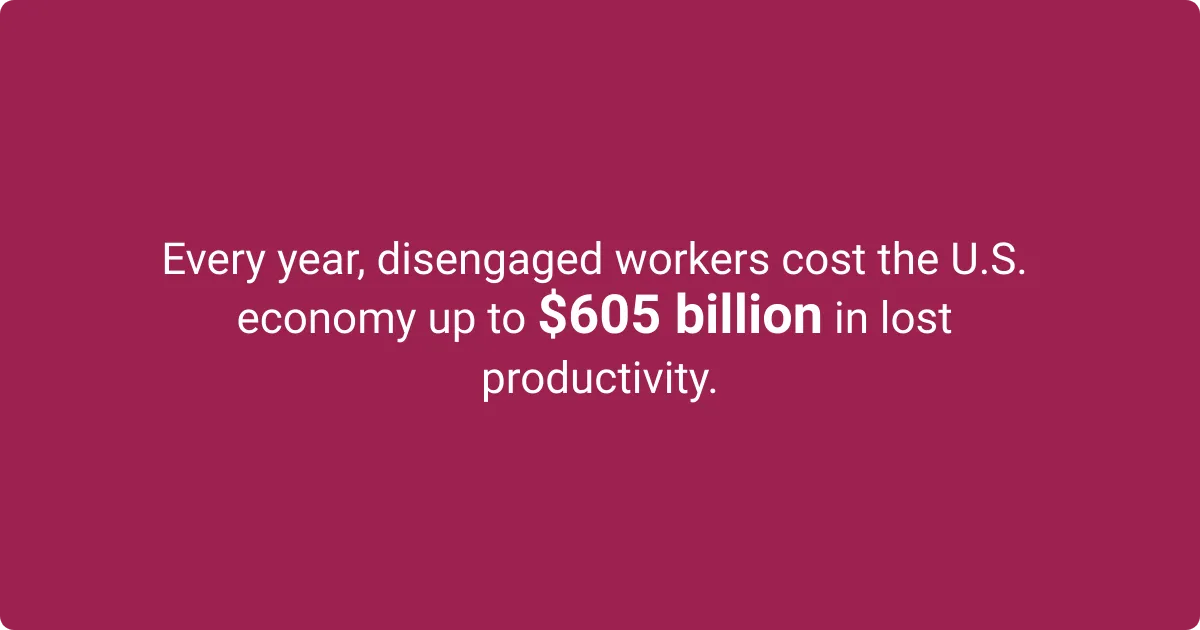
Disengaged employees cost the U.S. economy $483 billion to $605 billion yearly in lost productivity. With 51% of employees disengaged at work, adhocracy can help you improve engagement and achieve stronger performance.
Since an adhocracy gives employees the freedom to make decisions and contribute to innovative ideas, they feel more trusted and motivated. This sense of ownership boosts morale and drives employees beyond their core responsibilities to deliver meaningful results.
Enables quick decision-making
Decentralized decision-making reduces implementation barriers, allowing faster, improved decisions at all levels. Such agility helps your organization respond swiftly to emerging challenges and opportunities. Companies where over half of the employees have operational decision rights are better at sensing and seizing opportunities.
According to MIT CISR's research "Realizing Decentralized Economies of ScaleOpens in a new tab," companies with a higher percentage of decision-making roles report a 6.2% higher net profit margin and a 9.8% higher revenue growth rate compared to their more centralized peers.
Provides a strategic edge in a competitive environment
Adhocracy offers a strategic edge in rapidly changing markets, as it allows you to evolve quickly and stay ahead of industry and market trends. Because it encourages continuous innovation and empowers teams to take initiative with minimal bureaucracy, your company becomes more agile and responsive to emergent disruption or opportunities, keeping you a step ahead.
Promotes an inclusive company culture
Adhocracy nurtures an inclusive environment. Every team member feels valued and can contribute ideas, take initiative, participate in decision-making, and shape project direction without needing formal authority. Such inclusive practices at every stage can help you garner about 30% more revenue per employee, says a Deloitte study.
Drives continuous improvement through cross-functional collaboration
With adhocracy, you’ll break down organizational silos and create a more fluid environment where departments don’t operate in isolation. This cross-functional collaboration builds trust between employees and leaders to promote continuous improvement.
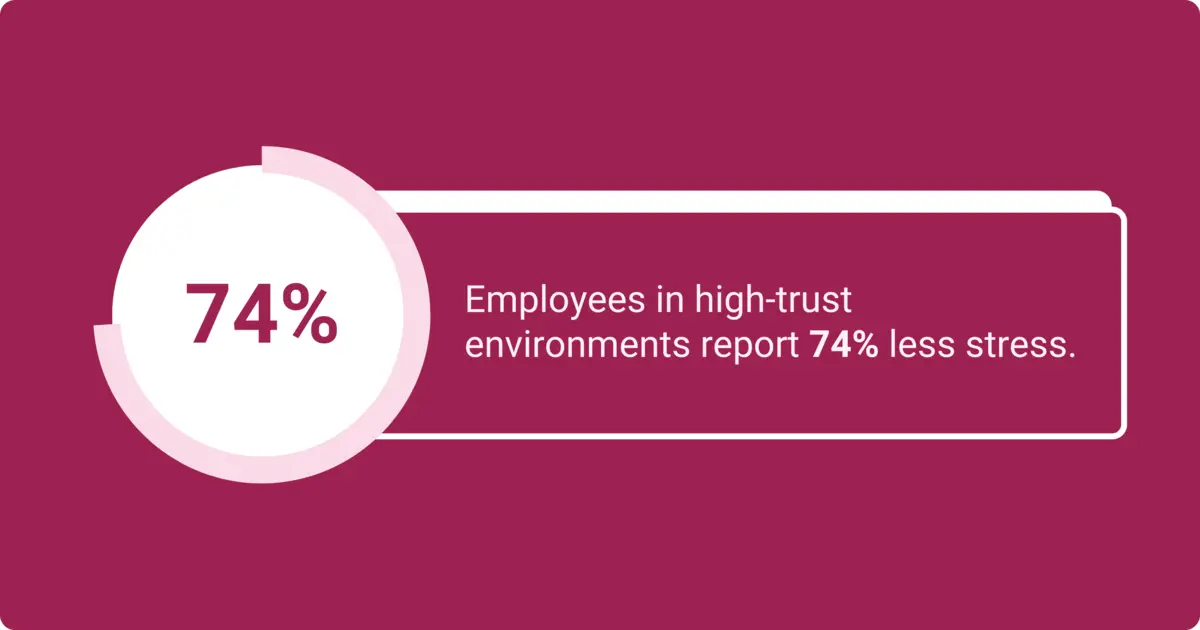
With such a high-trust environment, where the lack of trust in leadership is minimized, your employees will likely experience 74% less stress, 50% higher productivity, 106% more energy, 76% more engagement, and 29% more satisfaction than peers in low-trust workplaces.
Disadvantages of adhocracy culture
While an adhocracy culture offers many advantages, it is not short of challenges:
Challenges with authority and control
The absence of traditional hierarchies may lead to resistance and struggles with authority, as employees accustomed to clear leadership may struggle to adapt. Decision-making can be contested or confusing, leaving your team uncertain about whom to report to or who holds final authority.
Increased risk of operational inefficiencies
While freedom to innovate is a strength, it can become a challenge if you don’t coordinate or centralize oversight. Teams may duplicate work or pursue initiatives that conflict with one another. Such operational redundancy wastes time, drains resources, creates confusion, and makes it difficult for leadership to track progress and keep operations aligned with strategic objectives.
Lack of structure and organizational coordination
The lack of a defined structure can create confusion. Employees can have overlapping roles, competing priorities, unclear responsibilities, and inconsistent workflows that undermine collaboration. If you’re a large organization, this lack of coordination can cause siloed efforts or internal competition instead of unified progress toward shared goals.
Difficulty in performance evaluation
Adhocracy systems can be subjective, and evaluating individual contributions may be challenging without clear performance metrics. Group thinking, personal preferences, or limited information may influence your company's decisions, which could lead to suboptimal outcomes.
Besides, ambiguity in evaluation can result in inconsistent feedback and missed opportunities for recognition and development. Over time, employees who feel their efforts aren’t adequately acknowledged become disengaged or lose motivation.
Resource strain
A continuous push for innovation and rapid adaptation can strain human and financial resources. Employees may experience burnout from having to adapt or generate new ideas without sufficient support. Likewise, investing in experimental projects – some of which may fail – can stretch your financial resources, especially if you’re a startup or an organization with tight margins.
Adhocracy culture examples from notable companies
Several companies with a great work culture embody elements of adhocracy.
This search engine giant lets employees dedicate 20% of their time to passion projects to encourage constant experimentation and innovation. In fact, Gmail was born from this freedom.
Google also encourages employees to participate in decision-making with direct access to leaders.
3M
Like Google, 3M allows employees to spend 15% of their time on projects outside their formal job descriptions. This partly adhocracy approach has led to groundbreaking products like:
- Post-it Notes
- Multilayer Optical Film
- Cubitron Abrasive Grains
During the 15% time, 3M encourages employees to explore bold ideas they are passionate about without needing prior approval from upper management.
Netflix
Netflix promotes a high-trust, low-control environment that empowers employees to take initiative without excessive oversight. Its culture emphasizes freedom and responsibility, allowing teams to adapt quickly to market shifts and experiment with bold strategies.
Amazon
Although Amazon is often known for operational efficiency, certain divisions like Amazon Web Services reflect strong adhocracy traits. Teams have the autonomy to innovate rapidly, and the “Two-pizza team” helps maintain agility by keeping them small, empowered, and outcome-focused.
The role of leadership in adhocracy culture
If there are no hierarchies and employees can take initiative with minimal supervision, what role does the business leadership have in adhocracies? Leaders in this environment often act as facilitators, coaches, visionaries, or mentors as they:
- Enable innovation
- Empower teams
- Set strategic directions without stifling creativity
- Model adaptability and calculated risk-taking
Facilitative leadership is the core approach
Since adhocracy thrives on flexibility and innovation, your leadership should adopt a facilitative rather than a directive approach. Instead of issuing orders, remove obstacles and create a safe environment for experimentation. Spark curiosity by asking challenging questions, and then let your team pursue unconventional solutions.
Balancing autonomy with strategic alignment
While autonomy is key in adhocracies, it should be balanced with broader organizational goals. That means setting clear goals and removing communication barriers to align autonomy with business objectives.
Articulate the “why” behind your company’s direction and let your employees determine the “how.” Then, hold strategic check-ins, maintain a feedback loop, and encourage departments to share goals to maintain cohesion while respecting decision-making.
Leading by example
Leadership behavior sets the cultural tone. So, embody the trait you want to see:
- Take calculated risks
- Be transparent about failures
- Show willingness to experiment
- Demonstrate curiosity and adaptability
- Question the status quo
When you lead by example, you send the message that it’s safe to try new things and push boundaries.
How to measure the effectiveness of adhocracy culture
If you are concerned with the effectiveness of adhocracy in your organization, where would you start assessing company culture? What Key Performance Indicators (KPIs) or metrics would give you a clue of efficacy?
Below are KPIs to help you gauge whether adhocracy provides an innovative environment without losing sight of the performance of strategic direction:
- Employee satisfaction: Check how content and supported employees feel to verify that your work environment builds trust, encourages autonomy, and fosters a sense of purpose.
- Innovation output: Track the number of new ideas brought to life to see how well your culture encourages creativity and experimentation.
- Employee engagement: Assess how actively employees participate in projects, voice their ideas, and take initiatives to establish if they feel ownership and creative freedom.
- Revenue growth: Measure how much of your revenue comes from new ideas to determine if your culture’s emphasis on innovation is translating into business performance.
- Business agility: Monitor how quickly teams move from idea to implementation.
Monitoring adhocracy key performance indicators
But what tools can you use to track KPIs? There are several effective ones.
Employee feedback
Gather insights through informal channels like one-on-one meetings or team discussions to understand how your employees perceive autonomy and innovation in their role.
Surveys
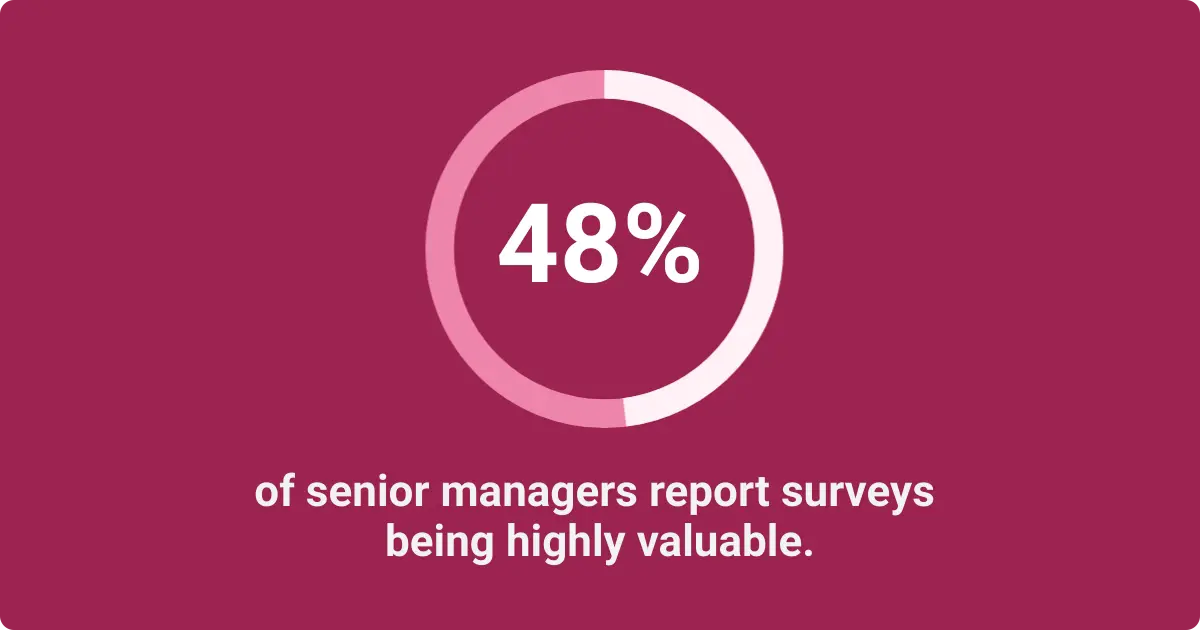
Implement structured surveys to measure aspects like engagement and satisfaction. While 48% of business leaders think surveys are invaluable, 45% of employees think they have little to no value. Learn more about the best practices for employee engagement surveys to align your employees’ views with yours.
Performance reviews
Evaluate individual contributions to innovation and collaboration. Verify that every employee’s effort aligns with the flexible nature of adhocracy and the overall business goals.
Cultural assessment tools
You can use a platform like Workhuman® iQ to assess cultural elements like agility, trust, and cross-functional collaboration. The platform analyzes employee recognition and feedback data to reveal how well your culture supports autonomy.
Unlock employees’ full potential with a dynamic culture
A less rigid environment in an adhocracy culture can be the way to go for organizations that need to innovate in a complex way. Whether you’re a startup looking to disrupt your industry or an established organization trying to stay relevant, adhocracy can help you be agile and respond to rapid changes.
But for an adhocracy to be effective, your business leadership must set the tone for how your organization tolerates and celebrates innovation. While you have to be bold and consistent to model trust, speed, and flexibility, you should also align adhocracy with your organization’s objectives to make the culture stick.
About the author
Ryan Stoltz
Ryan is a search marketing manager and content strategist at Workhuman where he writes on the next evolution of the workplace. Outside of the workplace, he's a diehard 49ers fan, comedy junkie, and has trouble avoiding sweets on a nightly basis.