
Internal Communication: Strategy, Channels, and Best Practices for HR Leaders
by Ryan Stoltz
Last updated
14 min read
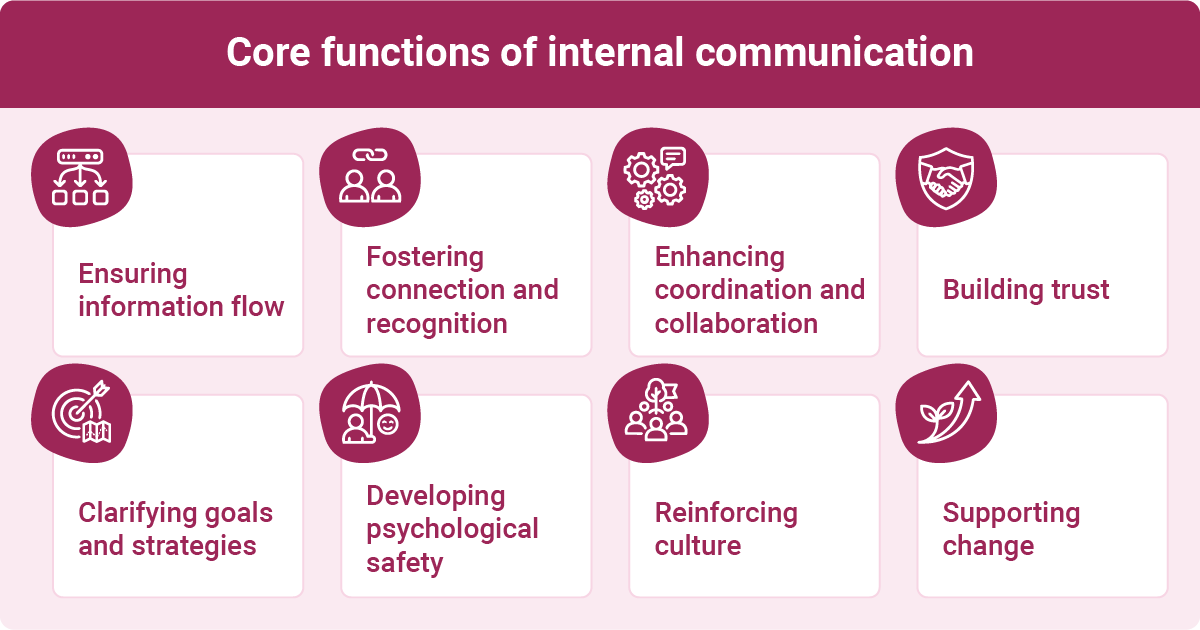
Table of contents
- What is internal communication?
- Types of internal communication flows and channels
- The role of leadership in internal communication
- Top internal communication tools and platforms
- Benefits of effective internal communication
- Common internal communication challenges (and how to overcome them)
- Understanding the ROI of internal communication
- How to build an internal communication strategy
- The internal communication department: Structure, roles, and careers
- Recognition and Community Celebrations: the most human form of internal communication
- Internal communication trends for 2026 and beyond
- How to improve internal communication for enterprise companies
- FAQs
- Conclusion
Share this article
Your teams are talking past each other, and their eyes glaze over every time leadership starts talking in corporate lingo. That all-hands email you sent two weeks ago is sitting unread in the inboxes of your frontline workers. That all-hands email you sent two weeks ago is sitting unread in the inboxes of your frontline workers.
You know communication matters, so why does it always seem to be an afterthought?
For the strongest collaborations, you need a thoughtful and systematic approach to internal communication. Your team probably talks all the time, but internal comms refers to the planned exchange of information within your organization. Done right, it connects strategy to daily work and builds trust across departments.
What is internal communication?
How would you define internal communication? We like this definition from Sustainability, “Calibrating Internal Communication Satisfaction within Organizations as an Auditing Index"Opens in a new tab:
Internal communication is "correspondence within the organization about ideas, as well as transmitting information either upward or downward." This is a broad sweep that can include everything from writing formal messages like memos to chit-chatting with coworkers at the coffee maker.
Some communication is top-down, such as performance reviews and project updates from leaders. Employees can also communicate from the bottom up by sharing feedback and ideas with higher-ups, or horizontally with peers through internal communications channels like Slack or Yammer, or through employee celebration or recognition platforms like Workhuman.
Increasingly, organizations are recognizing that communication isn’t just about information sharing—it’s about reinforcing what matters. Recognition and celebration moments, like service milestones, life events, and peer-to-peer appreciation, function as powerful internal communication signals. They show employees what the organization values in a way that feels authentic and human.
Purpose and core functions
Internal communication keeps information flowing throughout an organization, so everyone stays on the same page. For example, a manager may explain a new attendance policy, or coworkers might debate the best way to fix a tricky software bug.
It also allows employees to connect and get recognition. A literature review in the International Journal of Business Communication, “The Relationship of Internal Communication Satisfaction With Employee Engagement and Employer Attractiveness: Testing the Joint Mediating Effect of the Social Exchange Quality Indicators”Opens in a new tab, found that satisfaction with internal communication led to more employee engagement.
Other functions of internal comms include:
- Allowing teams to coordinate and collaborate more effectively
- Building trust in the workplace
- Clarifying organizational goals and strategies
- Developing psychological safety
- Reinforcing culture and shared values
- Supporting change and transitions
- Helping employees see how culture shows up in everyday work
Internal vs. external communication
Employees and leaders often change how they communicate based on whether they're talking to people inside their company or outside it. Here are a few key differences:
| Internal communication | External communication | |
| Audience | Internal stakeholders, such as contractors and staff | Customers, the media, and the public |
| Goals | Rally teams around common goals, boost productivity, maintain an engaged workforce, and increase retention | Make sales and improve brand awareness and reputation |
| Tone | Transparent and two-way | Polished and often one-way, with a focus on the market |
| Metrics | Engagement and behavioral changes | Conversions, reach, and sentiment |
Internal communication in the business communication context
Businesses use several types of communication, including external, marketing, and crisis communication. Internal communication focuses on these principles:
- Audience awareness
- Clarity
- Consistency
- Feedback loops
Internal communication stands out because it's embedded in an organization's culture. It prioritizes strengthening relationships without disclosing confidential information. As more companies focus on building engagement, improving communication has become a core part of the employee experience and talent management.
Types of internal communication flows and channels
You probably wouldn't use a sticky note to give an employee feedback or tell someone they've been promoted over text. It's easier to communicate certain messages when you pick the right channel.
Top-down communication channels
Leaders often share policies and other practical information with employees at different levels of the organization. These messages typically flow through far-reaching, one-way channels such as:
- Digital signage for frontline and deskless workers
- Intranet articles about company news
- Leadership emails about strategic updates
- Physical or digital newsletters
- Video messages
Bottom-up and peer-to-peer channels
Bottom-up channels let employees express themselves to leaders, often anonymously. For example, a company may use surveys and pulse checks to get feedback about new payroll software. Suggestion boxes can also encourage workers to share fresh ideas.
According to a 2025 study in Heliyon, “Communication from below: Feedback from employees as a tool for their stabilization”Opens in a new tab, bottom-up communication builds trust and leads to more motivated employees.
Peers communicate, too. Collaboration tools like Slack and Teams make it easier to coordinate projects, even when teams work remotely. Employees may form communities of practice and resource groups where they swap advice and support.
Recognition platforms also serve as dynamic, many-to-many communication channels. Unlike traditional tools that push information, recognition creates a continuous stream of employee-generated content—moments of appreciation, milestones, and celebrations—that employees actively engage with. This makes recognition one of the most scalable and authentic ways to communicate across teams and geographies.
Horizontal and cross-functional channels
It's all too easy for employees to fall into silos, even if other departments work right down the hall. Encourage cross-team collaboration with project management platforms, such as Asana and Trello.
Teams can create shared knowledge bases and swap documents, so no one's hoarding a critical file. Many organizations also invest in social intranets where employees can interact more casually.
Face-to-face communication matters, too. Regular all-hands and stand-up meetings help employees coordinate faster than yet another endless email chain. They also reduce the risk of miscommunication, especially during crises.
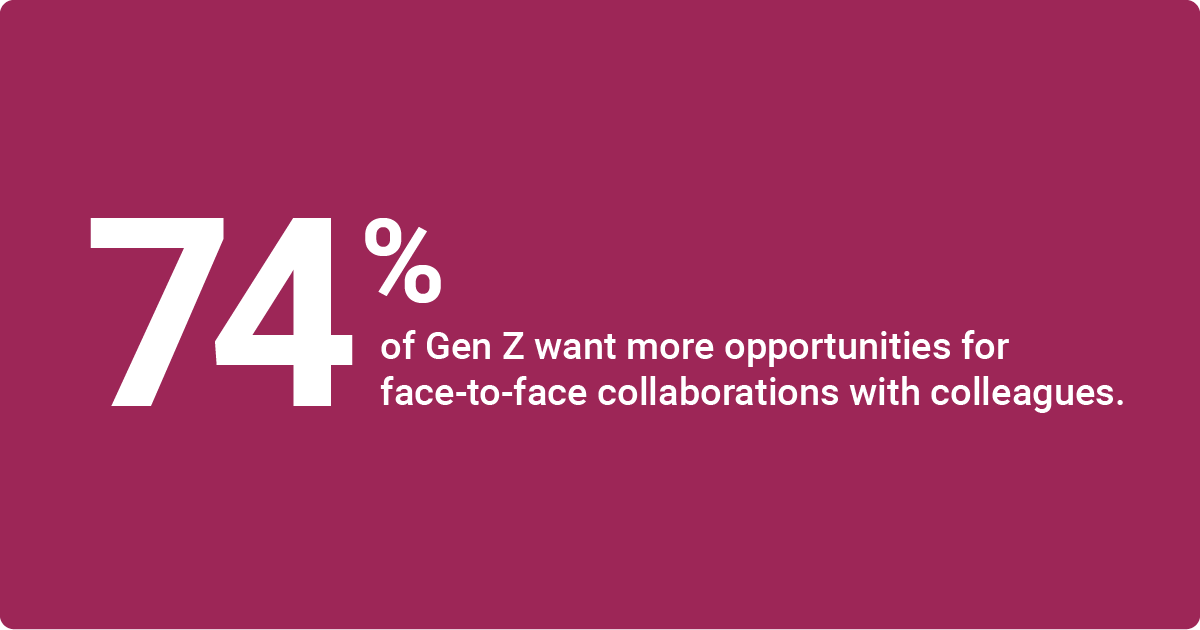
Many younger employees crave opportunities for in-person interaction. In the report, “A ‘Work Anywhere’ Workplace is What Employees Actually Want Today”Opens in a new tab, Accenture reports that 74% of Gen Z want more opportunities for face-to-face collaborations with colleagues.
Formal vs. informal internal communication
Professionals often use different levels of formality when interacting with colleagues:
| Formal communication | Informal communication | |
| What it is | Documented and planned messages | Spontaneous conversations and messages driven by relationships |
| Examples | Official emails and policy handbooks | Chats and messages between colleagues |
| When to use it | For serious or sensitive messages, such as compliance updates and high-risk decisions | When bonding with colleagues and solving simple problems |
| Advantages | Creates a paper trail and reduces confusion | Builds rapport, strengthens relationships, and takes less time |
| Potential drawbacks | Too much formality can seem alienating or cold | More risk of miscommunication and a lack of accountability |
When unmonitored, informal communication can turn into gossip or leave employees feeling left out. Leaders can support healthy interactions by laying down clear ground rules. These could include anti-discrimination policies and guidelines about confidentiality.
The role of leadership in internal communication
Through the report, “Anemic Employee Engagement Points to Leadership Challenges”Opens in a new tab, Gallup states that over a quarter (29%) of employees say their leaders don't communicate transparently or consistently. That can damage trust and decrease morale, especially if workers feel like their leaders don't care.
The good news is that no one's doomed to be a poor communicator; effective communication skills are a trainable asset. With the right tactics and education, anyone can improve this skill. In a Journal of Healthcare Leadership study titled “Evaluating Leadership Training for Managers in Healthcare: Focusing on Effective Communication”Opens in a new tab, leaders who completed the Mayo Clinic's healthcare communication curriculum were more competent and resilient.
Executive communication responsibilities
Executives often focus on conveying big-picture messages. They articulate and reinforce their organization's vision and strategy. They may also explain the rationale for major decisions or changes, such as discontinuing a popular product. When the entire leadership shares the same messaging, it prevents confusion and mixed signals.
Manager as communicator
Managers are often the primary drivers when rolling out a new internal communication strategy, since for most employees, communication primarily flows through their manager. They translate corporate messaging and strategy for their teams. They also provide personalized coaching and share employee concerns with executives as needed.
Top internal communication tools and platforms
Employees don't always get the opportunity to talk face-to-face, especially if they work remotely or have hectic schedules. Mobile-first communication software helps everyone stay in the loop to prevent information silos.
Look for user-friendly communication tools that fit into your existing workflows and tech stack. It's also best to choose a few multipurpose platforms with robust features. Otherwise, you may overwhelm employees with too many solutions that each do one thing, making staff less likely to engage. Here are a few categories to add to your toolkit.
Intranet and employee experience platforms
An intranet platform is a centralized hub that allows only your team members to access company communications. Use it to share confidential company information, such as news and resources.
Platforms like Connecteam and Workvivo also include personalization features and content filters. For the best results, choose a platform that's compatible with your existing HR systems.
Team collaboration and messaging tools
When employees need fast answers, they don't always have time to wait for an email response. Collaboration tools like Microsoft Teams and Slack let teams chat and coordinate their efforts in real-time. Users can also create separate channels for each project or topic – no more scrolling through weeks-old email threads.
For remote or hybrid teams, choose a tool with built-in videoconferencing. Google Meet works with the entire Google ecosystem, while Zoom offers nifty collaboration features.
Employee feedback and survey platforms
Promote employee empowerment by gathering and responding to their feedback. Use pulse surveys for sentiment monitoring, and offer opportunities to leave anonymous feedback.
Workhuman's® feedback and recognition software embeds directly into popular collaboration tools like Microsoft Teams and Yammer. Other key features include:
- Analytics dashboards
- Flexible API architecture, so employees don't need to hop between apps
- Mobile app and kiosk for offline workers
Benefits of effective internal communication
Improving internal communication in an organization does more than encourage employees to talk more. It has tangible benefits for both operations and individuals.
Business and operational benefits
Transparency in the workplace helps employees understand how their day-to-day work fits into the organization's overall strategy. If a company consistently emphasizes customer service, workers may go the extra mile to assist clients.
Communication is also closely linked to productivity. “Internal communications statistics: findings from Axios HQ 2025 annual report”Opens in a new tab estimates that the average employee wastes more than 35 working days per year due to poor communication, costing companies thousands.
Strong communication also leads to:
- Faster decision-making
- Fewer data silos
- Improved risk management
- More productivity
- Reduced errors
- Smoother collaborations
Employee experience benefits
Strengthening your organization's internal communication can improve employee experience. When leaders and managers share consistent and clear messaging, it builds trust and creates a sense of belonging. Employees may also feel more engaged and empowered to advocate for themselves.
Employees are also more likely to engage and stick around when they receive clear communication. A Nurse Leader article titled “Enhancing Nurse Satisfaction and Retention Through Real-Time Feedback: A Case Study at Los Angeles General Medical Center”Opens in a new tab reports that at Los Angeles General Medical Center, a communication app helped decrease nurse turnover from 22% to 13%.
Recognition-rich environments also strengthen internal communication by making appreciation visible, timely, and shared—helping employees feel seen while reinforcing key behaviors across the organization.
Real-world examples of internal communication excellence
Like many multinational companies, Thomson Reuters often faced challenges with cross-border collaboration. After the media firm invested in communication training, 92% of employees said they encountered fewer language barriers.
Meanwhile, Advanced Technology ServicesOpens in a new tab struggled to communicate with its deskless technicians. The company bridged this gap with digital signage, leading to happier and more informed employees.
Common internal communication challenges (and how to overcome them)
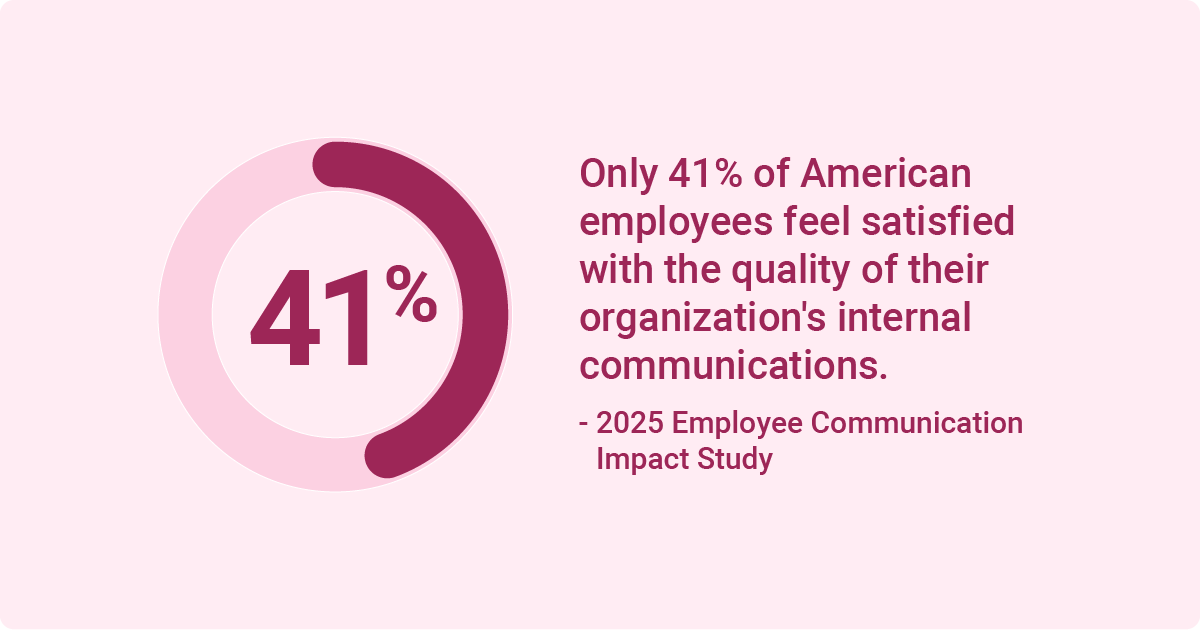
Only 41% of American employees feel satisfied with the quality of their organization's internal communications, according to the “2025 Employee Communication Impact Study”Opens in a new tab. A few common obstacles often lead to frustration and misunderstandings.
Information overload and noise
More communication isn't automatically better. A Gartner survey found that 27% of employees feel overwhelmed by information. Share too many messages, and your team's productivity may decline as they sift through their jam-packed inboxes.
These strategies will help you tamp down the noise:
- Create skimmable newsletters for non-urgent updates
- Flag urgent or important messages
- Send targeted messages instead of bulk communications
- Spell out how and when to use each channel
Organizational silos and fragmentation
Employees often struggle to communicate across teams, especially when they can't just stop by a coworker's desk. These communication silos can lead to gaps or even duplicate work, wasting time.
Solve this issue by:
- Bringing together people from across your organization to govern communication
- Including cross-functional communication when assessing leader performance
- Using shared communication channels
Reaching deskless and distributed workers
When employees don't travel to the office every day, it's much harder to keep them in the loop. Plus, workers on the go don't always have the luxury of reading email and Slack channels. Use these best practices to stay in touch wherever your team roams:
- Choose mobile-first communication apps
- Create brief, visual content that employees can consume quickly
- Put managers in charge of coordinating communication for their teams
- Send critical updates through SMS and push updates
Understanding the ROI of internal communication
Beefing up your internal comms doesn't always have an obvious payoff, but that doesn't mean nothing's happening. Calculating the return on investment (ROI) can help you understand the true impact of your messaging and define what internal communication success looks like for your organization. It compares the cost of improving communication with measurable business outcomes.
Calculating hard ROI
Hard ROI measures how internal communication affects your bottom line. Track it with these metrics:
- Number of errors
- Productivity gains
- Project success rates
- Revenue
- Turnover cost savings
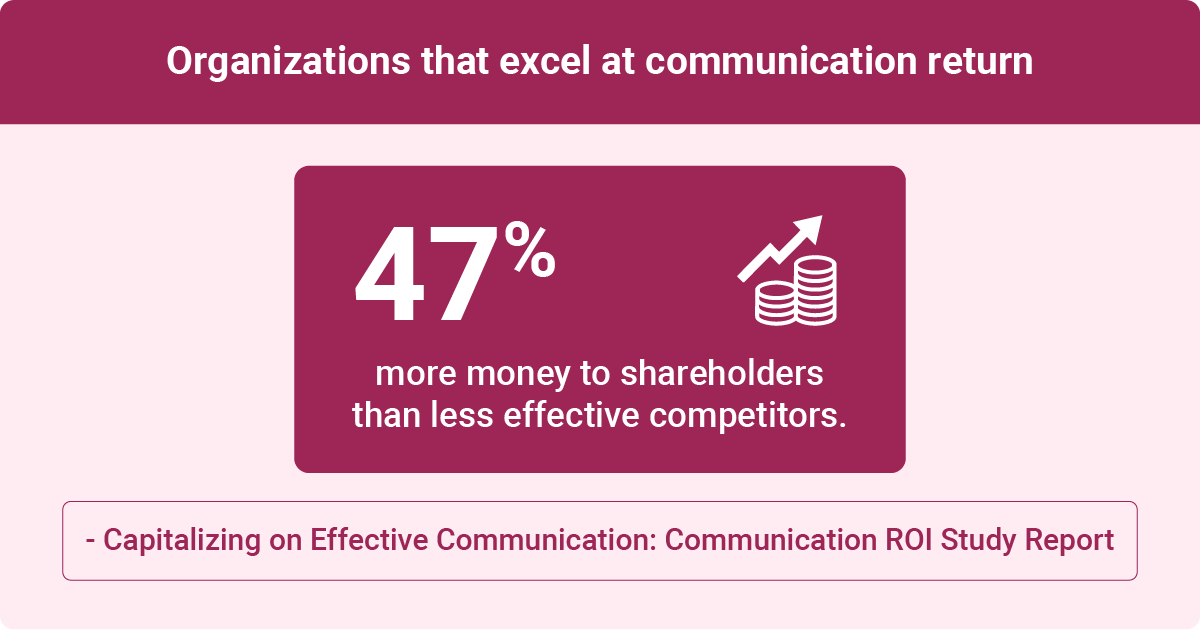
For example, a Towers Watson report, “Capitalizing on Effective Communication: Communication ROI Study Report”Opens in a new tab, found that organizations that excel at communication return 47% more money to shareholders than less effective competitors.
Measuring soft ROI and leading indicators
Soft ROI is less tangible. It evaluates how communication affects your company's culture and the employee experience with these metrics:
- Brand reputation
- Employee engagement scores
- Leadership trust
- Number of cross-functional collaborations
AI-powered analytics platforms like Workhuman can use employee recognition and communication data to track ROI. Monitor trends across departments and generate on-demand reports so you can see exactly how your internal comms efforts foster employee engagement and retention.
Building the business case
You may need to convince stakeholders that a communication initiative is worth the investment. Win them over by:
- Establishing baseline metrics, such as productivity and brand reputation
- Defining what success looks like and how you'll measure it
- Calculating the total cost, including new technology and training
- Estimating the impact of the project over 12 to 24 months
How to build an internal communication strategy
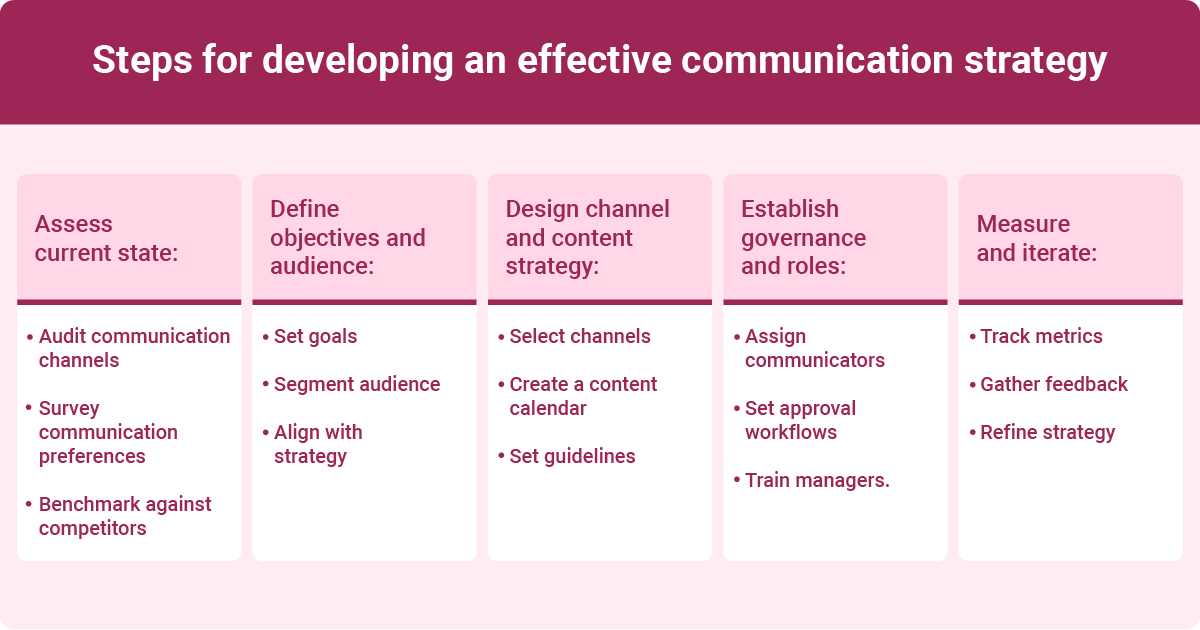
Good communication isn’t just a response to a crisis. Use these steps to proactively develop a stronger, more effective approach to communication.
Step 1: Assess current state
Audit your existing communication channels and owners to see how your team stays in contact. Then, survey employees about their communication preferences and frustrations. You may assume your team loves videoconferencing, but maybe they actually want to meet face-to-face.
Benchmark your system against competitors, too. This data can help you spot gaps or weaknesses in your current strategy.
Step 2: Define objectives and audience
Create a list of communication goals, such as encouraging collaboration across departments and improving trust. Prioritize these objectives based on their potential impact and organizational strategy.
And keep in mind that your employees' communication needs may vary drastically by role or location. Take the time to segment your audience and map employee journeys to see where each group needs the most support.
Step 3: Design channel and content strategy
Once you understand how your employees want to communicate, pick two or three channels for different types of messages. For example, you may use push notifications for urgent updates and Slack for casual conversation.
Create a content calendar for routine messaging, and spell out tone and style guidelines for consistency. Templates and playbooks can also help your team swap info faster.
Step 4: Establish governance and roles
Don't assume that employees will take the initiative to communicate. Put savvy communicators in charge of planning and executing your content strategy. A centralized administrative platform makes it easy to build approval workflows and delegate tasks. Workhuman can also flag potentially problematic messages for review and create custom dashboards with controlled access to sensitive data.
Managers and team members may need onboarding for new communication tools. After you train them, set up regular forums to gather feedback and coordinate messaging.
Step 5: Measure and iterate
Even the most thoughtful communication strategies often need fine-tuning. Make sure you're on the right track by monitoring these metrics:
- Channel usage
- Employee behavior change
- Engagement
- Open rates
Building an internal communication system
Communication doesn't happen in a vacuum. People, processes, and tools work together to spread information. Follow these best practices to build an effective system:
- Define communication workflows for every step, from creation to distribution
- Ensure equal access to internal comms channels for all workers
- Create protocols for sharing urgent or sensitive information
- Develop feedback loops
- Document standard operating procedures for routine scenarios, such as talking to employees about poor performance
The internal communication department: Structure, roles, and careers
Larger organizations often have dedicated departments for internal communication. See what that often looks like so you can build your own A-team.
Department structure and reporting models
Some companies have a single team that handles all internal communication, while others embed communicators within business units. Or you could take a hybrid approach for maximum flexibility.
If your focus is on the employee experience, these communicators may report to HR. If brand consistency or strategic alignment are top priorities, corporate communications or a chief of staff may oversee messaging.
In larger organizations, internal communicators and internal communications teams often work across HR, corporate communications, and business leadership to coordinate messaging.
Key roles and responsibilities
Depending on your organization's size and needs, your communication team may include:
- Head of internal communications to set strategy
- Communication with business partners to advise specific departments
- Content creators
- Channel managers in charge of the intranet and other platforms
- Analysts to track metrics
- Change communication specialists
Skills and career development
Corporate communicators often get their foot in the door with public relations or HR roles. As they gain experience, they may advance to mid-career and senior roles like senior communicators and directors.
All these roles require diverse skill sets, including:
- Crisis management
- Critical thinking
- Project management
- Public speaking
- Technical skills, such as AI and coding
- Writing and editing
Certification programs from the International Association of Business Communicators and other professional organizations can advance these abilities.
Recognition and Community Celebrations: the most human form of internal communication
Internal communication isn’t just about top-down messaging; it’s about what employees experience and share with each other every day.
That’s where recognition and community celebrations come in.
Moments like service milestones, life events, and peer-to-peer appreciation are some of the most effective and underutilized internal communication channels available to organizations today.
Unlike traditional communication, which is often top-down and periodic, recognition is:
- Continuous – happening in real time, not just during campaigns or announcements
- Peer-driven – created and shared by employees, not just leadership
- Behavior-focused – tied directly to the actions and values organizations want to reinforce
Turning moments into meaning
Every recognition moment sends a signal. When someone is celebrated for going above and beyond for a customer, collaborating across teams, or living company values, it communicates:
- What success looks like here
- What behaviors are rewarded
- What the organization truly values
Over time, these signals build a shared understanding of culture that no single email or town hall can achieve on its own.
Building community at scale
Celebrations like work anniversaries, promotions, and life events create shared moments that bring people together—especially in distributed or hybrid environments.
In this way, recognition doesn’t just communicate information—it creates community.
A smarter signal for leaders
Recognition also generates rich, real-time data. Leaders can see which values are showing up most, where collaboration is thriving (or not), and how employees are engaging across the organization.
That makes recognition not just a communication tool, but a feedback loop—helping organizations understand whether their messages are landing and where they need to adjust.
Internal communication trends for 2026 and beyond
New technology is shaking up corporate communication. Keep your eye on these three trends.
AI and personalization
Generative AI lets communicators tailor messages for the most impact. Companies can also use this technology to share on-demand information, analyze employee feedback, and proactively spot disengaging employees.
Video and employee-generated content
Blogs and emails aren't exactly dead, but many organizations are turning to short-form video to share updates. User-friendly editing tools empower employee ambassadors to share their authentic perspectives with colleagues, turning them into creators instead of consumers.
Analytics and workflow integration
Sentiment analysis and communication dashboards let leaders see trends in real-time. This high-tech employee listening strategy allows businesses to respond faster to emotional shifts and crises. Companies are also using distributed and asynchronous media to reach teams across time zones and regions.
How to improve internal communication for enterprise companies
Large organizations face communication challenges that small businesses don't. Messages often need to reach employees across functions, regions, time zones, and work environments. Without a clear system, information gets delayed, duplicated, or lost altogether.
To improve internal communication at an enterprise level, organizations need more than a handful of tools or occasional leadership updates. They need a coordinated approach that creates consistency without making communication feel rigid or impersonal.
Start with clear communication rhythms
In large companies, consistency helps reduce confusion. Employees should know when to expect leadership updates, manager cascades, team meetings, and feedback opportunities. Establishing regular communication rhythms creates predictability and makes it easier for people to stay aligned, especially during periods of change.
Standardize channels and ownership
Enterprise organizations often struggle with channel overload. Important messages may appear in email, chat, intranet posts, meetings, and texts, sometimes all at once. Define which channels serve which purpose, and clarify who owns each type of communication. This helps reduce noise and ensures critical updates reach the right audiences in the right format.
Equip managers to translate messages locally
Managers play a central role in enterprise communication. They help employees understand what broad organizational messages mean for their specific teams and day-to-day work. Give managers clear guidance, talking points, and context so they can reinforce strategy consistently and answer questions with confidence.
Design for distributed workforces
Enterprise communication systems should reflect the reality of how people work. That includes frontline staff, remote employees, hybrid teams, and global offices. Mobile-friendly tools, concise updates, and accessible formats make it easier to reach employees wherever they are, and however they work.
Create strong feedback loops
Internal communication works best when it moves in more than one direction. Surveys, pulse checks, manager feedback channels, peer-to-peer recognition platforms, and listening sessions give employees a way to raise concerns and share ideas. In enterprise settings, these feedback loops are essential for spotting communication gaps early and building trust over time.
FAQs
What is internal communication, and why does it matter?
Internal communication is the structured and informal exchange of information between people within an organization. It matters because it aligns teams around shared goals, reduces costly misunderstandings, and directly affects employee engagement and productivity. Organizations with strong internal communication consistently outperform those without it.
What is the difference between formal and informal internal communication?
Formal internal communication follows established channels and formats — think company-wide announcements, performance reviews, or policy updates. Informal communication is spontaneous and conversational, like a Slack message or hallway chat. Both serve distinct purposes: formal builds clarity and accountability, informal builds relationships and culture.
What are the benefits of effective internal communication?
Effective internal communication boosts productivity, reduces errors, and builds organizational trust. It keeps employees informed and aligned, which lowers turnover and increases engagement. Teams that communicate well also adapt faster to change, make better decisions, and spend less time resolving avoidable conflicts or duplicating effort.
What is the role of managers in internal communication?
Managers are the connective tissue of organizational communication. They translate leadership strategy into team-level direction, surface frontline concerns upward, and create psychological safety for open dialogue. When managers communicate consistently and transparently, it directly improves team morale, clarity, and performance, making their communication habits a significant driver of culture.
Conclusion
Strong internal communication helps keep employees informed, aligned, and better prepared for change. It’s not just about sending more messages; it’s about helping people understand what matters, what is changing, and how their work connects to the bigger picture.
When organizations build clear channels, equip managers to communicate well, and create real feedback loops, communication becomes a driver of trust, alignment, and a stronger employee experience.

Ryan Stoltz
Ryan is a search marketing manager and content strategist at Workhuman where he writes on the next evolution of the workplace. Outside of the workplace, he's a diehard 49ers fan, comedy junkie, and has trouble avoiding sweets on a nightly basis.
Recommended for you