
Conflict Resolution in the Workplace: Turning Tension into Trust
by Ryan Stoltz
Last updated
13 min read
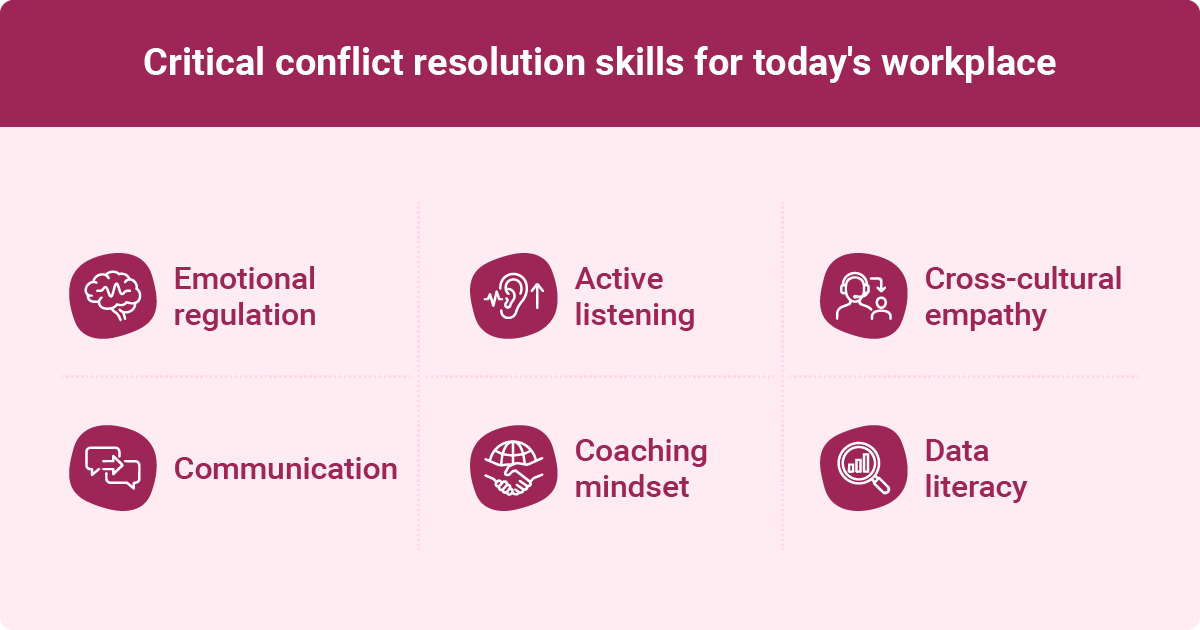
Table of contents
- Why addressing workplace conflict matters for culture and performance
- Common causes, types, and styles of workplace conflict
- 5 core strategies for resolving conflict in the workplace
- Critical conflict resolution skills for today's workplace
- Conflict resolution in remote and hybrid workplaces
- Behaviors that escalate conflict (and what to do instead)
- The leader's role: Building a conflict-resilient culture
- Using recognition and Human Intelligence to prevent and resolve conflict
- Policies, training, and metrics: Making conflict resolution systematic
- Conclusion: Turning everyday friction into a stronger culture
Share this article
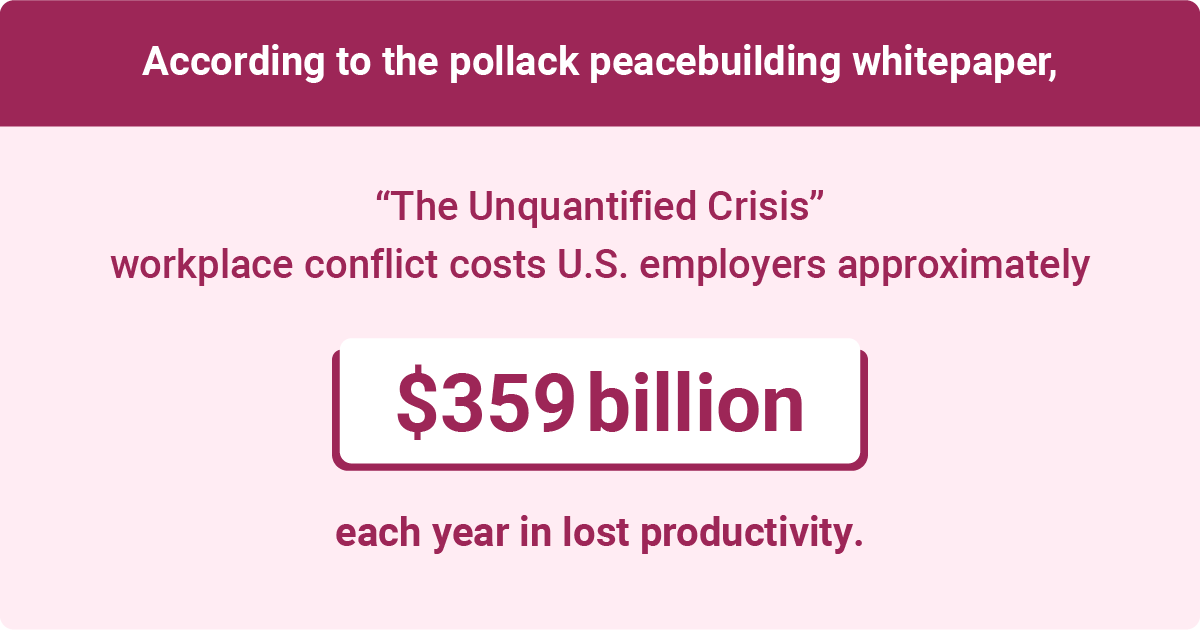
Workplace conflict costs U.S. employers an estimated $359 billion a year in lost productivity, according to the Pollack Peacebuilding whitepaper, “The Unquantified Crisis”Opens in a new tab – and that figure only captures what's measurable. It doesn't account for the trust that erodes due to a lack of conflict resolution in the workplace, the talent that walks out after one too many difficult interactions, or the teams that stop collaborating effectively long before anyone files a formal complaint.
Most organizations treat conflict as something to fix after it surfaces. A manager steps in, HR facilitates a conversation, and everyone moves on – until the next time. But conflict rarely materializes without warning. It builds through unacknowledged effort, inconsistent feedback, and the slow accumulation of small frustrations that never quite get resolved.
The organizations that are the best at addressing conflict have built cultures focused on encouraging employees to communicate through recognition, transparency, and psychological safety. They make destructive conflict less likely in the first place – and where people data gives leaders the visibility to spot tension early, before it becomes a performance or retention problem.
This article covers the most common types and causes of workplace conflict, five practical resolution strategies, the skills that separate effective mediators from ineffective ones, and how Workhuman's Social Recognition and Human Intelligence capabilities help organizations move from reactive conflict management to something more proactive and sustainable.
Why addressing workplace conflict matters for culture and performance
This scenario is fictional, but it shows some of the very real consequences of workplace conflict. Disputes often lead to missed deadlines or expensive rework. In extreme cases, the entire project may fail if team members can't compromise. Other common effects include unhappy clients and decreased revenue.
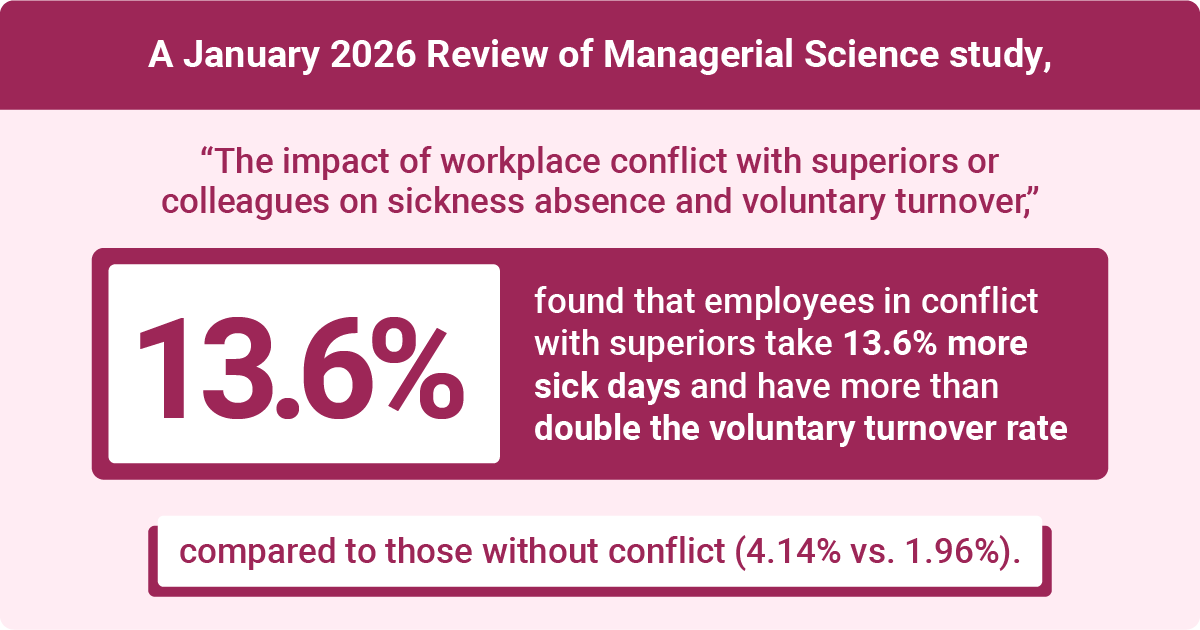
Conflict hurts employees, too. A January 2026 Review of Managerial Science study, “The impact of workplace conflict with superiors or colleagues on sickness absence and voluntary turnover”, found that people who have conflicts with superiors take 13.6% more sick days. They also had more than double the voluntary turnover rate compared to workers without conflict (4.14% vs. 1.96%).
These effects come from a loss of psychological safety. A 2023 Vilnius Tech article titled “Coping with Burnout? Measuring the Links Between Workplace Conflicts, Work-Related Stress, and Burnout” reports that workplace conflict often leads to negative emotions and burnout. Disagreements can also erode a sense of belonging, especially for people in underrepresented groups.
Other negative consequences of ignoring conflict include:
- Decreased trust in leadership
- Less recognition
- Lower engagement
- Weakened diversity, equity, and inclusion (DEI) programs
Leaders don't always witness disputes themselves, but the repercussions often appear in the metrics. For instance, high-conflict teams may have lower engagement scores and performance indicators. Employees may also express discontent in pulse surveys.
Workhuman® can help you spot these early signs of conflict and address them fairly. Real-time people analytics reveal trends in cultural and recognition data. These patterns allow you to pinpoint the sources of disagreements and resolve them more quickly.
See how recognition drives measurable ROI.
Common causes, types, and styles of workplace conflict
Most conflicts have multiple causes, even if they seem straightforward on the surface. To resolve them effectively, you need to understand both the type of conflict and the conflict resolution style of everyone involved.
There are four core types of conflicts.
Task conflicts focus on the work itself.
These disputes often involve disagreements over priorities, the project scope, or how to measure success. For example, sales representatives may push for quick deals, while the customer success team cares about building long-term relationships.
Process conflicts are disagreements about how to handle work.
Employees can clash over the logistics of completing projects, from who gets to make decisions to tools and workflows. In a global company, one region may prefer Slack while another favors Microsoft Teams, leading to friction.
Status conflicts involve disputes over hierarchy and positions in a group.
People frequently disagree over authority, credit, recognition, and control over resources. Such conflicts are common in matrixed organizations, where employees answer to more than one leader. For instance, marketing and sales may argue over who gets the credit for new leads — and whoever has the top title might win.
Relationship conflicts revolve around interpersonal discord.
Different personalities often lead to friction in the workplace. A brash person may steamroll a quieter teammate, causing resentment over time. Microaggressions and perceived disrespect also cause strife.
Coworkers can get into conflicts over practically everything, especially if they already have a poor relationship. Here are a few common triggers:
When disputes happen, employees often respond differently based on the situation and their conflict resolution styles:
| Style | When it shows up | How to engage it |
| Competing | High-stakes scenarios where someone asserts authority or pushes aggressively for a specific outcome. Fast results, but high relationship costs. | Don't match the aggression. Acknowledge their position directly, then redirect to shared goals. Structured mediation with clear ground rules helps level the playing field. |
| Accommodating | One party sets aside their own needs to satisfy the other – often to preserve the relationship or avoid confrontation. | Watch for chronic accommodators; repeated self-sacrifice breeds resentment. Create space for them to voice their actual needs privately before any group discussion. |
| Avoiding | The conflict is ignored in hopes that it resolves itself. Common when someone fears confrontation or doesn't feel psychologically safe enough to engage. | Don't force immediate resolution. Lower the stakes by starting with a low-pressure one-on-one. Name the avoidance gently: "I noticed we haven't talked about X – I'd like to understand your perspective." |
| Compromising | Both sides give something up to reach an acceptable middle ground. Works best for lower-stakes decisions where speed matters more than an optimal outcome. | Make the trade-offs explicit. All involved parties should articulate what they're conceding and why, so the compromise feels fair rather than forced. Document the agreement. |
| Collaborating | Both parties work together toward a solution that addresses underlying needs, not just surface positions. Takes more time but produces more durable outcomes. | Give it the time it needs. Use structured brainstorming, separate positions from interests, and agree on shared criteria for evaluating solutions before proposing any. |
Understanding the different styles can help you choose the best conflict resolution strategies for each situation. Let's say someone who prefers to compromise disagrees with a more competitive colleague. Encouraging them to write down their thoughts and take turns sharing them could prevent the competition-focused employee from dominating the conversation.
5 core strategies for resolving conflict in the workplace
Conflicts can be messy and emotionally charged. Skilled mediators have high emotional intelligence and a toolkit of strategies that they can adapt to different situations. Some tactics focus on speed and clarity to resolve disputes quickly. Others prioritize creativity, inclusion, and long-term trust.
Both approaches work best when they follow a simple framework: diagnose, dialogue, mediate, decide, and follow up. Following this basic model, managers can resolve everything from petty arguments to high-stakes disputes over projects.
Here are five conflict resolution techniques and when to use them.
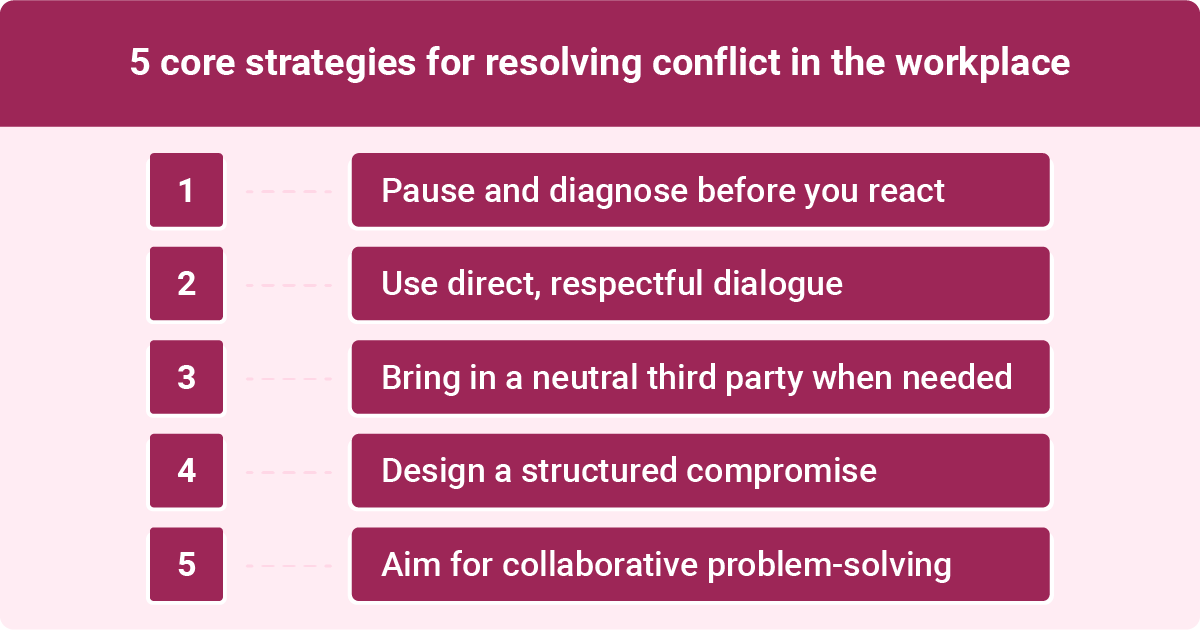
1. Pause and diagnose before you react
Even minor clashes can stir up strong emotional responses. You may feel tempted to fire off a snarky email or chat message, but that's a surefire way to escalate the situation. Instead, slow down and take the time to process your reaction.
Once you have more clarity, ask yourself, "What outcome do I want from this interaction?" and "What's at stake here?" These questions will help you decide how much energy and time you want to invest. You should also avoid making serious decisions when emotions are running high.
This tactic in action:
Sandra receives a Slack message from her manager, Lynn, asking her to revise a funny TikTok campaign. Lynn thinks the videos are too absurd, while Sandra is convinced their Gen Z audience will love them. The conversation quickly gets heated over email.
Stepping back for a moment, Sandra realizes that she cares more about her relationship with Lynn than keeping the original videos. She also recognizes that she's stressed by the thought of redoing six hours of editing. Instead of writing another email, she asks Lynn to join a video call. After a calmer discussion, they compromised by tweaking two of the videos instead of starting from scratch.
2. Use direct, respectful dialogue
Start by using "I" phrases, such as "I noticed that you didn't submit the report this morning" or "I felt hurt when you didn't give me any credit for the project." This language helps you express your concerns without casting blame or making the other person feel defensive.
Practice active listening by giving your colleague space to talk. Ask clarifying questions, and paraphrase what they said to make sure you understand their perspective. Once you both say your piece, work together to compromise on next steps. Set reasonable deadlines to keep everyone accountable.
This tactic in action:
Ian, a manager at a global tech firm, notices that the Dublin team has missed two handoffs to their Boston counterparts. He asks Cian, the Dublin team lead, to join him on a Zoom call. Here's a sample of what their conversation looks like:
Ian: I noticed that your team didn't send the product specs to Boston last week. What happened?
Cian: Our head developer just quit. The rest of the team had to stay late on Friday to work on a deadline, so we didn't get around to the specs. It's not a big deal.
Ian: I understand that you're dealing with staffing shortages. That must be very stressful. But the Boston team can't move forward without the specs. Is there any way you could work on those today?
Cian: Sure, but I'll need to push back something else to make time.
Ian: That's fine. Let's look at your team's deadlines together and see what we can move.
3. Bring in a neutral third party when needed
Sometimes, direct dialogue isn't enough to reach a resolution. You may have already spoken to your colleague several times, but they haven't changed their behavior. In other cases, power imbalances or a lack of psychological safety can make one-on-one communication risky.
If you can't overcome a conflict yourself, it's time to bring in a mediator. This could be a neutral manager or an HR business partner (HRBP). This individual won't solve your issue, but they can help you have more productive talks. They'll set clear ground rules, such as:
- Both parties get equal airtime
- Don't insult or dismiss each other
- Nothing leaves the room
- Focus on behaviors, not character or perceived shortcomings
As this list demonstrates, effective mediation is a learned skill. Large enterprises should consider investing in a structured conflict resolution program or coaching for managers.
Follow this checklist to prepare for your mediation session:
This tactic in action:
Steve is a rude director who often belittles employees and sends scathing emails. Three people have left his team this year, and all of them talked about his bullying behavior in their exit interviews. However, none of the remaining employees feel comfortable speaking to Steve directly.
The company hires an HRBP to facilitate a meeting between Steve and his team. The mediator asks guided questions to help the employees describe how Steve's abrasive behavior affects them. She also invites Steve to respond to what he's hearing. He admits that the stress of his leadership role has negatively influenced his behavior. Together, they set new expectations for communication.
4. Design a structured compromise
Compromise involves both parties giving up something meaningful to reach an acceptable solution. It's often the best option in situations where you need to make fast decisions without damaging a relationship.
An effective compromise plan includes:
- A clear scope
- Well-defined roles and responsibilities
- A timeline
- Metrics for success
- A review date to check progress
Always put agreements in writing, and follow up with an email outlining roles and timelines. Documentation helps keep everyone accountable.
This tactic in action:
Two product owners are in charge of backlog control for the next six months. They agree that one person will make decisions about designing new features, while the other will supervise bug fixes. They also schedule weekly check-ins to stay on the same page.
5. Aim for collaborative problem-solving
When it comes to conflict management strategies, collaboration is the gold standard. It involves both sides working together to develop a solution that addresses their deeper needs.
Collaboration often takes more time than quick fixes. However, it can lead to greater innovation and fewer conflicts in the future.
Use this four-step framework to solve your next problem collaboratively:
- Spend time brainstorming solutions together. Try to entertain each idea seriously instead of dismissing any.
- Separate what you want (position) from the underlying reason (interest).
- Evaluate your options against mutually agreed criteria, such as fairness, feasibility, and business outcomes.
- Choose a solution that satisfies both of your interests.
This tactic in action:
Finance and HR are put in charge of creating a new recognition model for employees in North America, Europe, the Middle East, and Africa. The budget soon becomes a major source of discord. The finance team wants to keep costs under control by giving everyone the same amount under the employee rewards and recognition program. However, HR is concerned that employees in different regions won't have equal spending power.
Once everyone understands the different needs, they work together to find a recognition software with automatic currency adjustments and localized incentives. That way, all employees can get equivalent rewards without straining the budget.
Critical conflict resolution skills for today's workplace
Many organizations have conflict management policies, but that's not always enough to get a good outcome. Often, the difference between a conflict becoming a learning opportunity or turning into a legal issue comes down to skill. These conflict management skills can help you handle disputes more effectively.
Emotional regulation
Active listening
It's easy to misinterpret other people, even if you listen carefully. Always check for accuracy by summarizing their viewpoint first. Role-play sessions can help you sharpen this skill.
Cross-cultural empathy
Written communication frequently leads to misinterpretation, especially across cultures. If you can't meet in person, try to schedule video calls for sensitive conversations.
Communication
Strong communicators clearly express themselves through writing and speech. Ask your peers for feedback about your communication skills, and look for internal training opportunities. For example, some organizations host public speaking workshops.
Coaching mindset
When mediating conflicts, aim to help both sides become stronger collaborators. Consider joining a coaching circle where you can practice your conflict resolution skills and receive mentorship.
Data literacy
Data often reveals tensions long before people consciously recognize them. Learning how to interpret engagement scores, recognition patterns, and turnover risk indicators will help you spot potential hotspots before they become formal complaints or exit interviews.
This is where tools like Workhuman iQ earn their place in a conflict resolution toolkit. Rather than manually tracking department-level trends across disconnected systems, HR teams and managers can use Human
Intelligence dashboards to surface patterns automatically – a team whose recognition frequency has dropped, a department whose sentiment scores are trending negative, or a business unit where regrettable attrition is creeping up alongside declining peer appreciation. These aren't lagging indicators. They're live signals that give leaders time to act.
Conflict resolution in remote and hybrid workplaces
Remote and hybrid work hasn't eliminated conflict, but it has changed the texture of disputes. When people don't interact in person – or even share the same time zone – they have fewer opportunities to spontaneously repair their relationships. A tense exchange that might get resolved over lunch in an office can calcify into a grudge over Slack.
Asynchronous text is the biggest culprit. Tone is easily misread, context gets stripped out, and the absence of a response can feel like hostility even when it isn't. Remote settings also make it easier to avoid conflict. It's simpler to ghost a difficult colleague or reassign work than to initiate a hard conversation on video.
Managers can reduce conflict in hybrid teams by:
- Defaulting to video for any conversation with emotional stakes
- Setting explicit response-time norms so silence isn't misread as dismissal
- Rotating who speaks first on contentious topics, so the same voices don't always set the frame
- Creating low-stakes touchpoints – virtual coffees, cross-regional team rituals – that build familiarity before friction arrives
Recognition plays a structural role here, too. In hybrid environments, informal appreciation, the kind that happens organically in an office, doesn't travel well across time zones.
Workhuman's Social Recognition™ makes peer appreciation visible across the entire organization, not just within a local team. That visibility builds the cross-regional familiarity and psychological safety that make conflict conversations easier when they do need to happen.
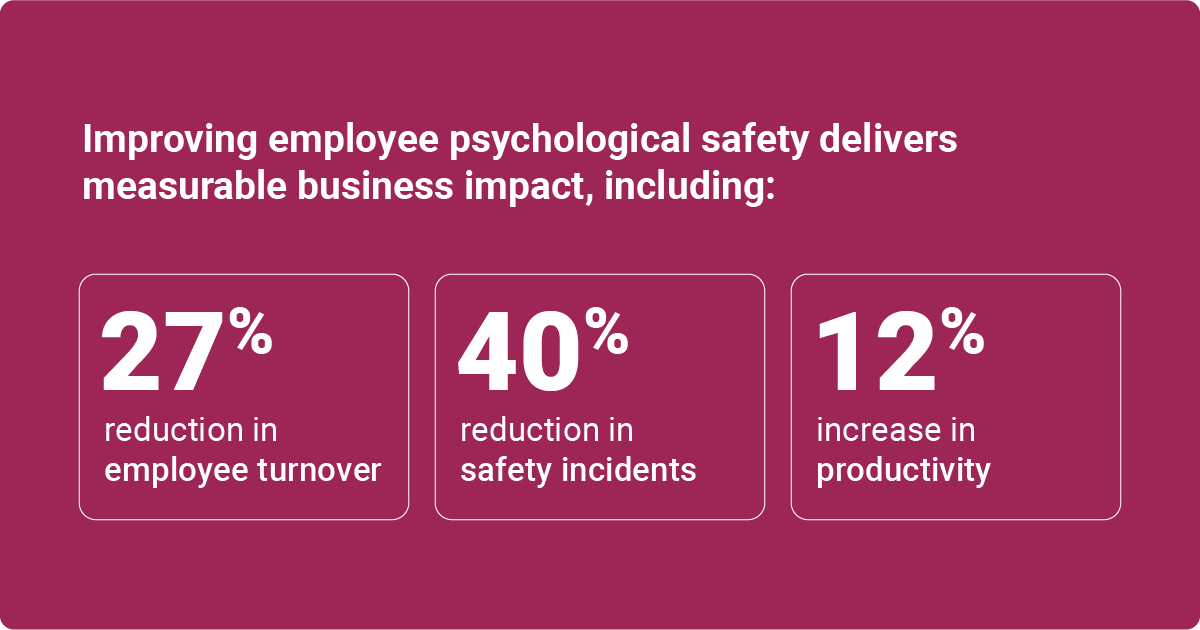
And because Workhuman iQ tracks recognition patterns across distributed teams, HR leaders can identify which remote or hybrid groups are becoming isolated – a reliable early indicator of conflict risk – before the problem shows up in attrition data.
Behaviors that escalate conflict (and what to do instead)
If you want to understand how to resolve conflict in the workplace, you also need to know how to avoid making it worse.
Don't:
Instead, do:
- Approach colleagues with curiosity
- Pause to actively listen
- Keep feedback private
- Actively work to resolve disagreements
- Stay serious but empathetic
- Share your concerns with employees instead of gossiping
Let's say a manager needs to tell an employee that their emails come across as blunt. Posting this feedback in the team Slack channel would likely embarrass them, cause resentment, and damage employee relations. Instead, the manager should gently deliver the critique in a one-on-one meeting.
The leader's role: Building a conflict-resilient culture
People often view conflict resolution as an optional interpersonal management skill. For anyone in a leadership role, though, it's a core competency. They're responsible for handling tensions at three levels: personal, team, and organizational.
At the personal level, leaders should consciously practice healthy conflict resolution techniques. That includes accepting feedback and admitting mistakes instead of deflecting. They should also model how to apologize sincerely and repair relationships.
Managers set norms for teams, too. They can promote healthy dynamics by teaching employees communication etiquette, such as not interrupting during meetings and responding to messages within 48 hours. Establishing feedback norms and developing recognition rituals are other ways to reduce friction.
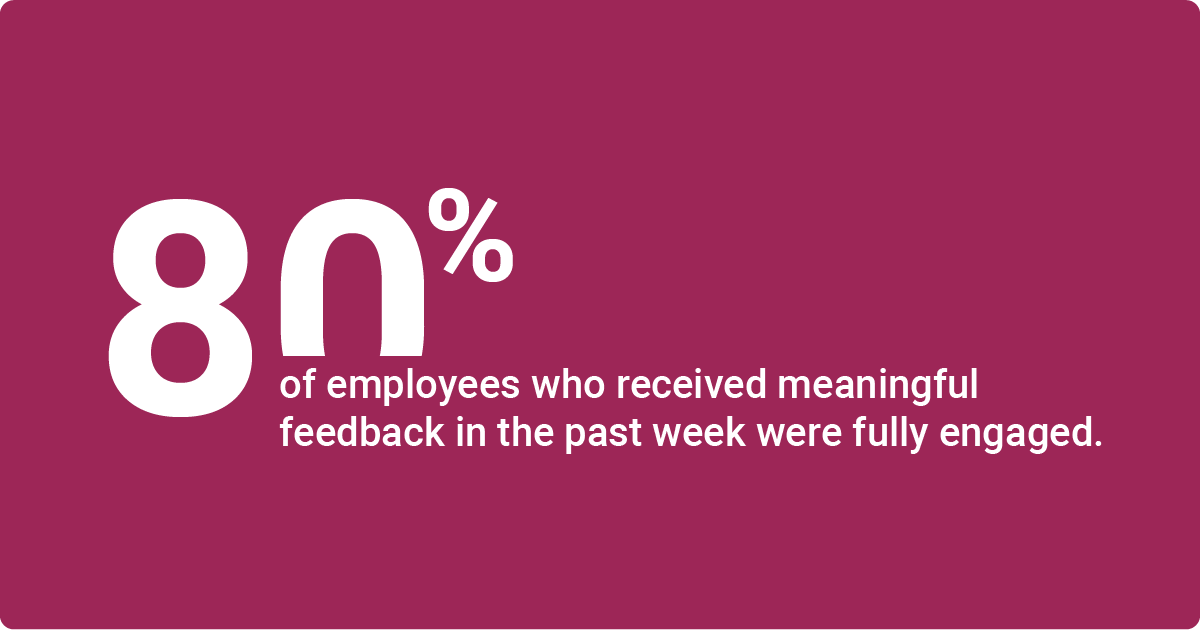
Leaders also influence how organizations handle conflict. They can make fairness part of the culture by supporting equitable grievance processes and unbiased promotion decisions. Other effective strategies include investing in manager training and using analytics to identify sources of conflict.
Across all levels, great leaders do five things when they encounter conflicts:
- Regulate their own emotions rather than getting frustrated
- Listen more than they talk
- Look for common ground instead of fixating on disagreements
- Set clear boundaries, expectations, and mutual respect
- Develop a concrete action plan and actually follow through
Using recognition and Human Intelligence to prevent and resolve conflict
Conflict rarely appears out of nowhere. It builds, often through unacknowledged effort, inconsistent feedback, and widening distance between teams. The most effective organizations don't just resolve conflict well; they create the conditions that make destructive conflict less likely in the first place.
That starts with recognition. When employees regularly receive specific, meaningful appreciation – from peers, not just managers – it builds the psychological safety that makes difficult conversations possible.
Workhuman's Social Recognition surfaces and celebrates milestones across regions and time zones, keeping distributed and matrixed teams connected in ways that reduce the "us vs. them" dynamic before it takes hold.
But recognition data also tells you something. And that's where Workhuman iQ comes in.
Traditional conflict management is reactive – leaders intervene after a dispute surfaces, often after trust has already eroded. Workhuman iQ takes a different approach by applying Human Intelligence to the recognition and engagement data your organization is already generating.
Rather than waiting for a formal complaint or an exit interview, it continuously analyzes patterns across the employee experience – recognition frequency, sentiment shifts in feedback, participation gaps across teams or regions – and surfaces early warning signals before they become visible problems.
Leaders and HR teams can act on these insights in real time, rather than discovering them in a year-end engagement survey:
This is the core difference between managing conflict and preventing it. When leaders have access to real-time people data, not just lagging indicators like turnover rates, they can intervene earlier, more fairly, and with more context.
In practice, this looks like a global pharmacy company using Workhuman iQ dashboards to track recognition frequency across teams and branches. When leaders discover that a regional engineering team is receiving significantly fewer recognition moments than comparable groups – despite carrying one of the highest workloads in the organization – they make a targeted staffing investment to reduce burnout risk before attrition climbs.
Recognition also changes how feedback lands. At a growing enterprise, a manager uses Conversations – Workhuman's continuous performance tool – to pair corrective feedback with timely recognition moments. Because both live on the same platform, employees see the full picture of how they're perceived, not just the criticism. That context makes difficult feedback feel more credible, fair, and actionable.
Policies, training, and metrics: Making conflict resolution systematic
Your organization may already have a few people with a knack for helping employees get along. But that's not enough. You also need clear guidelines, training, and measurement. Otherwise, leadership could quickly get overwhelmed by cross-departmental feuds and other conflicts.
Every conflict resolution system should include these must-have elements:
- Written policies with a clear escalation path from individual to manager to HR
- Regular manager training programs with role-play scenarios and opportunities to practice giving feedback and recognition
- Visual dashboards that reveal where conflict resolution is working and where employees need more support
Be sure to add data analytics software to your toolkit. Workhuman tracks metrics related to conflict, including:
- Employee net promoter score (eNPS)
- Grievance volume and resolution time
- Internal mobility rates
- Psychological safety scores
- Recognition frequency
- Regrettable attrition
Workhuman's Human Intelligence connects these data points to real behavioral patterns across teams. For instance, it might flag that your finance department's attrition has crept up and recognition has dropped. These patterns suggest that some sort of conflict may be affecting team dynamics.
Conclusion: Turning everyday friction into a stronger culture
Conflict is unavoidable in global and hybrid workplaces. But the organizations that handle it best aren't the ones with the most elaborate grievance procedures; they're the ones that have made recognition, psychological safety, and real-time people data part of a productive work environment.
The strategies in this article work at every level: individual contributors learning to pause and diagnose before reacting, managers building feedback norms that reduce friction before it compounds, and HR and people analytics teams using tools like Workhuman iQ to spot the early signals that precede a dispute – a dip in recognition frequency, a shift in sentiment, a team that's quietly disengaging.
None of this requires perfection. It requires consistency. When employees feel genuinely recognized, when leaders have the data to act early, and when difficult conversations happen in a culture of trust rather than fear, conflict stops being something organizations survive and starts being something they learn from.
If you're ready to move from reactive conflict management to something more proactive, see how Workhuman can help – request a demo.

Ryan Stoltz
Ryan is a search marketing manager and content strategist at Workhuman where he writes on the next evolution of the workplace. Outside of the workplace, he's a diehard 49ers fan, comedy junkie, and has trouble avoiding sweets on a nightly basis.
Recommended for you