5 Ways Recognition Can Turn Your People into AI Power Users
Table of contents
- Start here: define what an “AI power user” actually is
- 1) Recognize the behavior, not just the outcome
- 2) Use recognition to create psychological safety for learning in public
- 3) Tie recognition to the AI use cases that actually matter this quarter
- 5) Use recognition as a signal for whether adoption is actually spreading
- A quick word on the biggest trap in AI adoption
How is your team doing with AI adoption?
If your mind is jumping to the tools you’re implementing, or the training you’re doing, you might be halfway there. Getting the right platforms in place matters a lot.
But the real blockers to AI adoption are rarely in the technology. The blockers are in the humans. For a species so famously adaptable, we really don’t like change. And whether we’re excited about AI or worried about robot overlords, it’s a lot to integrate something this complicated into our work lives in a successful way – without complicated feelings along the way.
All too often we approach AI like a tooling challenge. Pick the right platform. Roll it out. Do some training. Create an “AI
Center of Excellence.” Toss a few prompts in a shared doc. Maybe run a lunch-and-learn.
It looks phenomenal on paper. But then 95% of generative AI pilots fail.Opens in a new tab So what gives?
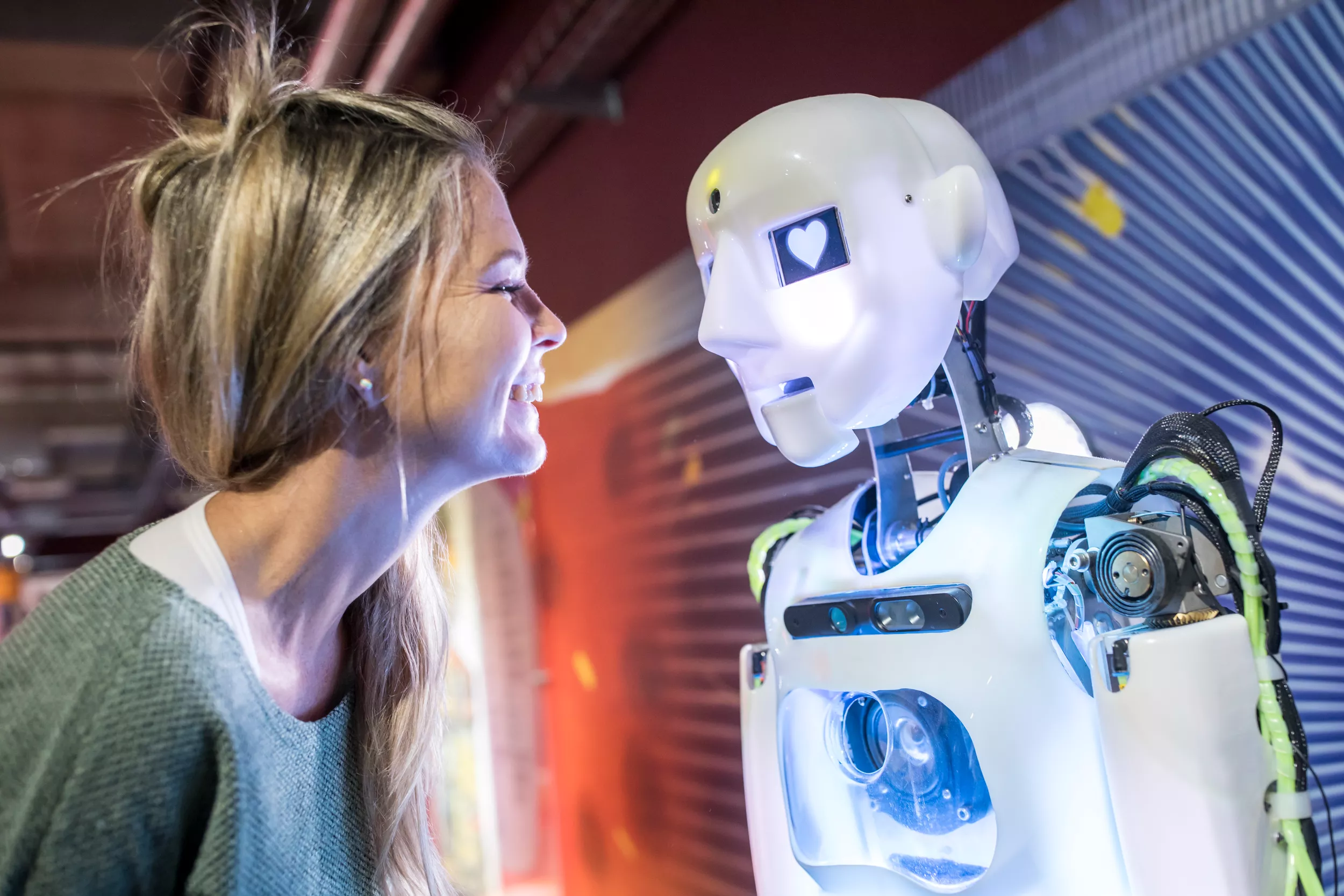
It’s not because people are stubborn. It’s not because they’re anti-innovation. It’s because “using AI well” isn’t some one-time decision. It’s a new set of habits. And habits don’t come from announcements or rally cries alone. They come from example, repetition, and reinforcement.
And that’s not just a nice idea. In our recently released Global Research, when employees were recognized in the last week, their likelihood of understanding strategic initiatives jumped from 50% to 86% — and alignment with those initiatives rose from 36% to 80%.
Over the years at Workhuman, we’ve observed one big truth about change of any kind: people repeat the behaviors that get noticed, appreciated, and rewarded. Talk is cheap. People notice the walk. We emulate what we see, and we trust what gets reinforced. That’s how change actually happens.
So if you want AI to become normal, you have to build the same kind of cultural flywheel you’d build for safety, quality, a big merger, or customer obsession.
And that boils down to positive reinforcement. Which means strategic recognition.
In our own Workhuman research, recognition is correlated with warm feelings, yes – but it also ties directly to whether people actually understand what the company is trying to do, and whether they feel safe enough to try, learn, and get better in public. That’s basically the recipe for successful change.
And it tracks with what we see when organizations struggle with AI rollouts: the technology shows up faster than human assimilation. People aren’t sure what “good” looks like yet. They’re not sure what’s allowed. They don’t want to look naive. They don’t want to make a mistake that gets screenshotted and remembered forever.
It also means being clear on your goals. Because the goal here isn’t “get more people to use AI.” The goal is to reinforce the behaviors that turn curiosity into capability.
So let’s talk about the steps you can take in your organization to change hearts and minds — and reinforce the behaviors that make AI adoption stick.
Start here: define what an “AI power user” actually is
When I say “AI power user,” I don’t mean “the person who makes the slickest slide with ChatGPT.”
I mean the person who:
- experiments without creating chaos,
- shares what they learn,
- builds reusable shortcuts,
- helps colleagues level up,
- and uses judgment – knowing when to trust automation and when to slow down because the stakes are human.
Those are the people who make adoption scale.
Now let’s talk about five ways recognition gets you there.
1) Recognize the behavior, not just the outcome
Early AI wins are messy. Someone tries five prompts before they get one useful answer. Someone tests a workflow, realizes it breaks compliance, and changes course. Someone drafts something that’s… fine… and then improves it with their own expertise.
If you only recognize “perfect” outcomes, you accidentally teach everyone to keep experimentation private.
Instead, recognize the behaviors you want to multiply: the trying, the learning, the sharing, the judgment.
That can be as simple as calling out, “Thank you for testing three approaches and documenting what worked – your systems thinking just saved the rest of us an hour next week.” Or: “I appreciate you jumping in and sanity-checking that output, and flagging where human review matters. This kind of teamwork and thoughtfulness is what makes you so invaluable to our team.”
In these examples, you’re not rewarding the tech – or even the output. You’re rewarding the craft. The behaviors. The human contributions that make the program successful. That’s what people remember, and what they’ll recreate.
2) Use recognition to create psychological safety for learning in public
AI adoption can be scary. It asks people to be beginners again, and most workplaces are not exactly optimized for beginner energy.
Recognition is one of the easiest ways to make learning visible and safe. In our most recent research, we found that when people had been recognized in the past month, their psychological safety scores were 21% higher. And it’s not only receiving recognition – giving it matters too. People who thanked others recently showed a 15% increase in psychological safety.
And when psychological safety is high, alignment jumps: teams are 40% more likely to understand values, 78% more likely to feel aligned to values, 44% more likely to understand strategic goals (like AI adoption), and 79% more likely to feel aligned to those goals.
When you publicly appreciate the person who asked the “basic” question, shared the imperfect draft, or admitted what didn’t work, you’re sending a signal: this is a place where improvement is the point.
That matters because AI isn’t a “set it and forget it” capability. It’s a practice. People get good because they iterate – and iteration requires safety.
3) Tie recognition to the AI use cases that actually matter this quarter
One of the fastest ways to kill AI momentum is to keep it abstract. “Use AI to be more innovative” is not a strategy. It’s a vibe. And vibes don’t survive a Tuesday afternoon with a full calendar.
People adopt AI when it helps them do the work in front of them: ship faster, reduce rework, answer customers better, onboard new hires quicker, catch issues earlier, make smarter decisions with less thrash.
That’s why recognition is so useful here: it can connect AI behavior to real priorities in a way that’s immediate and human.
Our Workhuman Global Research Study, Recognition as an Engine for Strategy, found that when recognition is tied to strategic initiatives, employees are far more likely to understand what those initiatives are and how their work contributes to them.
That matters for any change effort, but it’s especially relevant with AI, because it’s easy for people to assume it’s “a leadership thing” or “an IT thing.” Recognition is how you make it a “here’s what we’re doing – and here’s how you fit” thing.
So instead of generic praise, recognize the behavior and name the strategic thread:
“Thank you for using AI to tighten that customer response workflow. You helped us reduce turnaround time without compromising quality.” or “Appreciate you building a reusable prompt template for the HR team. This is exactly the kind of operational lift we need if we’re going to scale without burning people out.”
That’s how you turn recognition into alignment – and into change.
4) Build “AI power user flywheels” with peer recognition
Here’s the part most AI rollout plans miss: adoption spreads socially.
People don’t become confident AI users because of training. They become confident because someone they trust says, “Here’s what I tried. Here’s what worked. Here’s what to watch out for. Want the template?”
That’s why peer recognition is such a lever. It doesn’t just reward the person doing the “teaching.” It makes the teaching visible. It says: this is valued here. This is leadership here.
When it comes to rolling out AI, that means recognizing the people who:
- Share their prompts and explain the why (not just the what),
- Coach someone through a first attempt,
- Turn a one-off into a repeatable workflow,
- Create lightweight guardrails that keep things safe and usable,
- Translate “cool AI capabilities” into “this makes our job easier.”
If you want a simple ritual: do a weekly “AI Helper” shoutout. Not “best AI output.” Not “most automations built.” The person who helped the most colleagues get unstuck.
This kind of reinforcement helps you build power users at scale – and turn expertise into a shared asset.
5) Use recognition as a signal for whether adoption is actually spreading
Most AI adoption metrics are just okay. Things like logins, usage rates, number of seats activated, or time in tool. But let’s be clear: those are activity metrics. They don’t tell you what’s changing in the culture.
Recognition can.
Because recognition, when it’s specific, shows you what people are doing that others value. It’s a live feed of “this behavior helped me” and “this is what good looks like here.” Think of it as a behavior map.
When you look at recognition through an AI adoption lens, you can start asking smarter questions:
- Are people being recognized for experimentation and learning – or only for polished outcomes?
- Are managers reinforcing the same handful of AI success behaviors consistently – or is it random and personality-based?
- Where are the pockets of momentum? Which teams are sharing templates, coaching peers, building reusable workflows?
- Where is adoption stuck because psychological safety is low, because the use cases aren’t clear, or because people don’t think it’s “for them”?
This is the point where recognition stops being “a nice culture program” and becomes real infrastructure for change. It gives you visibility into the human side of adoption – the part that usually stays invisible until someone declares the rollout a disappointment.
A quick word on the biggest trap in AI adoption
If you take nothing else from this: don’t recognize “AI usage.” Recognize the behaviors that make AI useful, safe, and repeatable. The tool isn’t the transformation. The habits are.
AI power users aren’t born from a training module. They’re built through reinforcement: noticing the right behaviors, naming them, rewarding them, and making them socially contagious.
If you want the deeper argument for why AI adoption is a human change program (and how to approach it that way), you might be interested in this related (and more nerdy) blog post: AI adoption: how to approach it in the workplace.
And if you want to make AI transformation stick? Start paying attention to what you celebrate.
Further reading:
Global Research: Recognition is the Strategy Engine
See how goal-linked recognition drives alignment, psychological safety, and real commitment to what matters most.
About the author
Darcy Jacobsen
Darcy is a passionate storyteller and champion of workforce transformation, human connection, and recognition-driven culture. As an author on the Workhuman Live Blog, she loves to connect deep research insights with modern workplace dynamics to uncover what really drives engagement, belonging, and happiness at work. With a background in communications and a master's in medieval history, she brings a unique perspective to her writing, taking deep dives into all topics around organizational psychology and the science of gratitude.